Brauer Bastian, Merino-Veliz Nicolas, Ahumada-Marchant Constanza, Arriagada Gloria, Bustos Fernando J
Instituto de Ciencias Biomedicas, Facultad de Medicina y Facultad de Ciencias de la Vida, Universidad Andres Bello, Santiago, Chile.
Front Cell Dev Biol. 2023 Jul 19;11:1227723. doi: 10.3389/fcell.2023.1227723. eCollection 2023.
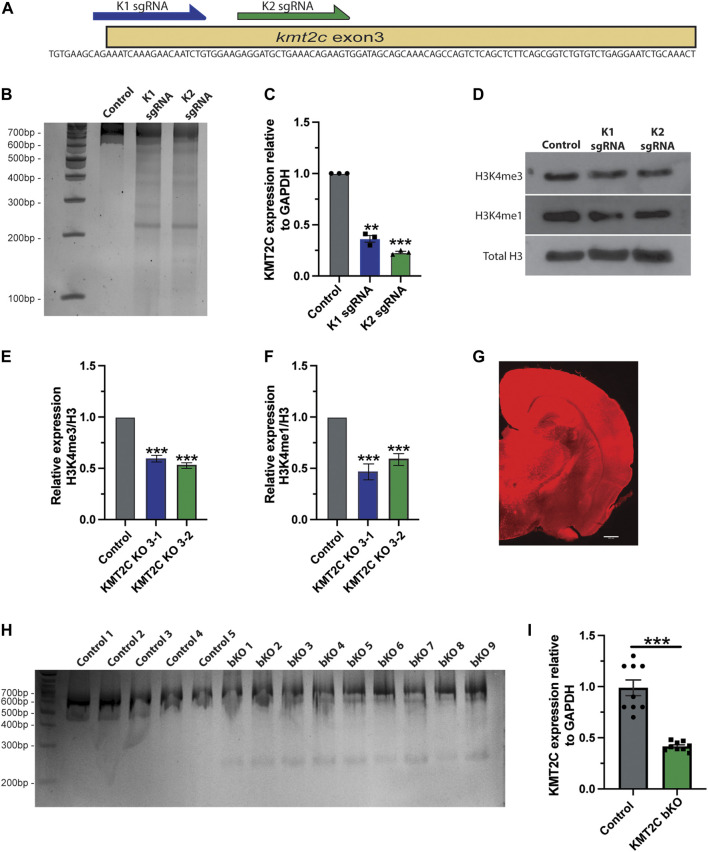
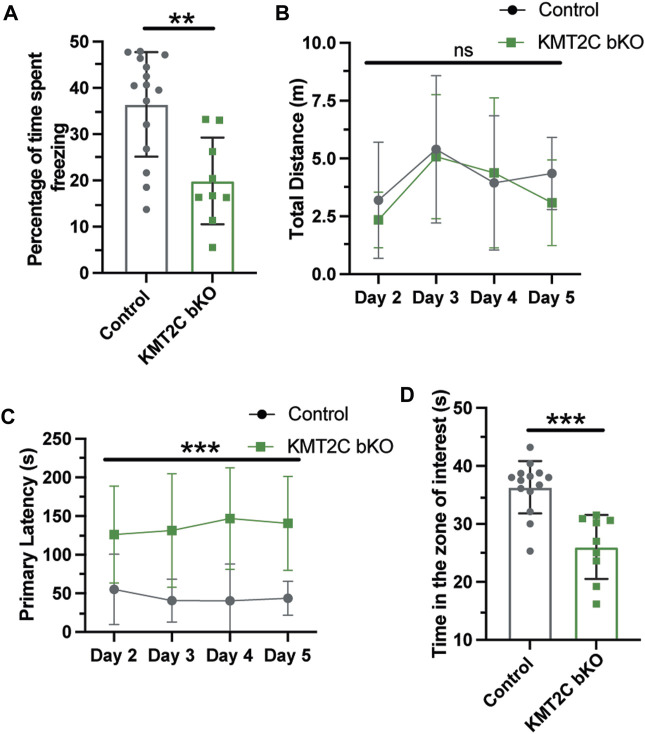
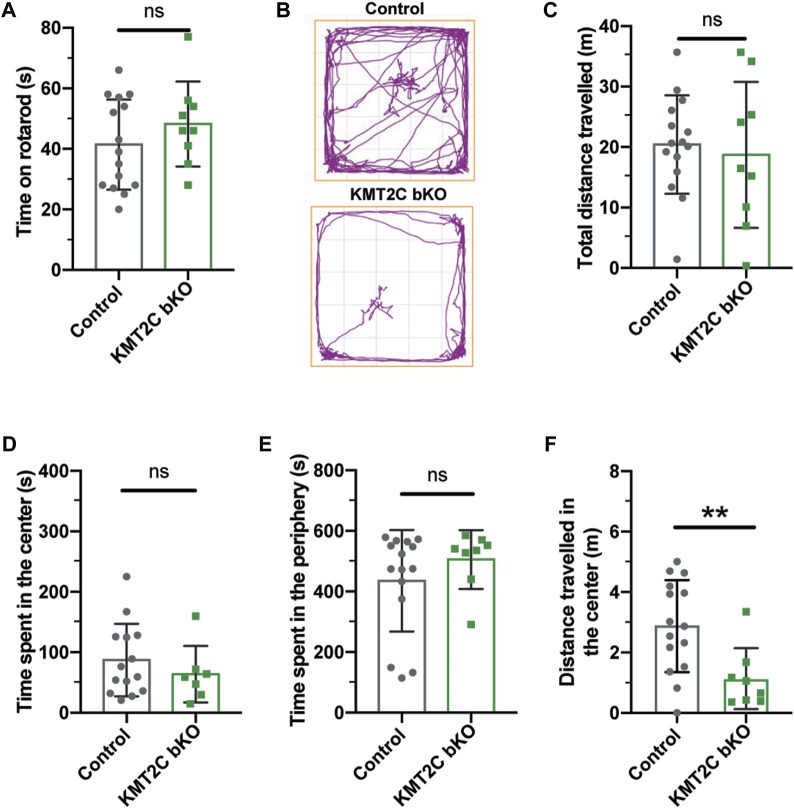
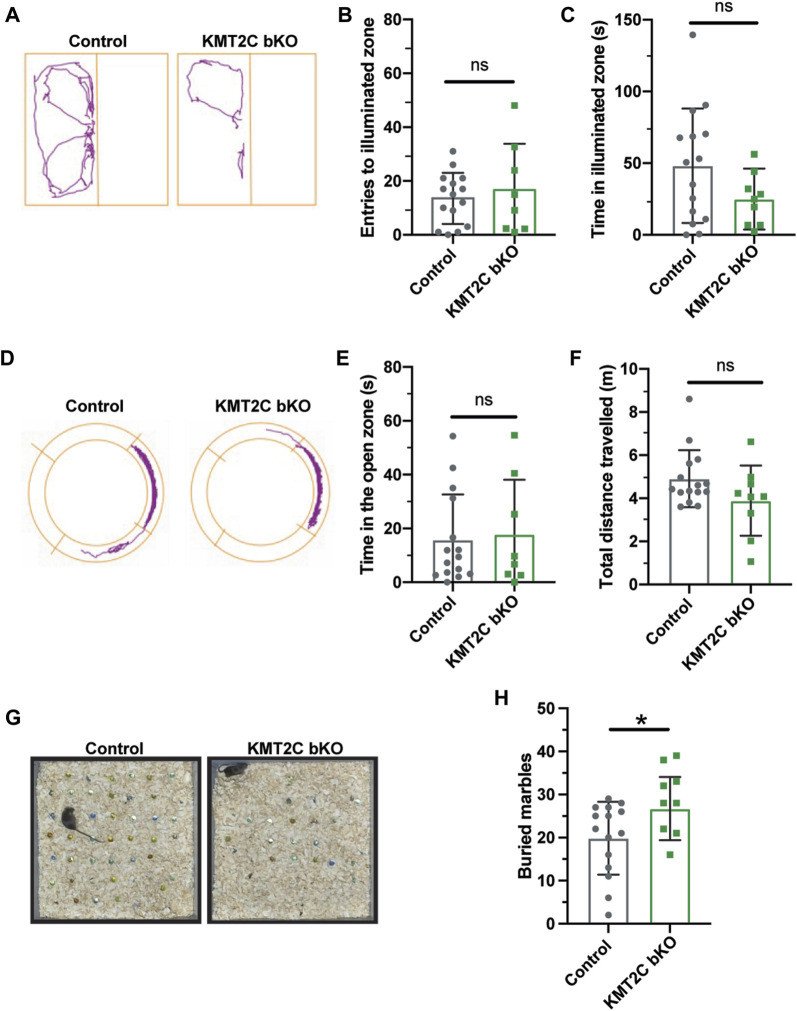
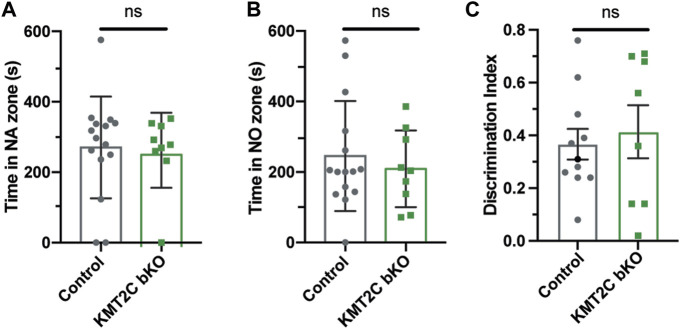
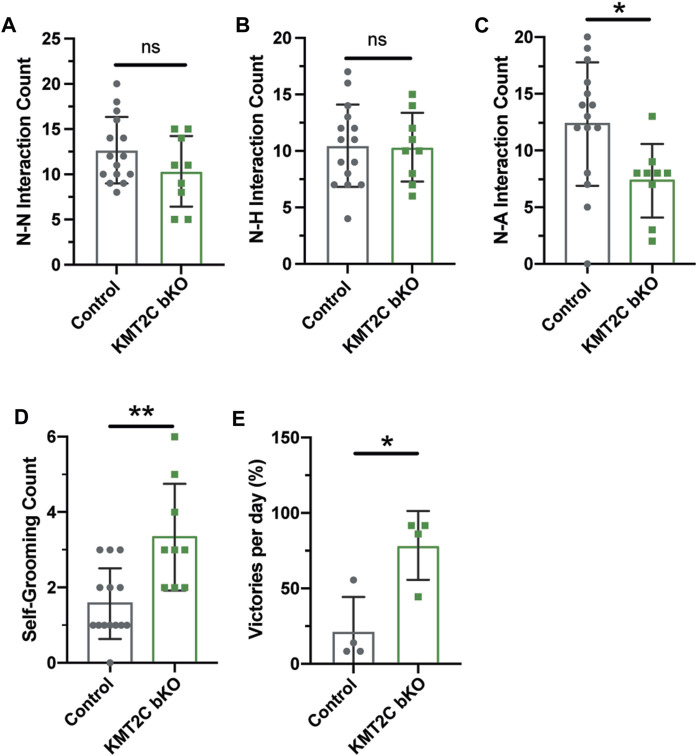
Neurodevelopmental disorders have been associated with genetic mutations that affect cellular function, including chromatin regulation and epigenetic modifications. Recent studies in humans have identified mutations in KMT2C, an enzyme responsible for modifying histone tails and depositing H3K4me1 and H3K4me3, as being associated with Kleefstra syndrome 2 and autism spectrum disorder (ASD). However, the precise role of KMT2C mutations in brain disorders remains poorly understood. Here we employed CRISPR/Cas9 gene editing to analyze the effects of KMT2C brain specific knockout on animal behavior. Knocking out KMT2C expression in cortical neurons and the mouse brain resulted in decreased KMT2C levels. Importantly, KMT2C brain specific knockout animals exhibited repetitive behaviors, social deficits, and intellectual disability resembling ASD. Our findings shed light on the involvement of KMT2C in neurodevelopmental processes and establish a valuable model for elucidating the cellular and molecular mechanisms underlying KMT2C mutations and their relationship to Kleefstra syndrome 2 and ASD.
神经发育障碍与影响细胞功能的基因突变有关,包括染色质调控和表观遗传修饰。最近在人类中的研究已确定,负责修饰组蛋白尾部并沉积H3K4me1和H3K4me3的酶KMT2C中的突变,与2型克莱夫斯特拉综合征和自闭症谱系障碍(ASD)相关。然而,KMT2C突变在脑部疾病中的精确作用仍知之甚少。在此,我们采用CRISPR/Cas9基因编辑技术来分析KMT2C脑特异性敲除对动物行为的影响。敲除皮质神经元和小鼠脑中的KMT2C表达导致KMT2C水平降低。重要的是,KMT2C脑特异性敲除动物表现出类似ASD的重复行为、社交缺陷和智力残疾。我们的研究结果揭示了KMT2C在神经发育过程中的参与,并建立了一个有价值的模型,用于阐明KMT2C突变背后的细胞和分子机制,以及它们与2型克莱夫斯特拉综合征和ASD的关系。