Pang Bo, Zhao Ronghua, Peng Bo, Bao Lei, Geng Zihan, Li Shuran, Xu Yingli, Zhou Lirun, Guo Shanshan, Cui Xiaolan, Sun Jing
Institute of Chinese Materia Medica, China Academy of Chinese Medical Sciences, Beijing, 100700, China.
Tianjin University of Traditional Chinese Medicine, Tianjin, 301617, China.
Heliyon. 2023 Jun 30;9(7):e17802. doi: 10.1016/j.heliyon.2023.e17802. eCollection 2023 Jul.
Kaihoujian Throat Spray children's type (KHJSC) is a Chinese medicine prescription for treating pediatric acute pharyngitis and tonsillitis (APT). However, its relevant mechanisms remain unclear.
To investigate the pharmacological effects of KHJSC on APT and , and explore the possible mechanism and target proteins.
The antiviral and antibacterial effects were evaluated by IC and MICs. Thirty-six Japanese white rabbits were averagely divided into control group, model group, amoxicillin group and 3 dose groups of KHJSC (720, 540 and 360 μL/kg/d). The model rabbits were injected with -hemolytic solution into the tonsils for 2 consecutive days. KHJSC treatment started on the third day. The whole blood, serum, tonsil tissues and pharyngeal mucosa tissues were collected for routine blood tests, proteomic, ELISA and other tests on the sixth day.
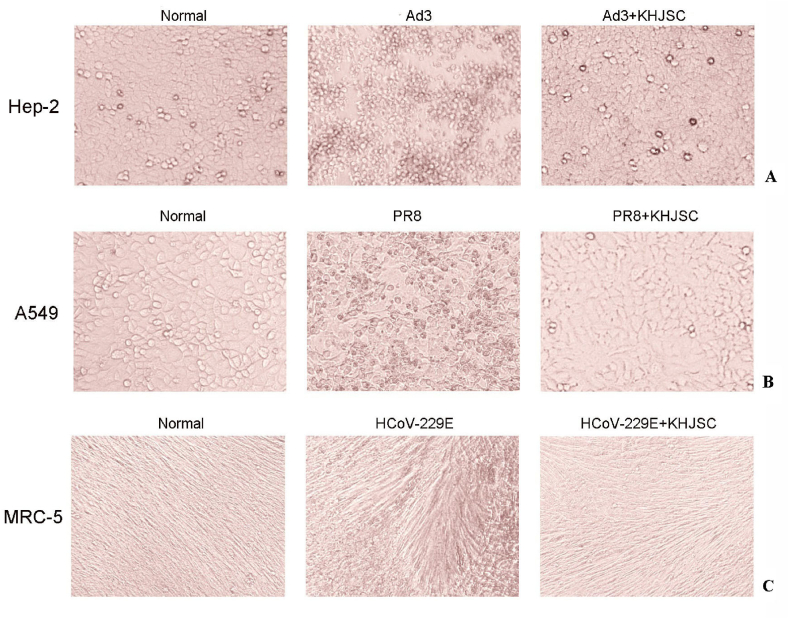
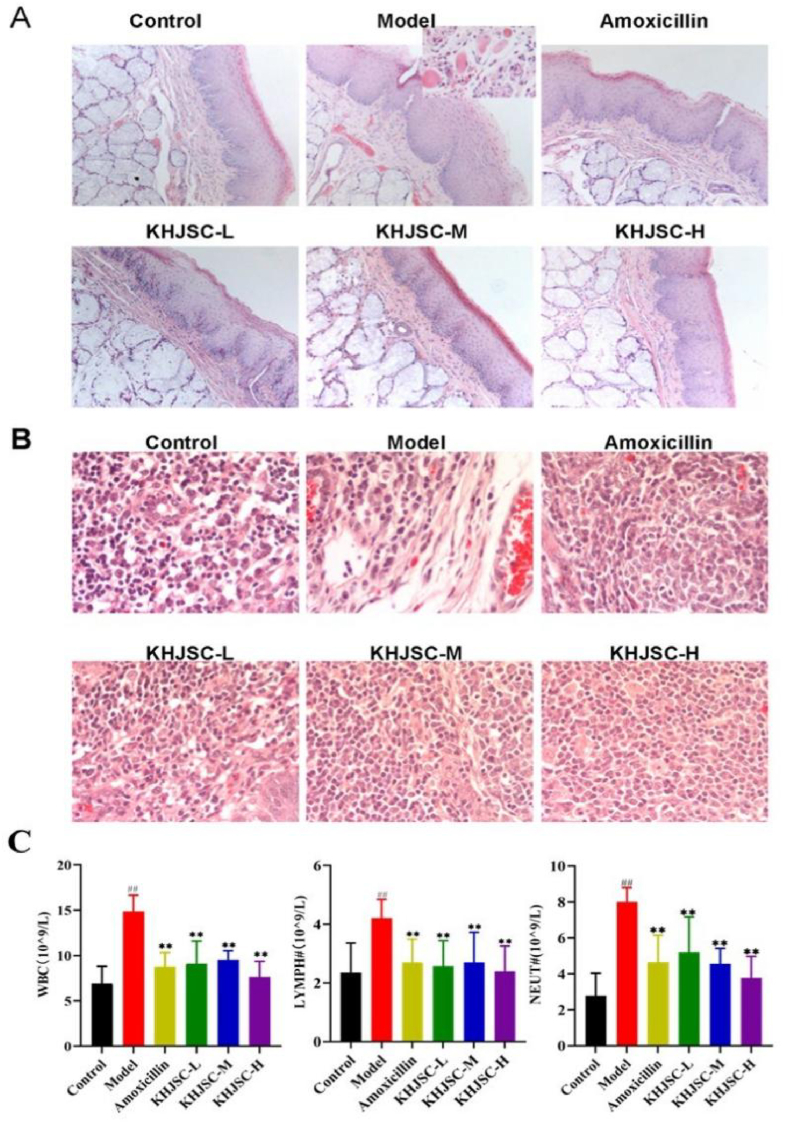
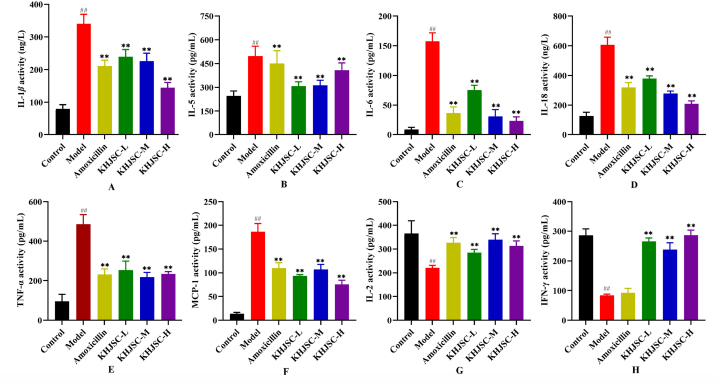
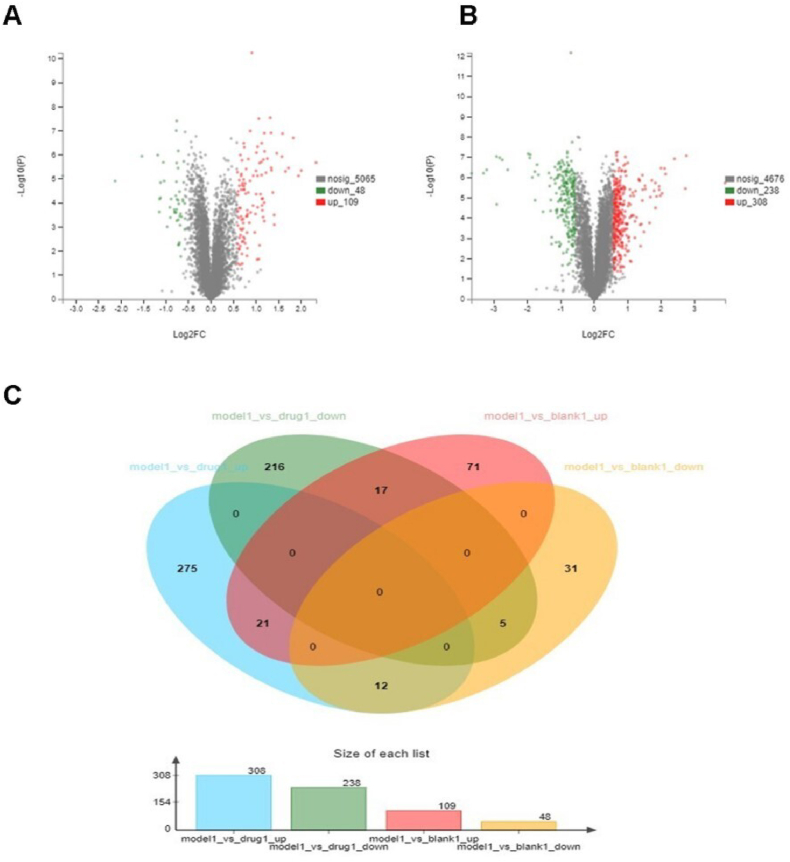
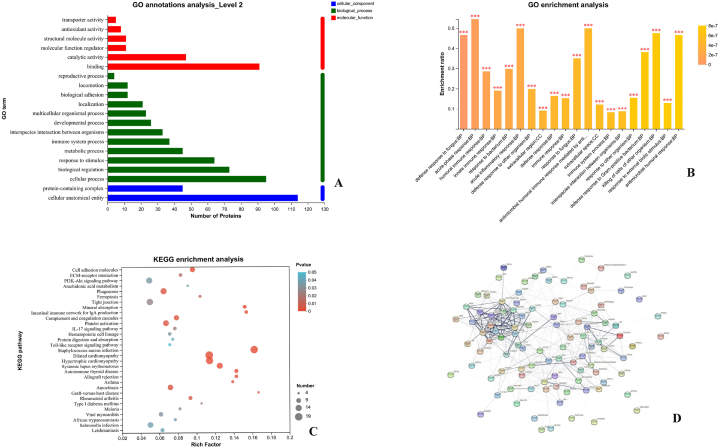
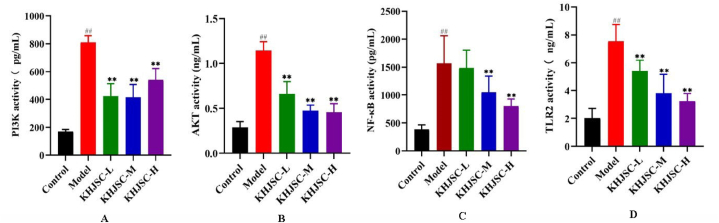
The IC of KHJSC on HCoV-229E, influenza PR8 and Ad3 were 1.99, 1.99 and 4.49 mg/mL, respectively; MICs of MDR-PA, MRSA and -hemolytic were 350, 350, and 175 mg/mL. KHJSC markedly decreased the number of white blood cells, lymphocytes, neutrophils, and the level of IL-1, IL-5, IL-6, IL-18, TNF- and MCP-1; increased the content of IL-2 and IFN-. Proteomic analysis and ELISA revealed that PI3K-Akt signaling pathway, NF-κB signaling pathway and Toll-like receptor signaling pathway were the potential mechanisms of KHJSC against APT.
These results provided the reference and scientific basis for the application of KHJSC in clinic and further mechanisms study.
开喉剑儿童型喷雾剂(KHJSC)是一种治疗小儿急性咽炎和扁桃体炎(APT)的中药方剂。然而,其相关机制尚不清楚。
研究开喉剑儿童型喷雾剂对小儿急性咽炎和扁桃体炎的药理作用,探讨其可能的作用机制及靶蛋白。
通过半数抑制浓度(IC)和最低抑菌浓度(MICs)评估其抗病毒和抗菌作用。36只日本大耳白兔平均分为对照组、模型组、阿莫西林组和开喉剑儿童型喷雾剂3个剂量组(720、540和360 μL/kg/d)。模型兔连续2天在扁桃体注射β-溶血链球菌溶液。第三天开始给予开喉剑儿童型喷雾剂治疗。第六天采集全血、血清、扁桃体组织和咽黏膜组织进行血常规、蛋白质组学、酶联免疫吸附测定(ELISA)等检测。
开喉剑儿童型喷雾剂对人冠状病毒229E(HCoV-229E)、流感病毒PR8和腺病毒3型(Ad3)的半数抑制浓度分别为1.99、1.99和4.49 mg/mL;对多重耐药鲍曼不动杆菌(MDR-PA)、耐甲氧西林金黄色葡萄球菌(MRSA)和β-溶血链球菌的最低抑菌浓度分别为350、350和175 mg/mL。开喉剑儿童型喷雾剂显著降低白细胞、淋巴细胞、中性粒细胞数量以及白细胞介素-1(IL-1)、白细胞介素-5(IL-5)、白细胞介素-6(IL-6)、白细胞介素-18(IL-18)、肿瘤坏死因子-α(TNF-α)和单核细胞趋化蛋白-1(MCP-1)水平;提高白细胞介素-2(IL-2)和干扰素-γ(IFN-γ)含量。蛋白质组学分析和ELISA显示,磷脂酰肌醇-3激酶-蛋白激酶B(PI3K-Akt)信号通路、核因子κB(NF-κB)信号通路和Toll样受体信号通路是开喉剑儿童型喷雾剂抗小儿急性咽炎和扁桃体炎的潜在机制。
这些结果为开喉剑儿童型喷雾剂在临床上的应用及进一步的作用机制研究提供了参考和科学依据。