Huang Fanxuan, Wang Xinyu, Zhong Junzhe, Chen Hao, Song Dan, Xu Tianye, Tian Kaifu, Sun Penggang, Sun Nan, Qin Jie, Song Yu, Ma Wenbin, Liu Yuxiang, Yu Daohan, Meng Xiangqi, Jiang Chuanlu, Xuan Hanwen, Qian Da, Cai Jinquan
Department of Neurosurgery, The Second Affiliated Hospital of Harbin Medical University, No. 246, Xuefu Road, Nangang District, Harbin, 150086, China.
Future Medical Laboratory, The Second Affiliated Hospital of Harbin Medical University, Harbin, 150086, China.
Cancer Cell Int. 2023 Aug 5;23(1):156. doi: 10.1186/s12935-023-03001-w.
N6-methyladenosine (m6A), 5-methylcytosine (m5C) and N1-methyladenosine (m1A) are the main RNA methylation modifications involved in the progression of cancer. However, it is still unclear whether RNA methylation-related long noncoding RNAs (lncRNAs) affect the prognosis of glioma.
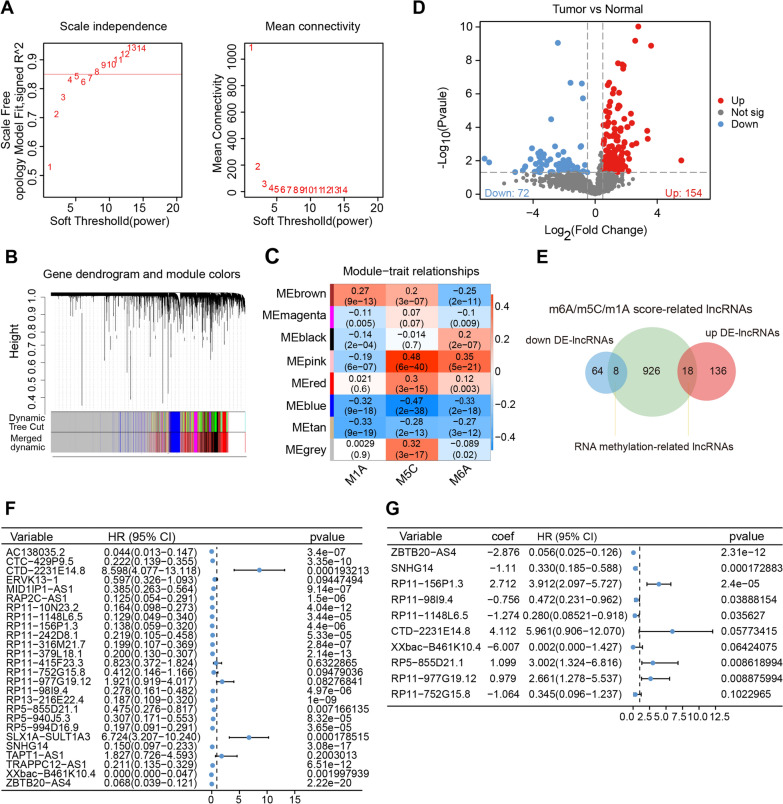
We summarized 32 m6A/m5C/m1A-related genes and downloaded RNA-seq data and clinical information from The Cancer Genome Atlas (TCGA) database. Differential expression analysis and weighted gene co-expression network analysis (WGCNA) were used to identify differentially expressed (DE-) RNA methylation-related lncRNAs in order to construct a prognostic signature of glioma and in order to determine their correlation with immune function, immune therapy and drug sensitivity. In vitro and in vivo assays were performed to elucidate the effects of RNA methylation-related lncRNAs on glioma.
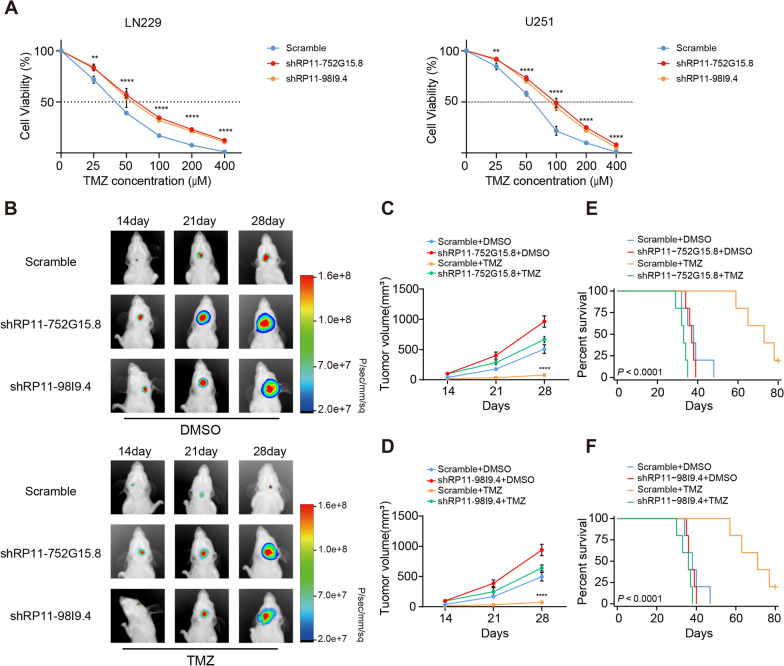
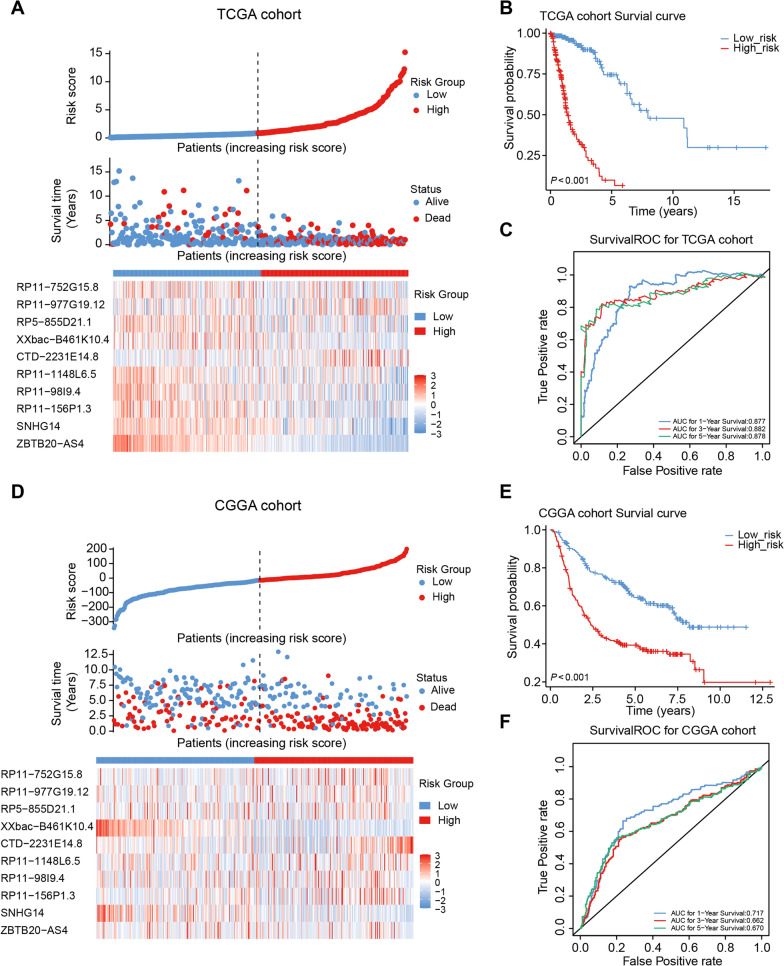
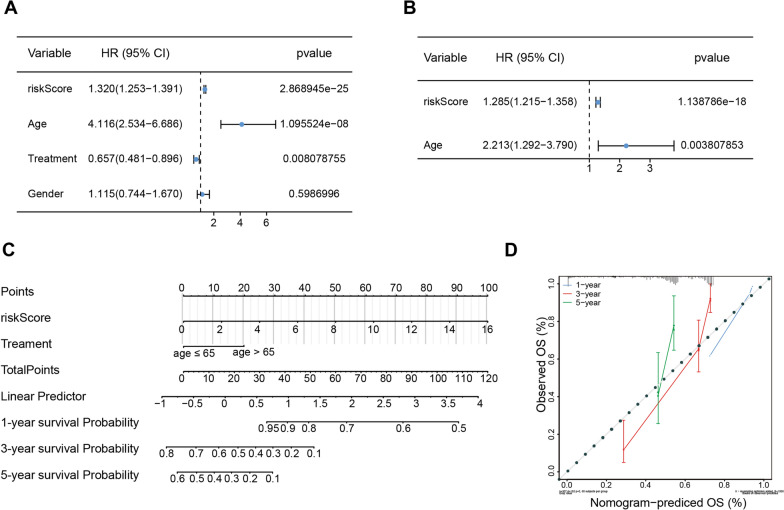
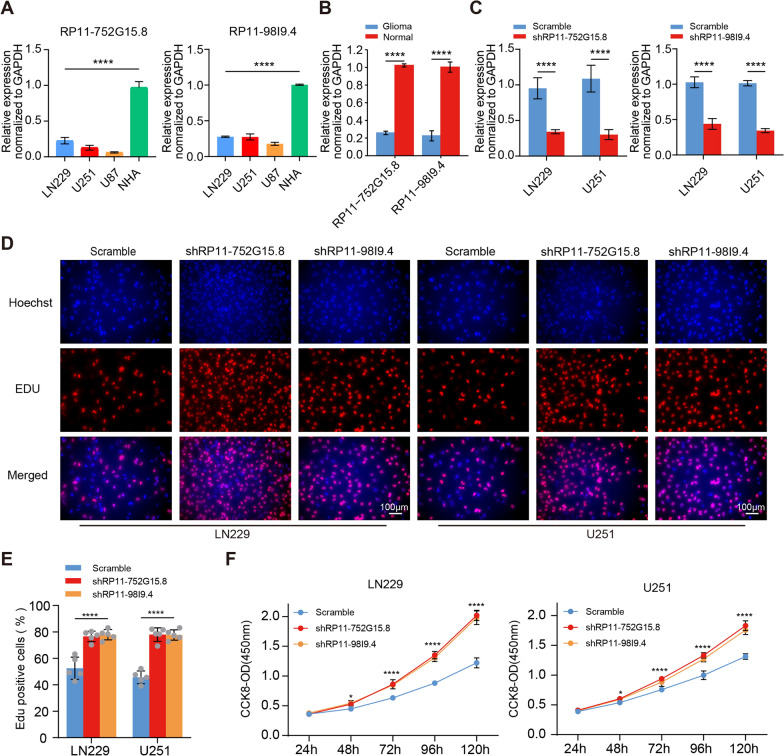
A total of ten RNA methylation-related lncRNAs were used to construct a survival and prognosis signature, which had good independent prediction ability for patients. It was found that the high-risk group had worse overall survival (OS) than the low-risk group in all cohorts. In addition, the risk group informed the immune function, immunotherapy response and drug sensitivity of patients with glioma in different subgroups. Knockdown of RP11-98I9.4 and RP11-752G15.8 induced a more invasive phenotype, accelerated cell growth and apparent resistance to temozolomide (TMZ) both in vitro and in vivo. We observed significantly elevated global RNA m5C and m6A levels in glioma cells.
Our study determined the prognostic implication of RNA methylation-related lncRNAs in gliomas, established an RNA methylation-related lncRNA prognostic model, and elucidated that RP11-98I9.4 and RP11-752G15.8 could suppress glioma proliferation, migration and TMZ resistance. In the future, these RNA methylation-related lncRNAs may become a new choice for immunotherapy of glioma.
N6-甲基腺苷(m6A)、5-甲基胞嘧啶(m5C)和N1-甲基腺苷(m1A)是参与癌症进展的主要RNA甲基化修饰。然而,RNA甲基化相关的长链非编码RNA(lncRNA)是否影响胶质瘤的预后仍不清楚。
我们总结了32个与m6A/m5C/m1A相关的基因,并从癌症基因组图谱(TCGA)数据库下载了RNA测序数据和临床信息。使用差异表达分析和加权基因共表达网络分析(WGCNA)来识别差异表达的(DE-)RNA甲基化相关lncRNA,以构建胶质瘤的预后特征,并确定它们与免疫功能、免疫治疗和药物敏感性的相关性。进行体外和体内实验以阐明RNA甲基化相关lncRNA对胶质瘤的影响。
总共使用了10个RNA甲基化相关lncRNA来构建生存和预后特征,该特征对患者具有良好的独立预测能力。发现在所有队列中,高危组的总生存期(OS)比低危组差。此外,风险组告知了不同亚组胶质瘤患者的免疫功能、免疫治疗反应和药物敏感性。敲低RP11-98I9.4和RP11-752G15.8在体外和体内均诱导了更具侵袭性的表型,加速了细胞生长并对替莫唑胺(TMZ)产生明显抗性。我们观察到胶质瘤细胞中全局RNA m5C和m6A水平显著升高。
我们的研究确定了RNA甲基化相关lncRNA在胶质瘤中的预后意义,建立了RNA甲基化相关lncRNA预后模型,并阐明了RP11-98I9.4和RP11-752G15.8可以抑制胶质瘤的增殖、迁移和TMZ抗性。未来,这些RNA甲基化相关lncRNA可能成为胶质瘤免疫治疗的新选择。