Department of Neurobiology, Duke University Medical Center, Durham, NC 27701, USA.
Department of Neurobiology, Duke University Medical Center, Durham, NC 27701, USA.
Neuron. 2023 Oct 18;111(20):3255-3269.e6. doi: 10.1016/j.neuron.2023.07.003. Epub 2023 Aug 4.
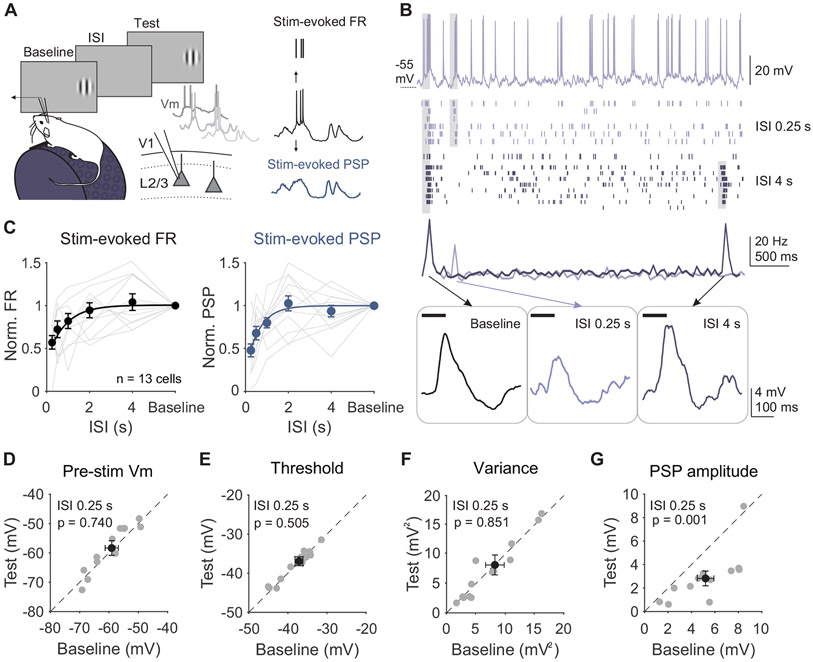
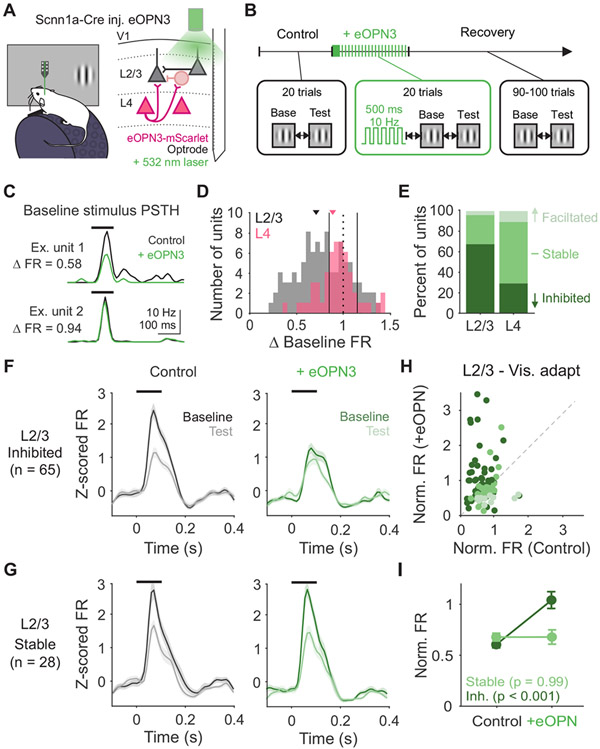
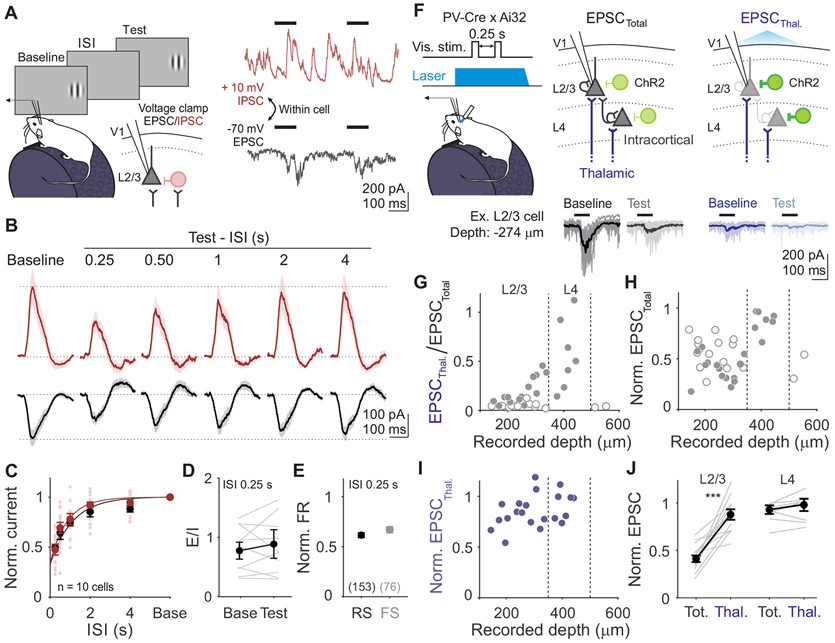
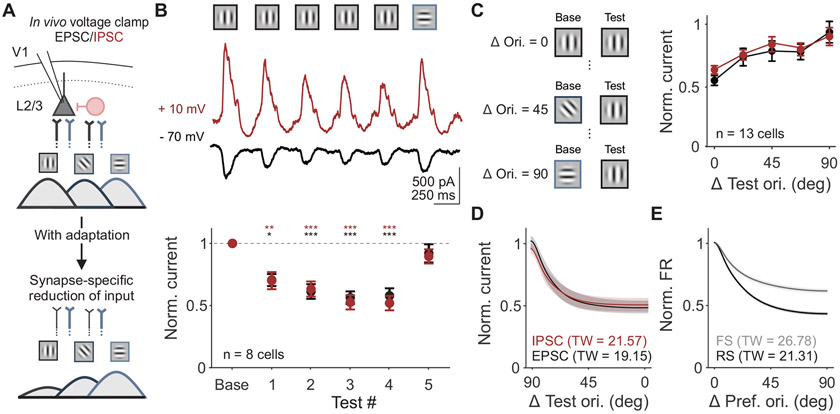
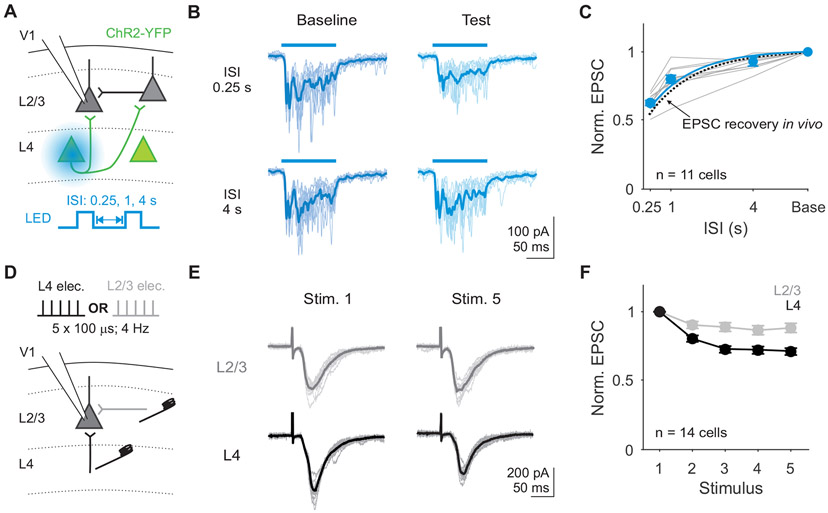
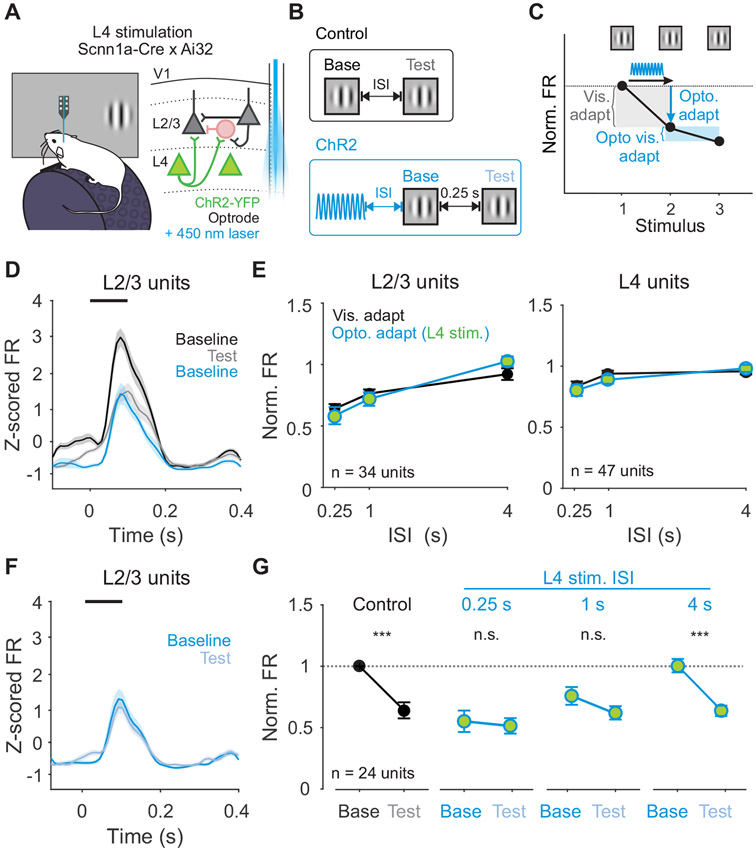
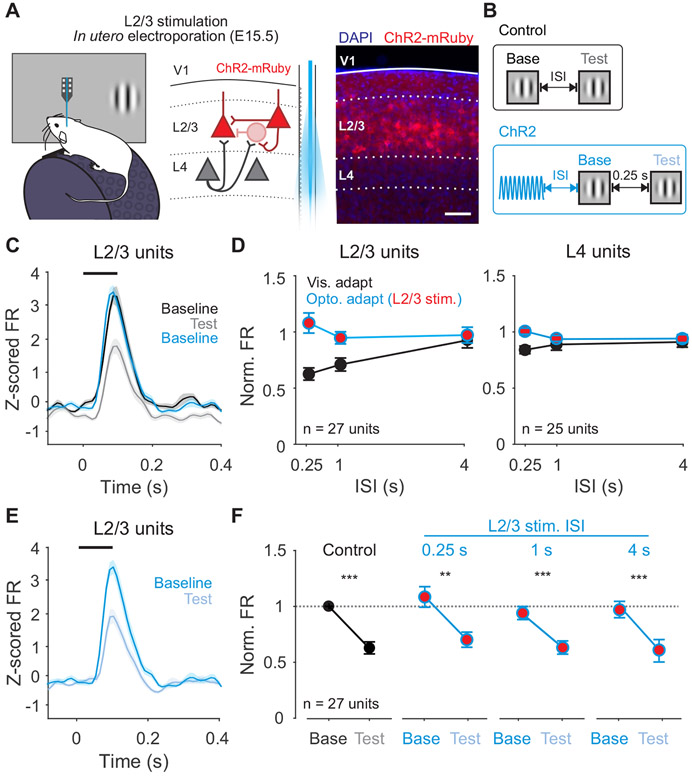
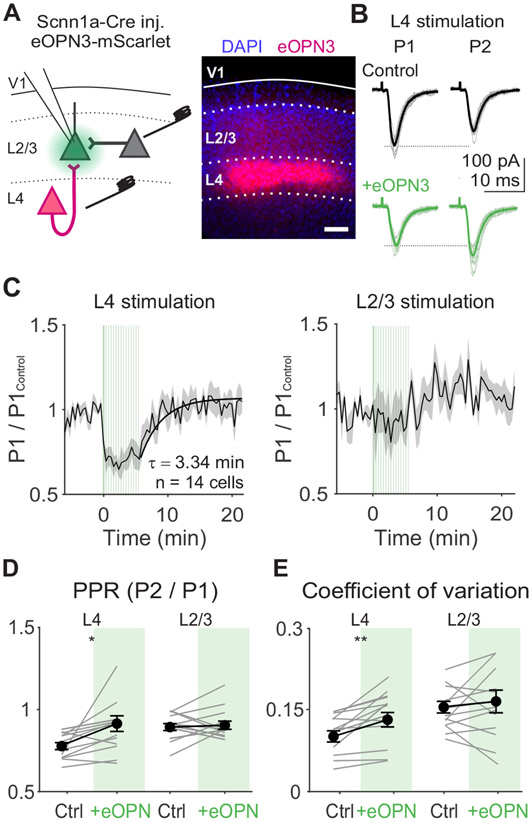
Efficient sensory processing requires the nervous system to adjust to ongoing features of the environment. In primary visual cortex (V1), neuronal activity strongly depends on recent stimulus history. Existing models can explain effects of prolonged stimulus presentation but remain insufficient for explaining effects observed after shorter durations commonly encountered under natural conditions. We investigated the mechanisms driving adaptation in response to brief (100 ms) stimuli in L2/3 V1 neurons by performing in vivo whole-cell recordings to measure membrane potential and synaptic inputs. We find that rapid adaptation is generated by stimulus-specific suppression of excitatory and inhibitory synaptic inputs. Targeted optogenetic experiments reveal that these synaptic effects are due to input-specific short-term depression of transmission between layers 4 and 2/3. Thus, brief stimulus presentation engages a distinct adaptation mechanism from that previously reported in response to prolonged stimuli, enabling flexible control of sensory encoding across a wide range of timescales.
高效的感官处理需要神经系统适应环境的持续特征。在初级视觉皮层(V1)中,神经元活动强烈依赖于最近的刺激历史。现有的模型可以解释长时间刺激呈现的效果,但对于解释在自然条件下常见的更短持续时间内观察到的效果仍然不足。我们通过在体全细胞膜片钳记录测量膜电位和突触输入,研究了 L2/3 V1 神经元对短暂(100 毫秒)刺激的适应机制。我们发现,快速适应是由刺激特异性抑制兴奋性和抑制性突触输入产生的。靶向光遗传学实验表明,这些突触效应是由于 4 层和 2/3 层之间的传输的输入特异性短期抑郁。因此,短暂的刺激呈现引发了一种与以前报道的对长时间刺激的适应机制不同的适应机制,从而能够在广泛的时间尺度上灵活控制感觉编码。