Department of Orthopedics, Chaohu Hospital of Anhui Medical University, Hefei, China.
Chaohu Hospital of Anhui Medical University, Hefei, China.
J Orthop Surg Res. 2023 Aug 5;18(1):571. doi: 10.1186/s13018-023-04049-0.
Hip fracture (HF) is one of the most common fractures in the elderly and is significantly associated with high mortality and unfavorable prognosis. Postoperative pneumonia (POP), the most common postoperative complication of HF, can seriously affect patient prognosis and increase the burden on the healthcare system. The aim of this study was to develop machine learning models for identifying elderly patients at high risk of pneumonia after hip fracture surgery.
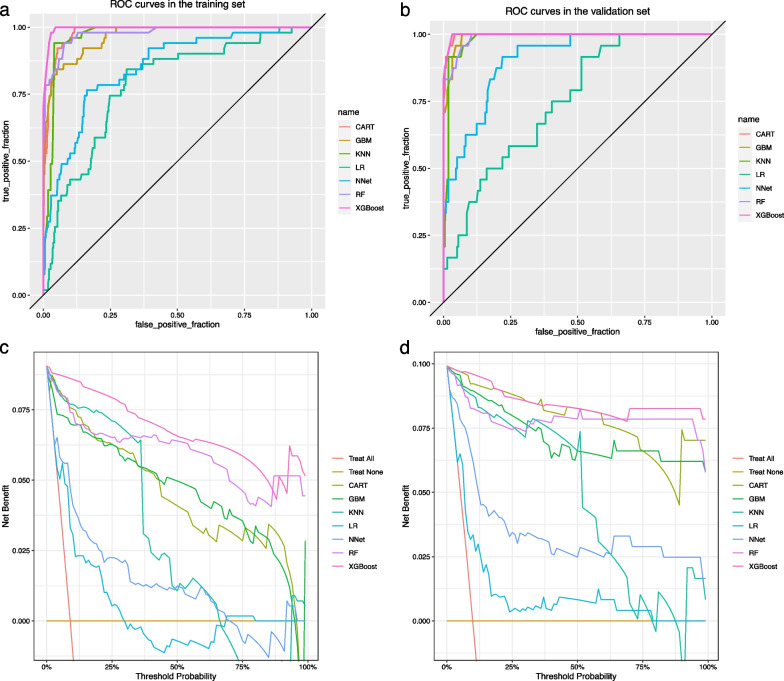
From May 2016 to November 2022, patients admitted to a single central hospital for HF served as the study population. We extracted data that could be collected within 24 h of patient admission. The dataset was divided into training and validation sets according to 70:30. Based on the screened risk factors, prediction models were developed using seven machine learning algorithms, namely CART, GBM, KNN, LR, NNet, RF, and XGBoost, and their performance was evaluated.
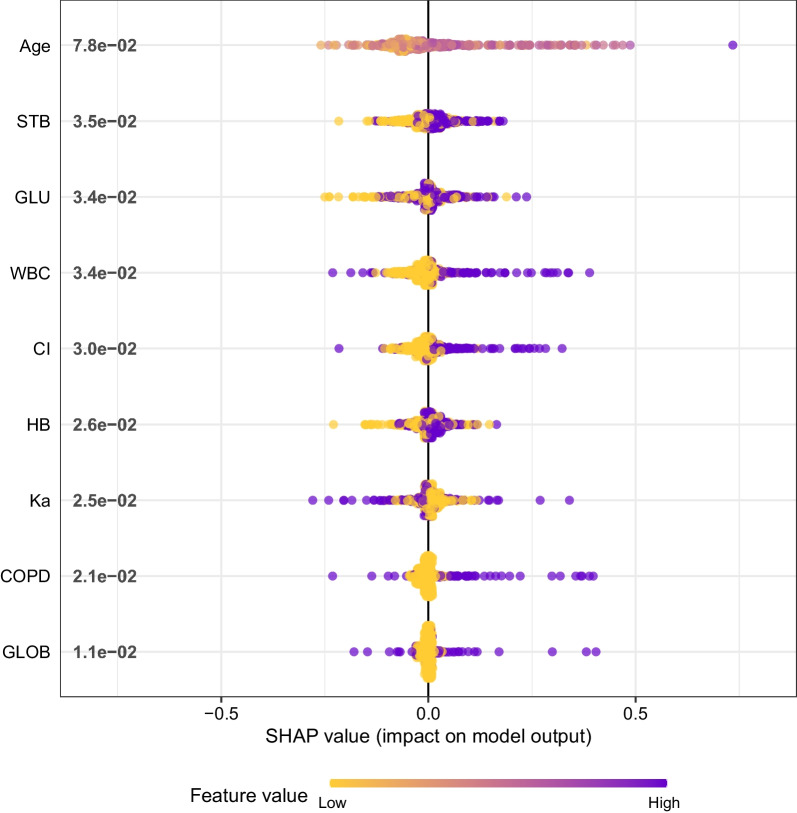
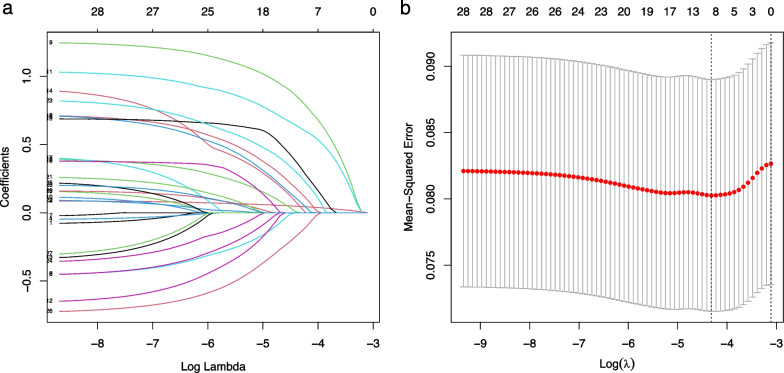
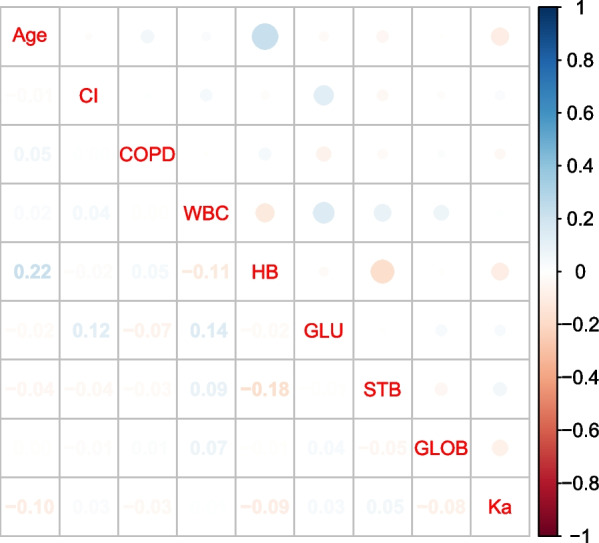
Eight hundred five patients were finally included in the analysis and 75 (9.3%) patients suffered from POP. Age, CI, COPD, WBC, HB, GLU, STB, GLOB, Ka which are used as features to build machine learning models. By evaluating the model's AUC value, accuracy, sensitivity, specificity, Kappa value, MCC value, Brier score value, calibration curve, and DCA curve, the model constructed by XGBoost algorithm has the best and near-perfect performance.
The machine learning model we created is ideal for detecting elderly patients at high risk of POP after HF at an early stage.
髋部骨折(HF)是老年人中最常见的骨折之一,与高死亡率和不良预后显著相关。术后肺炎(POP)是 HF 术后最常见的并发症,可严重影响患者的预后,并增加医疗系统的负担。本研究旨在开发用于识别髋部骨折术后发生肺炎风险较高的老年患者的机器学习模型。
从 2016 年 5 月至 2022 年 11 月,单中心医院收治的 HF 患者作为研究人群。我们提取了患者入院 24 小时内可收集的数据。数据集根据 70:30 的比例分为训练集和验证集。基于筛选出的风险因素,使用 CART、GBM、KNN、LR、NNet、RF 和 XGBoost 等七种机器学习算法开发预测模型,并评估其性能。
最终纳入 805 例患者进行分析,其中 75 例(9.3%)患者发生 POP。年龄、CI、COPD、WBC、HB、GLU、STB、GLOB、Ka 被用作构建机器学习模型的特征。通过评估模型的 AUC 值、准确性、敏感性、特异性、Kappa 值、MCC 值、Brier 评分值、校准曲线和 DCA 曲线,XGBoost 算法构建的模型具有最佳和近乎完美的性能。
我们构建的机器学习模型非常适合在 HF 后早期检测发生 POP 风险较高的老年患者。