Dong Daling, Zhang Shixin, Jiang Bin, Wei Wei, Wang Chao, Yang Qian, Yan Tingzhi, Chen Min, Zheng Liken, Shao Weikang, Xiong Gang
Department of Cardiothoracic Surgery, Guiqian International Hospital, Guiyang, China.
Genecast Biotechnology Co., Ltd., Wuxi, China.
Front Oncol. 2023 Jul 21;13:1222716. doi: 10.3389/fonc.2023.1222716. eCollection 2023.
The primary objective of this study is to thoroughly investigate the intricate correlation between postoperative molecular residual disease (MRD) status in individuals diagnosed with stage I-IIIA non-small cell lung cancer (NSCLC) and clinicopathological features, gene mutations, the tumour immune microenvironment and treatment effects.
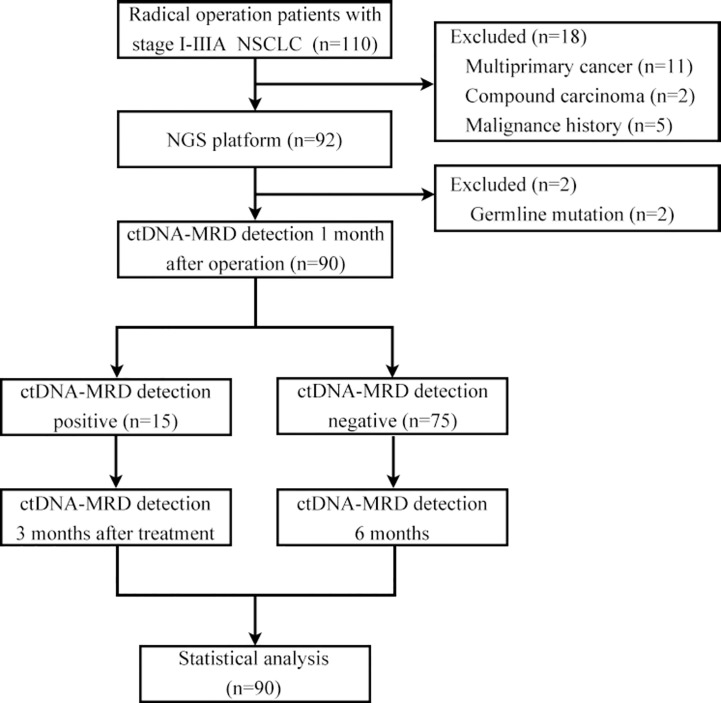
The retrospective collection and analysis were carried out on the clinical data of ninety individuals diagnosed with stage I-IIIA NSCLC who underwent radical resection of lung cancer at our medical facility between January 2021 and March 2022. The comprehensive investigation encompassed an evaluation of multiple aspects including the MRD status, demographic information, clinicopathological characteristics, results from genetic testing, the tumor immune microenvironment, and treatment effects.
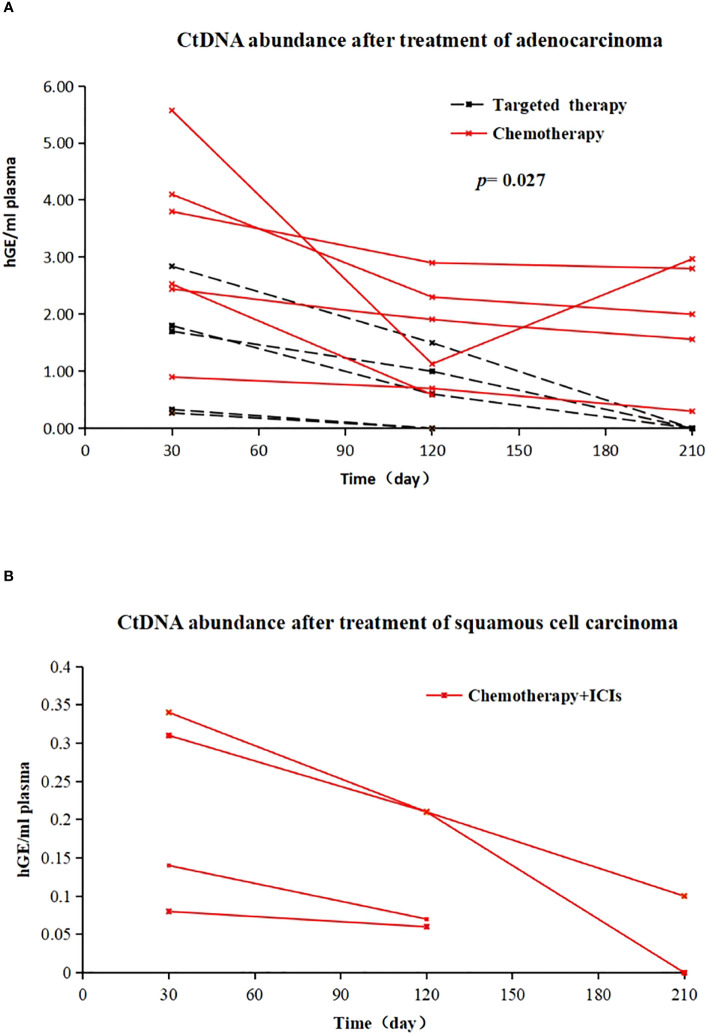
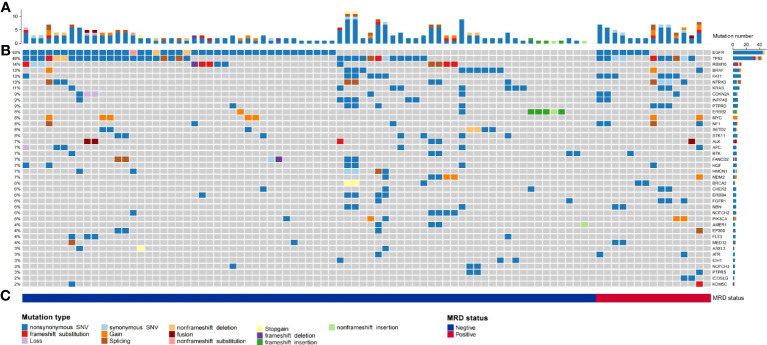
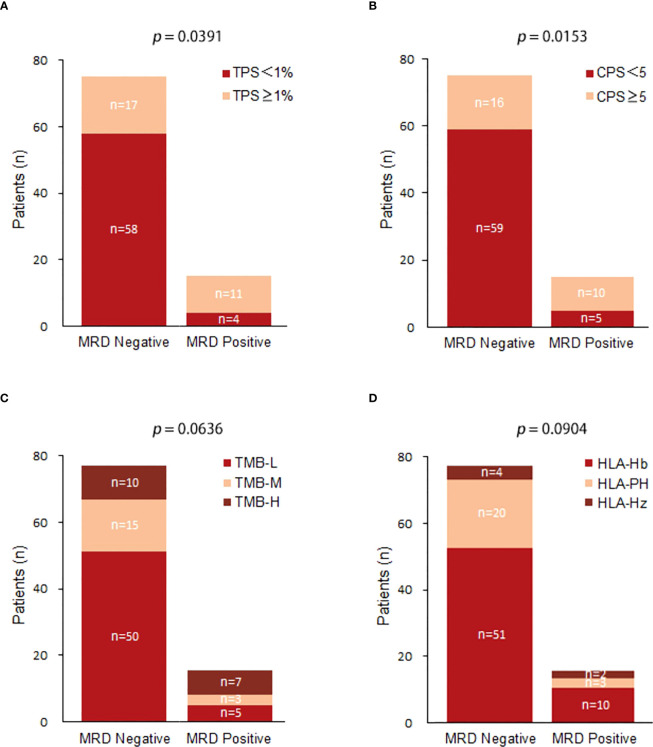
No significant associations were observed between postoperative MRD status and variables such as gender, age, smoking history, pathological type, and gene mutations. However, a statistically significant correlation was found between MRD positivity and T (tumor diameter > 3 cm) as well as N (lymph node metastasis) stages (p values of 0.004 and 0.003, respectively). It was observed that higher proportions of micropapillary and solid pathological subtypes within lung adenocarcinoma were associated with increased rates of MRD-positivity after surgery (p = 0.007;0.005). MRD positivity demonstrated a correlation with the presence of vascular invasion (p = 0.0002). For the expression of programmed cell death ligand 1 (PD-L1), tumour positive score (TPS) ≥ 1% and combined positive score (CPS) ≥ 5 were correlated with postoperative MRD status (p value distribution was 0.0391 and 0.0153). In terms of ctDNA elimination, among patients identified as having postoperative MRD and lacking gene mutations, postoperative adjuvant targeted therapy demonstrated superiority over chemotherapy (p = 0.027).
Postoperative ctDNA-MRD status in NSCLC patients exhibits correlations with the size of the primary tumor, lymph node metastasis, pathological subtype of lung adenocarcinoma, presence of vascular invasion, as well as TPS and CPS values for PD-L1 expression; in postoperative patients with MRD, the effectiveness of adjuvant EGFR-TKI targeted therapy exceeds that of chemotherapy, as evidenced by the elimination of ctDNA.
本研究的主要目的是深入探究确诊为I-IIIA期非小细胞肺癌(NSCLC)的患者术后分子残留疾病(MRD)状态与临床病理特征、基因突变、肿瘤免疫微环境及治疗效果之间的复杂关联。
对2021年1月至2022年3月期间在我院接受肺癌根治性切除术的90例确诊为I-IIIA期NSCLC患者的临床资料进行回顾性收集和分析。全面调查包括对MRD状态、人口统计学信息、临床病理特征、基因检测结果、肿瘤免疫微环境及治疗效果等多个方面的评估。
术后MRD状态与性别、年龄、吸烟史、病理类型及基因突变等变量之间未观察到显著关联。然而,发现MRD阳性与T(肿瘤直径>3 cm)及N(淋巴结转移)分期之间存在统计学显著相关性(p值分别为0.004和0.003)。观察到肺腺癌中微乳头和实性病理亚型比例较高与术后MRD阳性率增加相关(p = 0.007;0.005)。MRD阳性与血管侵犯的存在相关(p = 0.0002)。对于程序性细胞死亡配体1(PD-L1)的表达,肿瘤阳性评分(TPS)≥1%和联合阳性评分(CPS)≥5与术后MRD状态相关(p值分布分别为0.0391和0.0153)。在ctDNA清除方面,在确定为术后MRD且缺乏基因突变的患者中,术后辅助靶向治疗优于化疗(p = 0.027)。
NSCLC患者术后ctDNA-MRD状态与原发肿瘤大小、淋巴结转移、肺腺癌病理亚型、血管侵犯的存在以及PD-L1表达的TPS和CPS值相关;在术后MRD患者中,辅助EGFR-TKI靶向治疗的效果超过化疗,ctDNA的清除证明了这一点。