Cancer Gene Therapy Group, Translational Immunology Research Program, Faculty of Medicine, University of Helsinki, Helsinki, Finland.
TILT Biotherapeutics Ltd, Helsinki, Finland.
Oncoimmunology. 2023 Aug 2;12(1):2241710. doi: 10.1080/2162402X.2023.2241710. eCollection 2023.
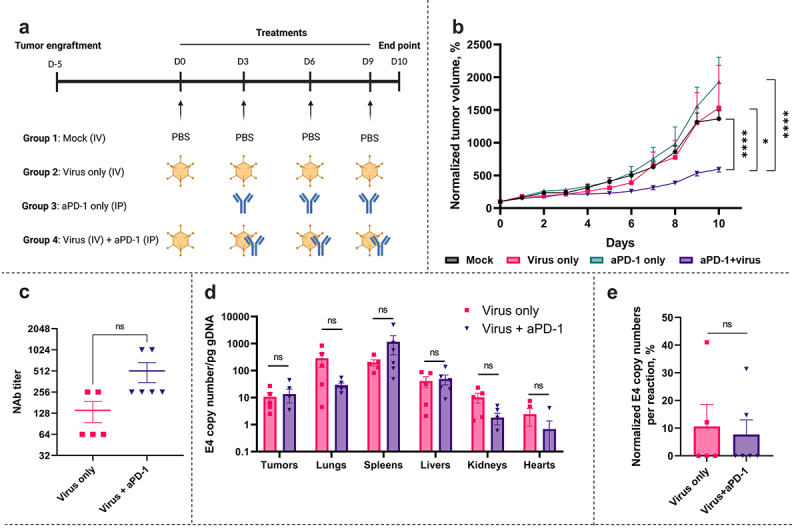
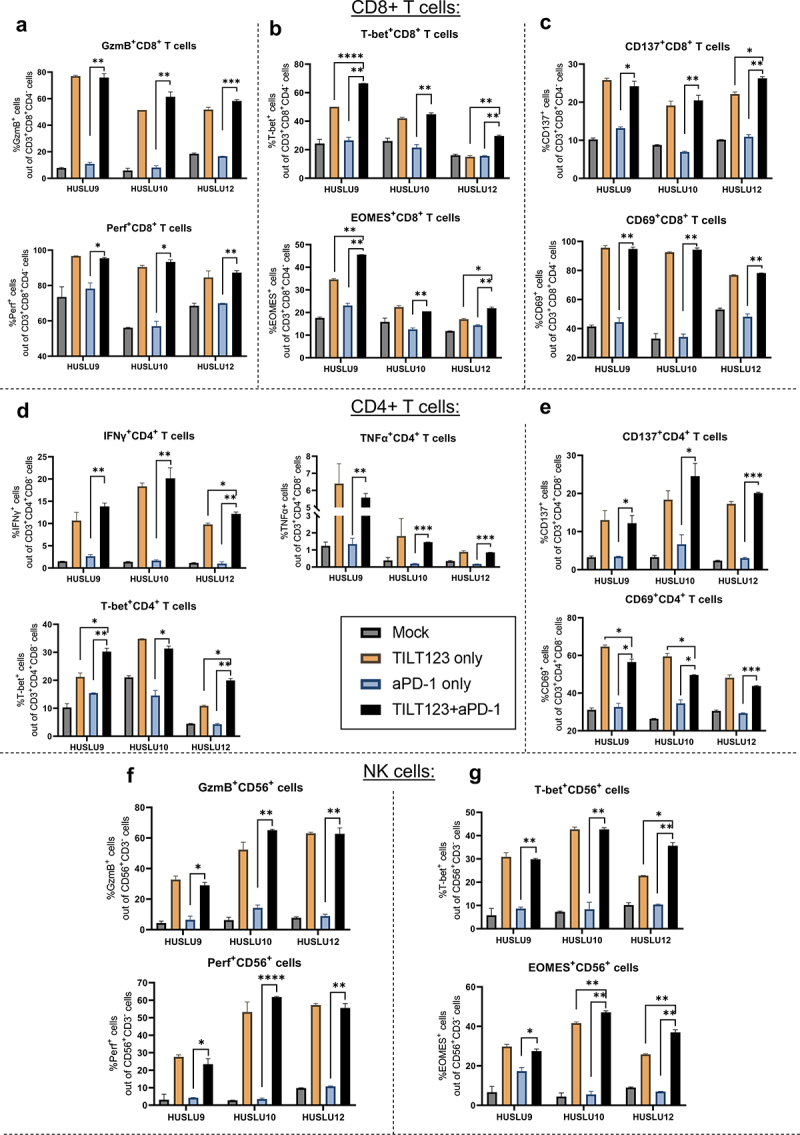
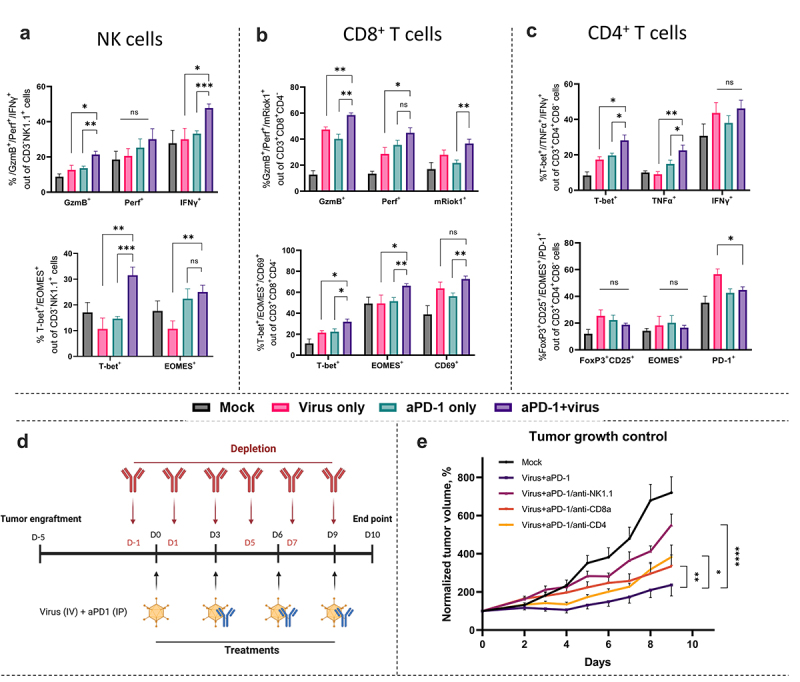
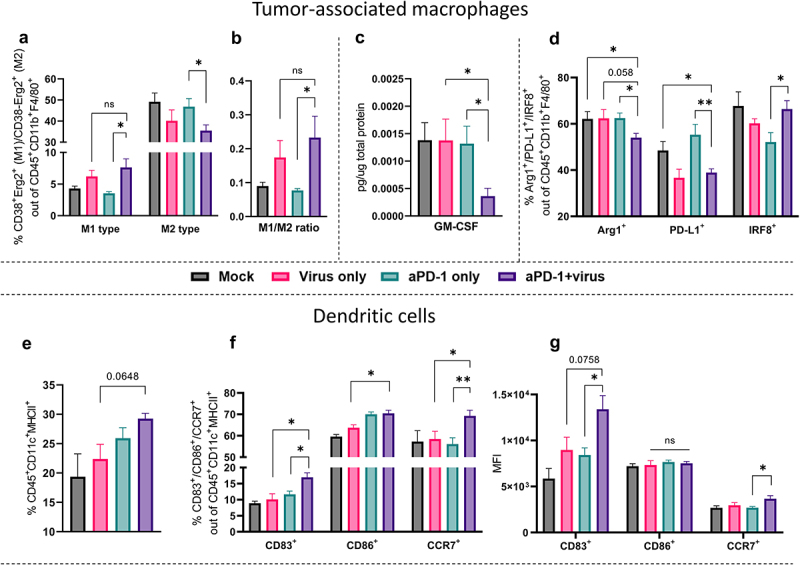
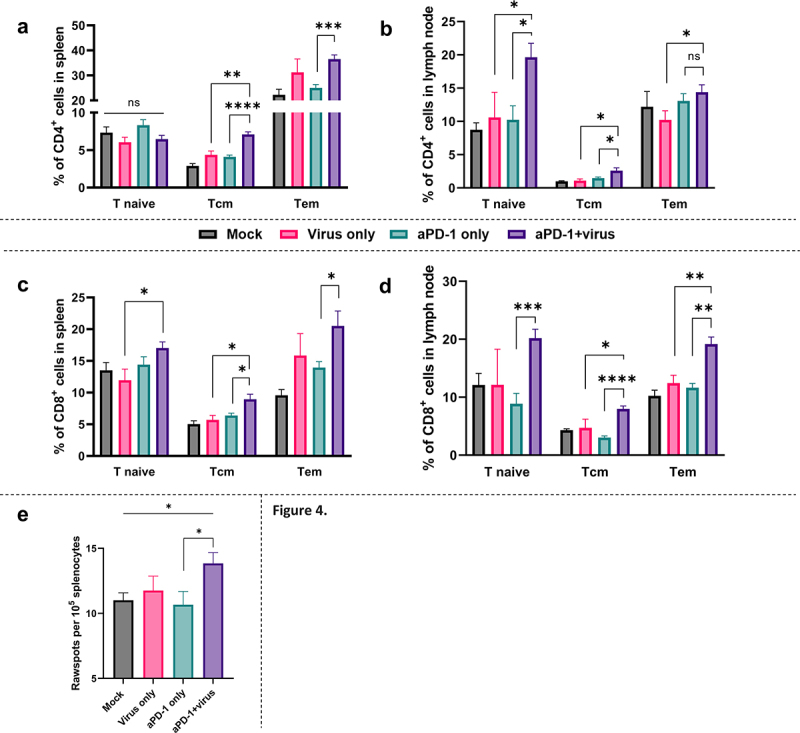
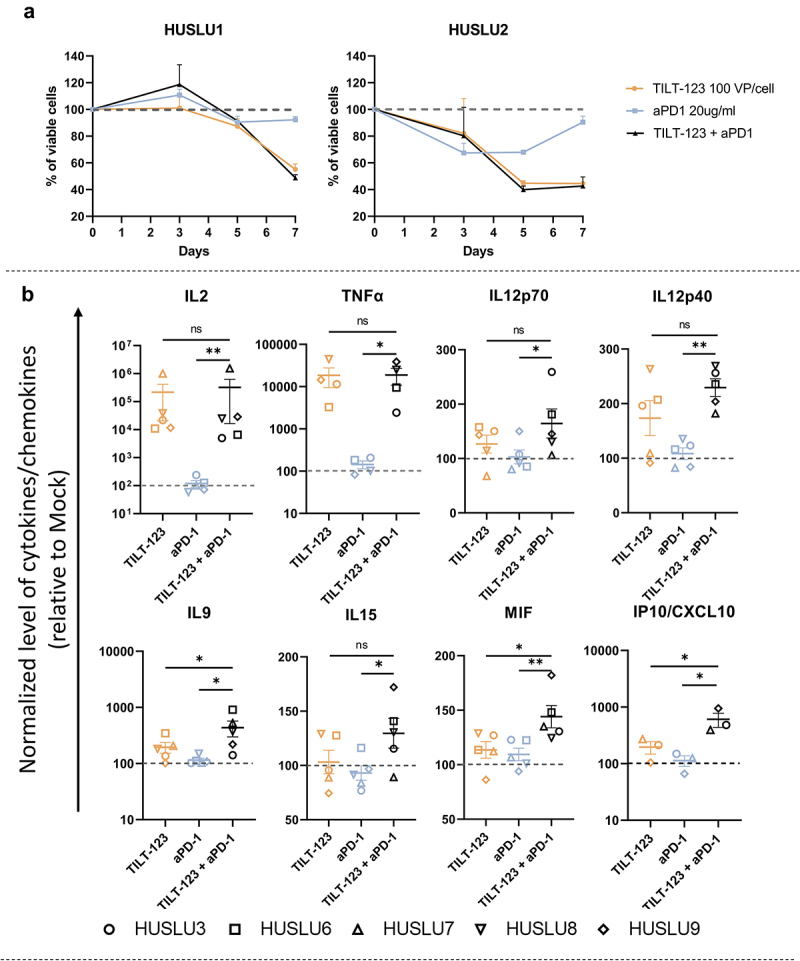
Lung cancer remains among the most difficult-to-treat malignancies and is the leading cause of cancer-related deaths worldwide. The introduction of targeted therapies and checkpoint inhibitors has improved treatment outcomes; however, most patients with advanced-stage non-small cell lung cancer (NSCLC) eventually fail these therapies. Therefore, there is a major unmet clinical need for checkpoint refractory/resistant NSCLC. Here, we tested the combination of aPD-1 and adenovirus armed with TNFα and IL-2 (Ad5-CMV-mTNFα/mIL-2) in an immunocompetent murine NSCLC model. Moreover, although local delivery has been standard for virotherapy, treatment was administered intravenously to facilitate clinical translation and putative routine use. We showed that treatment of tumor-bearing animals with aPD-1 in combination with intravenously injected armed adenovirus significantly decreased cancer growth, even in the presence of neutralizing antibodies. We observed an increased frequency of cytotoxic tumor-infiltrating lymphocytes, including tumor-specific cells. Combination treatment led to a decreased percentage of immunosuppressive tumor-associated macrophages and an improvement in dendritic cell maturation. Moreover, we observed expansion of the tumor-specific memory T cell compartment in secondary lymphoid organs in the group that received aPD-1 with the virus. However, although the non-replicative Ad5-CMV-mTNFα/mIL-2 virus allows high transgene expression in the murine model, it does not fully reflect the clinical outcome in humans. Thus, we complemented our findings using NSCLC ex vivo models fully permissive for the TNFα and IL-2- armed oncolytic adenovirus TILT-123. Overall, our data demonstrate the ability of systemically administered adenovirus armed with TNFα and IL-2 to potentiate the anti-tumor efficacy of aPD-1 and warrant further investigation in clinical trials.
肺癌仍然是最难治疗的恶性肿瘤之一,也是全球癌症相关死亡的主要原因。靶向治疗和检查点抑制剂的引入改善了治疗效果;然而,大多数晚期非小细胞肺癌(NSCLC)患者最终会对这些疗法产生耐药性。因此,临床上迫切需要治疗检查点耐药/难治性 NSCLC。在这里,我们在免疫功能正常的 NSCLC 小鼠模型中测试了抗 PD-1 抗体联合携带 TNFα 和 IL-2 的腺病毒(Ad5-CMV-mTNFα/mIL-2)的疗效。此外,虽然局部给药一直是病毒疗法的标准治疗方法,但为了便于临床转化和常规使用,我们采用了静脉给药的方式。我们发现,在肿瘤荷瘤动物中,抗 PD-1 抗体联合静脉注射武装腺病毒治疗可显著抑制肿瘤生长,即使存在中和抗体也是如此。我们观察到细胞毒性肿瘤浸润淋巴细胞的频率增加,包括肿瘤特异性细胞。联合治疗可降低免疫抑制性肿瘤相关巨噬细胞的比例,并改善树突状细胞成熟。此外,我们观察到接受 aPD-1 和病毒治疗的动物的次级淋巴器官中肿瘤特异性记忆 T 细胞区室扩大。然而,虽然非复制型 Ad5-CMV-mTNFα/mIL-2 病毒可在小鼠模型中实现高转基因表达,但它并不能完全反映人类的临床结果。因此,我们使用完全允许 TNFα 和 IL-2 武装溶瘤腺病毒 TILT-123 的 NSCLC 体外模型补充了我们的研究结果。总之,我们的数据表明,系统给予携带 TNFα 和 IL-2 的武装腺病毒能够增强 aPD-1 的抗肿瘤疗效,值得在临床试验中进一步研究。