Tsai Caressa N, Massicotte Marie-Ange, MacNair Craig R, Perry Jordyn N, Brown Eric D, Coombes Brian K
Department of Biochemistry & Biomedical Sciences, McMaster University Hamilton ON L8S 4L8 Canada
Michael G. DeGroote Institute for Infectious Disease Research Hamilton ON Canada.
RSC Chem Biol. 2023 Jul 8;4(8):600-612. doi: 10.1039/d3cb00014a. eCollection 2023 Aug 3.
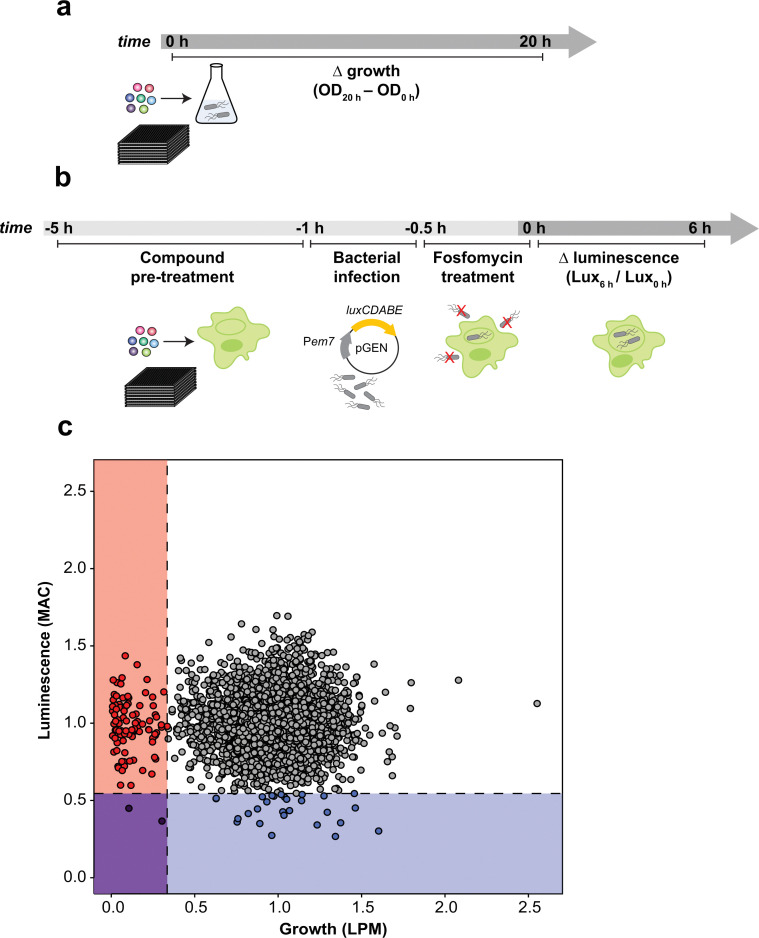
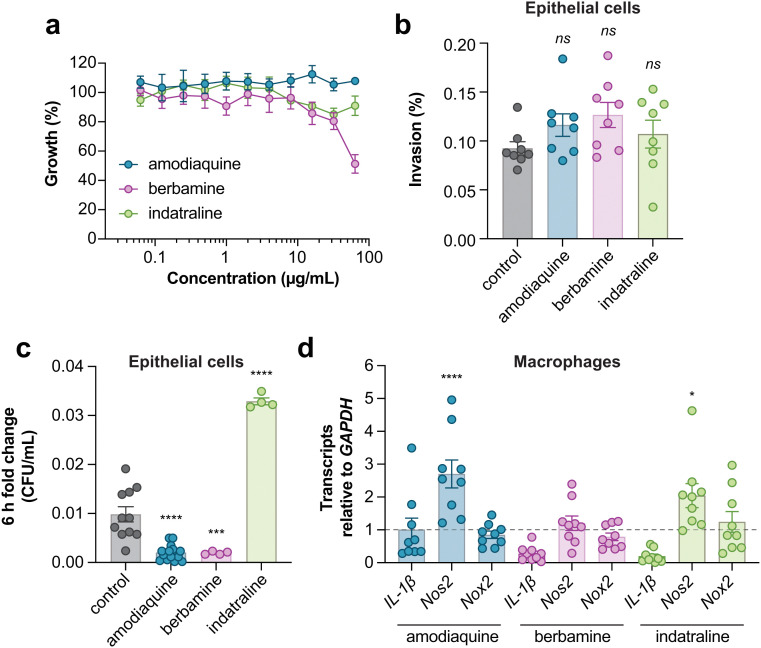
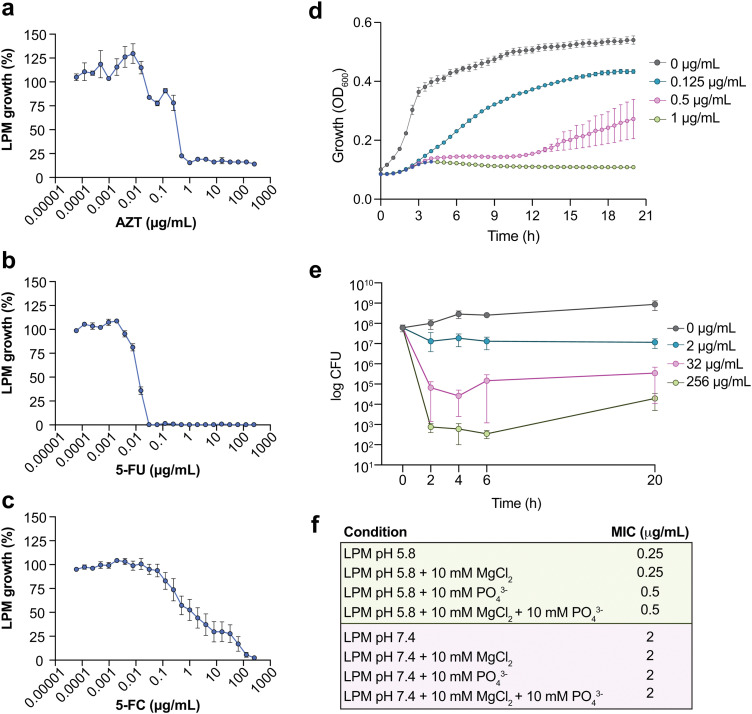
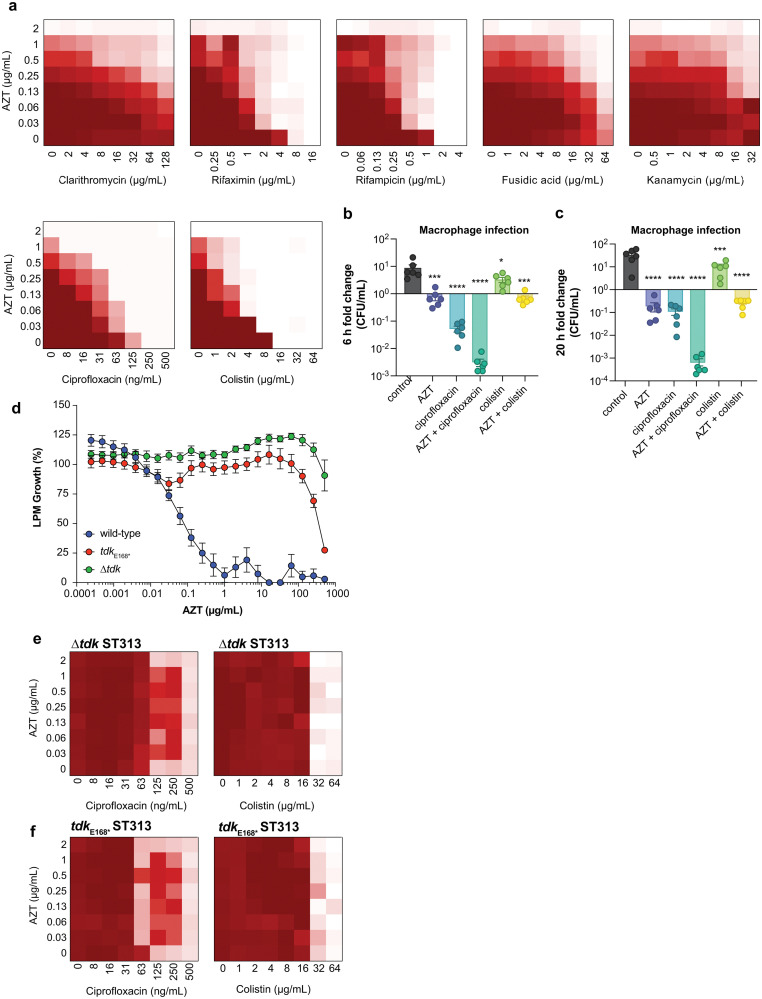
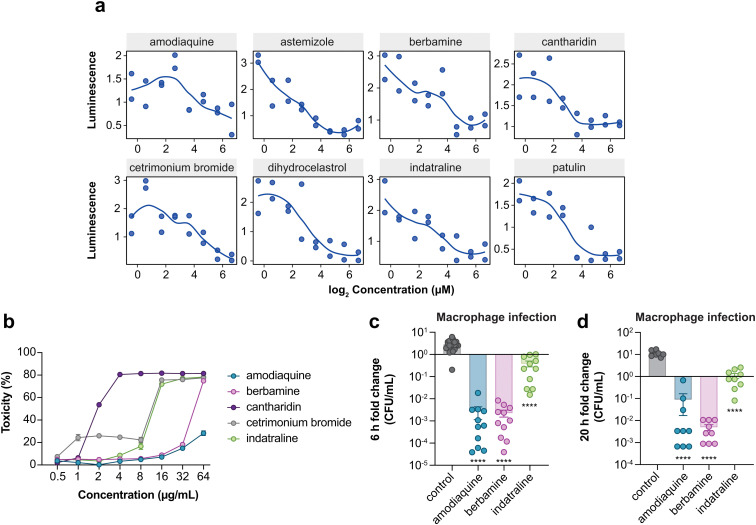
Bloodstream infections caused by invasive, non-typhoidal (iNTS) are a major global health concern, particularly in Africa where the pathogenic variant of Typhimurium sequence type (ST) 313 is dominant. Unlike Typhimurium strains that cause gastroenteritis, iNTS strains cause bloodstream infections and are resistant to multiple first-line antibiotics, thus limiting current treatment options. Here, we developed and implemented multiple small molecule screens under physiological, infection-relevant conditions to reveal chemical sensitivities in ST313 and to identify host-directed therapeutics as entry points to drug discovery to combat the clinical burden of iNTS. Screening ST313 iNTS under host-mimicking growth conditions identified 92 compounds with antimicrobial activity despite inherent multidrug resistance. We characterized the antimicrobial activity of the nucleoside analog 3'-azido-3'-deoxythymidine as an exemplary compound from this screen, which depended on bacterial thymidine kinase activity for antimicrobial activity. In a companion macrophage-based screening platform designed to enrich for host-directed therapeutics, we identified three compounds (amodiaquine, berbamine, and indatraline) as actives that required the presence of host cells for antibacterial activity. These three compounds had antimicrobial activity only in the presence of host cells that significantly inhibited intracellular ST313 iNTS replication in macrophages. This work provides evidence that despite high invasiveness and multidrug resistance, ST313 iNTS remains susceptible to unconventional drug discovery approaches.
由侵袭性非伤寒型(iNTS)引起的血流感染是一个重大的全球健康问题,尤其是在非洲,鼠伤寒血清型(ST)313的致病变体占主导地位。与引起肠胃炎的鼠伤寒菌株不同,iNTS菌株会导致血流感染,并且对多种一线抗生素耐药,从而限制了当前的治疗选择。在此,我们在生理、感染相关条件下开展并实施了多个小分子筛选,以揭示ST313中的化学敏感性,并确定宿主导向疗法作为药物发现的切入点,以应对iNTS的临床负担。在模拟宿主生长条件下筛选ST313 iNTS,鉴定出92种具有抗菌活性的化合物,尽管其具有固有的多重耐药性。我们将核苷类似物3'-叠氮基-3'-脱氧胸苷的抗菌活性作为该筛选中的一个示例性化合物进行了表征,其抗菌活性依赖于细菌胸苷激酶活性。在一个旨在富集宿主导向疗法的基于巨噬细胞的配套筛选平台中,我们鉴定出三种化合物(阿莫地喹、小檗胺和茚达曲林)为活性物质,它们需要宿主细胞的存在才能发挥抗菌活性。这三种化合物仅在宿主细胞存在时具有抗菌活性,可显著抑制巨噬细胞内ST313 iNTS的复制。这项工作提供了证据,表明尽管ST313 iNTS具有高侵袭性和多重耐药性,但它仍然对非常规药物发现方法敏感。