Neurological Disorders Research Center, Qatar Biomedical Research Institute (QBRI), Hamad Bin Khalifa University (HBKU), Qatar Foundation, Doha, Qatar.
College of Health & Life Sciences (CHLS), Hamad Bin Khalifa University (HBKU), Qatar Foundation, Doha, Qatar.
Mol Neurobiol. 2023 Dec;60(12):7297-7308. doi: 10.1007/s12035-023-03527-0. Epub 2023 Aug 8.
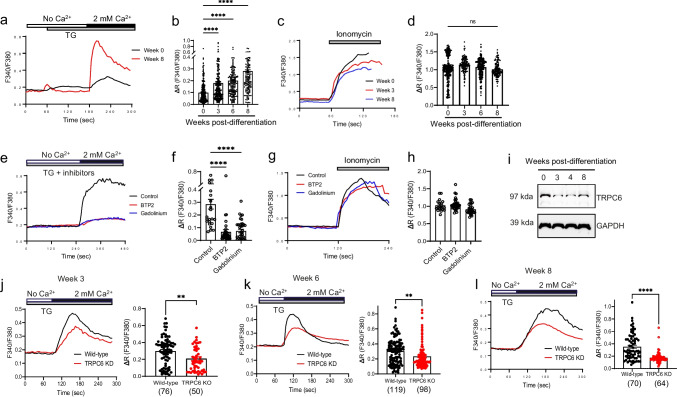
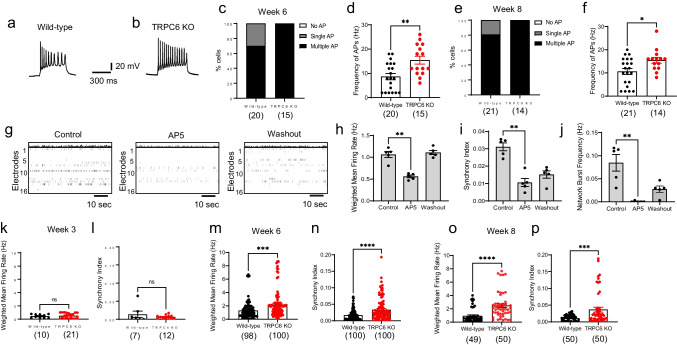
Autism spectrum disorder (ASD) is a complex and heterogeneous neurodevelopmental disorder linked to numerous rare, inherited, and arising de novo genetic variants. ASD often co-occurs with attention-deficit hyperactivity disorder and epilepsy, which are associated with hyperexcitability of neurons. However, the physiological and molecular mechanisms underlying hyperexcitability in ASD remain poorly understood. Transient receptor potential canonical-6 (TRPC6) is a Ca-permeable cation channel that regulates store-operated calcium entry (SOCE) and is a candidate risk gene for ASD. Using human pluripotent stem cell (hPSC)-derived cortical neurons, single-cell calcium imaging, and electrophysiological recording, we show that TRPC6 knockout (KO) reduces SOCE signaling and leads to hyperexcitability of neurons by increasing action potential frequency and network burst frequency. Our data provide evidence that reduction of SOCE by TRPC6 KO results in neuronal hyperexcitability, which we hypothesize is an important contributor to the cellular pathophysiology underlying hyperactivity in some ASD.
自闭症谱系障碍(ASD)是一种复杂的异质性神经发育障碍,与许多罕见的、遗传性的、新出现的从头遗传变异有关。ASD 常与注意力缺陷多动障碍和癫痫共病,这些疾病与神经元的过度兴奋有关。然而,ASD 中过度兴奋的生理和分子机制仍知之甚少。瞬时受体电位经典型-6(TRPC6)是一种钙通透阳离子通道,调节钙库操纵的钙内流(SOCE),是 ASD 的候选风险基因。我们使用人多能干细胞(hPSC)衍生的皮质神经元、单细胞钙成像和电生理记录,表明 TRPC6 敲除(KO)减少 SOCE 信号,并通过增加动作电位频率和网络爆发频率导致神经元过度兴奋。我们的数据提供了证据,表明 TRPC6 KO 通过减少 SOCE 导致神经元过度兴奋,我们假设这是 ASD 中某些过度活跃的细胞病理生理学的一个重要贡献因素。