Janelia Research Campus, Howard Hughes Medical Institute, Ashburn, VA, 20148, USA.
Department of Diagnostic Radiology and Nuclear Medicine, University of Maryland School of Medicine, Baltimore, MD, 21201, USA.
Nat Commun. 2023 Aug 8;14(1):4756. doi: 10.1038/s41467-023-40444-1.
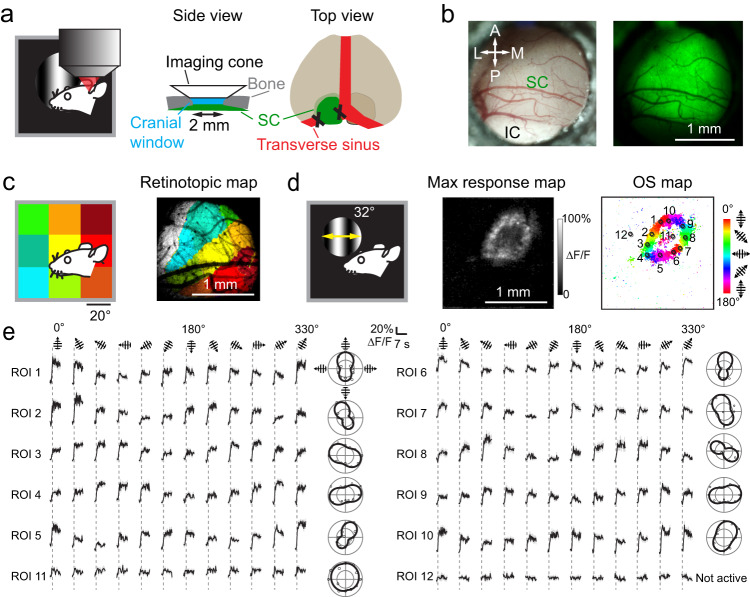
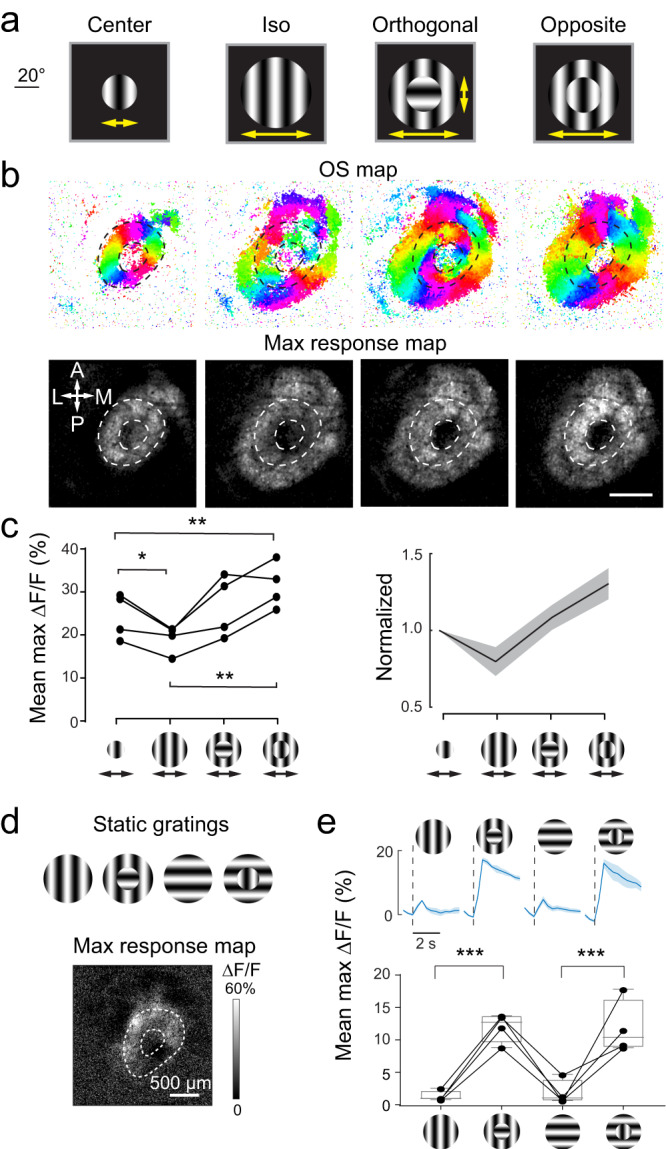
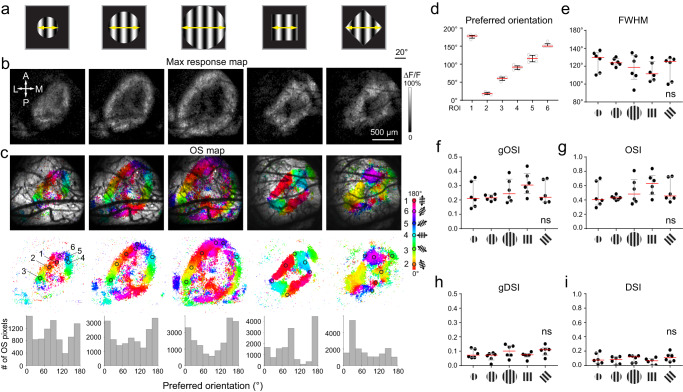
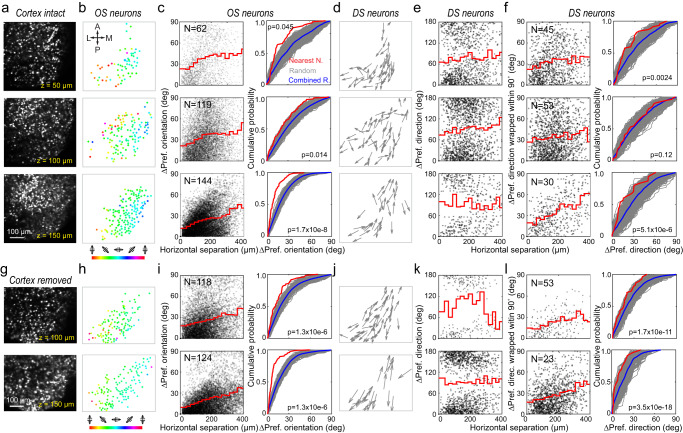
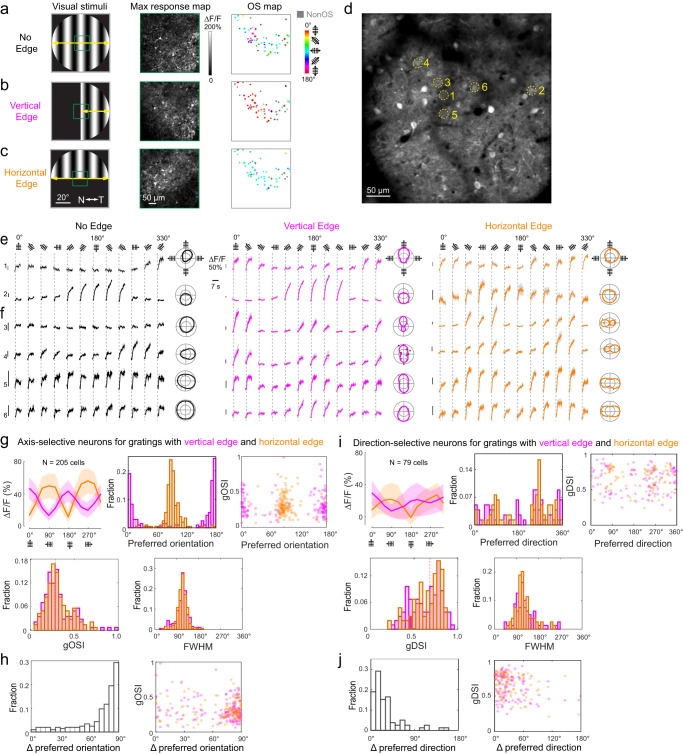
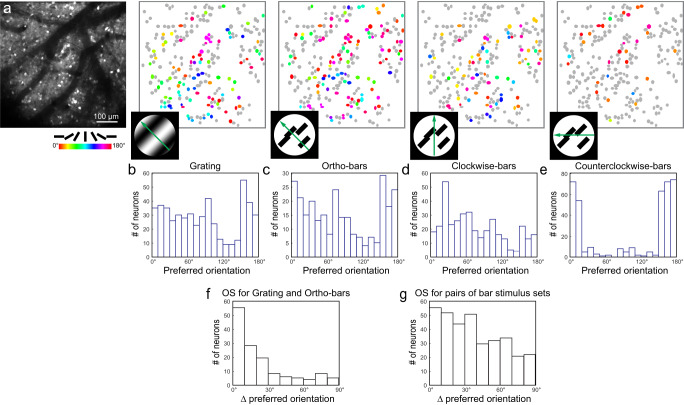
Orientation columns exist in the primary visual cortex (V1) of cat and primates but not mouse. Intriguingly, some recent studies reported the presence of orientation and direction columns in the mouse superficial superior colliculus (sSC), while others reported a lack of columnar organization therein. Using in vivo calcium imaging of sSC in the awake mouse brain, we found that the presence of columns is highly stimulus dependent. Specifically, we observed orientation and direction columns formed by sSC neurons retinotopically mapped to the edge of grating stimuli. For both excitatory and inhibitory neurons in sSC, orientation selectivity can be induced by the edge with their preferred orientation perpendicular to the edge orientation. Furthermore, we found that this edge-induced orientation selectivity is associated with saliency encoding. These findings indicate that the tuning properties of sSC neurons are not fixed by circuit architecture but rather dependent on the spatiotemporal properties of the stimulus.
在猫和灵长类动物的初级视觉皮层(V1)中存在方位柱,但在小鼠中不存在。有趣的是,一些最近的研究报告称在小鼠浅层上丘(sSC)中存在方位和方向柱,而另一些研究则报告称其中不存在柱状组织。使用清醒小鼠大脑中 sSC 的活体钙成像,我们发现柱的存在高度依赖于刺激。具体来说,我们观察到由 sSC 神经元形成的方位和方向柱,这些神经元在视网膜上映射到光栅刺激的边缘。对于 sSC 中的兴奋性和抑制性神经元,具有与边缘方向垂直的最佳方向的边缘可以诱导其方位选择性。此外,我们发现这种边缘诱导的方位选择性与显着性编码有关。这些发现表明,sSC 神经元的调谐特性不是由电路结构决定的,而是取决于刺激的时空特性。