Department of Ophthalmology, University Hospital of Bonn, Bonn, Germany.
Department of Psychosomatic Medicine and Psychotherapy, University of Cologne, Cologne, Germany.
BMJ Open Ophthalmol. 2023 Aug;8(1). doi: 10.1136/bmjophth-2023-001334.
Strabismus can have a great negative impact on the quality of life and the well-being of affected patients. In the past, these aspects were often neglected and, compared with somatic functioning, placed in the background. The aim of our study is to elicit factors influencing satisfaction with strabismus surgery, quality of life and expectations of surgery in order to better predict who will benefit the most and who may need further support.
We made a selection of suitable questionnaires to assess psychosocial aspects of strabismus and decided for Adult Strabismus 20 Questionnaire, Amblyopia and Strabismus Questionnaire, Diplopia Questionnaire, Expectations of Strabismus Surgery Questionnaire and Hospital Anxiety and Depression Scale. We then translated these measures (if not available in German). The patients filled out these forms as part of their preoperative orthoptic and ophthalmological assessment as well as approximately 3 months after strabismus surgery.
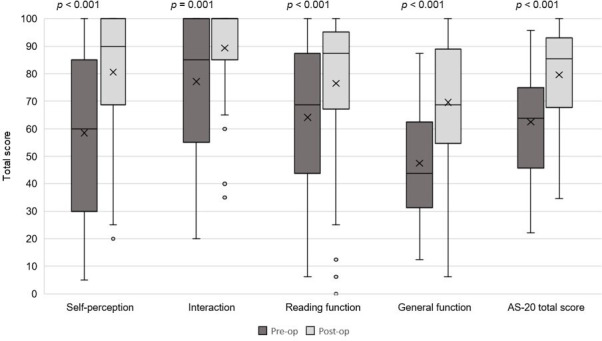
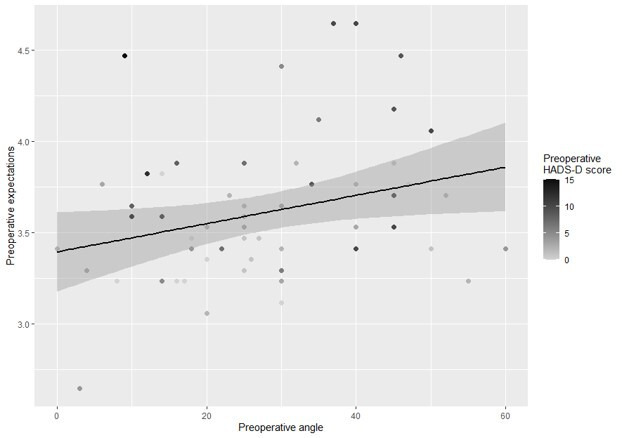
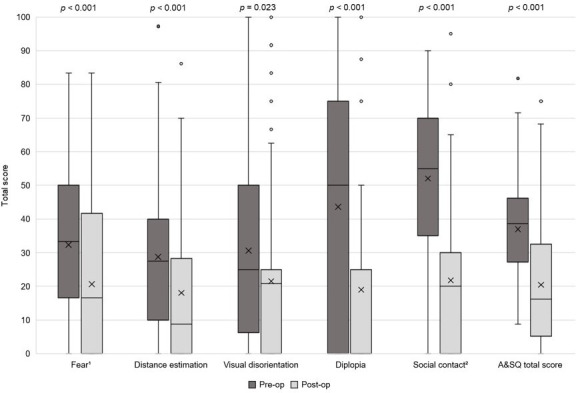
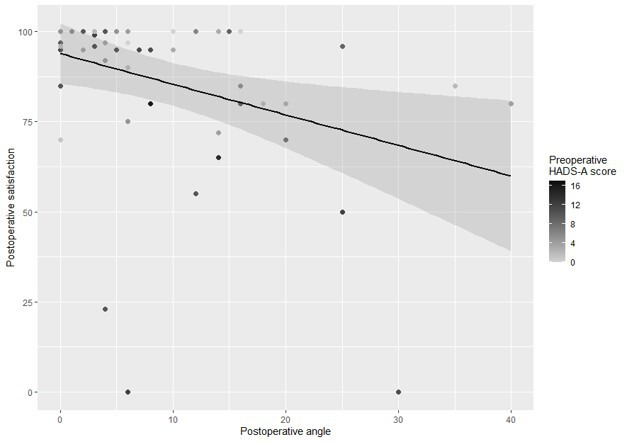
We enrolled 59 patients in this study. Postoperative strabismus-related quality of life was higher after surgery and anxiety and depression levels were lower. Satisfaction with surgery was lower with higher postoperative angle and diplopia; the latter was also a determinant of lower postoperative quality of life. Higher expectations of strabismus surgery were present with higher depression levels and higher preoperative strabismus angle.
Our data indicate that strabismus surgery may cause a significant improvement in several psychosocial domains. There is evidence that psychosocial factors can have significant impact on expectations with surgery. Hence, it is important to consider mental health aspects of this disease in order to treat patients in the best possible way.
斜视会对患者的生活质量和幸福感产生重大负面影响。过去,这些方面经常被忽视,与躯体功能相比处于次要地位。我们的研究旨在探讨影响斜视手术满意度、生活质量和手术预期的因素,以便更好地预测谁将受益最大,谁可能需要进一步的支持。
我们选择了一些合适的问卷来评估斜视的社会心理方面,并决定使用成人斜视 20 问卷、弱视和斜视问卷、复视问卷、斜视手术预期问卷和医院焦虑抑郁量表。然后,我们翻译了这些措施(如果没有德语版本的话)。患者在术前斜视和眼科评估时以及斜视手术后大约 3 个月填写这些表格。
本研究共纳入 59 例患者。手术后斜视相关的生活质量更高,焦虑和抑郁水平更低。术后斜视角度和复视越大,对手术的满意度越低;后者也是术后生活质量较低的决定因素。斜视手术的预期越高,抑郁水平越高,术前斜视角度越大。
我们的数据表明,斜视手术可能会显著改善多个社会心理领域。有证据表明,社会心理因素可能对手术预期产生重大影响。因此,为了以最佳方式治疗患者,了解该疾病的心理健康方面很重要。