Ozga Andrew T, Ottoni Claudio
Nova Southeastern University, Halmos College of Arts and Sciences, Fort Lauderdale, FL, 33314, USA.
DANTE - Diet and ANcient TEchnology Laboratory, Department of Oral and Maxillo-Facial Sciences, "Sapienza" University of Rome, 00161, Rome, Italy.
Quat Int. 2023 Apr 20;653-654:47-52. doi: 10.1016/j.quaint.2021.06.012.
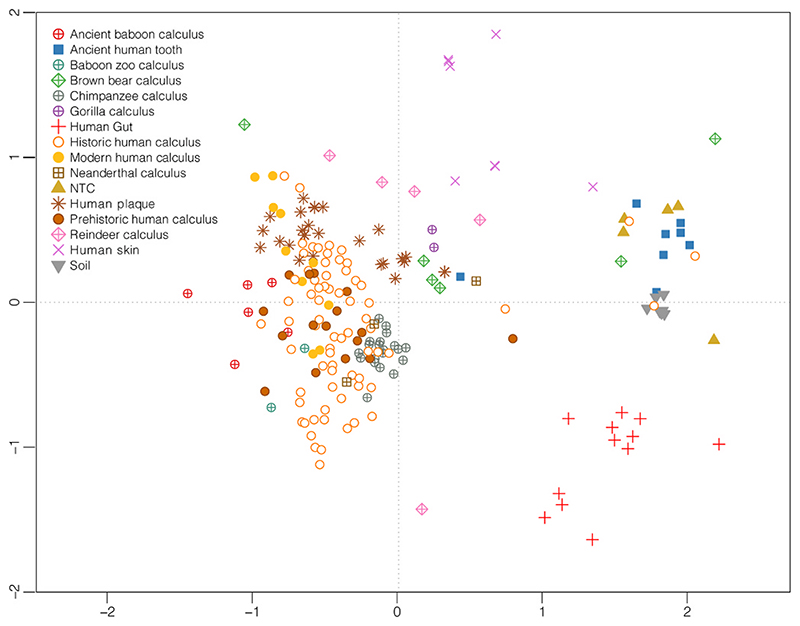
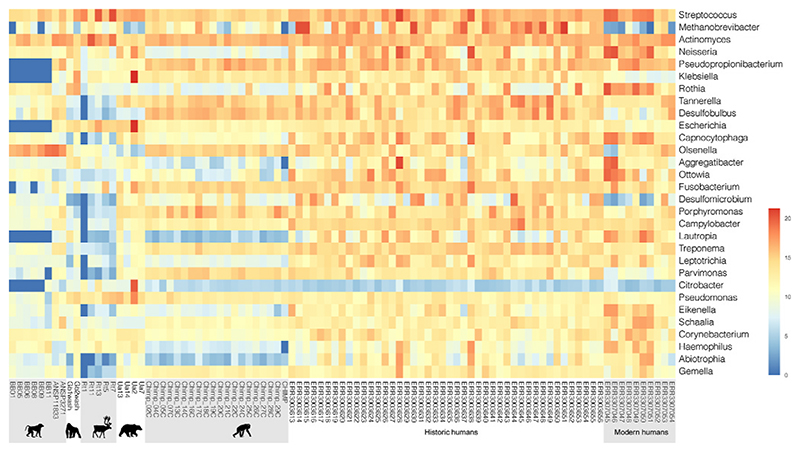
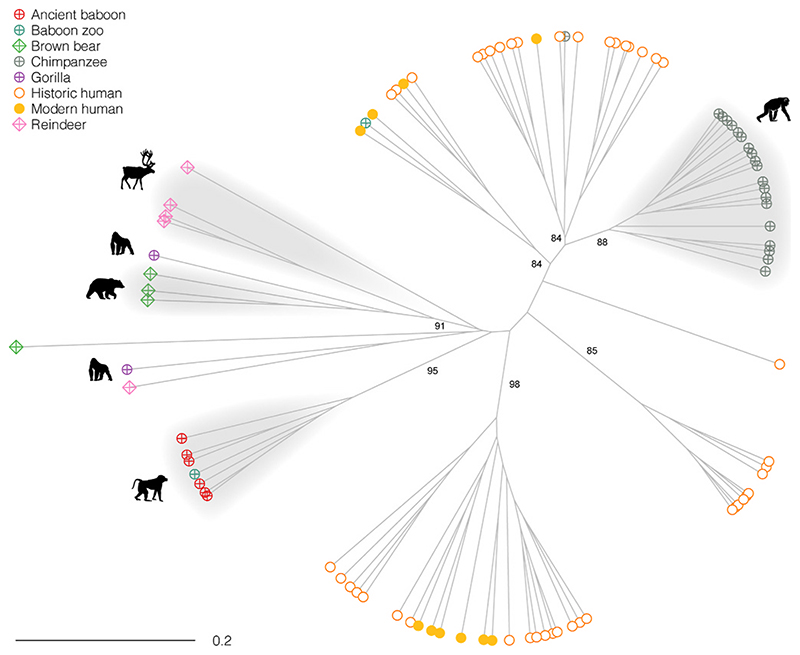
The field of dental calculus research has exploded in recent years, predominantly due to the multitude of studies related to human genomes and oral pathogens. Despite having a subset of these studies devoted to non-human primates, little progress has been made in the distribution of oral pathogens across domestic and wild animal populations. This overlooked avenue of research is particularly important at present when many animal populations with the potentiality for zoonotic transmission continue to reside in close proximity to human groups due to reasons such as deforestation and climatic impacts on resource availability. Here, we analyze all previously available published oral microbiome data recovered from the skeletal remains of animals, all of which belong to the Mammalia class. Our genus level results emphasize the tremendous diversity of oral ecologies across mammals in spite of the clustering based primarily on host species. We also discuss the caveats and flaws in analyzing ancient animal oral microbiomes at the species level of classification. Lastly, we assess the benefits, challenges, and gaps in the current knowledge of dental calculus research within animals and postulate the future of the field as a whole.
近年来,牙结石研究领域发展迅速,这主要归功于众多与人类基因组和口腔病原体相关的研究。尽管有一部分研究致力于非人类灵长类动物,但在口腔病原体在 domestic 和野生动物群体中的分布方面进展甚微。目前,这条被忽视的研究途径尤为重要,因为由于森林砍伐和气候对资源可用性的影响等原因,许多具有人畜共患病传播潜力的动物群体继续与人类群体近距离生活。在这里,我们分析了所有先前从动物骨骼遗骸中获取的已发表的口腔微生物组数据,所有这些动物都属于哺乳纲。我们在属水平上的结果强调了尽管主要基于宿主物种聚类,但哺乳动物口腔生态具有巨大的多样性。我们还讨论了在物种分类水平上分析古代动物口腔微生物组时的注意事项和缺陷。最后,我们评估了当前动物牙结石研究知识中的益处、挑战和差距,并推测了该领域的整体未来。