Cabotaje Princess R, Walter Kaija, Zamader Afridi, Huang Ping, Ho Felix, Land Henrik, Senger Moritz, Berggren Gustav
Molecular Biomimetics, Department of Chemistry, Ångström Laboratory, Uppsala University, Box 523, SE-75120 Uppsala, Sweden.
ACS Catal. 2023 Jul 26;13(15):10435-10446. doi: 10.1021/acscatal.3c02314. eCollection 2023 Aug 4.
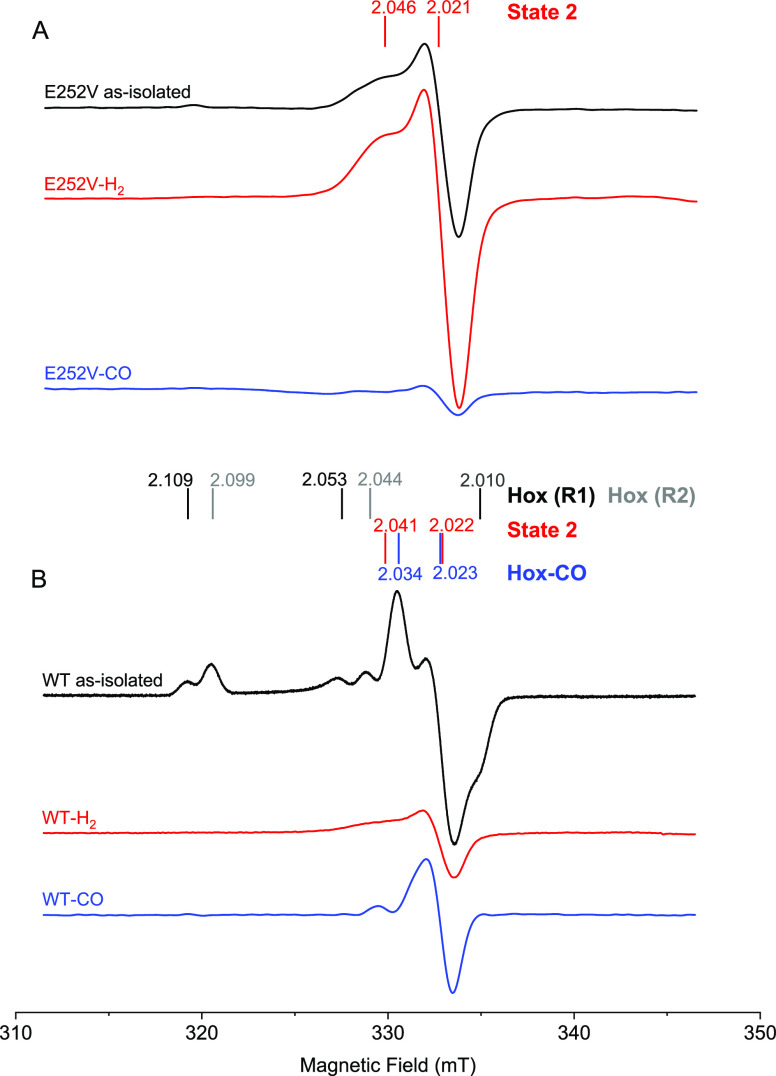
[FeFe] hydrogenases, metalloenzymes catalyzing proton/dihydrogen interconversion, have attracted intense attention due to their remarkable catalytic properties and (bio-)technological potential for a future hydrogen economy. In order to unravel the factors enabling their efficient catalysis, both their unique organometallic cofactors and protein structural features, i.e., "outer-coordination sphere" effects have been intensively studied. These structurally diverse enzymes are divided into distinct phylogenetic groups, denoted as Group A-D. Prototypical Group A hydrogenases display high turnover rates (10-10 s). Conversely, the sole characterized Group D representative, HydS (HydS), shows relatively low catalytic activity (specific activity 10 μmol H mg min) and has been proposed to serve a H-sensory function. The various groups of [FeFe] hydrogenase share the same catalytic cofactor, the H-cluster, and the structural factors causing the diverging reactivities of Group A and D remain to be elucidated. In the case of the highly active Group A enzymes, a well-defined proton transfer pathway (PTP) has been identified, which shuttles H between the enzyme surface and the active site. In Group D hydrogenases, this conserved pathway is absent. Here, we report on the identification of highly conserved amino acid residues in Group D hydrogenases that constitute a possible alternative PTP. We varied two proposed key amino acid residues of this pathway (E252 and E289, HydS numbering) via site-directed mutagenesis and analyzed the resulting variants via biochemical and spectroscopic methods. All variants displayed significantly decreased H-evolution and -oxidation activities. Additionally, the variants showed two redox states that were not characterized previously. These findings provide initial evidence that these amino acid residues are central to the putative PTP of Group D [FeFe] hydrogenase. Since the identified residues are highly conserved in Group D exclusively, our results support the notion that the PTP is not universal for different phylogenetic groups in [FeFe] hydrogenases.
[铁铁]氢化酶是催化质子/氢气相互转化的金属酶,因其卓越的催化性能以及在未来氢能经济中的(生物)技术潜力而备受关注。为了阐明使其高效催化的因素,人们对其独特的有机金属辅因子和蛋白质结构特征,即“外部配位球”效应进行了深入研究。这些结构多样的酶被分为不同的系统发育组,标记为A - D组。典型的A组氢化酶表现出高周转率(10 - 10 s)。相反,唯一已表征的D组代表HydS,显示出相对较低的催化活性(比活性10 μmol H mg min),并被认为具有氢传感功能。不同组的[铁铁]氢化酶共享相同的催化辅因子——H簇,而导致A组和D组反应活性不同的结构因素仍有待阐明。对于高活性的A组酶,已确定了一条明确的质子转移途径(PTP),该途径在酶表面和活性位点之间穿梭质子。在D组氢化酶中,这条保守途径不存在。在此,我们报告在D组氢化酶中鉴定出高度保守的氨基酸残基,它们构成了一条可能的替代PTP。我们通过定点诱变改变了该途径中两个提出的关键氨基酸残基(E252和E289,HydS编号),并通过生化和光谱方法分析了所得变体。所有变体的析氢和氧化活性均显著降低。此外,这些变体显示出两种以前未表征的氧化还原状态。这些发现提供了初步证据,表明这些氨基酸残基对于D组[铁铁]氢化酶的假定PTP至关重要。由于所鉴定的残基仅在D组中高度保守,我们的结果支持了PTP在[铁铁]氢化酶的不同系统发育组中并非通用的观点。