Chen Huan-Huan, Wu Qi-Jun, Zhang Tie-Ning, Zhao Yu-Hong
Department of Clinical Epidemiology, Shengjing Hospital of China Medical University, Shenyang, China.
Clinical Research Center, Shengjing Hospital of China Medical University, Shenyang, China.
Front Microbiol. 2023 Jul 19;14:1165360. doi: 10.3389/fmicb.2023.1165360. eCollection 2023.
The association between gut microbes and short-chain fatty acids (SCFAs) and therapeutic responses of patients with lung cancer (LC) receiving therapy remains unknown.
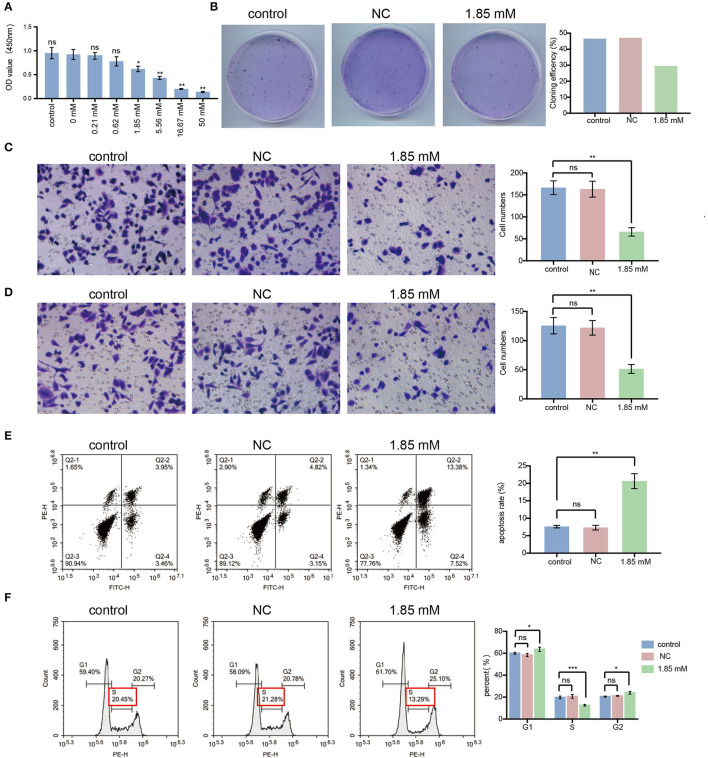
Fecal and serum samples were prospectively collected from patients with LC, classified as responders, if they presented durable clinical benefits, and non-responders, if not. The composition of gut microbes was analyzed using 16S ribosomal DNA sequencing. Serum SCFA concentrations were detected using gas chromatography. Cell proliferation, migration, invasion, cell cycle, and apoptosis assays were performed on isobutyric acid-treated A549 cells. Reverse transcription-quantitative PCR, Western blotting, immunocytochemistry, and immunofluorescence staining experiments have been performed to investigate the expression of associated genes or proteins.
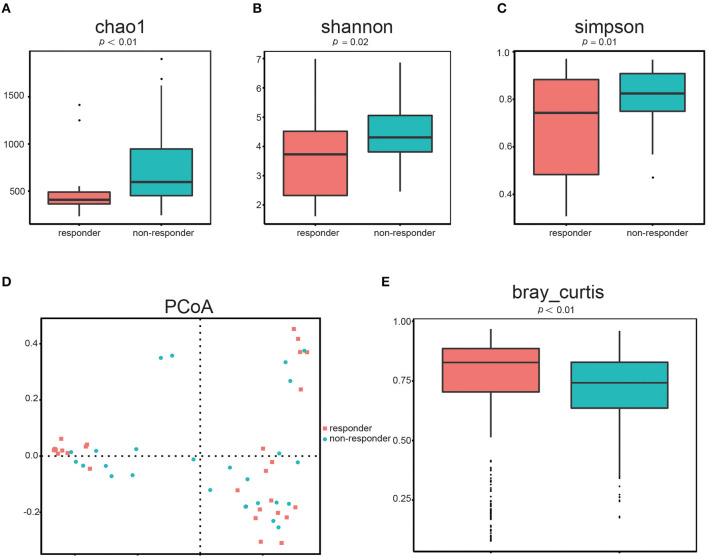
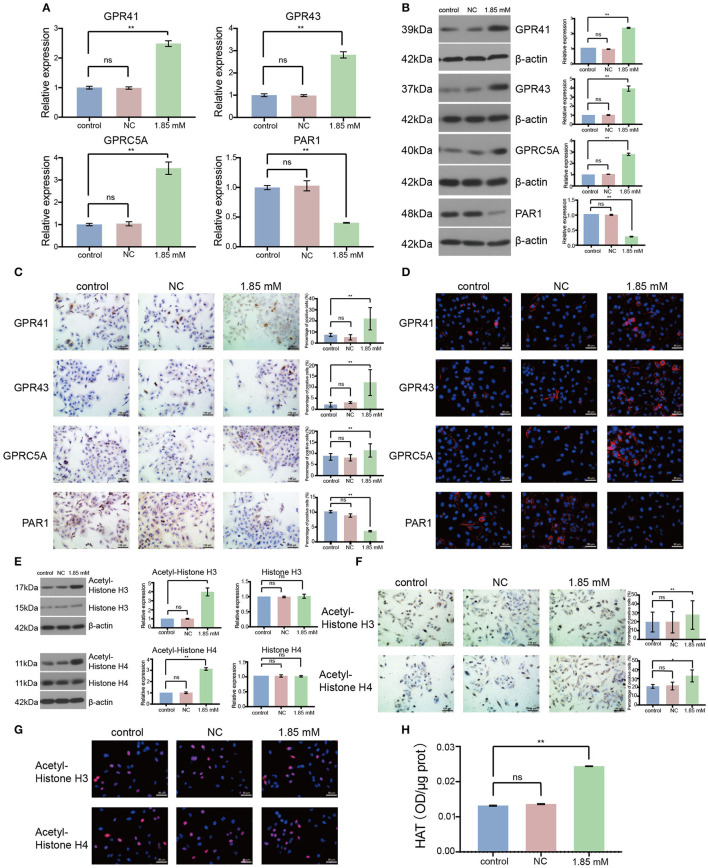
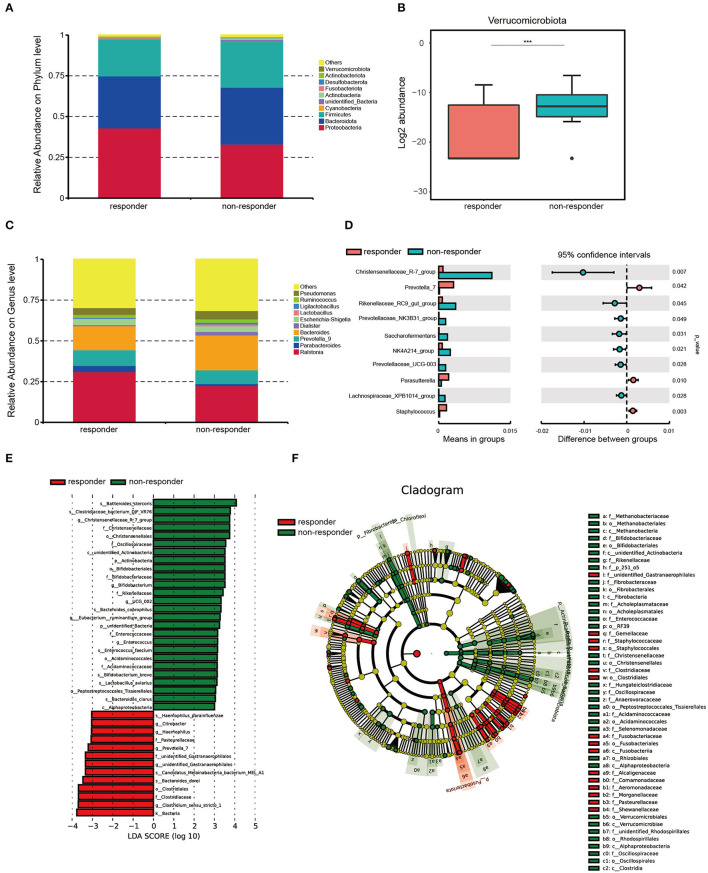
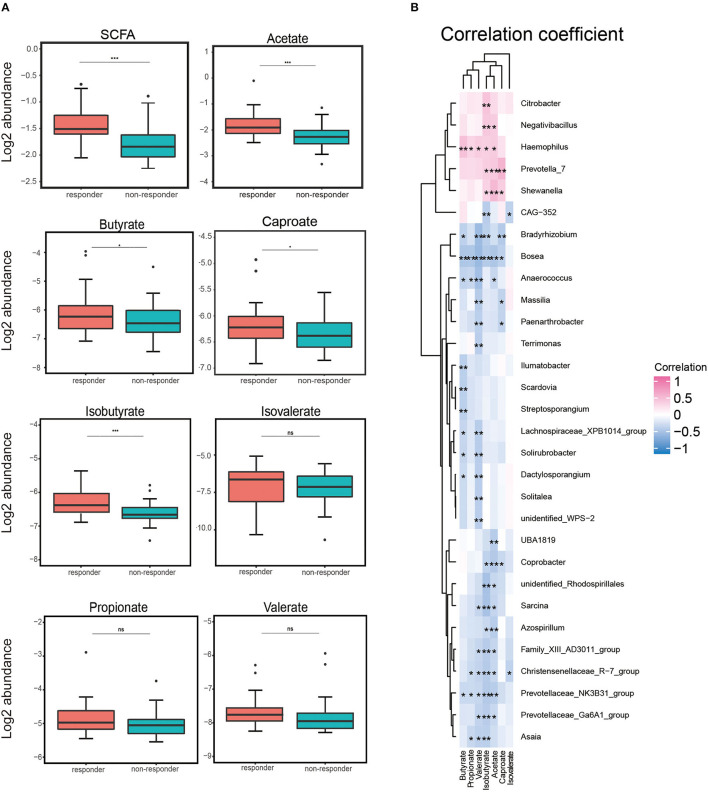
Non-responders harbored higher microbiome α-diversity but lower β-diversity compared with responders. Compared to the patients with low α-diversity, those with high α-diversity showed significantly shorter progression-free survival. Additionally, β-diversity has also been observed between these two groups. Specifically, , and were more abundant among responders, whereas and were more abundant in non-responders. The serum SCFA (especially acetate and isobutyrate) levels tended to be higher in responders. Isobutyric acid inhibited the proliferation, migration, and invasion of A549 cells by inducing apoptosis and G1/S arrest while upregulating the expression of GPR41, GPR43, and GPR5C and downregulating that of PAR1, and increasing the activity of histone acetyltransferases.
We revealed the influence of gut microbiota and SCFAs on the therapeutic responses in patients with LC and the anti-tumor effect of isobutyric acid, indicating their potential use as therapeutic targets.
肠道微生物与短链脂肪酸(SCFAs)之间的关联以及肺癌(LC)患者接受治疗后的治疗反应仍不清楚。
前瞻性收集LC患者的粪便和血清样本,若患者呈现持久的临床获益则分类为反应者,若未呈现则分类为无反应者。使用16S核糖体DNA测序分析肠道微生物的组成。使用气相色谱法检测血清SCFA浓度。对异丁酸处理的A549细胞进行细胞增殖、迁移、侵袭、细胞周期和凋亡检测。进行逆转录定量PCR、蛋白质印迹、免疫细胞化学和免疫荧光染色实验以研究相关基因或蛋白质的表达。
与反应者相比,无反应者的微生物群α多样性较高,但β多样性较低。与α多样性低的患者相比,α多样性高的患者无进展生存期明显更短。此外,两组之间也观察到了β多样性。具体而言,反应者中 、 和 更为丰富,而无反应者中 和 更为丰富。反应者的血清SCFA(尤其是乙酸盐和异丁酸盐)水平往往更高。异丁酸通过诱导凋亡和G1/S期阻滞,同时上调GPR41、GPR43和GPR5C的表达,下调PAR1的表达,并增加组蛋白乙酰转移酶的活性,从而抑制A549细胞的增殖、迁移和侵袭。
我们揭示了肠道微生物群和SCFAs对LC患者治疗反应的影响以及异丁酸的抗肿瘤作用,表明它们作为治疗靶点的潜在用途。