Muthusamy Karthik, Sivadasan Ajith, Dixon Luke, Sudhakar Sniya, Thomas Maya, Danda Sumita, Wszolek Zbigniew K, Wierenga Klaas, Dhamija Radhika, Gavrilova Ralitza
Department of Clinical Genomics, Mayo Clinic, Jacksonville, FL, United States.
Department of Neurological Sciences, Christian Medical College, Tamil Nadu, Vellore, India.
Front Neurol. 2023 Jul 26;14:1219324. doi: 10.3389/fneur.2023.1219324. eCollection 2023.
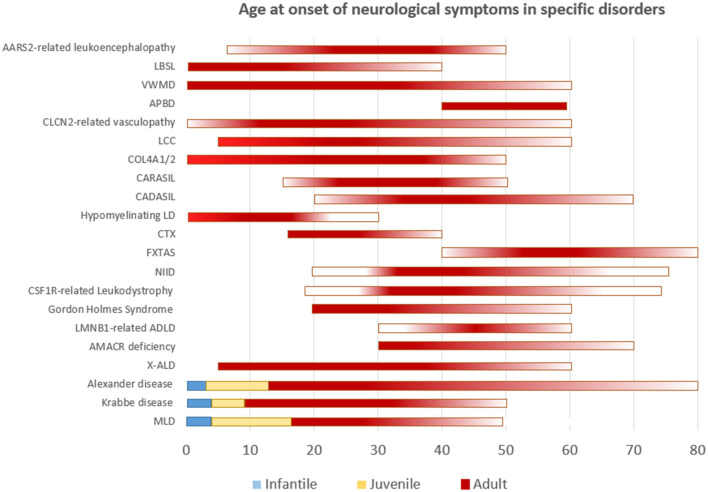
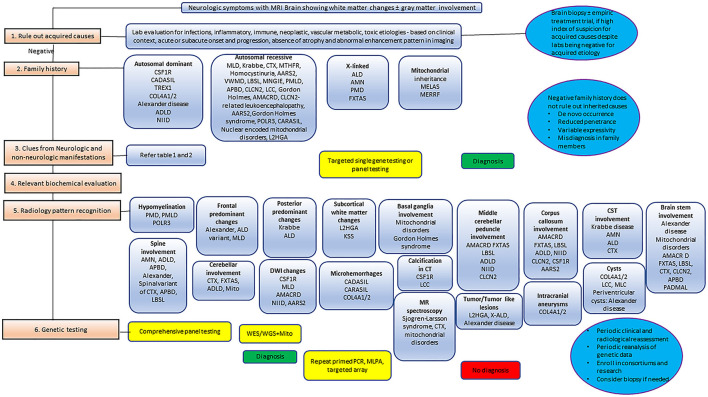
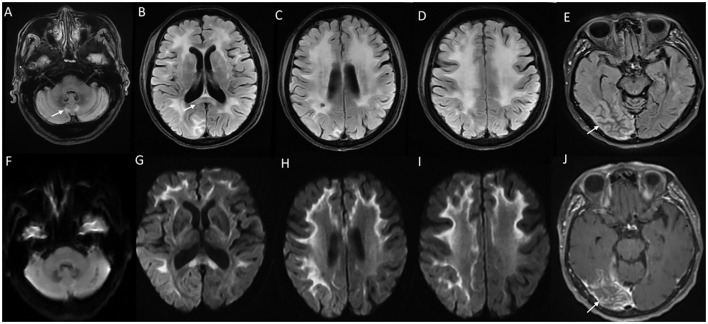
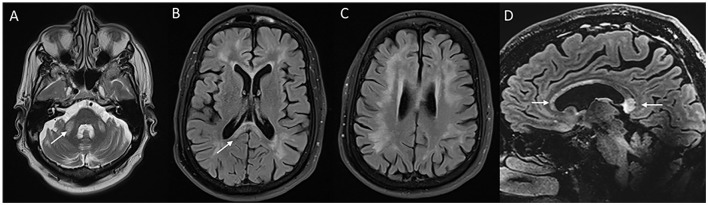
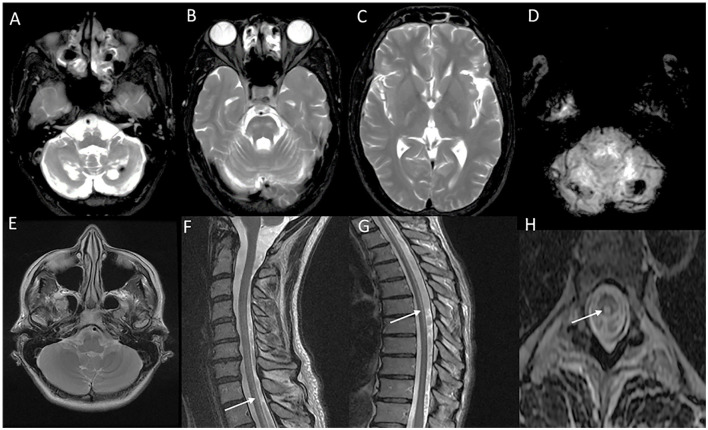
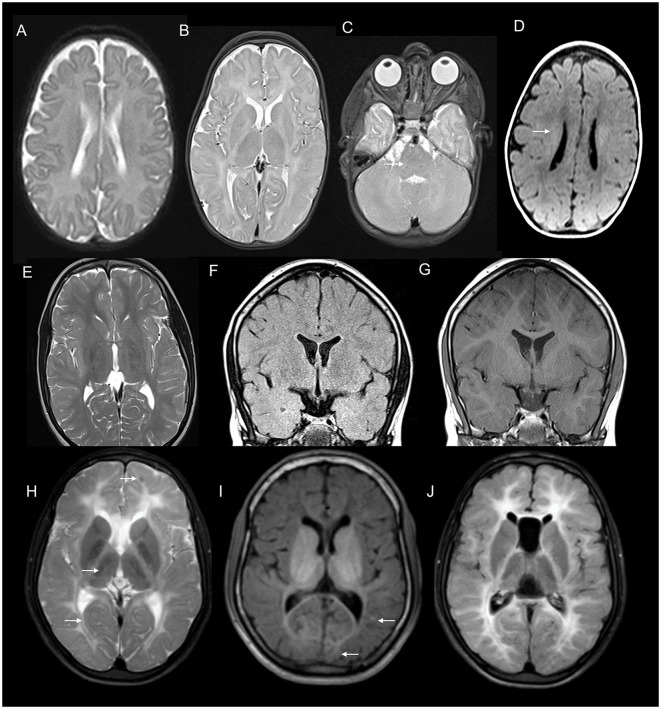
Adult-onset leukodystrophies though individually rare are not uncommon. This group includes several disorders with isolated adult presentations, as well as several childhood leukodystrophies with attenuated phenotypes that present at a later age. Misdiagnoses often occur due to the clinical and radiological overlap with common acquired disorders such as infectious, immune, inflammatory, vascular, metabolic, and toxic etiologies. Increased prevalence of non-specific white matter changes in adult population poses challenges during diagnostic considerations. Clinico-radiological spectrum and molecular landscape of adult-onset leukodystrophies have not been completely elucidated at this time. Diagnostic approach is less well-standardized when compared to the childhood counterpart. Absence of family history and reduced penetrance in certain disorders frequently create a dilemma. Comprehensive evaluation and molecular confirmation when available helps in prognostication, early initiation of treatment in certain disorders, enrollment in clinical trials, and provides valuable information for the family for reproductive counseling. In this review article, we aimed to formulate an approach to adult-onset leukodystrophies that will be useful in routine practice, discuss common adult-onset leukodystrophies with usual and unusual presentations, neuroimaging findings, recent advances in treatment, acquired mimics, and provide an algorithm for comprehensive clinical, radiological, and genetic evaluation that will facilitate early diagnosis and consider active treatment options when available. A high index of suspicion, awareness of the clinico-radiological presentations, and comprehensive genetic evaluation are paramount because treatment options are available for several disorders when diagnosed early in the disease course.
成人起病的脑白质营养不良虽然个体罕见,但并不少见。这一类别包括几种以成人孤立发病为表现的疾病,以及几种儿童脑白质营养不良但表型减弱且在较晚年龄发病的情况。由于与常见获得性疾病(如感染性、免疫性、炎症性、血管性、代谢性和中毒性病因)在临床和影像学上存在重叠,误诊经常发生。成人人群中非特异性白质改变的患病率增加,在诊断时带来了挑战。目前,成人起病的脑白质营养不良的临床-放射学谱和分子格局尚未完全阐明。与儿童脑白质营养不良相比,成人起病脑白质营养不良的诊断方法标准化程度较低。缺乏家族史以及某些疾病中较低的外显率常常造成困境。进行全面评估并在可行时进行分子确诊,有助于预后判断、在某些疾病中尽早开始治疗、参与临床试验,并为家庭提供生殖咨询的宝贵信息。在这篇综述文章中,我们旨在制定一种适用于成人起病脑白质营养不良的方法,以用于日常实践,讨论具有常见和不常见表现的常见成人起病脑白质营养不良、神经影像学表现、治疗方面的最新进展、获得性模仿疾病,并提供一种全面的临床、放射学和遗传学评估算法,这将有助于早期诊断,并在可行时考虑积极的治疗方案。高度的怀疑指数、对临床-放射学表现的认识以及全面的遗传学评估至关重要,因为在疾病病程早期诊断出几种疾病时都有相应的治疗选择。