Bioengineering Program, Department of Mechanical Engineering, San Diego State University, 5500 Campanile Drive, San Diego, CA 92182; Division of Biomedical Physics, Office of Science and Engineering Laboratories, Center for Devices and Radiological Health, Food and Drug Administration, 10903 New Hampshire Avenue, Silver Spring, MD 20993.
Mechanical and Aerospace Engineering Department, University of California, San Diego 9500 Gilman Drive, La Jolla, CA 92093.
J Biomech Eng. 2023 Nov 1;145(11). doi: 10.1115/1.4063147.
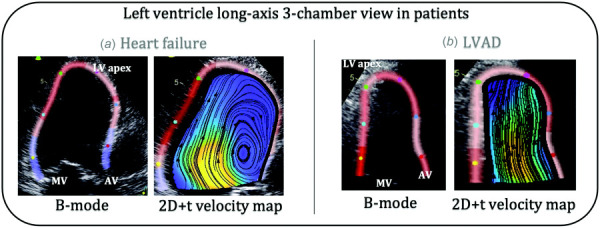
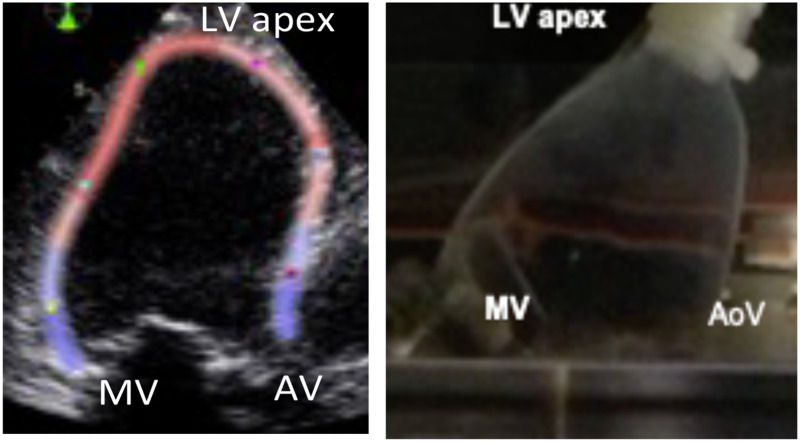
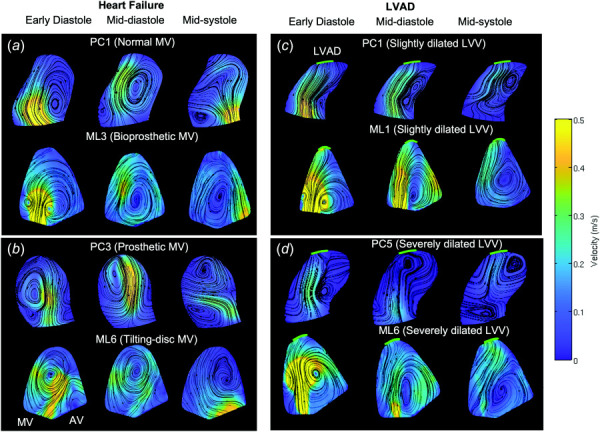
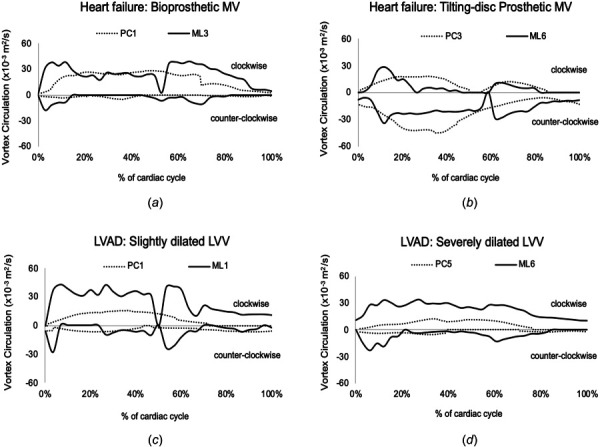
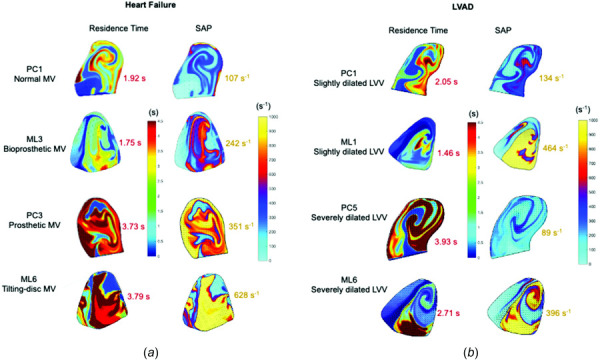
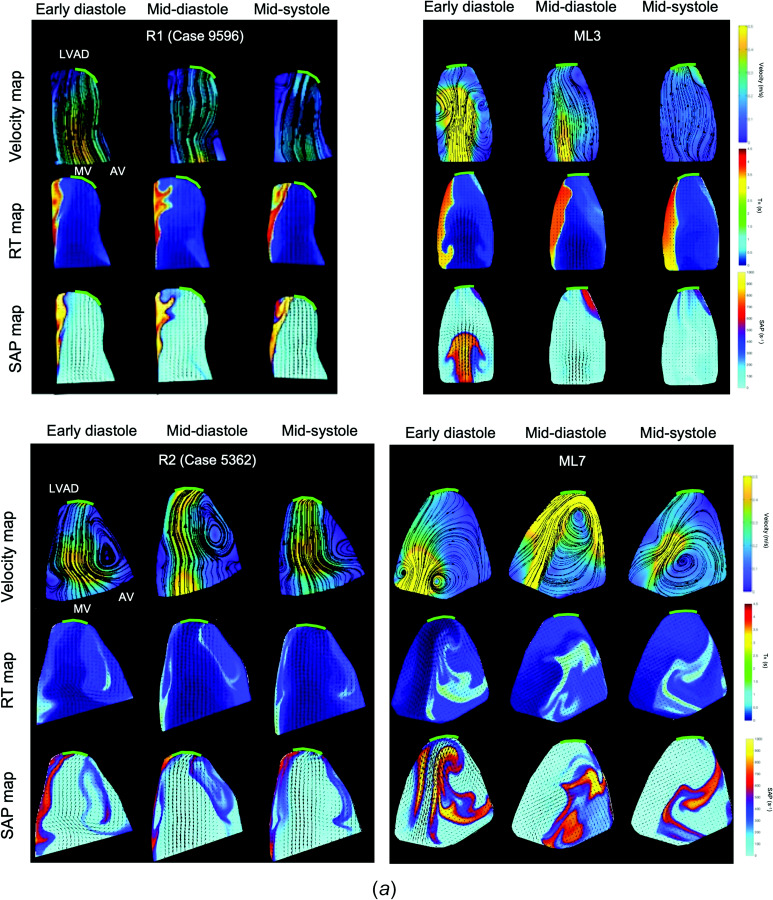
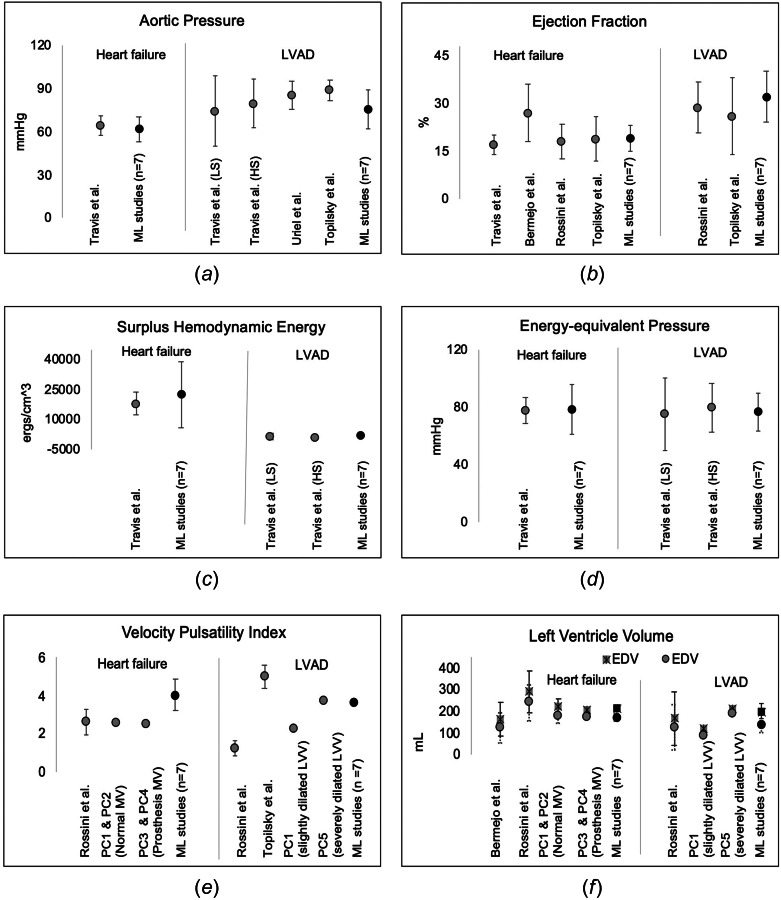
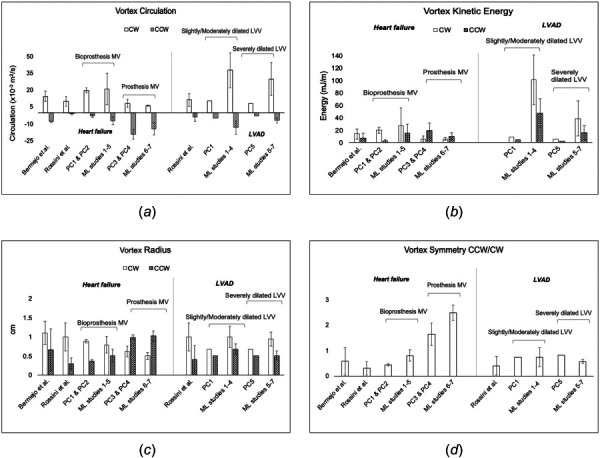
The characterization of intraventricular flow is critical to evaluate the efficiency of fluid transport and potential thromboembolic risk but challenging to measure directly in advanced heart failure (HF) patients with left ventricular assist device (LVAD) support. The study aims to validate an in-house mock loop (ML) by simulating specific conditions of HF patients with normal and prosthetic mitral valves (MV) and LVAD patients with small and dilated left ventricle volumes, then comparing the flow-related indices result of vortex parameters, residence time (RT), and shear-activation potential (SAP). Patient-specific inputs for the ML studies included heart rate, end-diastolic and end-systolic volumes, ejection fraction, aortic pressure, E/A ratio, and LVAD speed. The ML effectively replicated vortex development and circulation patterns, as well as RT, particularly for HF patient cases. The LVAD velocity fields reflected altered flow paths, in which all or most incoming blood formed a dominant stream directing flow straight from the mitral valve to the apex. RT estimation of patient and ML compared well for all conditions, but SAP was substantially higher in the LVAD cases of the ML. The benchtop system generated comparable and reproducible hemodynamics and fluid dynamics for patient-specific conditions, validating its reliability and clinical relevance. This study demonstrated that ML is a suitable platform to investigate the fluid dynamics of HF and LVAD patients and can be utilized to investigate heart-implant interactions.
心室腔内流动的特性对于评估液体输送效率和潜在的血栓栓塞风险至关重要,但对于接受左心室辅助装置(LVAD)支持的晚期心力衰竭(HF)患者,直接测量具有挑战性。本研究旨在通过模拟具有正常和人工二尖瓣(MV)的 HF 患者以及具有小且扩张的左心室容积的 LVAD 患者的特定条件,验证内部模拟回路(ML),然后比较涡旋参数、驻留时间(RT)和剪切激活潜能(SAP)等与流动相关的指标结果。ML 研究的患者特定输入包括心率、舒张末期和收缩末期容积、射血分数、主动脉压、E/A 比和 LVAD 速度。ML 有效地复制了涡旋的发展和循环模式,以及 RT,特别是对于 HF 患者病例。LVAD 速度场反映了改变的流动路径,其中所有或大部分进入的血液形成主导流,直接从二尖瓣流向心尖。所有条件下患者和 ML 的 RT 估计值都很好地吻合,但 ML 的 LVAD 病例中的 SAP 要高得多。该台式系统为特定于患者的条件生成了可比且可重复的血液动力学和流体动力学,验证了其可靠性和临床相关性。这项研究表明,ML 是研究 HF 和 LVAD 患者流体动力学的合适平台,可用于研究心脏植入物的相互作用。