State Key Laboratory of Food Science and Technology, Collaborative Innovation Center of Food Safety and Quality Control in Jiangsu Province, School of Food Science and Technology, Jiangnan University, Wuxi 214122, China.
Int J Mol Sci. 2023 Jul 28;24(15):12117. doi: 10.3390/ijms241512117.
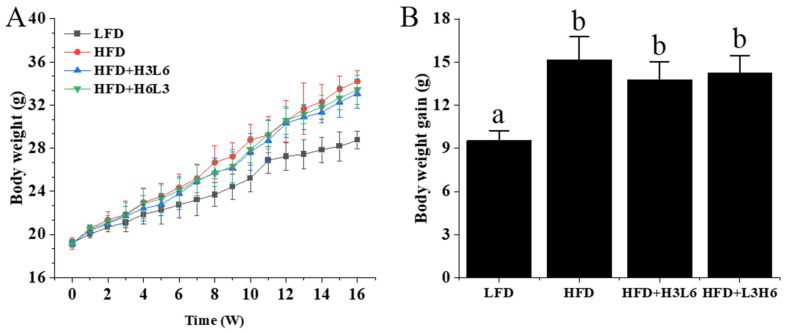
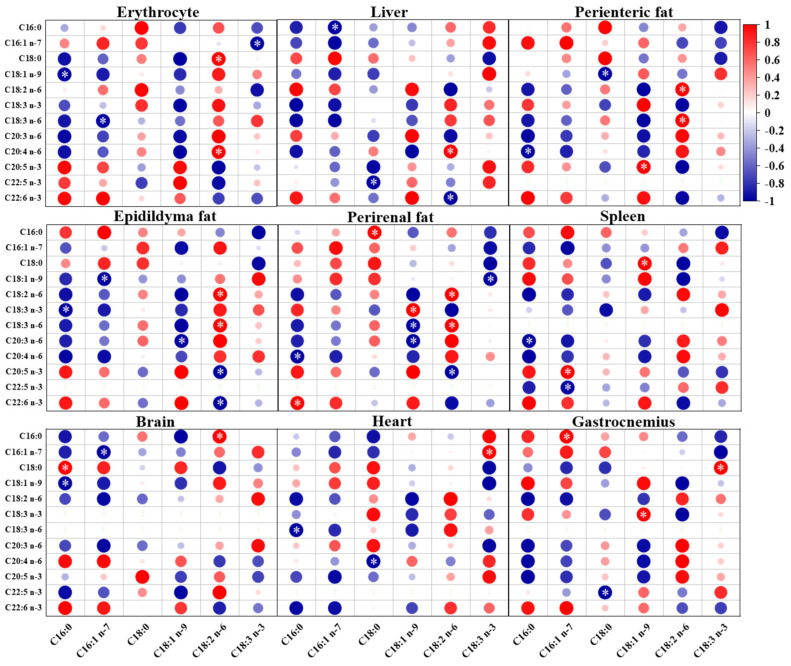
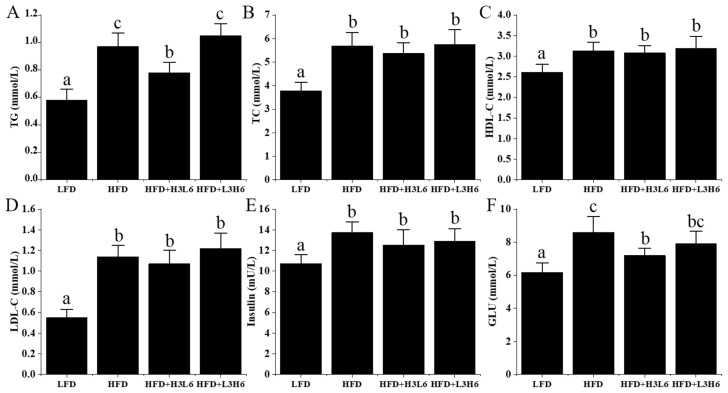
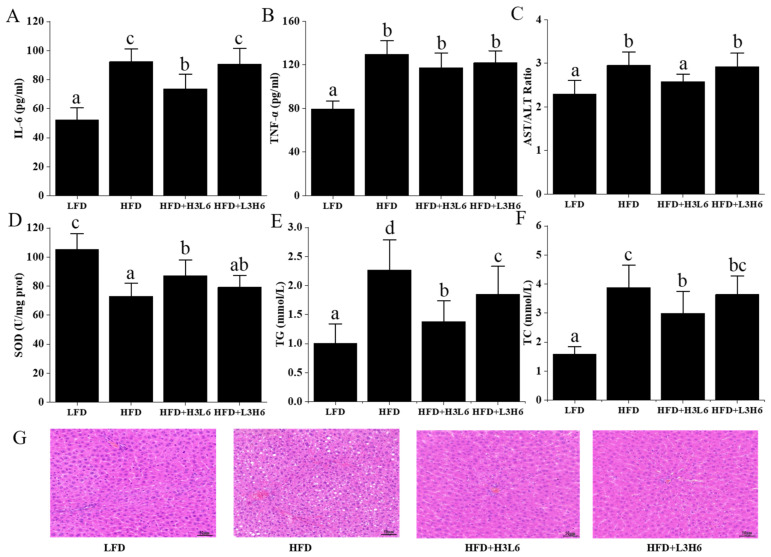
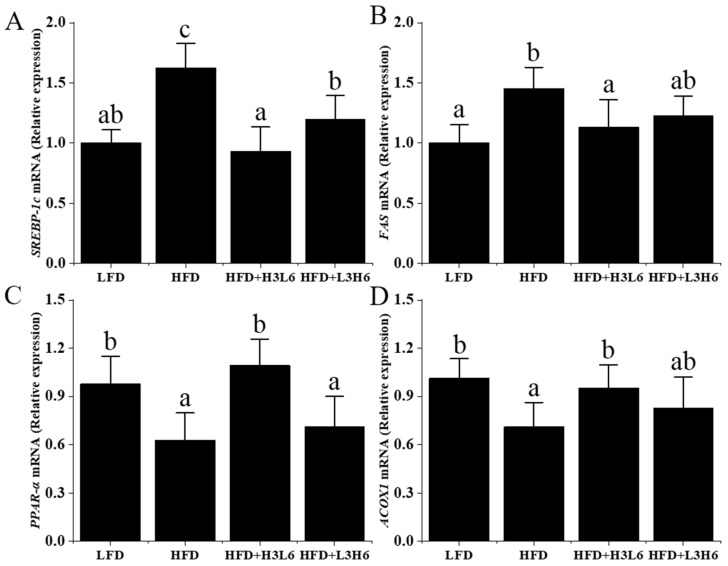
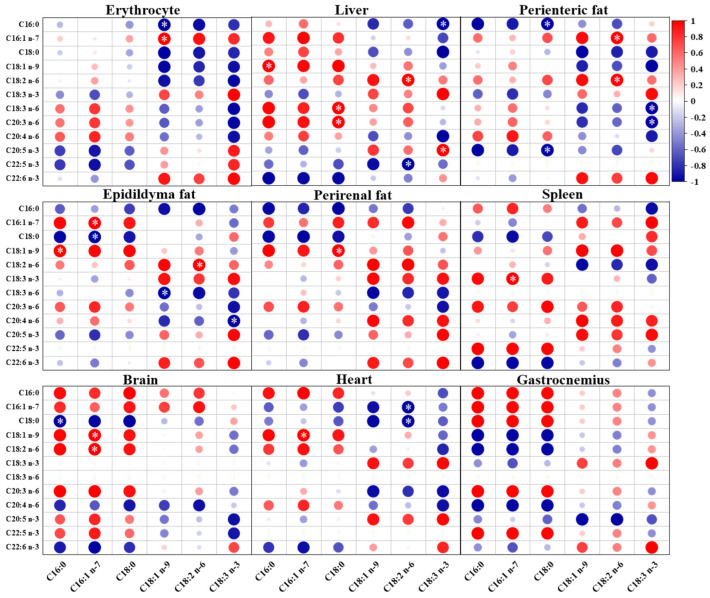
A reduced risk of obesity and metabolic syndrome has been observed in individuals with a low intake ratio of linoleic acid/α-linolenic acid (LA/ALA). However, the influence of a low ratio of LA/ALA intake on lipid metabolism and endogenous fatty acid distribution in obese patients remains elusive. In this investigation, 8-week-old C57BL/6J mice were randomly assigned to four groups: low-fat diet (LFD) as a control, high-fat diet (HFD), high-fat diet with a low LA/ALA ratio (HFD+H3L6), and high-fat diet with a high LA/ALA ratio (HFD+L3H6) for 16 weeks. Our results show that the HFD+H3L6 diet significantly decreased the liver index of HFD mice by 3.51%, as well as the levels of triacylglycerols (TGs) and low-density lipoprotein cholesterol (LDL-C) by 15.67% and 10.02%, respectively. Moreover, the HFD+H3L6 diet reduced the pro-inflammatory cytokines interleukin-6 (IL-6) level and aspartate aminotransferase/alanine aminotransferase (AST/ALT) ratio and elevated the level of superoxide dismutase (SOD) in the liver. The HFD+H3L6 diet also resulted in the downregulation of fatty acid synthetase () and sterol regulatory element binding proteins-1c () expression and the upregulation of peroxisome proliferator-activated receptor-α () and acyl-CoA oxidase 1 () gene expression in the liver. The low LA/ALA ratio diet led to a notable increase in the levels of ALA and its downstream derivative docosahexaenoic acid (DHA) in the erythrocyte, liver, perienteric fat, epididymal fat, perirenal fat, spleen, brain, heart, and gastrocnemius, with a strong positive correlation. Conversely, the accumulation of LA in abdominal fat was more prominent, and a high LA/ALA ratio diet exacerbated the deposition effect of LA. In conclusion, the low LA/ALA ratio not only regulated endogenous fatty acid levels but also upregulated and and downregulated and gene expression levels, thus maintaining lipid homeostasis. Optimizing dietary fat intake is important in studying lipid nutrition. These research findings emphasize the significance of understanding and optimizing dietary fat intake.
亚油酸/α-亚麻酸(LA/ALA)低摄入比值与肥胖和代谢综合征风险降低有关。然而,低 LA/ALA 摄入比值对肥胖患者的脂质代谢和内源性脂肪酸分布的影响仍不清楚。在本研究中,将 8 周龄 C57BL/6J 小鼠随机分为四组:低脂饮食(LFD)作为对照、高脂肪饮食(HFD)、高脂肪饮食加低 LA/ALA 比值(HFD+H3L6)和高脂肪饮食加高 LA/ALA 比值(HFD+L3H6),喂养 16 周。结果显示,HFD+H3L6 饮食可使 HFD 小鼠肝脏指数降低 3.51%,三酰甘油(TGs)和低密度脂蛋白胆固醇(LDL-C)水平分别降低 15.67%和 10.02%。此外,HFD+H3L6 饮食降低了促炎细胞因子白细胞介素-6(IL-6)水平和天冬氨酸氨基转移酶/丙氨酸氨基转移酶(AST/ALT)比值,增加了肝脏中超氧化物歧化酶(SOD)水平。HFD+H3L6 饮食还导致脂肪酸合酶(FASN)和固醇调节元件结合蛋白-1c(SREBP-1c)表达下调,过氧化物酶体增殖物激活受体-α(PPAR-α)和酰基辅酶 A 氧化酶 1(ACOX1)基因表达上调。低 LA/ALA 比值饮食导致红细胞、肝脏、腹膜脂肪、附睾脂肪、肾周脂肪、脾脏、大脑、心脏和腓肠肌中 ALA 及其下游衍生物二十二碳六烯酸(DHA)水平显著升高,且与 LA 呈强正相关。相反,腹部脂肪中 LA 的积累更为明显,高 LA/ALA 比值饮食加剧了 LA 的沉积作用。总之,低 LA/ALA 比值不仅调节内源性脂肪酸水平,而且上调 FASN 和 SREBP-1c 基因表达,下调 PPAR-α 和 ACOX1 基因表达,维持脂质代谢平衡。优化饮食脂肪摄入在研究脂质营养中很重要。这些研究结果强调了了解和优化饮食脂肪摄入的重要性。