Huang Weiye, Wu Junyi, Li Wenxin, Chen Guojin, Chu Changyong, Li Chao, Zhu Yucheng, Yang Hui, Chao Yan
School of Mechanical Engineering, Hangzhou Dianzi University, Hangzhou 310018, China.
Sanmen Sanyou Technology Inc., Taizhou 472000, China.
Materials (Basel). 2023 Aug 5;16(15):5483. doi: 10.3390/ma16155483.
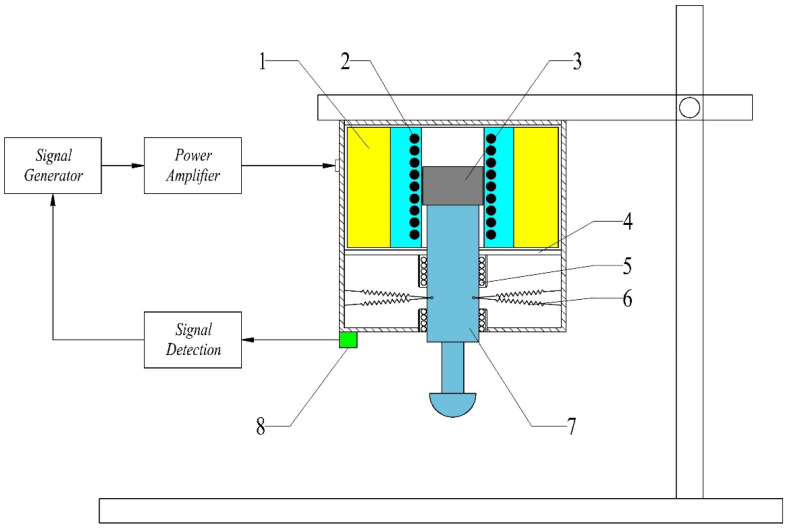
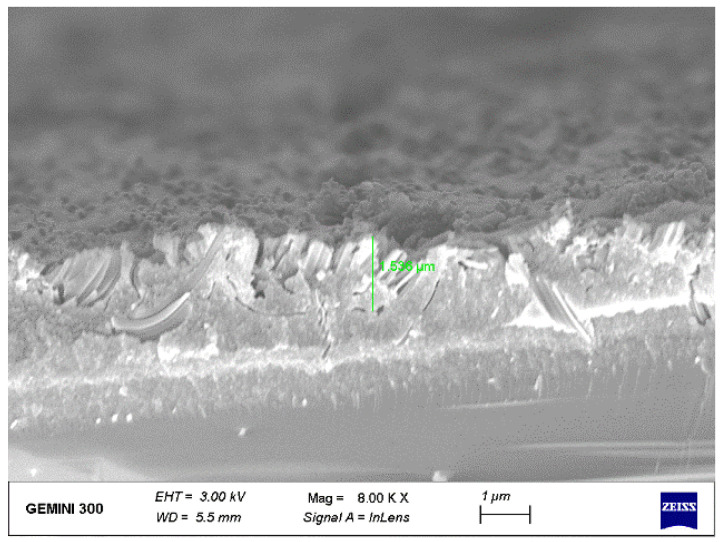
In this work, we design a micro-vibration platform, which combined with the traditional metal-assisted chemical etching (MaCE) to etch silicon nanowires (SiNWs). The etching mechanism of SiNWs, including in the mass-transport (MT) and charge-transport (CT) processes, was explored through the characterization of SiNW's length as a function of MaCE combined with micro-vibration conditions, such as vibration amplitude and frequency. The scanning electron microscope (SEM) experimental results indicated that the etching rate would be continuously improved with an increase in amplitude and reached its maximum at 4 μm. Further increasing amplitude reduced the etching rate and affected the morphology of the SiNWs. Adjusting the vibration frequency would result in a maximum etching rate at a frequency of 20 Hz, and increasing the frequency will not help to improve the etching effects.
在这项工作中,我们设计了一个微振动平台,该平台与传统的金属辅助化学蚀刻(MaCE)相结合来蚀刻硅纳米线(SiNWs)。通过将SiNW的长度表征为MaCE与微振动条件(如振动幅度和频率)的函数,探索了SiNWs的蚀刻机制,包括质量传输(MT)和电荷传输(CT)过程。扫描电子显微镜(SEM)实验结果表明,蚀刻速率会随着振幅的增加而持续提高,并在4μm时达到最大值。进一步增加振幅会降低蚀刻速率并影响SiNWs的形态。调整振动频率会在20Hz的频率下产生最大蚀刻速率,而增加频率无助于提高蚀刻效果。