Kozlov Anatolii
Institut Jean Nicod (CNRS-EHESS-ENS), Paris, France.
Department of Science and Technology Studies, University College London, London, UK.
Eur J Philos Sci. 2023;13(3):38. doi: 10.1007/s13194-023-00536-7. Epub 2023 Aug 11.
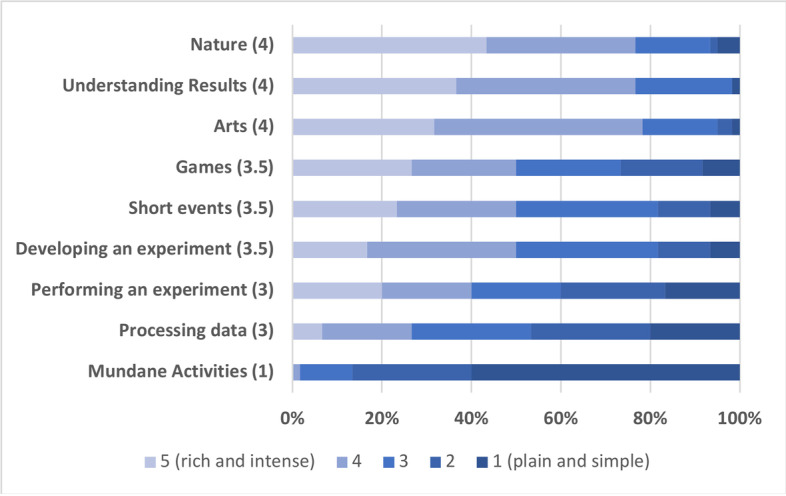
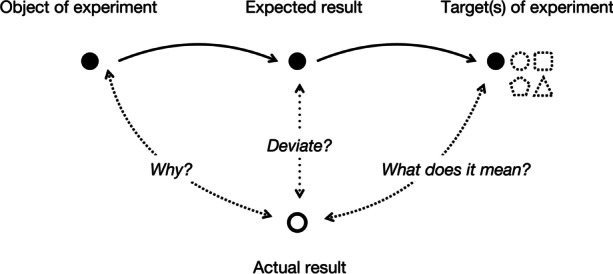
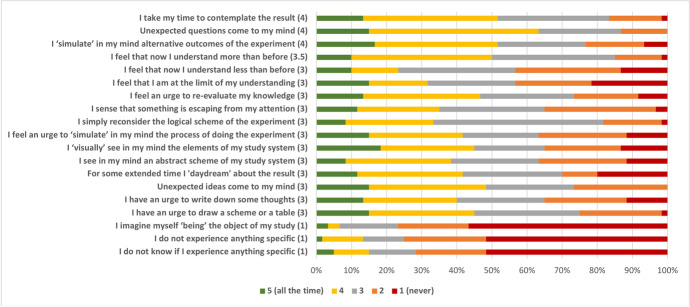
Some experimental results in science are productively surprising or beautiful. Such results are disruptive in their epistemic nature: by violating epistemic expectations they mark the phenomenon at hand as worthy of further investigation. Could it be that there are emotions beyond these two which are also useful for the epistemic evaluation of scientific experiments? Here, I conduct a structured sociological survey to explore affective experiences in scientific experimental research. I identify that learning the results of an experiment is the high emotional point in the experimenting process. Thus, experimental results can be challenging, beautiful, or boring, and they can worry, amuse, make one sad, and so on. They can also drive meta-cognitive evaluations as well as motivate specific research-related actions. From this, I advance two claims: that emotions beyond surprise and disruptive beauty are epistemically useful in empirical research, and that emotions help to overcome specific challenges of reasoning about new experimental results.
The online version contains supplementary material available at 10.1007/s13194-023-00536-7.
科学中的一些实验结果会产生富有成效的惊喜或美感。这些结果在认知本质上具有颠覆性:通过违背认知预期,它们将眼前的现象标记为值得进一步研究的对象。是否可能存在这两种情绪之外的其他情绪,它们对科学实验的认知评估也同样有用呢?在此,我开展了一项结构化的社会学调查,以探索科学实验研究中的情感体验。我发现得知实验结果是实验过程中的情感高潮。因此,实验结果可能具有挑战性、美感或枯燥乏味,它们可能引发担忧、带来乐趣、使人悲伤等等。它们还能推动元认知评估,并激发与特定研究相关的行动。据此,我提出两个主张:除了惊喜和颠覆性美感之外的情绪在实证研究中具有认知上的用处,并且情绪有助于克服对新实验结果进行推理时的特定挑战。
在线版本包含可在10.1007/sl3194-023-00536-7获取的补充材料。