Li Keren, Niu Yi, Li Kai, Zhong Chengrui, Qiu Zhiyu, Yuan Yichuan, Shi Yunxing, Lin Zhu, Huang Zhenkun, Zuo Dinglan, Yuan Yunfei, Li Binkui
State Key Laboratory of Oncology in South China, Sun Yat-Sen University Cancer Center, Guangzhou, Guangdong, China.
Department of Liver Surgery, Sun Yat-Sen University Cancer Center, Guangzhou, Guangdong, China.
J Clin Transl Hepatol. 2023 Oct 28;11(5):1094-1105. doi: 10.14218/JCTH.2022.00401. Epub 2023 Apr 21.
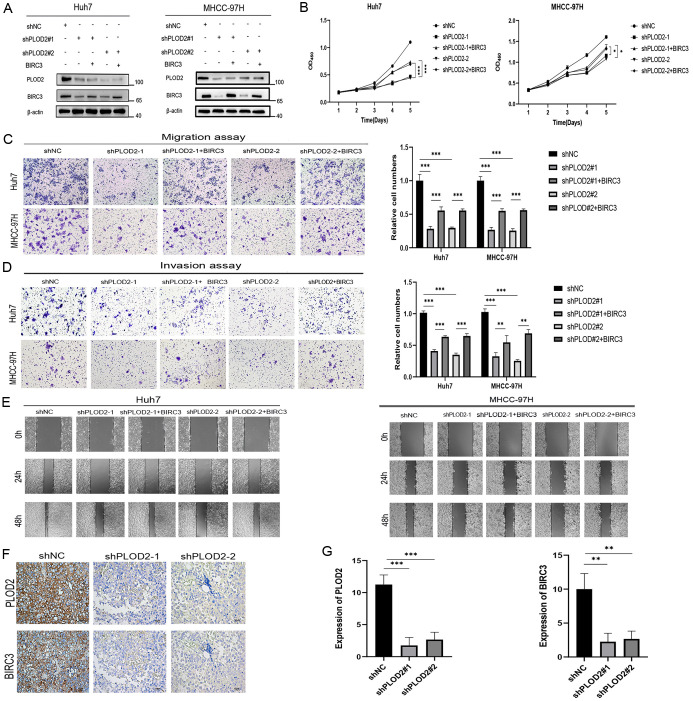
Metastasis is a major factor associated with high recurrence and mortality in hepatocellular carcinoma (HCC) patients while the underlying mechanism of metastasis remains elusive. In our study, procollagen-lysine, 2-oxoglutarate 5-dioxygenase 2 (PLOD2) was shown to be involved in the process of metastasis in HCC.
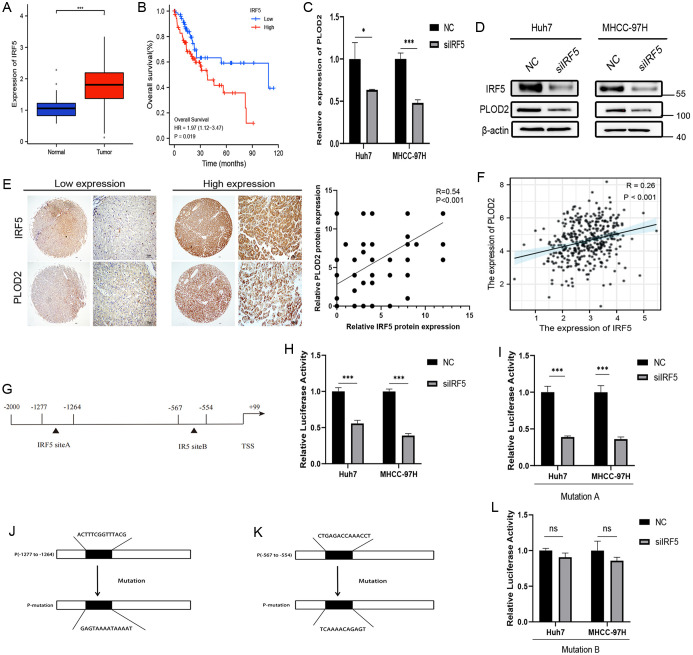
The Cancer Genome Atlas (TCGA) database and HCC tissue microarrays were used to evaluate the expression of genes. migration, invasion, subcutaneous tumor model and lung metastasis assays were used to determine the role of PLOD2 in tumor growth and metastasis in HCC. RNA sequencing and gene set enrichment analysis were performed to uncover the downstream factor of PLOD2 in HCC cells. A luciferase reporter assay was performed to evaluate the interaction between PLOD2 and interferon regulatory factor 5 (IRF5).
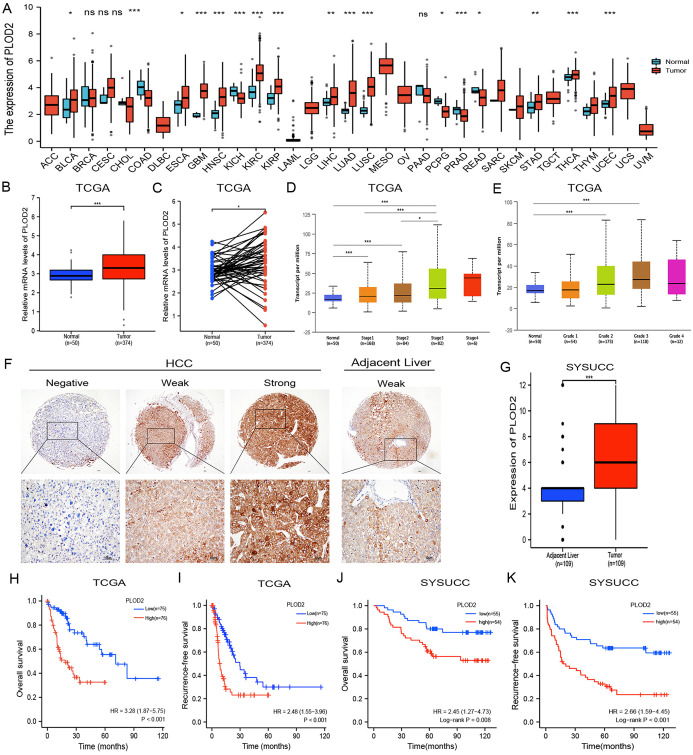
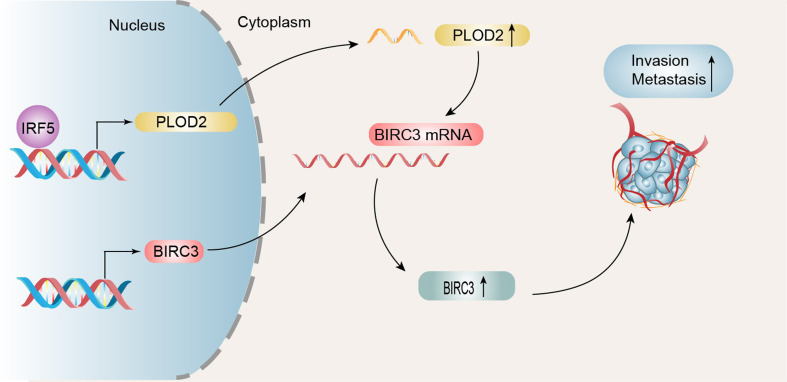
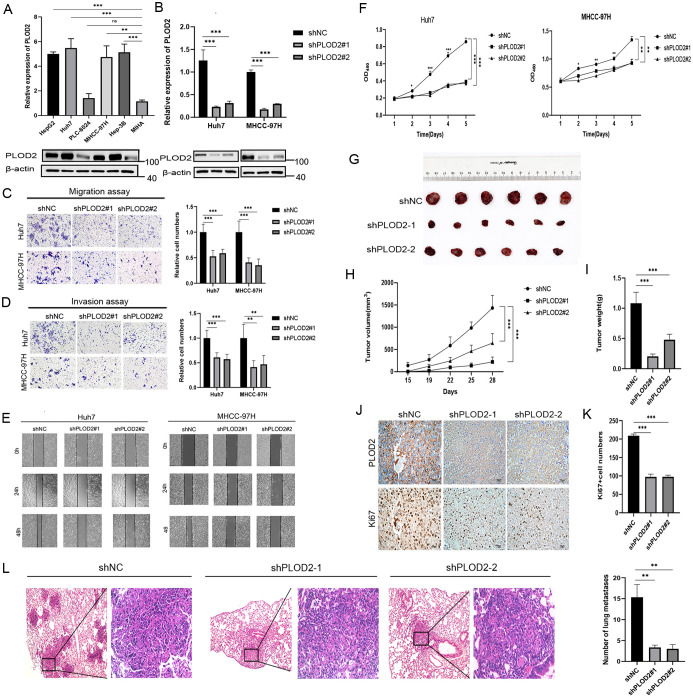
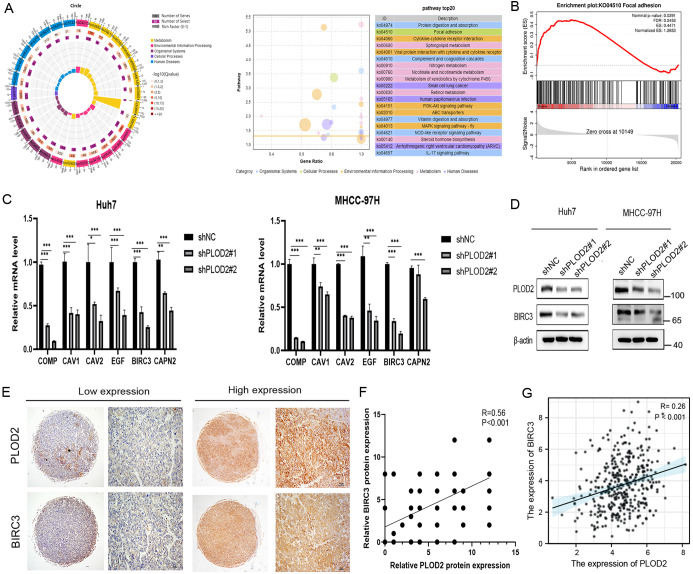
The expression of PLOD2 in HCC tissues was higher than that in adjacent tissues, and increased PLOD2 expression was often found in advanced tumors and was correlated with poor prognosis in HCC patients. experiments, knockdown of PLOD2 reduced the migration and invasion of human HCC cells. Loss of PLOD2 suppressed human HCC growth and metastasis in a subcutaneous tumor model and a lung metastasis model. Baculoviral IAP repeat containing 3 (BIRC3) was proven to be the downstream factor of PLOD2 in human HCC cells. In addition, PLOD2 was transcriptionally regulated by IRF5 in HCC cells.
High expression of PLOD2 was regulated by IRF5, which was correlated with the poor survival of HCC patients. PLOD2 enhanced HCC metastasis via BIRC3, suggesting that PLOD2 might be a valuable prognostic biomarker for HCC treatment.
转移是肝细胞癌(HCC)患者高复发率和高死亡率的主要相关因素,而转移的潜在机制仍不清楚。在我们的研究中,脯氨酸赖氨酸2 - 氧代戊二酸5 - 双加氧酶2(PLOD2)被证明参与了HCC的转移过程。
利用癌症基因组图谱(TCGA)数据库和HCC组织芯片评估基因表达。采用迁移、侵袭、皮下肿瘤模型和肺转移实验来确定PLOD2在HCC肿瘤生长和转移中的作用。进行RNA测序和基因集富集分析以揭示HCC细胞中PLOD2的下游因子。进行荧光素酶报告基因实验以评估PLOD2与干扰素调节因子5(IRF5)之间的相互作用。
HCC组织中PLOD2的表达高于相邻组织,且PLOD2表达增加常见于晚期肿瘤,与HCC患者的不良预后相关。实验表明,敲低PLOD2可降低人HCC细胞的迁移和侵袭能力。在皮下肿瘤模型和肺转移模型中,PLOD2缺失抑制了人HCC的生长和转移。杆状病毒IAP重复序列包含3(BIRC3)被证明是人类HCC细胞中PLOD2的下游因子。此外,PLOD2在HCC细胞中受IRF5转录调控。
PLOD2的高表达受IRF5调控,这与HCC患者的不良生存相关。PLOD2通过BIRC3增强HCC转移,提示PLOD2可能是HCC治疗中有价值的预后生物标志物。