Department of Engineering Mathematics, University of Bristol, Bristol, United Kingdom.
Colorectal Tumour Biology Group, School of Cellular and Molecular Medicine, Faculty of Life Sciences, University of Bristol, Bristol, United Kingdom.
PLoS Comput Biol. 2023 Aug 14;19(8):e1011386. doi: 10.1371/journal.pcbi.1011386. eCollection 2023 Aug.
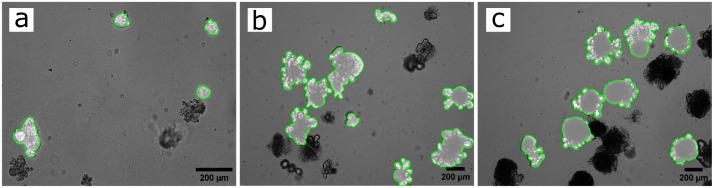
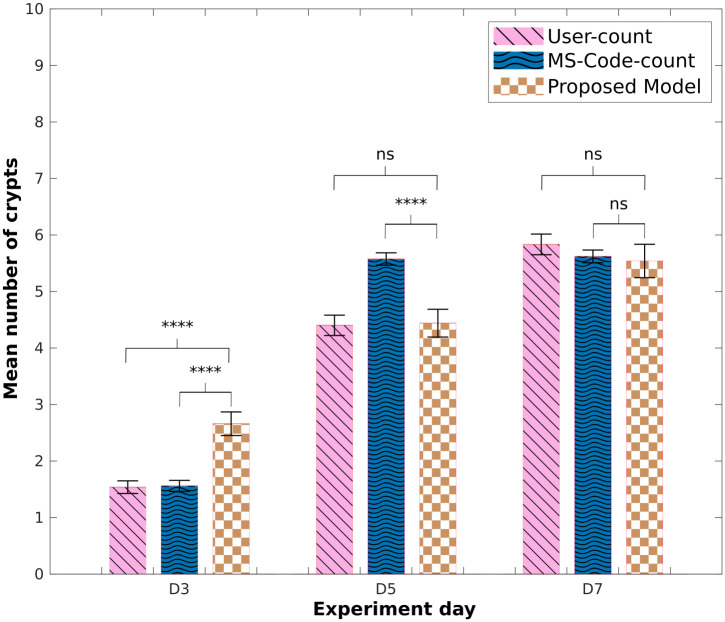
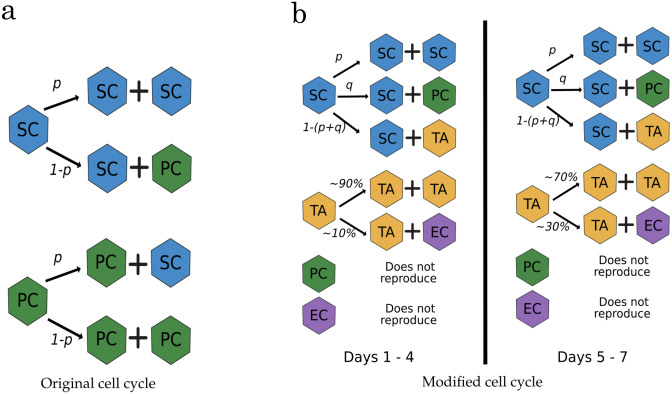
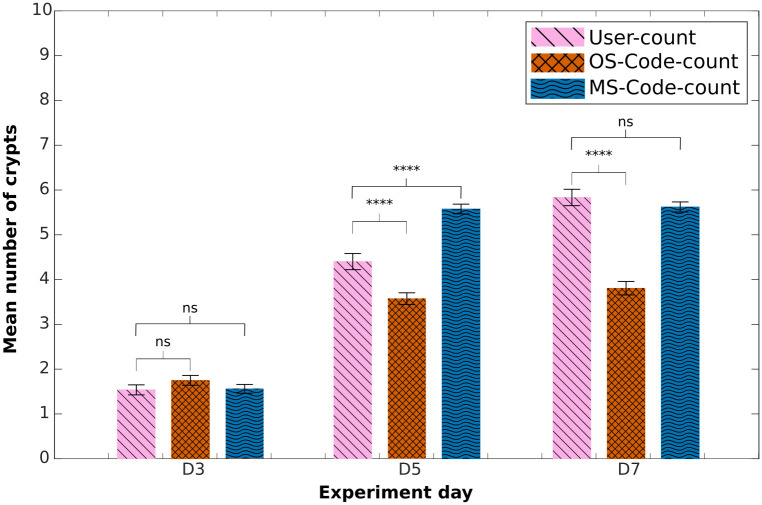
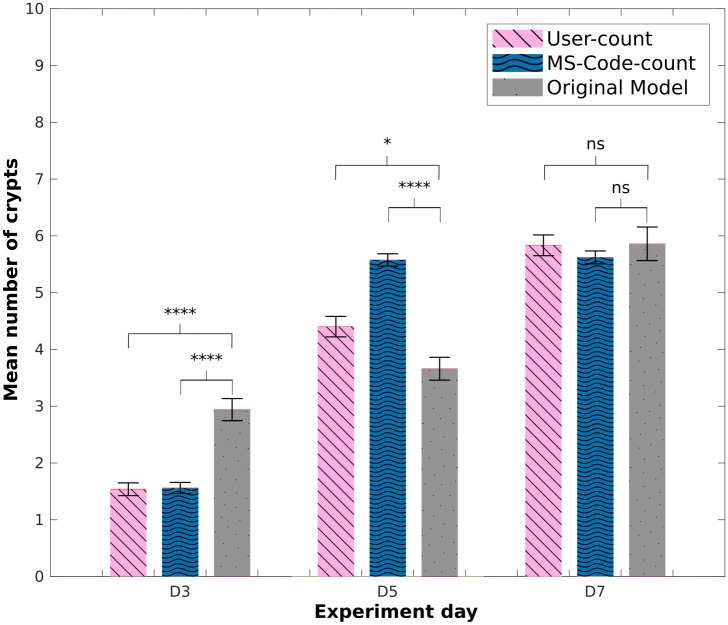
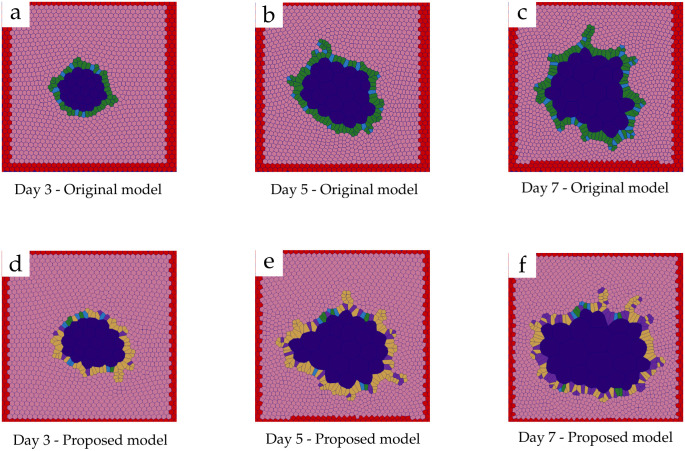
Organoids offer a powerful model to study cellular self-organisation, the growth of specific tissue morphologies in-vitro, and to assess potential medical therapies. However, the intrinsic mechanisms of these systems are not entirely understood yet, which can result in variability of organoids due to differences in culture conditions and basement membrane extracts used. Improving the standardisation of organoid cultures is essential for their implementation in clinical protocols. Developing tools to assess and predict the behaviour of these systems may produce a more robust and standardised biological model to perform accurate clinical studies. Here, we developed an algorithm to automate crypt-like structure counting on intestinal organoids in both in-vitro and in-silico images. In addition, we modified an existing two-dimensional agent-based mathematical model of intestinal organoids to better describe the system physiology, and evaluated its ability to replicate budding structures compared to new experimental data we generated. The crypt-counting algorithm proved useful in approximating the average number of budding structures found in our in-vitro intestinal organoid culture images on days 3 and 7 after seeding. Our changes to the in-silico model maintain the potential to produce simulations that replicate the number of budding structures found on days 5 and 7 of in-vitro data. The present study aims to aid in quantifying key morphological structures and provide a method to compare both in-vitro and in-silico experiments. Our results could be extended later to 3D in-silico models.
类器官为研究细胞的自我组织、特定组织形态的体外生长以及评估潜在的医学治疗方法提供了强大的模型。然而,这些系统的内在机制尚未完全理解,这可能导致由于培养条件和使用的基底膜提取物的差异,类器官的变异性。提高类器官培养的标准化对于将其纳入临床方案至关重要。开发评估和预测这些系统行为的工具可能会产生更稳健和标准化的生物模型,以进行准确的临床研究。在这里,我们开发了一种算法,用于自动对体外和计算机图像中的肠类器官进行隐窝样结构计数。此外,我们修改了现有的二维基于代理的肠类器官数学模型,以更好地描述系统生理学,并评估其与我们生成的新实验数据相比复制萌芽结构的能力。该隐窝计数算法可用于近似我们在体外肠类器官培养图像中播种后第 3 天和第 7 天发现的平均萌芽结构数量。我们对计算机模型的更改有可能产生模拟,复制在第 5 天和第 7 天的体外数据中发现的萌芽结构数量。本研究旨在帮助定量关键形态结构,并提供一种比较体外和计算机实验的方法。我们的结果以后可以扩展到 3D 计算机模型。