Department of Health Promotion and Policy, School of Public Health and Health Sciences, University of Massachusetts, Amherst.
JAMA Netw Open. 2023 Aug 1;6(8):e2328928. doi: 10.1001/jamanetworkopen.2023.28928.
Approximately one-third of the more than 1 100 000 confirmed COVID-19-related deaths as of January 18, 2023, were considered preventable if public health recommendations had been followed. Physicians' propagation of misinformation about COVID-19 on social media and other internet-based platforms has raised professional, public health, and ethical concerns.
To characterize (1) the types of COVID-19 misinformation propagated by US physicians after vaccines became available, (2) the online platforms used, and (3) the characteristics of the physicians spreading misinformation.
DESIGN, SETTING, AND PARTICIPANTS: Using US Centers for Disease Control and Prevention guidelines for the prevention and treatment of COVID-19 infection during the study window to define misinformation, structured searches of high-use social media platforms (Twitter, Facebook, Instagram, Parler, and YouTube) and news sources (The New York Times, National Public Radio) were conducted to identify COVID-19 misinformation communicated by US-based physicians between January 2021 and December 2022. Physicians' state of licensure and medical specialty were identified. The number of followers for each physician on 4 major platforms was extracted to estimate reach and qualitative content analysis of the messages was performed.
Outcome measures included categories of COVID-19 misinformation propagated, the number and traits of physicians engaged in misinformation propagation, and the type of online media channels used to propagate misinformation and potential reach.
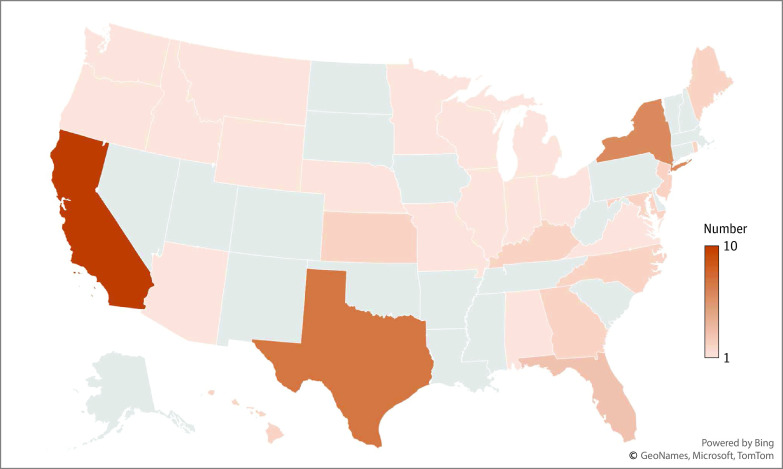
The propagation of COVID-19 misinformation was attributed to 52 physicians in 28 different specialties across all regions of the country. General misinformation categories included vaccines, medication, masks, and other (ie, conspiracy theories). Forty-two physicians (80.8%) posted vaccine misinformation, 40 (76.9%) propagated information in more than 1 category, and 20 (38.5%) posted misinformation on 5 or more platforms. Major themes identified included (1) disputing vaccine safety and effectiveness, (2) promoting medical treatments lacking scientific evidence and/or US Food and Drug Administration approval, (3) disputing mask-wearing effectiveness, and (4) other (unsubstantiated claims, eg, virus origin, government lies, and other conspiracy theories).
In this mixed-methods study of US physician propagation of COVID-19 misinformation on social media, results suggest widespread, inaccurate, and potentially harmful assertions made by physicians across the country who represented a range of subspecialties. Further research is needed to assess the extent of the potential harms associated with physician propagation of misinformation, the motivations for these behaviors, and potential legal and professional recourse to improve accountability for misinformation propagation.
截至 2023 年 1 月 18 日,在 110 多万例经确认的与 COVID-19 相关的死亡病例中,约有三分之一被认为是可以预防的,如果遵循了公共卫生建议。医生在社交媒体和其他互联网平台上传播与 COVID-19 相关的错误信息,引起了专业、公共卫生和道德方面的关注。
描述(1)在美国医生在疫苗问世后传播的 COVID-19 错误信息的类型,(2)使用的在线平台,以及(3)传播错误信息的医生的特征。
设计、设置和参与者:使用美国疾病控制与预防中心在研究窗口内针对 COVID-19 感染的预防和治疗指南来定义错误信息,对高使用率的社交媒体平台(Twitter、Facebook、Instagram、Parler 和 YouTube)和新闻来源(《纽约时报》、美国国家公共电台)进行了有针对性的搜索,以确定 2021 年 1 月至 2022 年 12 月期间美国医生传播的 COVID-19 错误信息。确定了医生的州执照状态和医疗专业。从 4 个主要平台上提取了每位医生的关注者数量,以估计传播范围,并对信息进行定性内容分析。
结果指标包括传播的 COVID-19 错误信息类别、参与错误信息传播的医生数量和特征,以及传播错误信息和潜在传播范围所使用的在线媒体渠道类型。
错误信息的传播归因于全国 28 个不同地区 28 个不同专业的 52 名医生。一般错误信息类别包括疫苗、药物、口罩和其他(即阴谋论)。42 名医生(80.8%)发布了疫苗错误信息,40 名医生(76.9%)发布了超过 1 个类别的信息,20 名医生(38.5%)在 5 个或更多平台上发布了错误信息。确定的主要主题包括(1)质疑疫苗的安全性和有效性,(2)推广缺乏科学证据和/或美国食品和药物管理局批准的治疗方法,(3)质疑口罩的有效性,以及(4)其他(未经证实的说法,例如病毒起源、政府谎言和其他阴谋论)。
在这项关于美国医生在社交媒体上传播 COVID-19 错误信息的混合方法研究中,结果表明,来自全国各地的代表各种专科的医生发表了广泛、不准确且可能有害的断言。需要进一步研究来评估与医生传播错误信息相关的潜在危害的程度、这些行为的动机,以及潜在的法律和专业追索权,以提高对错误信息传播的问责制。
