Nair Aparna U, Brekke-Riedl Julia A, DiMaggio-Potter Michaelle E, Carosella Katherine A, Lasch Carolyn, Brower Rylee, Papke Victoria, Reigstad Kristina, Klimes-Dougan Bonnie, Cullen Kathryn R
Department of Psychiatry and Behavioral Sciences, University of Minnesota, Minneapolis, MN 55454, USA.
Medical Scientist Training Program, University of Minnesota, Minneapolis, MN 55455, USA.
J Psychiatr Brain Sci. 2023;8. doi: 10.20900/jpbs.20230007. Epub 2023 Jul 1.
Non-suicidal self-injury (NSSI) is a highly prevalent clinical concern in adolescents and is associated with impaired functioning and suicide risk. The BRIDGES (BRain Imaging Development of Girls' Emotion and Self) study was designed to collect longitudinal clinical and neurobiological data to advance our understanding of NSSI in adolescents. The purpose of this paper is to describe the clinical data collected as part of this study, including psychiatric diagnoses, depression symptoms, episodes of non-suicidal self-injury, suicidal thoughts and behaviors, childhood trauma, and personality domains.
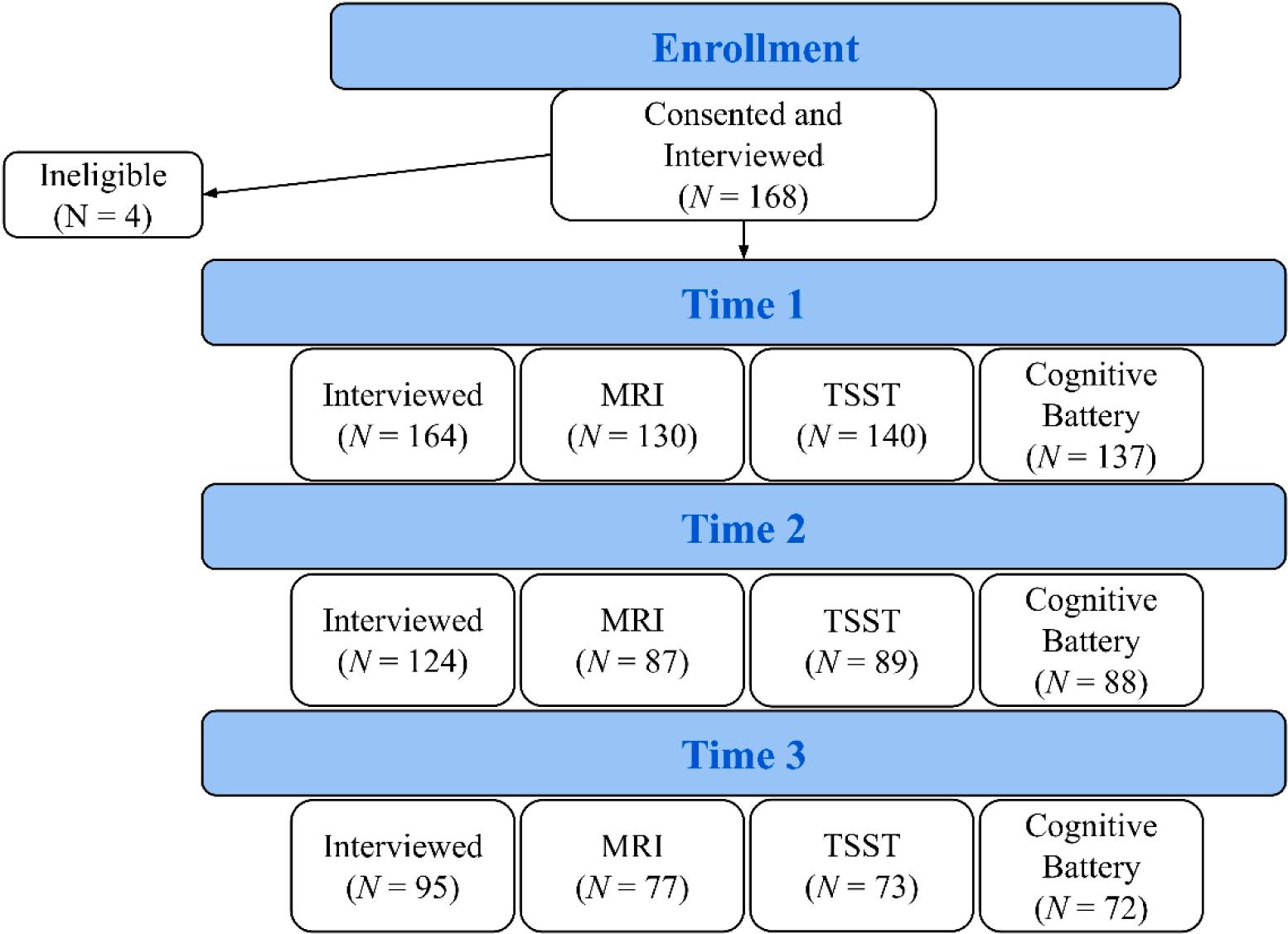
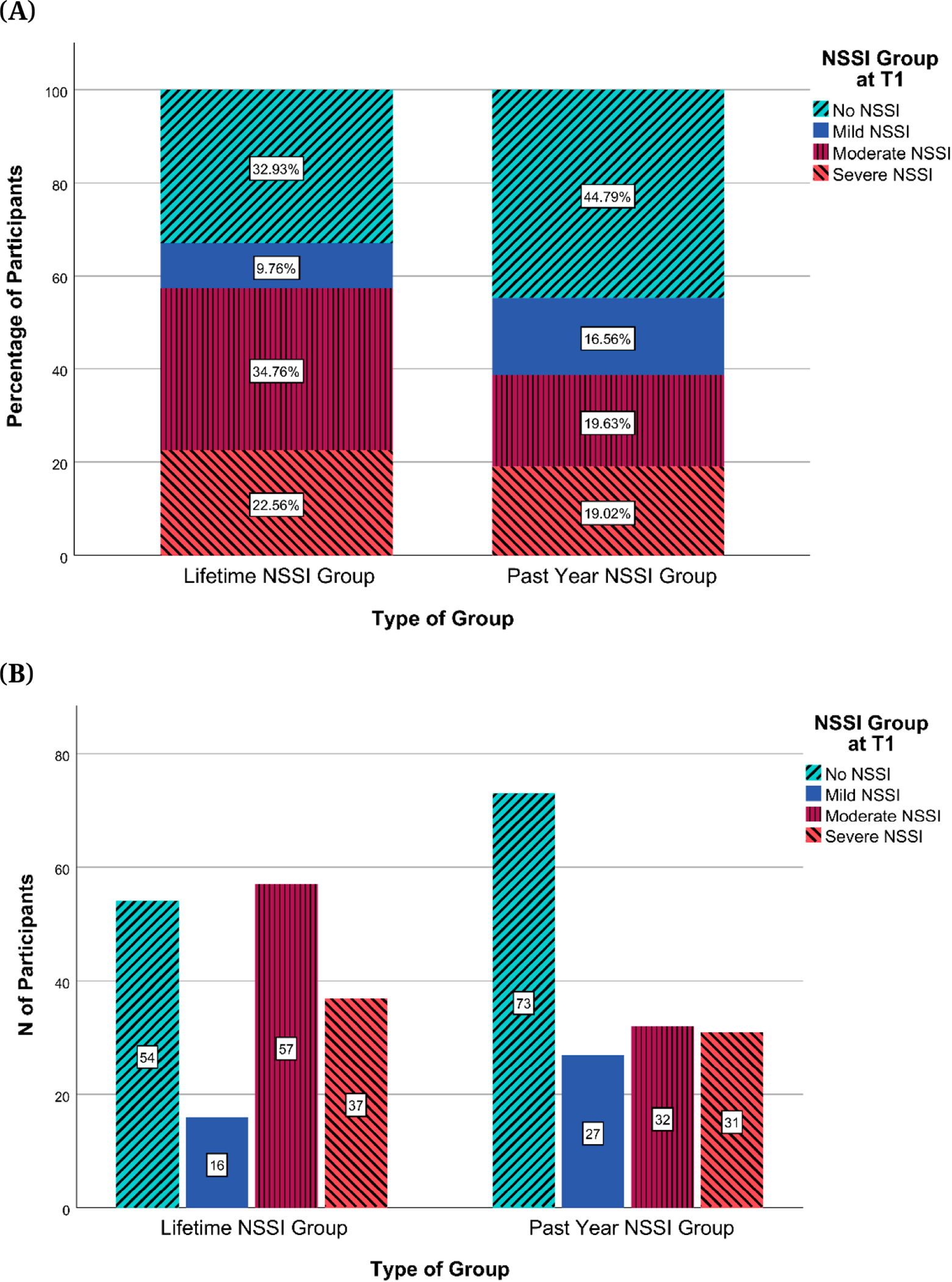
The baseline sample included 164 adolescents aged 12-16 assigned female at birth (Mean age = 14.97, SD = 1.20) with NSSI histories ranging from none to severe. Participants and their parent/guardian were invited to provide data at three time points spaced approximately one year apart. Descriptive analyses were conducted to provide estimates of rates and trajectories of clinical data.
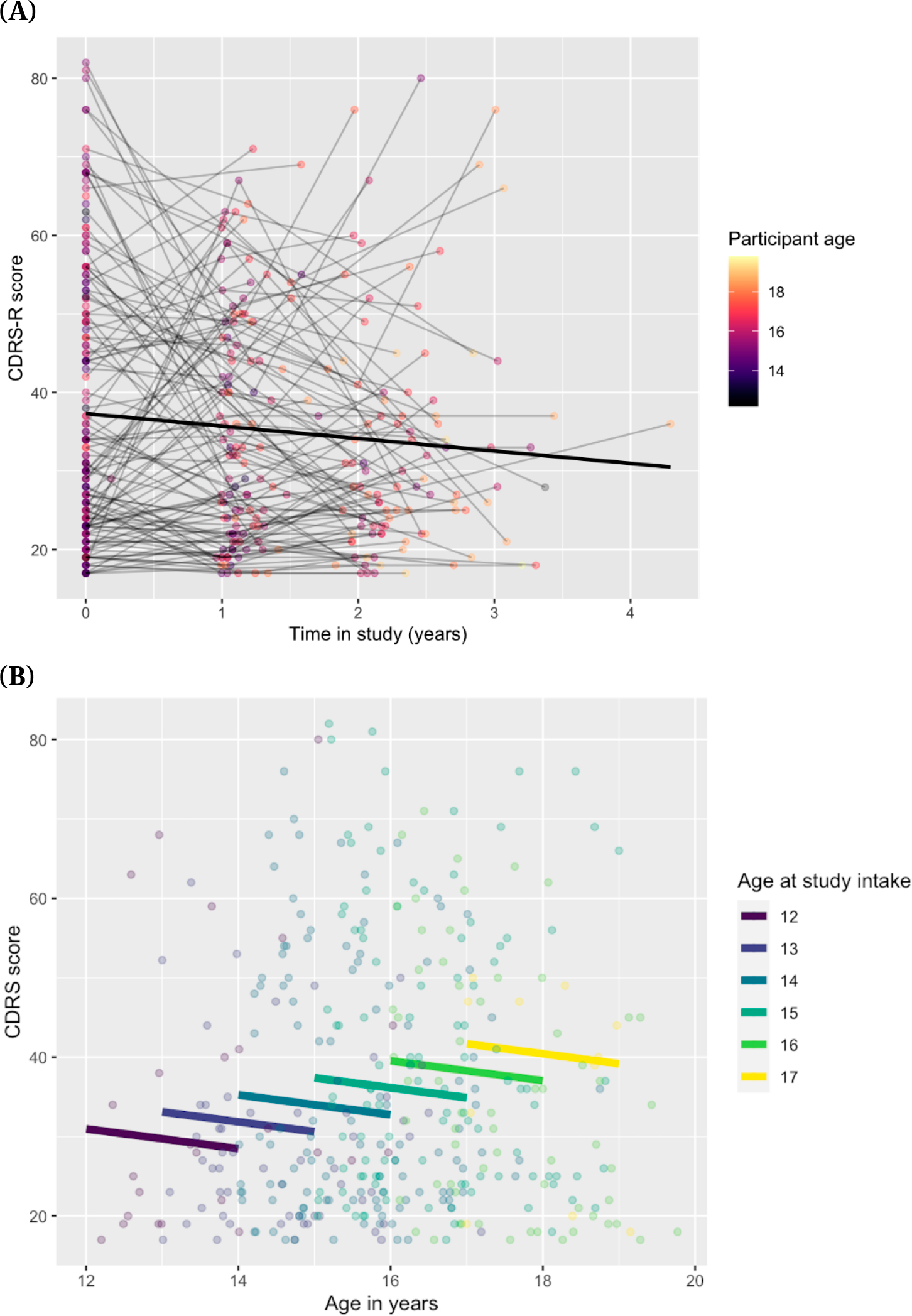
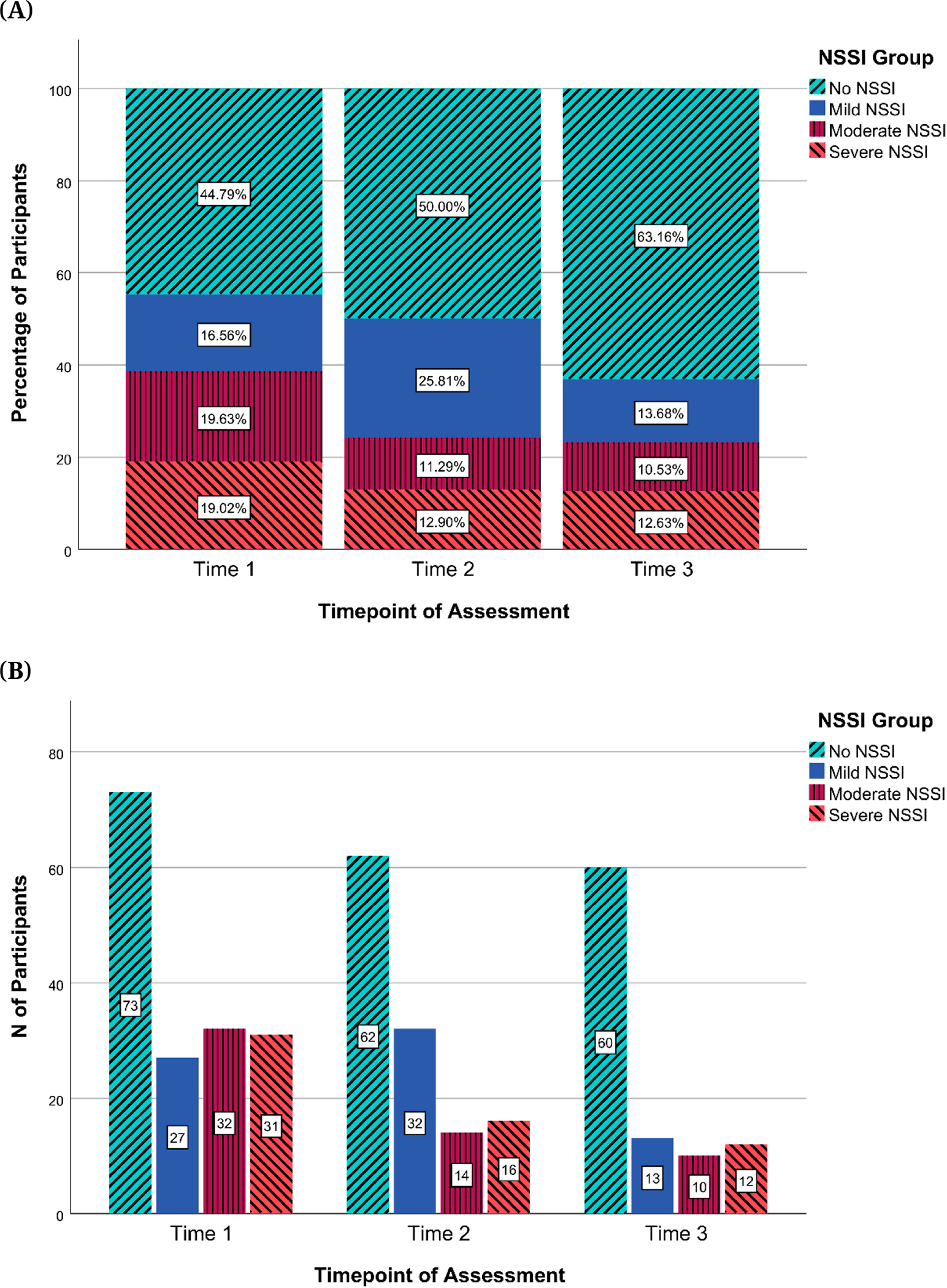
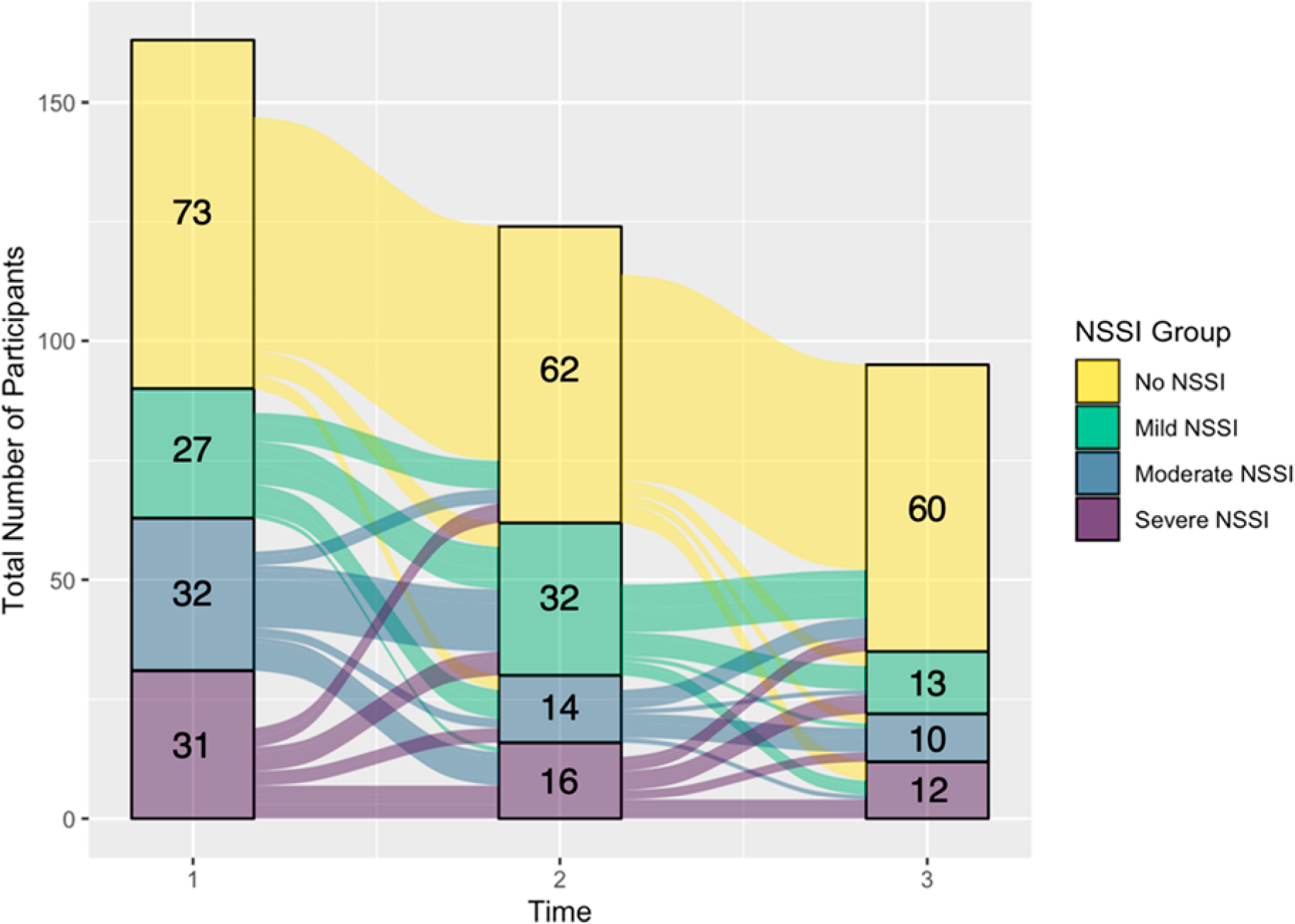
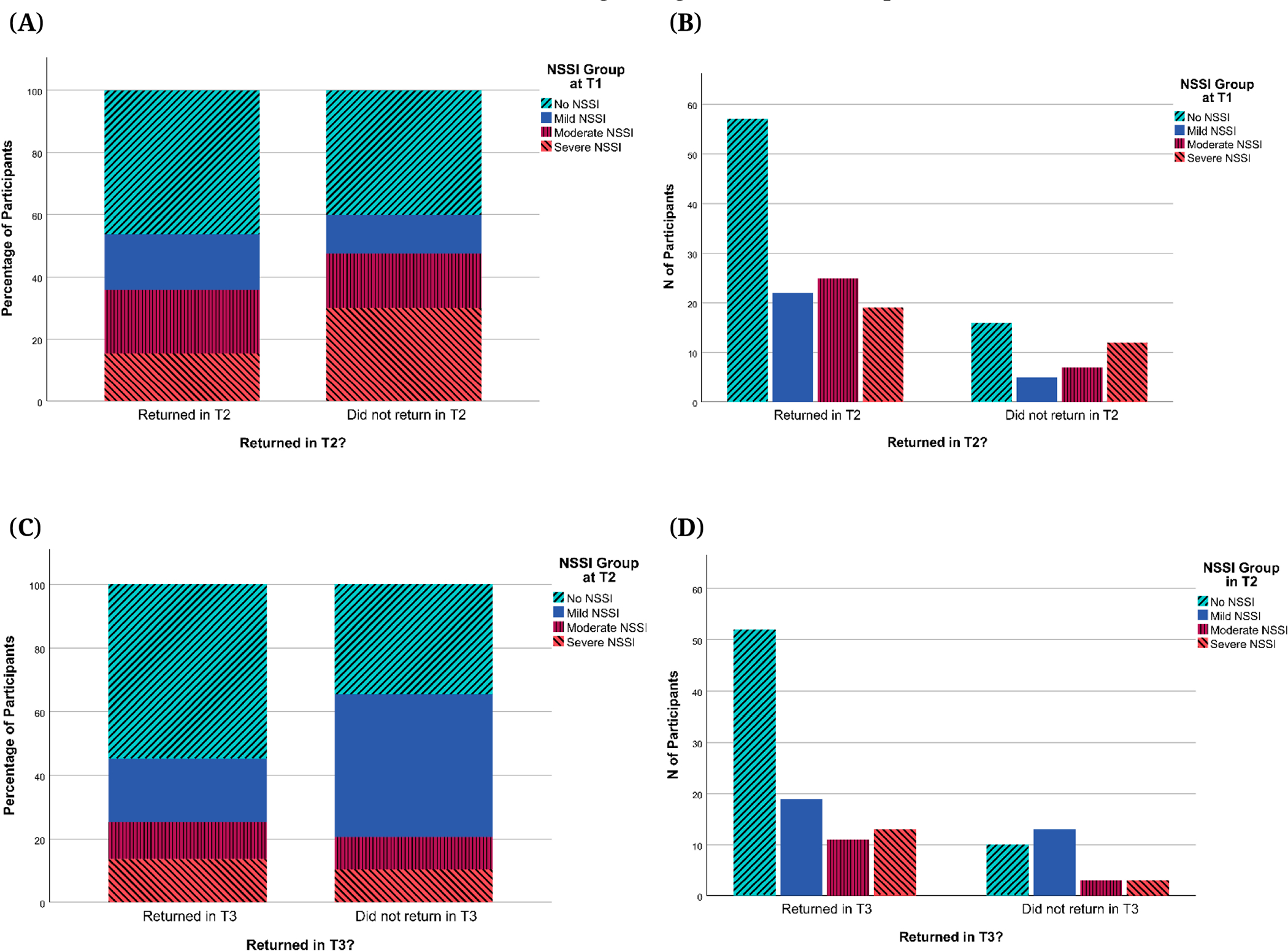
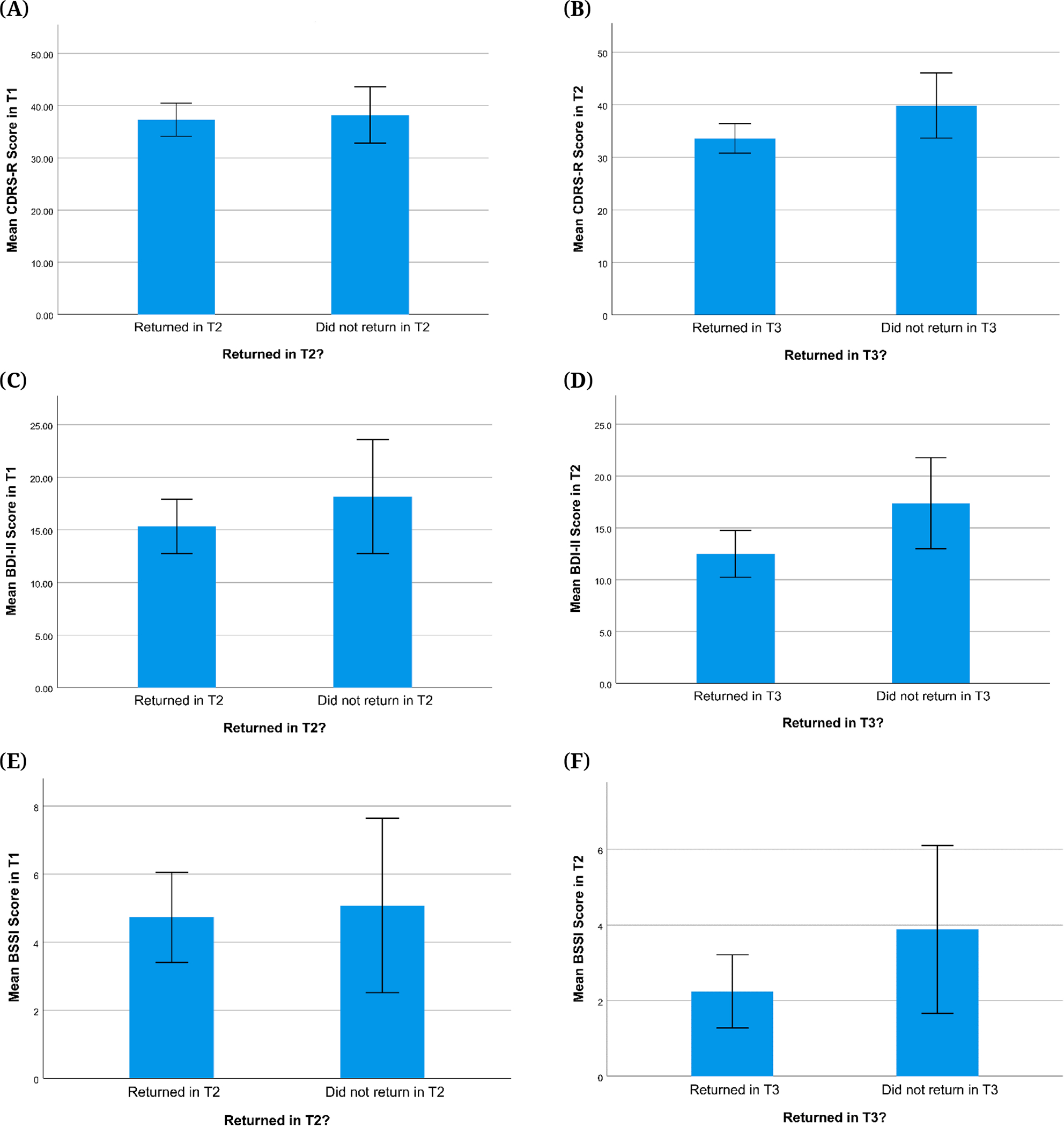
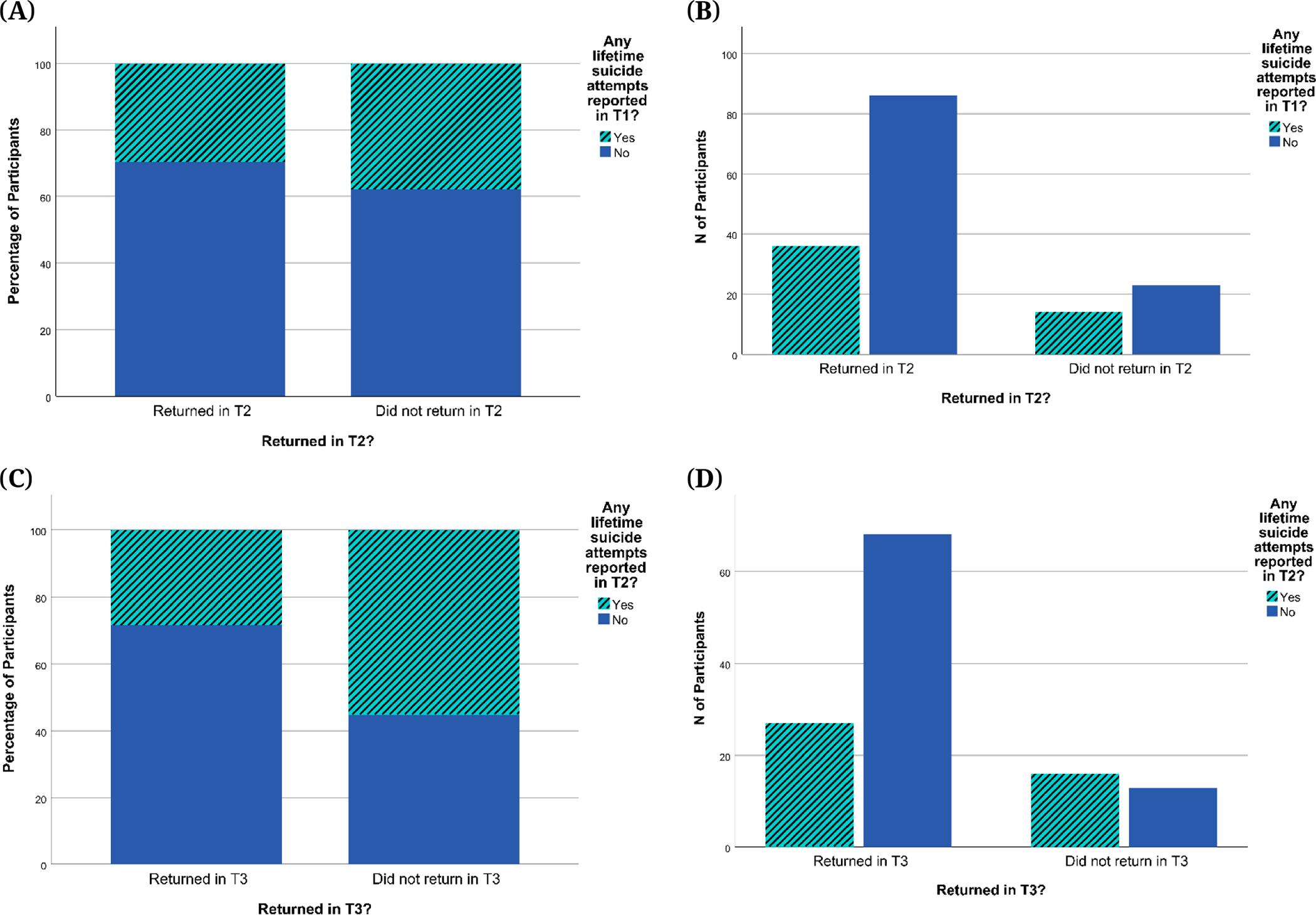
Of the 164 study participants, 75.61% and 57.93% completed the second and third time points, respectively. Visual inspection of the data suggests an overall trend of decreasing severity of psychopathology over time, and adolescents with a history of NSSI appeared to have higher rates of psychopathology than those without.
This paper describes longitudinal clinical trajectories in adolescents with a range of NSSI histories and presents readers with an overview of the rich, publicly available dataset that we hope will inspire future research to advance the understanding of the neurodevelopmental trajectories associated with NSSI, depression, and suicide risk.
非自杀性自伤(NSSI)是青少年中一种非常普遍的临床问题,与功能受损和自杀风险相关。BRIDGES(女孩情绪与自我的脑成像发展)研究旨在收集纵向临床和神经生物学数据,以增进我们对青少年非自杀性自伤的理解。本文的目的是描述作为该研究一部分收集的临床数据,包括精神疾病诊断、抑郁症状、非自杀性自伤发作、自杀想法和行为、童年创伤以及人格领域。
基线样本包括164名12 - 16岁的青少年,她们出生时被指定为女性(平均年龄 = 14.97,标准差 = 1.20),非自杀性自伤史从无到严重不等。参与者及其父母/监护人被邀请在大约相隔一年的三个时间点提供数据。进行描述性分析以提供临床数据的发生率和轨迹估计。
在164名研究参与者中,分别有75.61%和57.93%完成了第二个和第三个时间点的数据收集。对数据的直观检查表明,随着时间的推移,精神病理学严重程度总体呈下降趋势,有非自杀性自伤史的青少年似乎比没有该病史的青少年有更高的精神病理学发生率。
本文描述了具有一系列非自杀性自伤史的青少年的纵向临床轨迹,并向读者介绍了丰富的、可公开获取的数据集概况,我们希望这将激发未来的研究,以增进对与非自杀性自伤、抑郁和自杀风险相关的神经发育轨迹的理解。