SINTEF Ocean, Trondheim NO-7465, Norway.
Oleolytics LLC, Lebanon, New Jersey 08833, United States.
Environ Sci Technol. 2023 Aug 29;57(34):12583-12593. doi: 10.1021/acs.est.3c01624. Epub 2023 Aug 17.
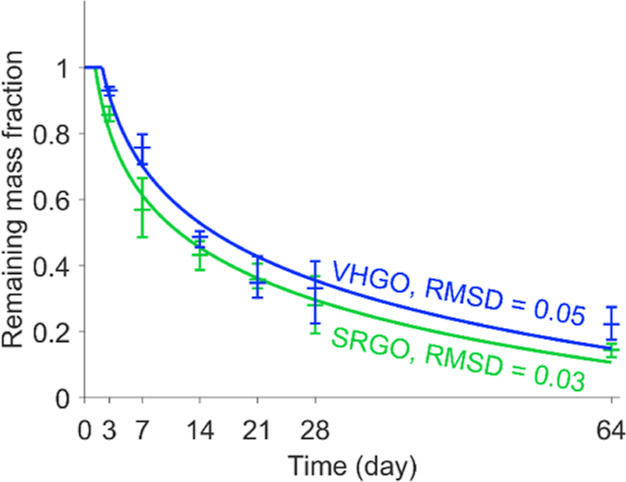
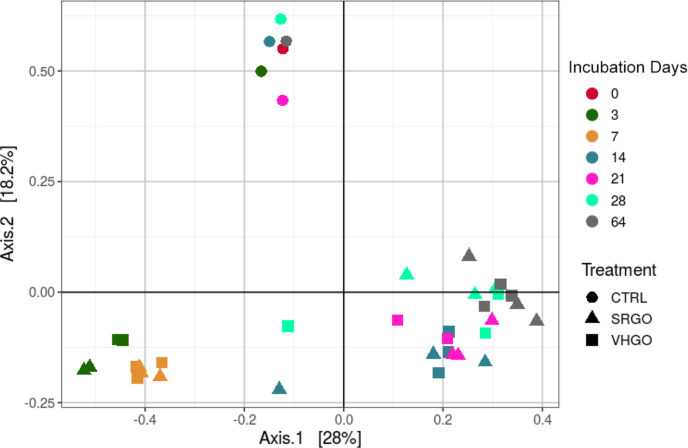
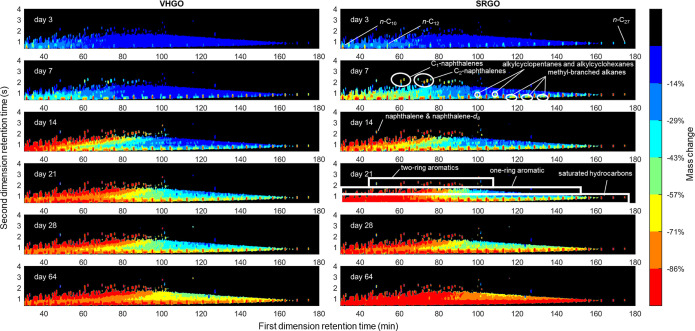
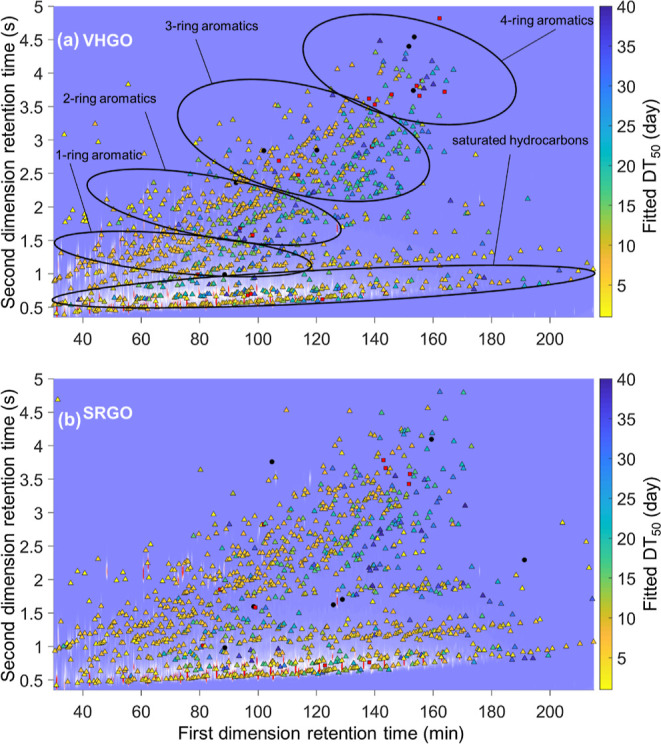
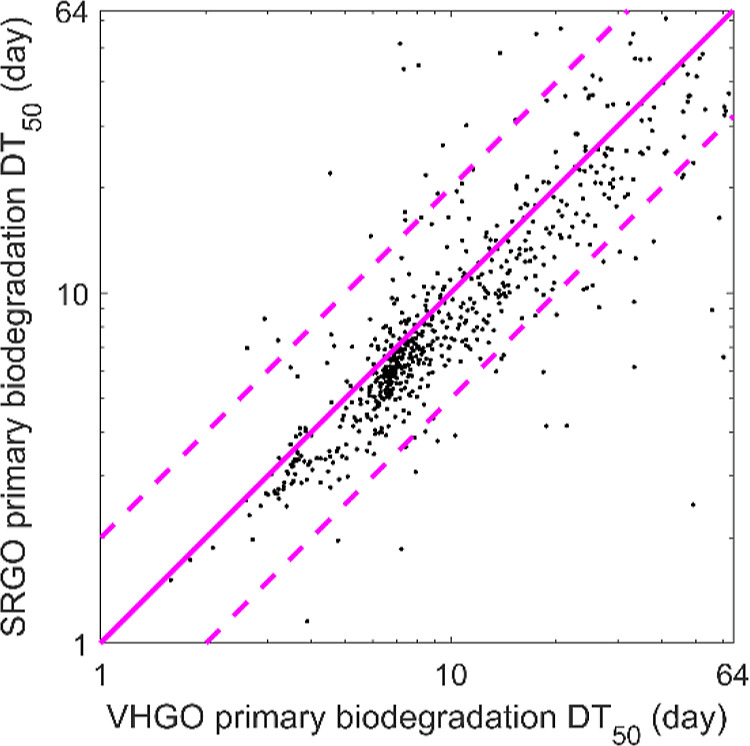
Petroleum substances, as archetypical UVCBs (substances of unknown or variable composition, complex reaction products, or biological substances), pose a challenge for chemical risk assessment as they contain hundreds to thousands of individual constituents. It is particularly challenging to determine the biodegradability of petroleum substances since each constituent behaves differently. Testing the whole substance provides an average biodegradation, but it would be effectively impossible to obtain all constituents and test them individually. To overcome this challenge, comprehensive two-dimensional gas chromatography (GC × GC) in combination with advanced data-handling algorithms was applied to track and calculate degradation half-times (DTs) of individual constituents in two dispersed middle distillate gas oils in seawater. By tracking >1000 peaks (representing ∼53-54% of the total mass across the entire chromatographic area), known biodegradation patterns of oil constituents were confirmed and extended to include many hundreds not currently investigated by traditional one-dimensional GC methods. Approximately 95% of the total tracked peak mass biodegraded after 64 days. By tracking the microbial community evolution, a correlation between the presence of functional microbial communities and the observed progression of DTs between chemical classes was demonstrated. This approach could be used to screen the persistence of GC × GC-amenable constituents of petroleum substance UVCBs.
石油物质是典型的 UVCB(成分不明或组成可变的物质、复杂反应产物或生物物质),由于其中含有数百到数千种单独的成分,因此对化学风险评估构成了挑战。由于每种成分的行为都不同,因此确定石油物质的生物降解性尤其具有挑战性。测试整个物质可以提供平均生物降解率,但实际上不可能获得所有成分并单独测试它们。为了克服这一挑战,应用了综合二维气相色谱(GC×GC)与先进的数据处理算法,以跟踪和计算海水中两种分散的中间馏分油中单个成分的降解半衰期(DT)。通过跟踪 >1000 个峰(代表整个色谱区域总质量的约 53-54%),确认了已知的油成分生物降解模式,并将其扩展到包括许多目前尚未通过传统一维 GC 方法进行研究的成分。大约 95%的总跟踪峰质量在 64 天后被生物降解。通过跟踪微生物群落的演变,证明了功能微生物群落的存在与观察到的化学类别之间 DT 进展之间存在相关性。这种方法可用于筛选石油物质 UVCB 中 GC×GC 可处理成分的持久性。