NICM Health Research Institute, Western Sydney University, Locked Bag 1797, Penrith, NSW, 2751, Australia.
School of Medicine, Western Sydney University, Penrith, NSW, 2751, Australia.
Syst Rev. 2023 Aug 17;12(1):143. doi: 10.1186/s13643-023-02301-6.
Subjective cognitive impairment (SCI) substantially increases dementia risk and is often conceptualised as the preclinical asymptomatic phase of the cognitive decline continuum. Due to the lack of pharmacological interventions available to treat SCI and reduce dementia risk, and the popularity of herbal and nutritional medicines, the primary aim of this review was to investigate the efficacy on cognitive function and safety of herbal and nutritional medicines (relative to a control) for older adults with and without SCI. The secondary aims were to describe the study characteristics and assess the methodological quality of included studies.
Five databases (Cochrane, MEDLINE, CINAHL, PsycInfo, and EMBASE) were searched from database inception with weekly alerts established until review finalisation on 18 September 2022. Articles were eligible if they included the following: study population of older adults with and without SCI, herbal and nutritional medicines as an intervention, evaluated cognitive outcomes and were randomised control trials.
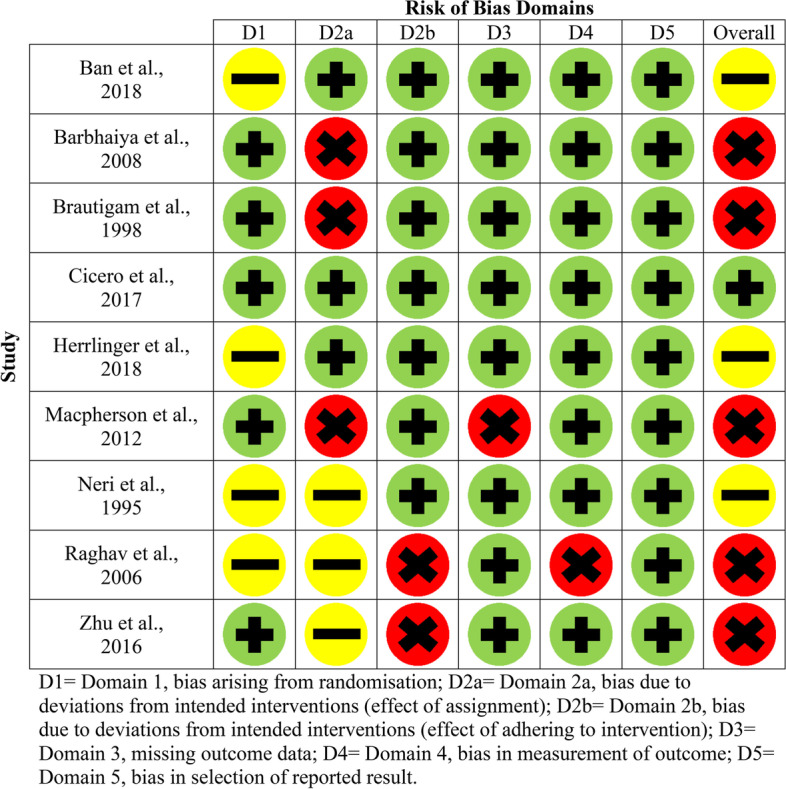
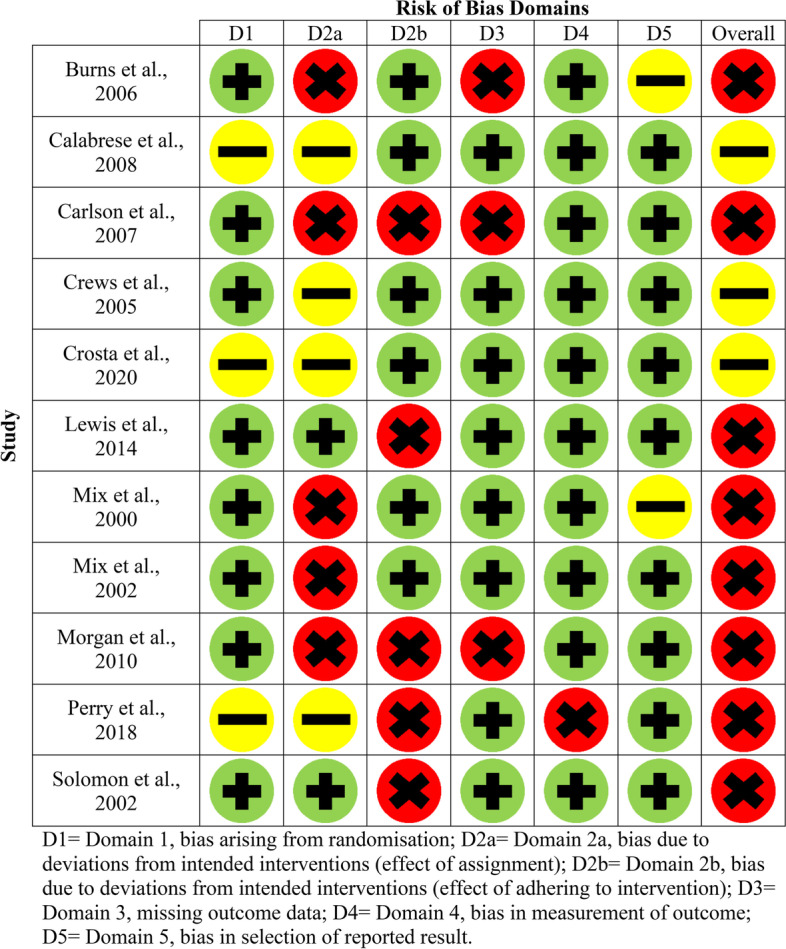
Data were extracted from 21/7666 eligible full-text articles, and the risk of methodological bias was assessed (with SCI = 9/21; without SCI = 12/21). Most studies (20/21) employed parallel, randomised, placebo-controlled designs and were 12 weeks in length. Herbal supplements were widely used (17/21), namely a form of Ginkgo biloba (8/21) or Bacopa monnieri (6/21). Measures of cognition varied across studies, with 14/21 reporting improvements in at least one domain of cognitive functioning over time, in the intervention group (compared to control). A total of 14/21 studies were deemed as having an overall high methodological risk of bias, 6/21 had some concerns, and only one study (using an SCI population) was assessed as having a low risk of methodological bias.
Overall, this review found that there is a low quality of evidence regarding the efficacy of cognitive function and safety of herbal and nutritional medicines for older adults with and without SCI, due to a high risk of bias across studies. Additionally, further work needs to be done in classifying and understanding SCI and selecting appropriate trial primary outcomes before future studies can more accurately determine the efficacy of interventions for this population.
主观认知障碍(SCI)显著增加了痴呆风险,通常被认为是认知衰退连续体的无症状临床前阶段。由于缺乏可用的药物干预措施来治疗 SCI 和降低痴呆风险,以及草药和营养药物的流行,本研究的主要目的是调查草药和营养药物(与对照相比)对有和没有 SCI 的老年患者认知功能的疗效和安全性。次要目的是描述研究特征并评估纳入研究的方法学质量。
从数据库建立开始,每周进行一次更新,直到 2022 年 9 月 18 日综述最终确定,共对 5 个数据库(Cochrane、MEDLINE、CINAHL、PsycInfo 和 EMBASE)进行了检索。如果文章符合以下标准,则被纳入:研究人群为有和没有 SCI 的老年人;草药和营养药物作为干预措施;评估认知结果;且为随机对照试验。
从 7666 篇符合条件的全文文章中提取数据,并评估了方法学偏倚的风险(有 SCI=9/21;无 SCI=12/21)。大多数研究(20/21)采用平行、随机、安慰剂对照设计,持续 12 周。广泛使用草药补充剂(17/21),即银杏叶(8/21)或假马齿苋(6/21)。研究中的认知测量指标各不相同,14/21 项研究报告称,与对照组相比,干预组的认知功能至少有一个领域随时间改善。21 项研究中有 14 项被认为整体具有高度的方法学偏倚风险,6 项有一些担忧,只有一项研究(针对 SCI 人群)被评估为具有低方法学偏倚风险。
总的来说,由于研究之间存在高度的偏倚风险,本综述发现,关于草药和营养药物对有和没有 SCI 的老年患者认知功能的疗效和安全性的证据质量较低。此外,在未来的研究能够更准确地确定干预措施对这一人群的疗效之前,还需要进一步开展分类和理解 SCI 以及选择适当的试验主要结局的工作。