Department of Orthopaedics and Rehabilitation, The Pennsylvania State University College of Medicine, Hershey, Pennsylvania, USA.
Center for Orthopaedic Research and Translational Science (CORTS), The Pennsylvania State University College of Medicine, Hershey, Pennsylvania, USA.
J Bone Miner Res. 2023 Nov;38(11):1560-1576. doi: 10.1002/jbmr.4902. Epub 2023 Sep 25.
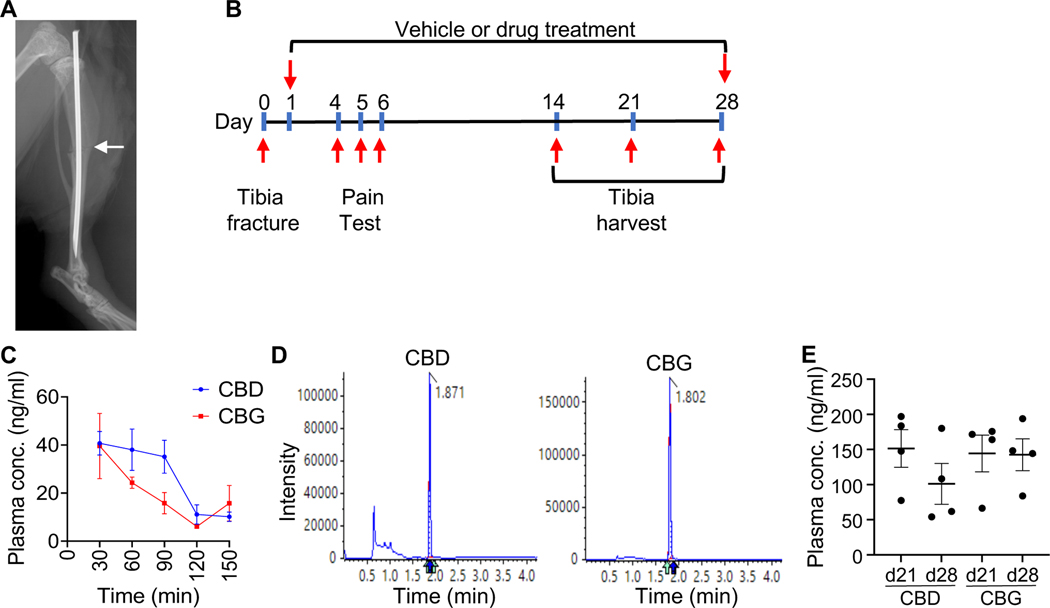
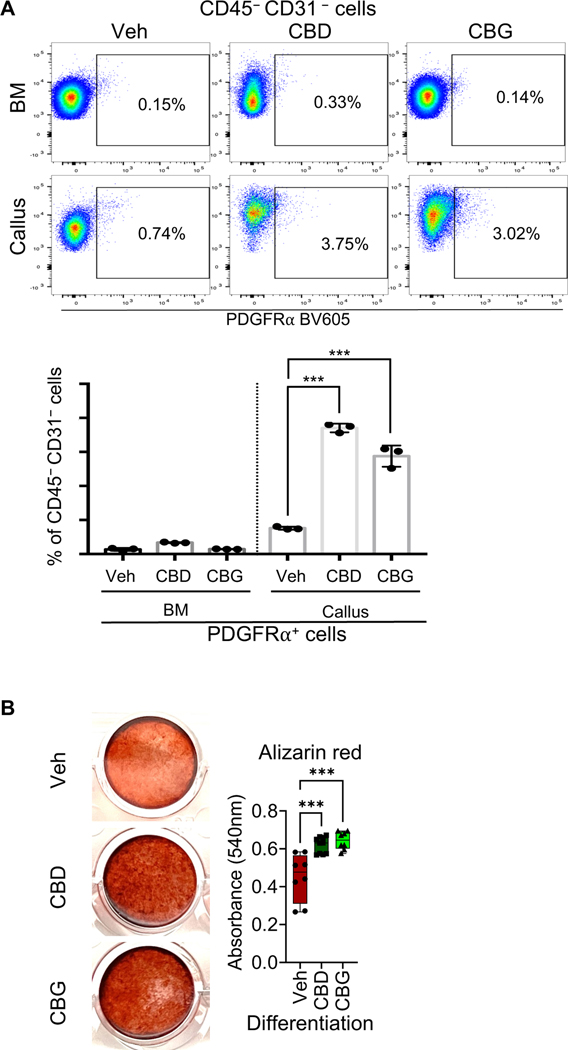
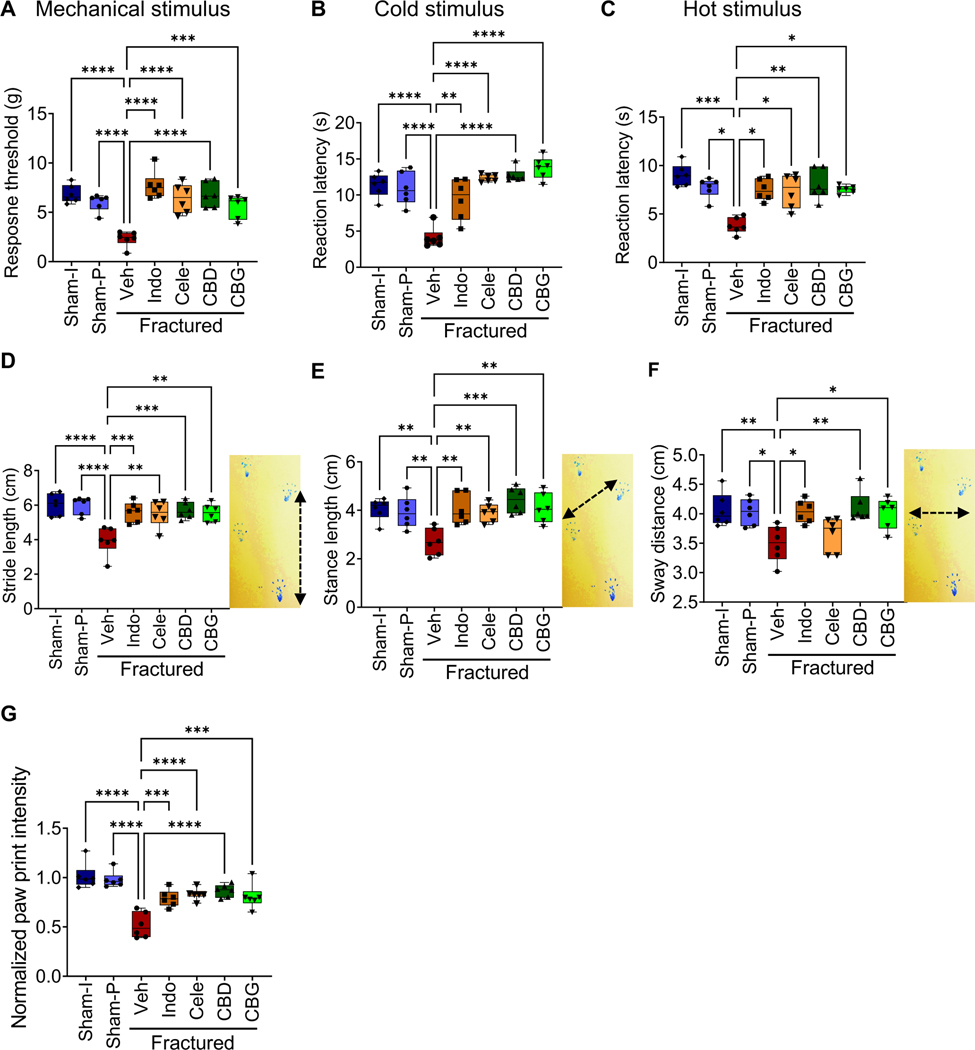
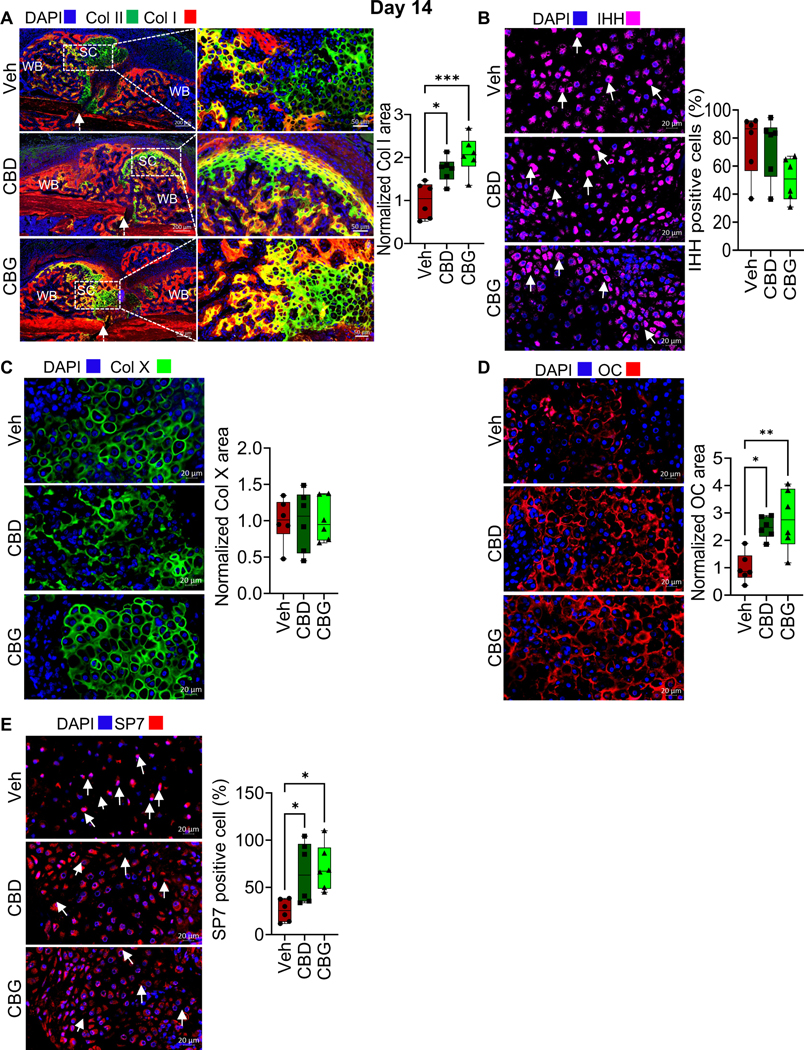
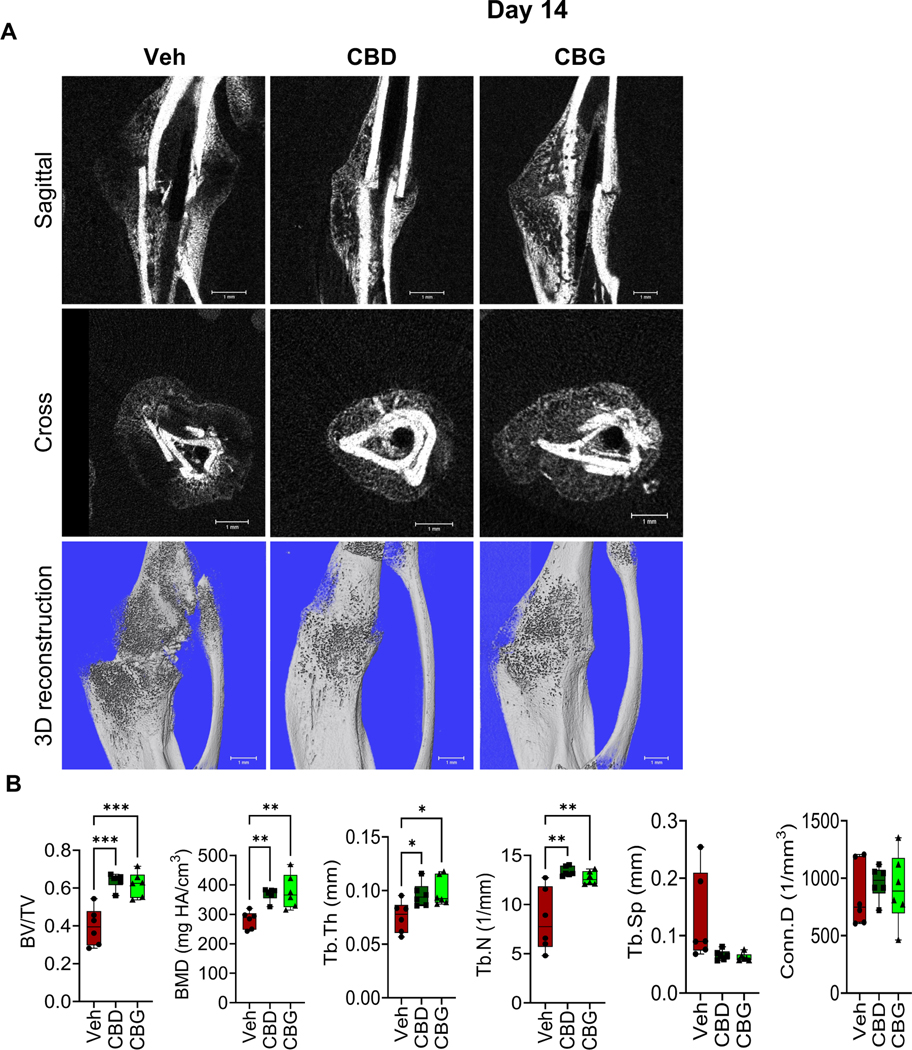
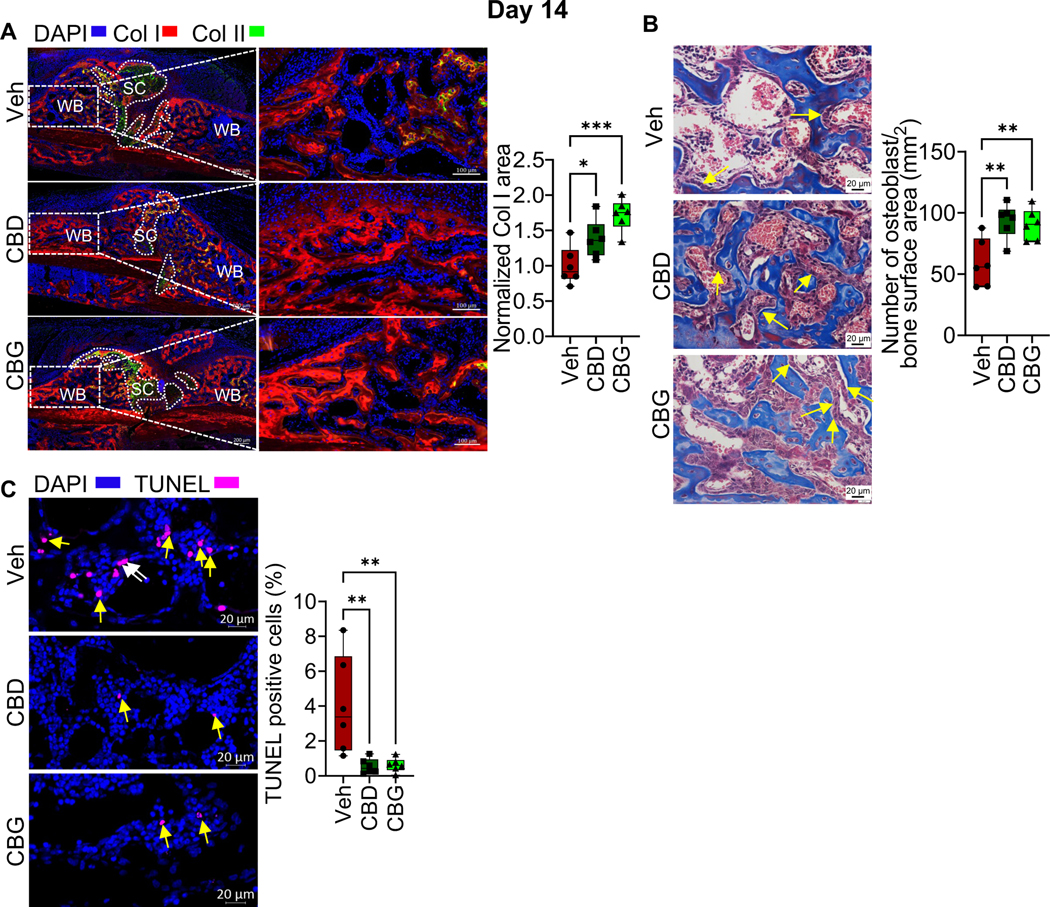
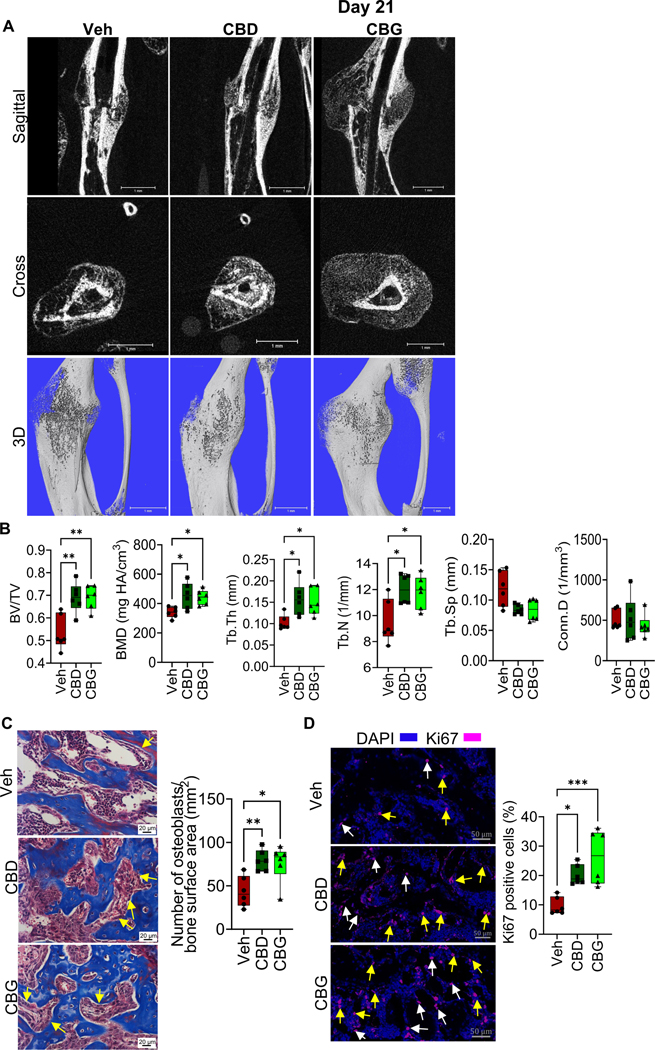
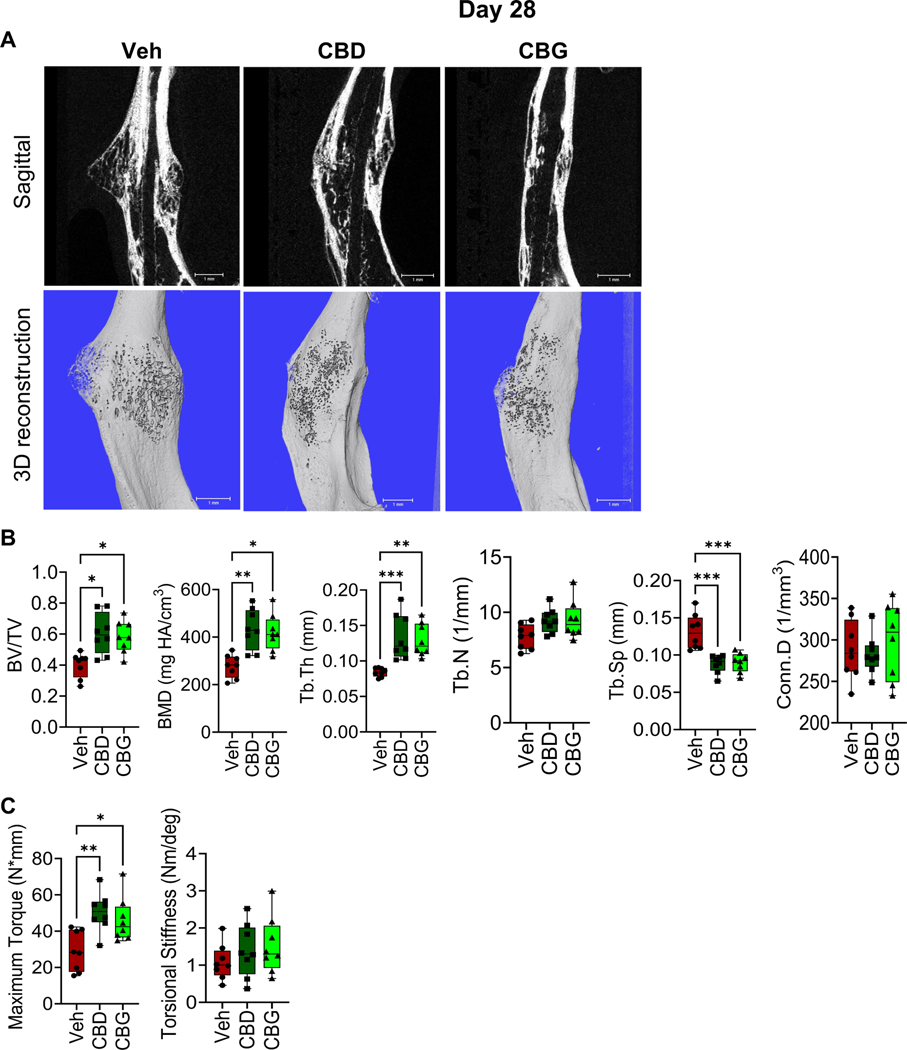
Bone fractures are among the most prevalent musculoskeletal injuries, and pain management is an essential part of fracture treatment. Fractures heal through an early inflammatory phase, followed by repair and remodeling. Nonsteroidal anti-inflammatory drugs (NSAIDs) are not recommended for fracture pain control as they potently inhibit the inflammatory phase and, thus, impair the healing. Opioids do not provide a better alternative for several reasons, including abuse potential. Accordingly, there is an unmet clinical need for analgesics that effectively ameliorate postfracture pain without impeding the healing. Here, we investigated the analgesic efficacy of two nonpsychotropic cannabinoids, cannabidiol (CBD) and cannabigerol (CBG), in a mouse model for tibial fracture. Mice with fractured tibiae exhibited increased sensitivity to mechanical, cold, and hot stimuli. Both CBD and CBG normalized pain sensitivity to all tested stimuli, and their analgesic effects were comparable to those of the NSAIDs. Interestingly, CBD and CBG promoted bone healing via multiple mechanisms during the early and late phases. During the early inflammatory phase, both cannabinoids increased the abundance of periosteal bone progenitors in the healing hematoma and promoted the osteogenic commitment of these progenitors. During the later phases of healing, CBD and CBG accelerated the fibrocartilaginous callus mineralization and enhanced the viability and proliferation of bone and bone-marrow cells. These effects culminated in higher bone volume fraction, higher bone mineral density, and improved mechanical quality of the newly formed bone. Together, our data suggest CBD and CBG as therapeutic agents that can replace NSAIDs in managing postfracture pain as both cannabinoids exert potent analgesic effects and, at the same time, promote bone healing. © 2023 The Authors. Journal of Bone and Mineral Research published by Wiley Periodicals LLC on behalf of American Society for Bone and Mineral Research (ASBMR).
骨折是最常见的肌肉骨骼损伤之一,疼痛管理是骨折治疗的重要组成部分。骨折通过早期炎症期、修复和重塑期愈合。非甾体抗炎药(NSAIDs)不推荐用于骨折疼痛控制,因为它们强烈抑制炎症期,从而损害愈合。由于多种原因,包括滥用潜力,阿片类药物并不是更好的选择。因此,临床上需要有效的镇痛剂来缓解骨折后疼痛,而不会阻碍愈合。在这里,我们研究了两种非精神活性大麻素,大麻二酚(CBD)和大麻萜酚(CBG)在小鼠胫骨骨折模型中的镇痛效果。胫骨骨折的小鼠对机械、冷和热刺激的敏感性增加。CBD 和 CBG 均可使所有测试刺激的疼痛敏感性正常化,其镇痛效果可与 NSAIDs 相媲美。有趣的是,CBD 和 CBG 通过多种机制在早期和晚期促进骨愈合。在早期炎症期,两种大麻素都增加了愈合血肿中骨膜骨祖细胞的丰度,并促进了这些祖细胞的成骨分化。在愈合的后期阶段,CBD 和 CBG 加速了纤维软骨性愈伤组织的矿化,并增强了骨髓细胞和成骨细胞的活力和增殖。这些作用最终导致骨体积分数增加、骨矿物质密度增加和新形成骨的机械质量提高。总之,我们的数据表明 CBD 和 CBG 可以作为治疗剂替代 NSAIDs 来管理骨折后疼痛,因为这两种大麻素都具有很强的镇痛作用,同时促进骨愈合。