Department of Clinical Laboratory, Sichuan Clinical Research Center for Cancer, Sichuan Cancer Hospital & Institute, Sichuan Cancer Center, Affiliated Cancer Hospital of University of Electronic Science and Technology of China, Chengdu, China.
Department of Oncology, Tongji Hospital, Tongji Medical College, Huazhong University of Science and Technology, Wuhan, China.
Sci Rep. 2023 Aug 19;13(1):13532. doi: 10.1038/s41598-023-40780-8.
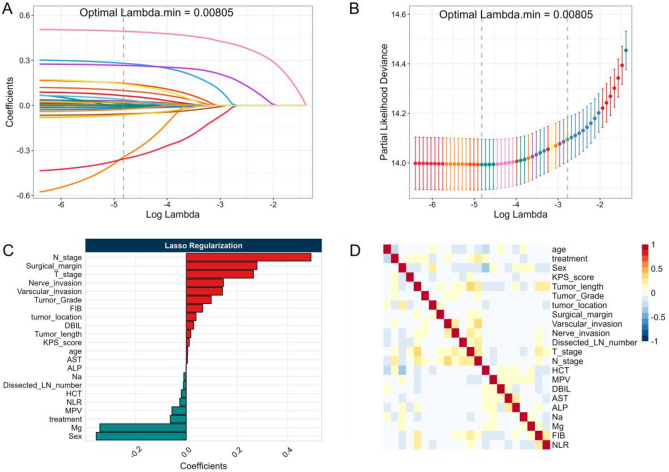
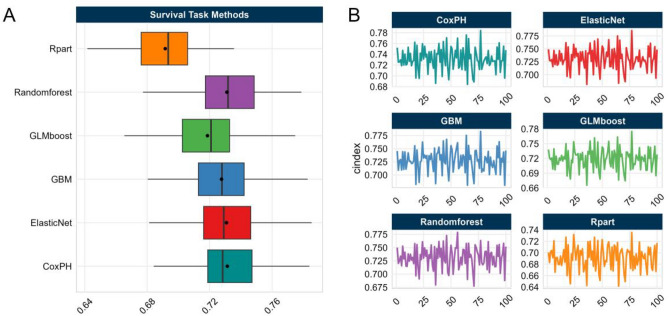
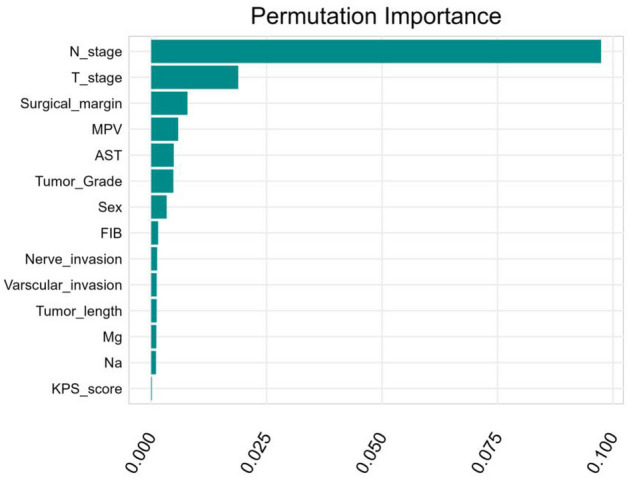
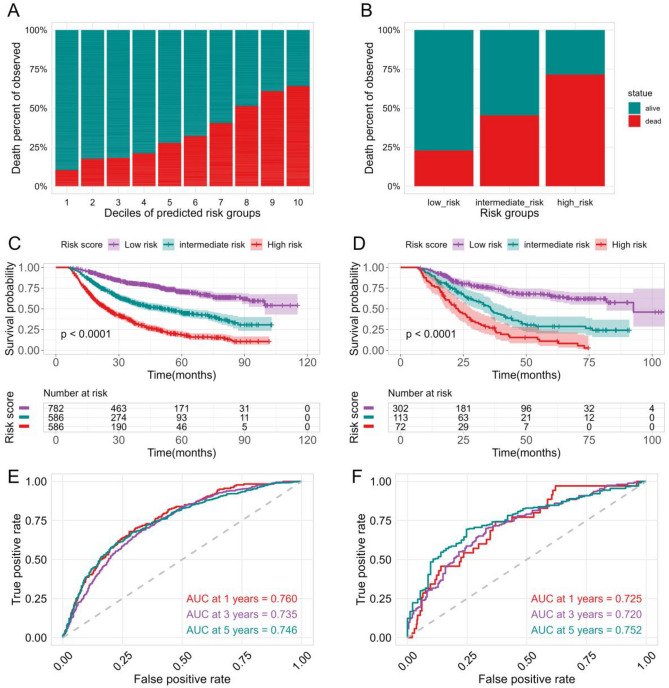
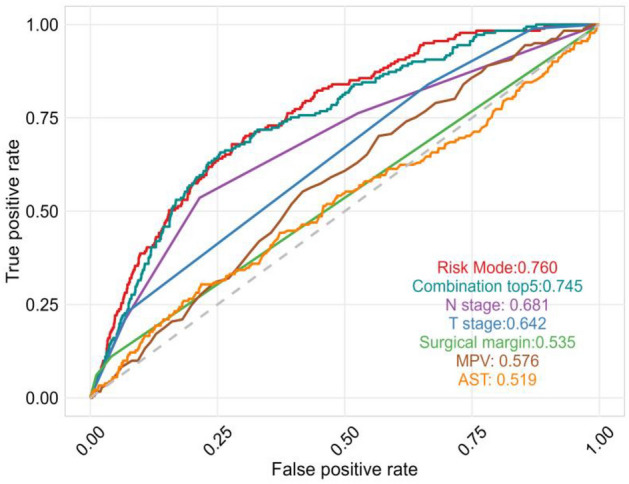
The current prognostic tools for esophageal squamous cell carcinoma (ESCC) lack the necessary accuracy to facilitate individualized patient management strategies. To address this issue, this study was conducted to develop a machine learning (ML) prediction model for ESCC patients' survival management. Six ML approaches, including Rpart, Elastic Net, GBM, Random Forest, GLMboost, and the machine learning-extended CoxPH method, were employed to develop risk prediction models. The model was trained on a dataset of 1954 ESCC patients with 27 clinical features and validated on a dataset of 487 ESCC patients. The discriminative performance of the models was assessed using the concordance index (C-index). The best performing model was used for risk stratification and clinical evaluation. The study found that N stage, T stage, surgical margin, tumor grade, tumor length, sex, MPV, AST, FIB, and Mg are the important feature for ESCC patients' survival. The machine learning-extended CoxPH model, Elastic Net, and Random Forest had similar performance in predicting the mortality risk of ESCC patients, and outperformed GBM, GLMboost, and Rpart. The risk scores derived from the CoxPH model effectively stratified ESCC patients into low-, intermediate-, and high-risk groups with distinctly different 3-year overall survival (OS) probabilities of 80.8%, 58.2%, and 29.5%, respectively. This risk stratification was also observed in the validation cohort. Furthermore, the risk model demonstrated greater discriminative ability and net benefit than the AJCC8th stage, suggesting its potential as a prognostic tool for predicting survival events and guiding clinical decision-making. The classical algorithm of the CoxPH method was also found to be sufficiently good for interpretive studies.
目前用于食管鳞状细胞癌 (ESCC) 的预后工具缺乏必要的准确性,无法为患者提供个体化的管理策略。针对这一问题,本研究旨在开发一种用于 ESCC 患者生存管理的机器学习 (ML) 预测模型。该研究采用了 6 种 ML 方法,包括 Rpart、Elastic Net、GBM、Random Forest、GLMboost 和机器学习扩展的 CoxPH 方法,来构建风险预测模型。该模型在包含 27 个临床特征的 1954 名 ESCC 患者数据集上进行训练,并在包含 487 名 ESCC 患者的数据集上进行验证。采用一致性指数 (C-index) 评估模型的判别性能。选择表现最佳的模型进行风险分层和临床评估。研究发现,N 分期、T 分期、手术切缘、肿瘤分级、肿瘤长度、性别、MPV、AST、FIB 和 Mg 是影响 ESCC 患者生存的重要特征。机器学习扩展的 CoxPH 模型、Elastic Net 和 Random Forest 在预测 ESCC 患者的死亡风险方面表现相似,优于 GBM、GLMboost 和 Rpart。基于 CoxPH 模型的风险评分可将 ESCC 患者有效分层为低危、中危和高危组,其 3 年总生存率 (OS) 分别为 80.8%、58.2%和 29.5%。这种分层在验证队列中也得到了验证。此外,该风险模型比 AJCC8 分期具有更好的判别能力和净获益,表明其作为一种预测生存事件和指导临床决策的预后工具具有潜在价值。CoxPH 方法的经典算法也被发现足以用于解释性研究。