Martins Zita E, Ramos Helena, Araújo Ana Margarida, Silva Marta, Ribeiro Mafalda, Melo Armindo, Mansilha Catarina, Viegas Olga, Faria Miguel A, Ferreira Isabel M P L V O
LAQV/REQUIMTE, Departamento de Ciências Químicas, Laboratório de Bromatologia e Hidrologia, Faculdade de Farmácia, Universidade do Porto, Rua de Jorge Viterbo Ferreira n.° 228, 4050-313 Porto, Portugal.
Faculdade de Ciências da Nutrição e Alimentação, Universidade do Porto, Rua do Campo Alegre 823, 4150-180 Porto, Portugal.
Curr Res Food Sci. 2023 Aug 3;7:100557. doi: 10.1016/j.crfs.2023.100557. eCollection 2023.
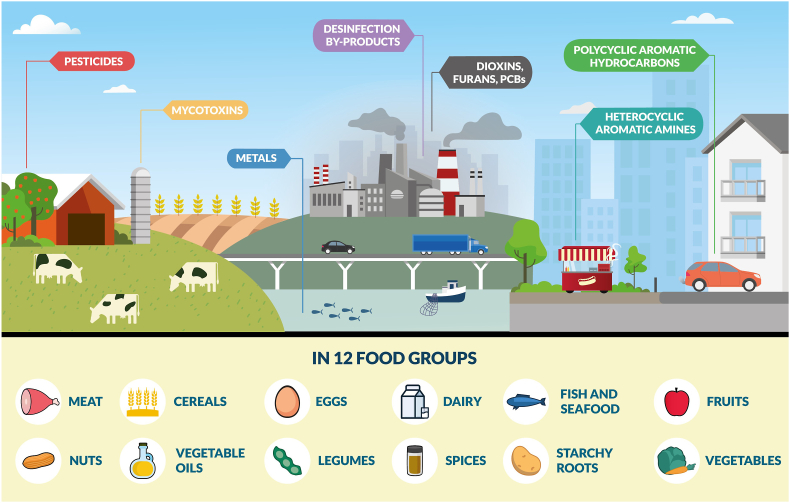
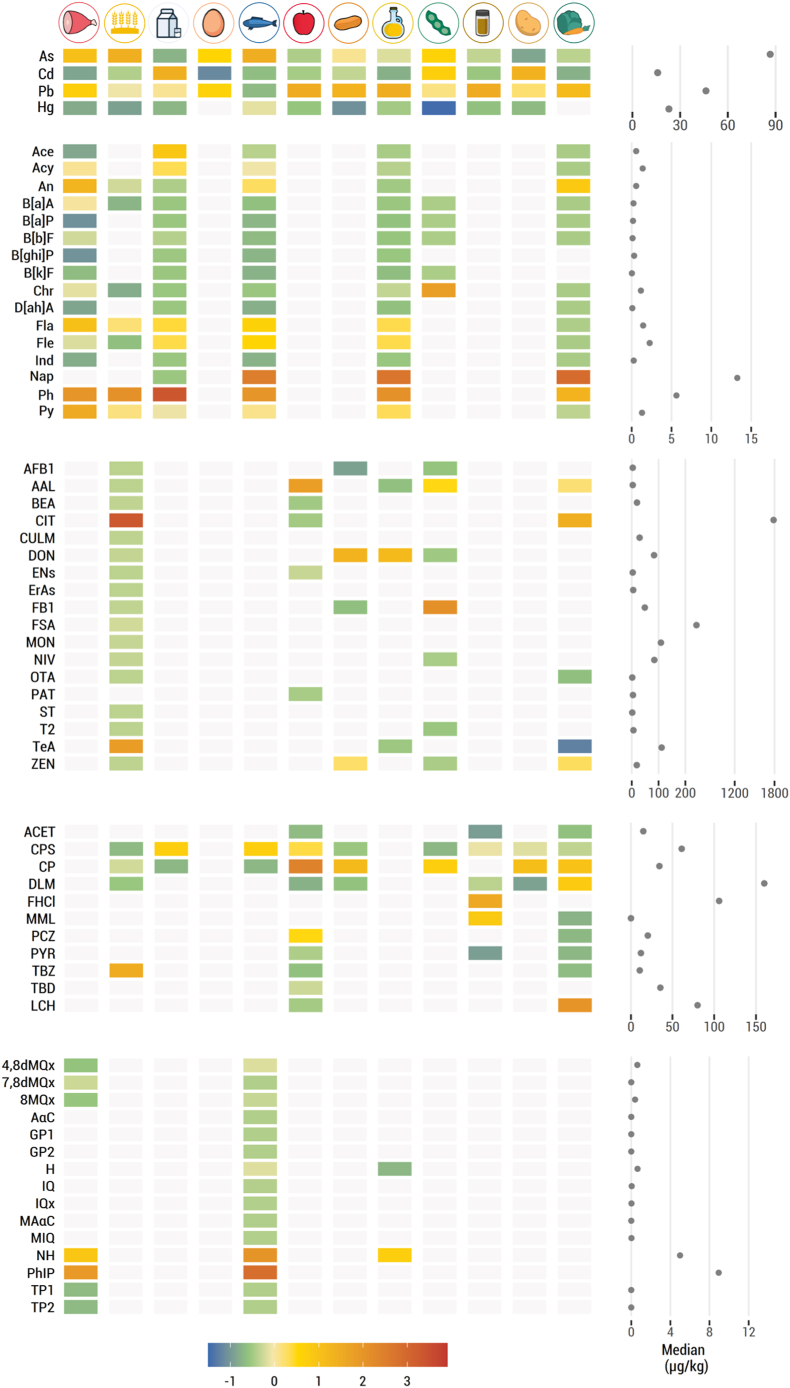
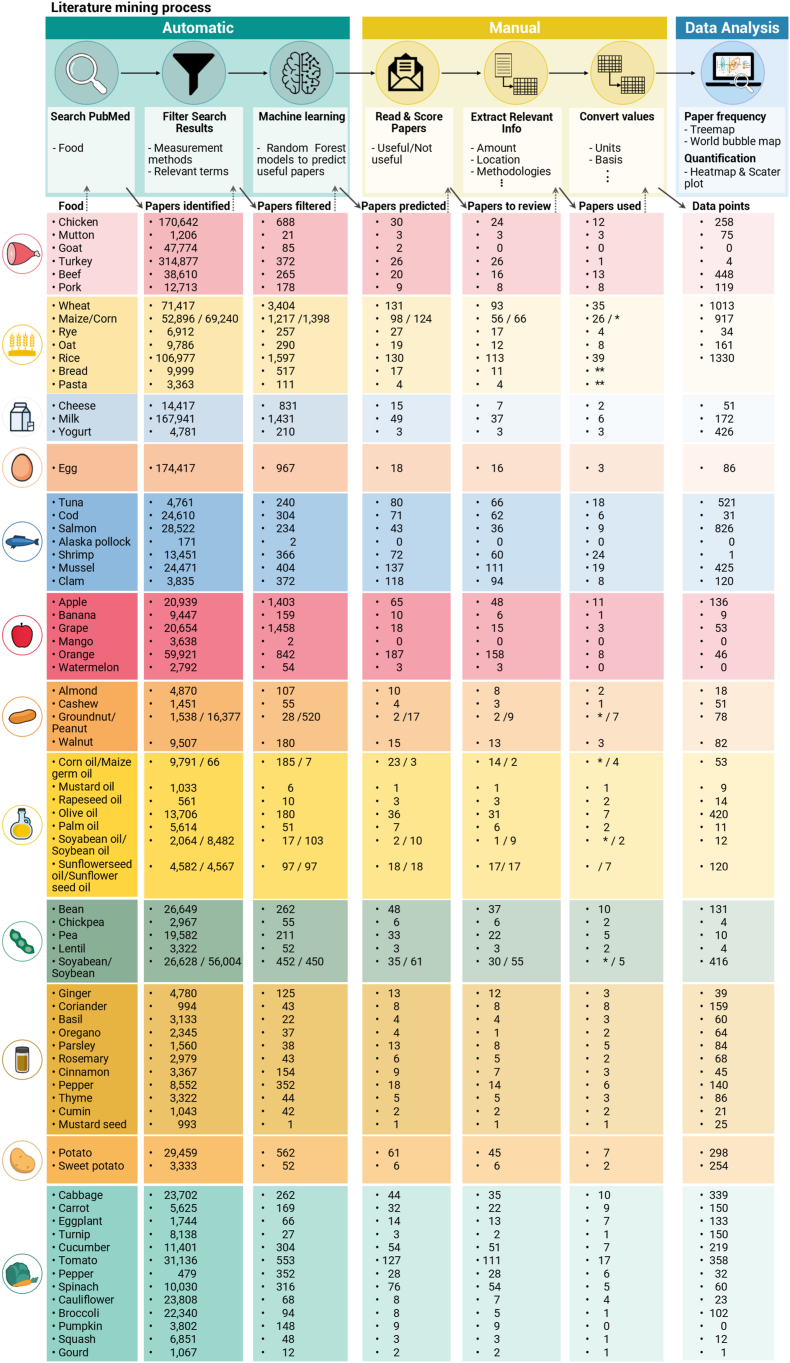
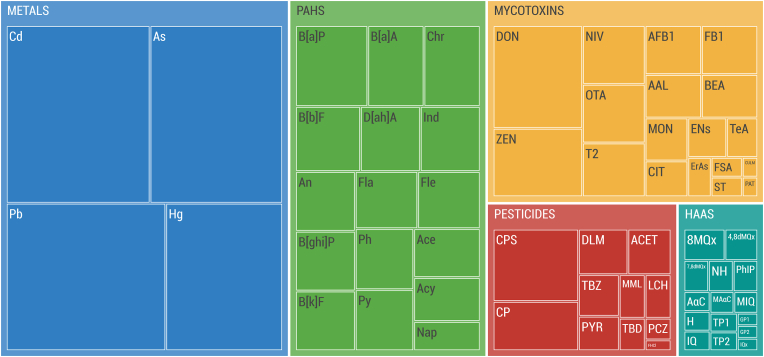
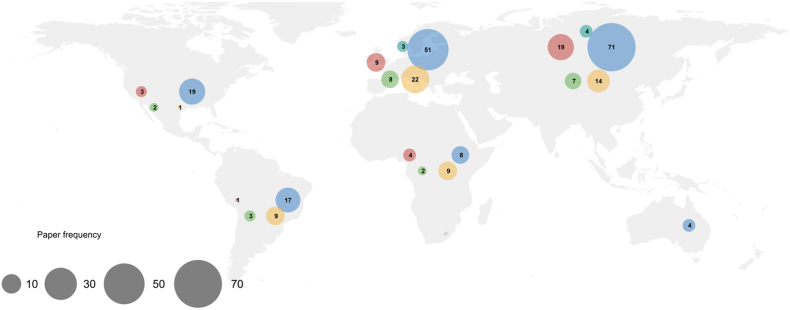
Food remains a major source of human exposure to chemical contaminants that are unintentionally present in commodities globally, despite strict regulation. Scientific literature is a valuable source of quantification data on those contaminants in various foods, but manually summarizing the information is not practicable. In this review, literature mining and machine learning techniques were applied in 72 foods to obtain relevant information on 96 contaminants, including heavy metals, polychlorinated biphenyls, dioxins, furans, polycyclic aromatic hydrocarbons (PAHs), pesticides, mycotoxins, and heterocyclic aromatic amines (HAAs). The 11,723 data points collected from 254 papers from the last two decades were then used to identify the patterns of contaminants distribution. Considering contaminant categories, metals were the most studied globally, followed by PAHs, mycotoxins, pesticides, and HAAs. As for geographical region, the distribution was uneven, with Europe and Asia having the highest number of studies, followed by North and South America, Africa and Oceania. Regarding food groups, all contained metals, while PAHs were found in seven out of 12 groups. Mycotoxins were found in six groups, and pesticides in almost all except meat, eggs, and vegetable oils. HAAs appeared in only three food groups, with fish and seafood reporting the highest levels. The median concentrations of contaminants varied across food groups, with citrinin having the highest median value. The information gathered is highly relevant to explore, establish connections, and identify patterns between diverse datasets, aiming at a comprehensive view of food contamination.
尽管有严格的监管,但食品仍然是全球商品中无意存在的化学污染物的主要来源。科学文献是各种食品中这些污染物定量数据的宝贵来源,但手动总结这些信息是不可行的。在本综述中,我们将文献挖掘和机器学习技术应用于72种食品,以获取96种污染物的相关信息,包括重金属、多氯联苯、二恶英、呋喃、多环芳烃(PAHs)、农药、霉菌毒素和杂环芳香胺(HAAs)。然后,我们使用从过去二十年的254篇论文中收集的11723个数据点来识别污染物的分布模式。考虑到污染物类别,全球研究最多的是金属,其次是多环芳烃、霉菌毒素、农药和杂环芳香胺。至于地理区域,分布并不均匀,欧洲和亚洲的研究数量最多,其次是北美洲和南美洲、非洲和大洋洲。关于食品类别,所有类别都含有金属,而12个类别中有7个类别发现了多环芳烃。霉菌毒素在6个类别中被发现,除肉类、蛋类和植物油外,几乎所有类别都发现了农药。杂环芳香胺仅出现在3个食品类别中,鱼类和海鲜中的含量最高。不同食品类别中污染物的中位数浓度各不相同,桔霉素的中位数最高。收集到的信息对于探索、建立不同数据集之间的联系和识别模式非常相关,旨在全面了解食品污染情况。