Department of Microbiology, Icahn School of Medicine at Mount Sinai, New York, NY, United States.
Graduate School of Biomedical Sciences, Icahn School of Medicine at Mount Sinai, New York, NY, United States.
Front Immunol. 2023 Aug 4;14:1217181. doi: 10.3389/fimmu.2023.1217181. eCollection 2023.
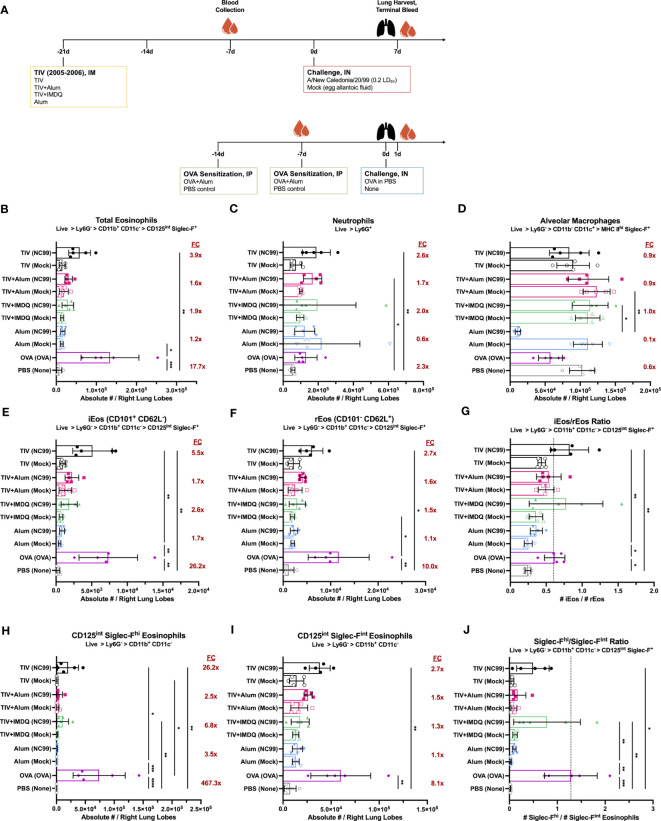
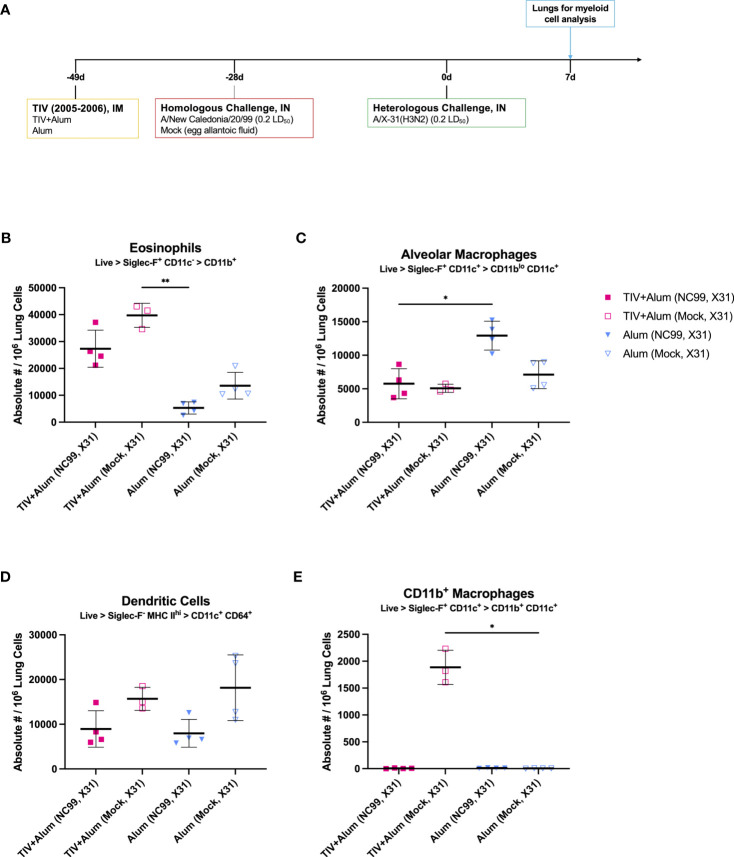
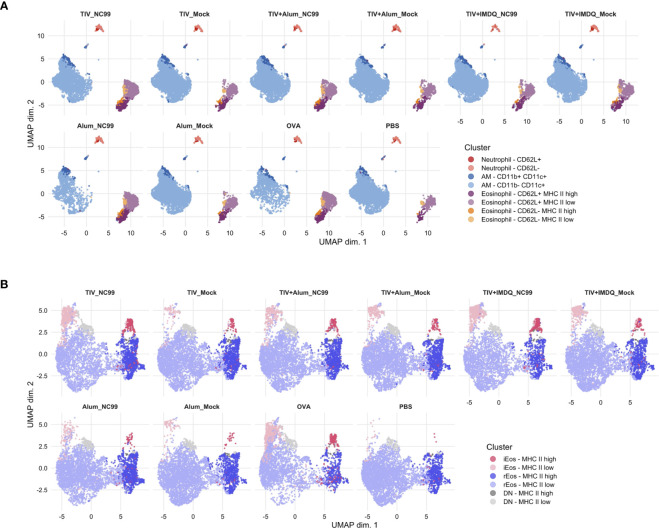
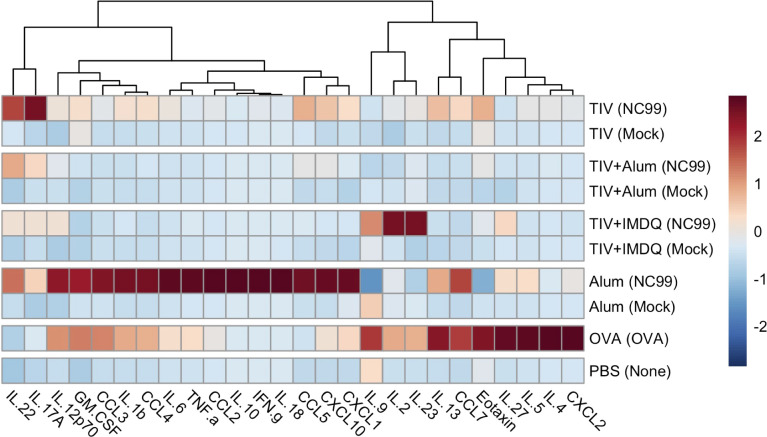
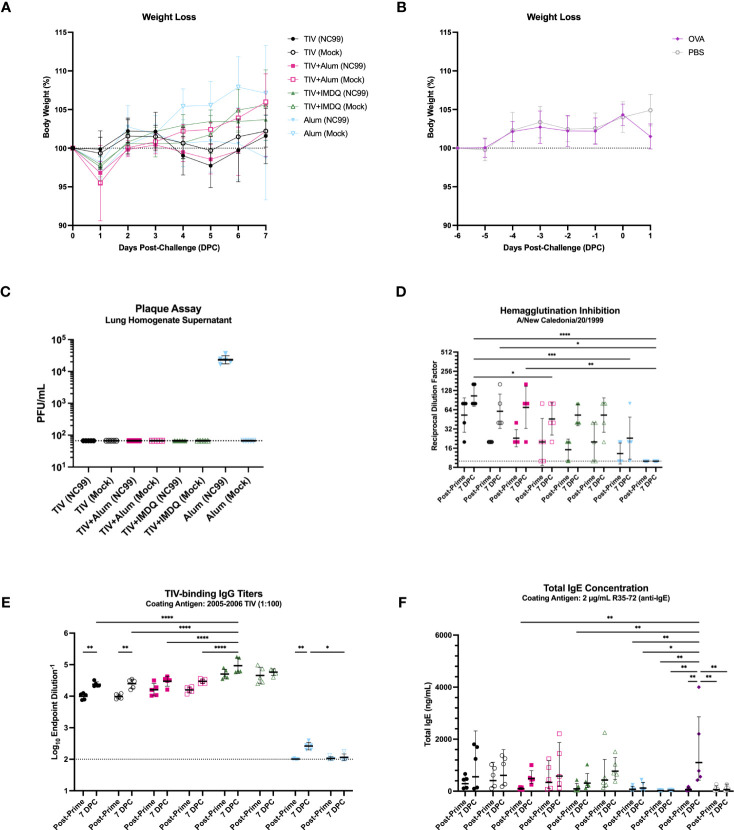
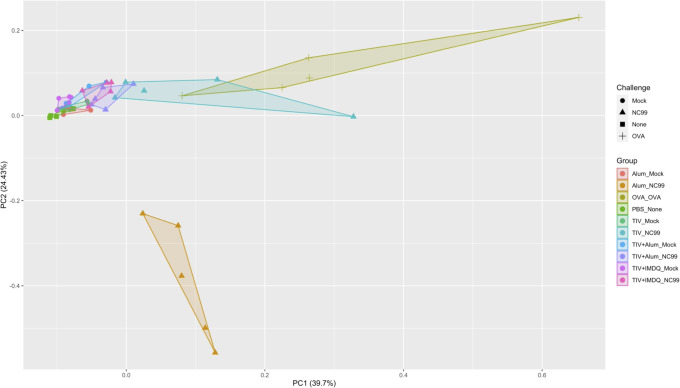
Eosinophils are important mediators of mucosal tissue homeostasis, anti-helminth responses, and allergy. Lung eosinophilia has previously been linked to aberrant Type 2-skewed T cell responses to respiratory viral infection and may also be a consequence of vaccine-associated enhanced respiratory disease (VAERD), particularly in the case of respiratory syncytial virus (RSV) and the formalin-inactivated RSV vaccine. We previously reported a dose-dependent recruitment of eosinophils to the lungs of mice vaccinated with alum-adjuvanted trivalent inactivated influenza vaccine (TIV) following a sublethal, vaccine-matched H1N1 (A/New Caledonia/20/1999; NC99) influenza challenge. Given the differential role of eosinophil subset on immune function, we conducted the investigations herein to phenotype the lung eosinophils observed in our model of influenza breakthrough infection. Here, we demonstrate that eosinophil influx into the lungs of vaccinated mice is adjuvant- and sex-independent, and only present after vaccine-matched sublethal influenza challenge but not in mock-challenged mice. Furthermore, vaccinated and challenged mice had a compositional shift towards more inflammatory eosinophils (iEos) compared to resident eosinophils (rEos), resembling the shift observed in ovalbumin (OVA)-sensitized allergic control mice, however without any evidence of enhanced morbidity or aberrant inflammation in lung cytokine/chemokine signatures. Furthermore, we saw a lung eosinophil influx in the context of a vaccine-mismatched challenge. Additional layers of heterogeneity in the eosinophil compartment were observed via unsupervised clustering analysis of flow cytometry data. Our collective findings are a starting point for more in-depth phenotypic and functional characterization of lung eosinophil subsets in the context of vaccine- and infection-induced immunity.
嗜酸性粒细胞是黏膜组织稳态、抗蠕虫反应和过敏的重要介质。肺嗜酸性粒细胞先前与呼吸道病毒感染的异常 2 型偏倚 T 细胞反应有关,也可能是疫苗相关增强呼吸道疾病(VAERD)的结果,特别是在呼吸道合胞病毒(RSV)和福尔马林灭活 RSV 疫苗的情况下。我们之前报道了在亚致死性、疫苗匹配的 H1N1(A/New Caledonia/20/1999;NC99)流感挑战后,用明矾佐剂三价灭活流感疫苗(TIV)接种的小鼠肺部嗜酸性粒细胞呈剂量依赖性募集。鉴于嗜酸性粒细胞亚群对免疫功能的不同作用,我们进行了本研究,以表型分析我们流感突破性感染模型中观察到的肺嗜酸性粒细胞。在这里,我们证明了疫苗接种小鼠肺部嗜酸性粒细胞的涌入是佐剂和性别独立的,仅在疫苗匹配的亚致死性流感挑战后存在,而在模拟挑战的小鼠中不存在。此外,与驻留嗜酸性粒细胞(rEos)相比,接种疫苗和接受挑战的小鼠肺部的嗜酸性粒细胞组成向更具炎症性的嗜酸性粒细胞(iEos)转移,类似于卵清蛋白(OVA)致敏的过敏对照小鼠中观察到的转移,但在肺细胞因子/趋化因子特征中没有任何增强的发病率或异常炎症的证据。此外,我们在疫苗不匹配的挑战中观察到了肺部嗜酸性粒细胞的涌入。通过对流式细胞术数据的无监督聚类分析观察到嗜酸性粒细胞区室中的额外异质性。我们的综合研究结果为更深入地表征和功能表征疫苗和感染诱导免疫背景下的肺嗜酸性粒细胞亚群提供了起点。