Department of Veterinary Sciences, University of Turin, Largo P. Braccini 2, Grugliasco, Turin, Italy.
Department of Agricultural, Forest and Food Sciences, University of Turin, Largo P. Braccini 2, Grugliasco, Turin, Italy.
Front Cell Infect Microbiol. 2023 Jul 31;13:1229460. doi: 10.3389/fcimb.2023.1229460. eCollection 2023.
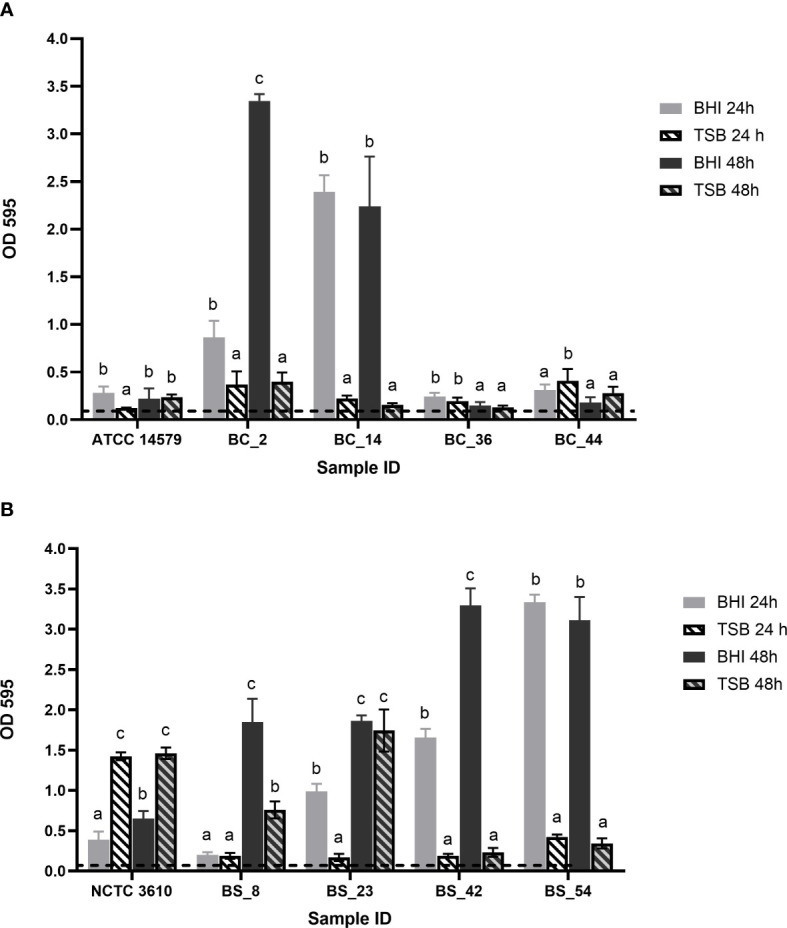
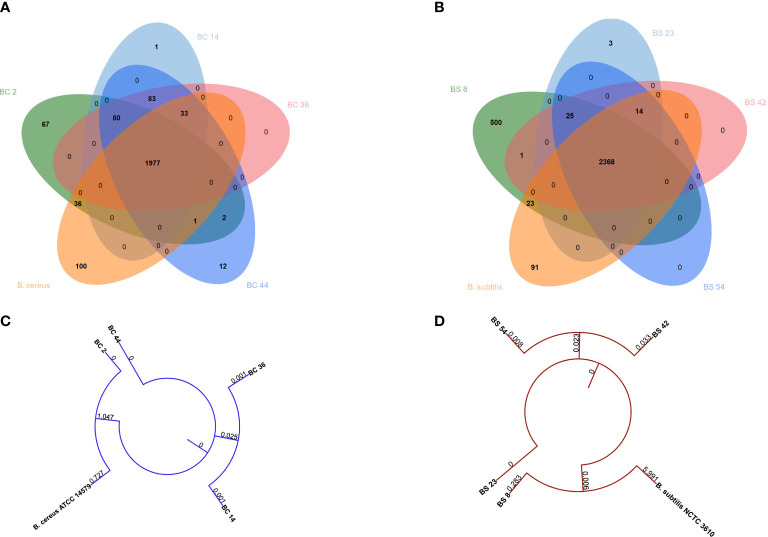
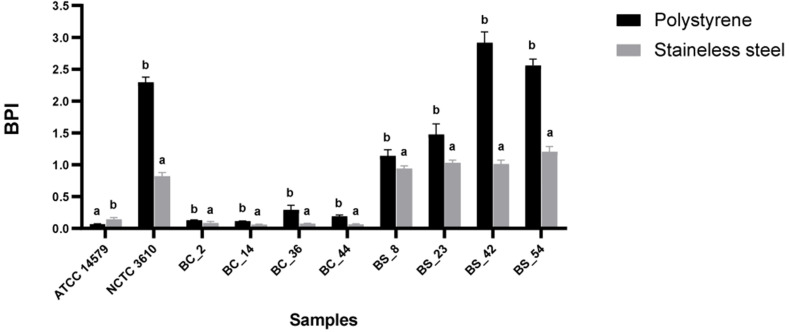
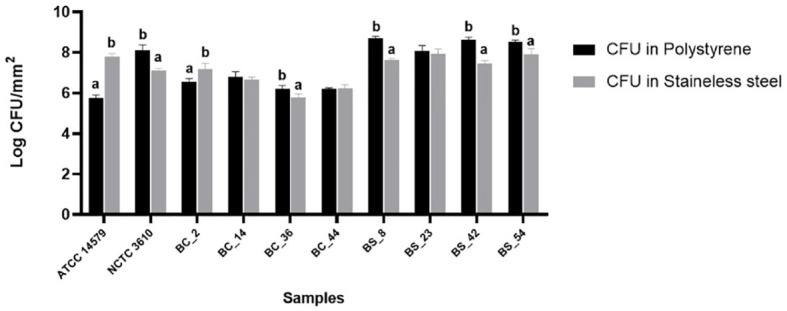
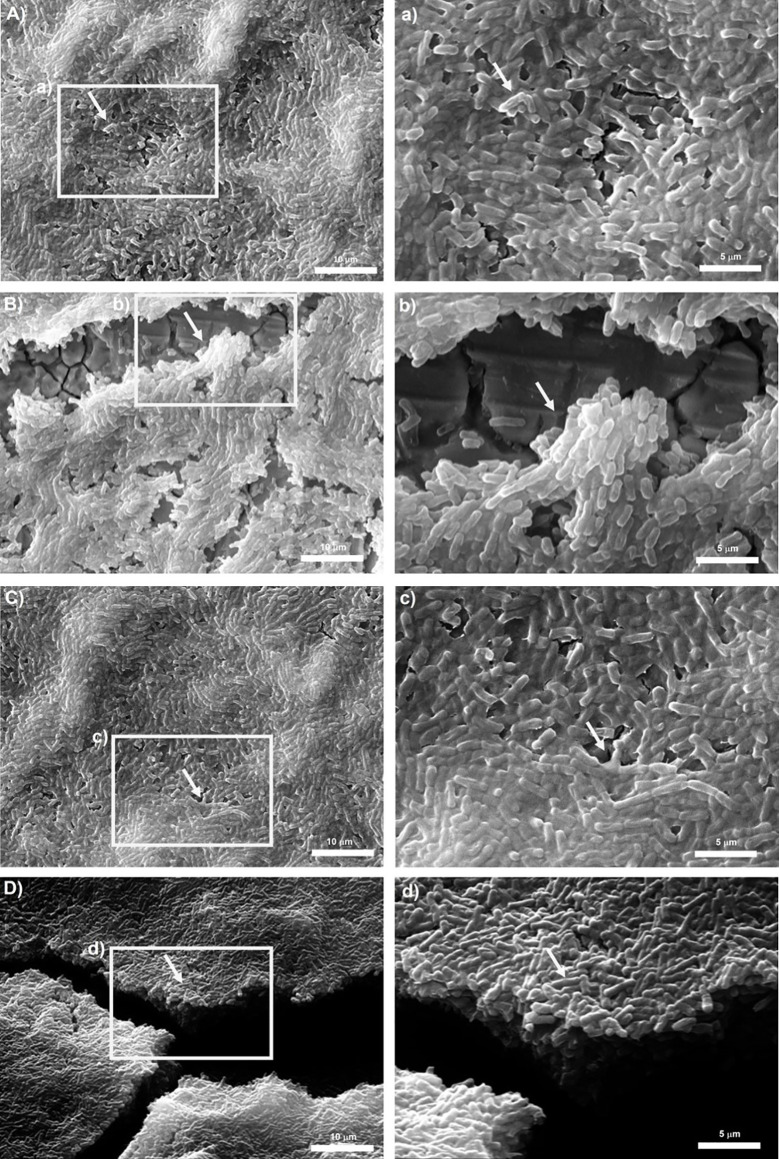
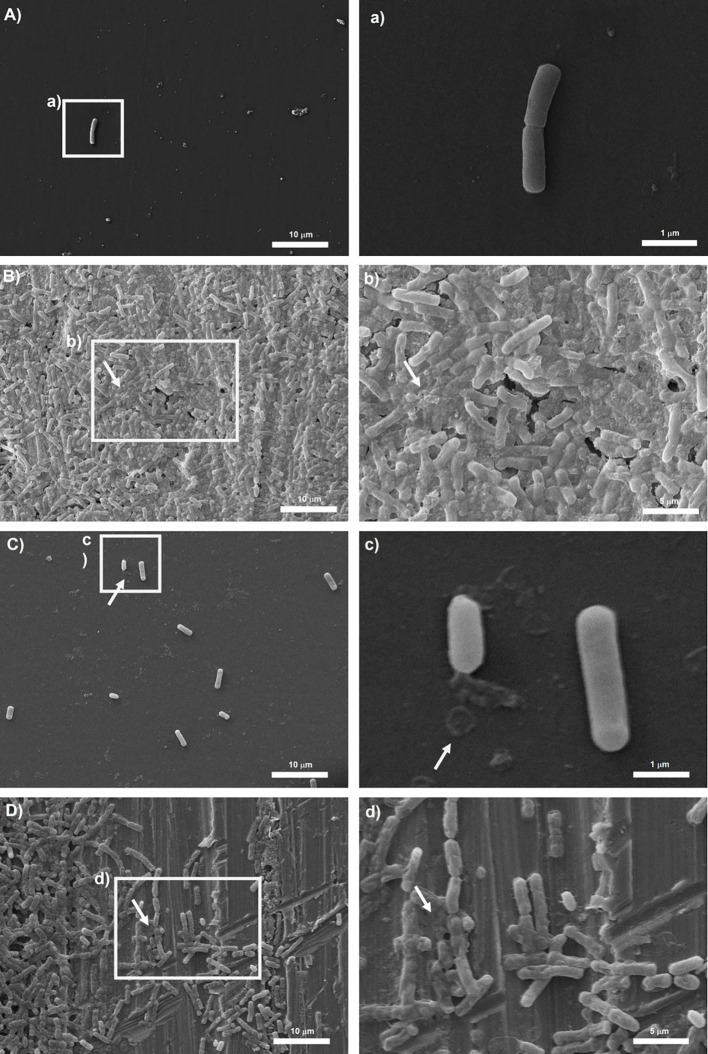
Food processing lines represents a suitable environment for bacterial biofilm formation. One of the most common biofilm-forming genera in dairy processing plants is , which includes species that may have a negative impact on safety and/or quality of dairy products. In the current study, we evaluated the biofilm forming ability and molecular characteristics of dairy spp. isolates ( and ). Reference strains ( ATCC 14579 and NCTC 3610) were also included in the experiment. All isolates were screened by micro-titer plate (96 wells) to assess their ability to form biofilm. Then, they were tested on two common food contact surfaces (polystyrene and stainless steel) by using 6-well plates and AISI 316 stainless steel coupons. Biofilm formation, expressed as biofilm production index (BPI), was higher on polystyrene than stainless steel (except for ATCC 14579). These observations were further confirmed by scanning electron microscopy, which allowed the microscopy observation of biofilm structure. Moreover, a possible correlation among total viable cell counts (CFU) and BPI was examined, as well as a connection among biofilm formation and bacterial cell hydrophobicity. Finally, whole genome sequencing was performed highlighting a genetic similarity among the strains belonging to the same species. The presence of selected genes involved in biofilm formation was also examined showing that strains with a greater presence of these genes were able to produce more biofilm in the tested materials. Additionally, for strains enterotoxin genes were detected.
食品加工线是细菌生物膜形成的适宜环境。在乳制品加工厂中,最常见的生物膜形成属之一是 ,其中包括可能对乳制品安全和/或质量产生负面影响的物种。在当前的研究中,我们评估了乳制品 spp. 分离株( 和 )的生物膜形成能力和分子特征。参考菌株(ATCC 14579 和 NCTC 3610)也包含在实验中。所有分离株均通过微量滴定板(96 孔)筛选,以评估其形成生物膜的能力。然后,通过使用 6 孔板和 AISI 316 不锈钢试片在两种常见的食品接触表面(聚苯乙烯和不锈钢)上进行测试。生物膜形成,以生物膜产生指数(BPI)表示,在聚苯乙烯上高于不锈钢(除了 ATCC 14579)。这些观察结果通过扫描电子显微镜进一步得到证实,该显微镜允许观察生物膜结构。此外,还检查了总活菌计数(CFU)和 BPI 之间的可能相关性,以及生物膜形成与细菌细胞疏水性之间的联系。最后,进行了全基因组测序,突出了属于同一物种的菌株之间的遗传相似性。还检查了参与生物膜形成的选定基因的存在情况,结果表明,具有这些基因更大存在的菌株能够在测试材料中产生更多的生物膜。此外,还检测到 菌株的肠毒素基因。