Ye Bicheng, Wang Qi, Zhu Xiaofeng, Zeng Lingling, Luo Huiyuan, Xiong Yan, Li Qin, Zhu Qinmei, Zhao Songyun, Chen Ting, Xie Jingen
Medical School, Yangzhou Polytechnic College, Yangzhou, China.
Department of Gastroenterology, Affiliated Hospital of Jiangsu University, Zhenjiang, China.
Front Oncol. 2023 Aug 2;13:1236435. doi: 10.3389/fonc.2023.1236435. eCollection 2023.
Pancreatic ductal adenocarcinoma (PDAC) is an extremely deadly neoplasm, with only a 5-year survival rate of around 9%. The tumor and its microenvironment are highly heterogeneous, and it is still unknown which cell types influence patient outcomes.
We used single-cell RNA sequencing (scRNA-seq) and spatial transcriptome (ST) to identify differences in cell types. We then applied the scRNA-seq data to decompose the cell types in bulk RNA sequencing (bulk RNA-seq) data from the Cancer Genome Atlas (TCGA) cohort. We employed unbiased machine learning integration algorithms to develop a prognosis signature based on cell type makers. Lastly, we verified the differential expression of the key gene LY6D using immunohistochemistry and qRT-PCR.
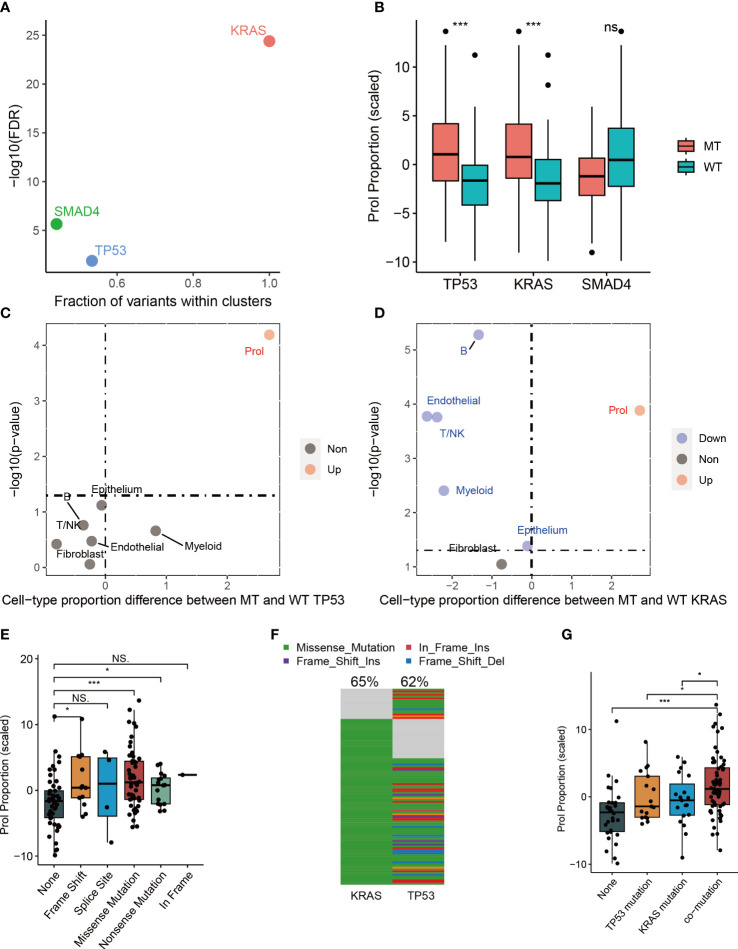
In this study, we identified a novel cell type with high proliferative capacity, Prol, enriched with cell cycle and mitosis genes. We observed that the proportion of Prol cells was significantly increased in PDAC, and Prol cells were associated with reduced overall survival (OS) and progression-free survival (PFS). Additionally, the marker genes of Prol cell type, identified from scRNA-seq data, were upregulated and associated with poor prognosis in the bulk RNA-seq data. We further confirmed that mutant KRAS and TP53 were associated with an increased abundance of Prol cells and that these cells were associated with an immunosuppressive and cold tumor microenvironment in PDAC. ST determined the spatial location of Prol cells. Additionally, patients with a lower proportion of Prol cells in PDAC may benefit more from immunotherapy and gemcitabine treatment. Furthermore, we employed unbiased machine learning integration algorithms to develop a Prol signature that can precisely quantify the abundance of Prol cells and accurately predict prognosis. Finally, we confirmed that the LY6D protein and mRNA expression were markedly higher in pancreatic cancer than in normal pancreatic tissue.
In summary, by integrating bulk RNA-seq and scRNA-seq, we identified a novel proliferative cell type, Prol, which influences the OS and PFS of PDAC patients.
胰腺导管腺癌(PDAC)是一种极其致命的肿瘤,5年生存率仅约为9%。肿瘤及其微环境具有高度异质性,目前仍不清楚哪些细胞类型会影响患者的预后。
我们使用单细胞RNA测序(scRNA-seq)和空间转录组(ST)来识别细胞类型的差异。然后,我们将scRNA-seq数据应用于分解来自癌症基因组图谱(TCGA)队列的批量RNA测序(bulk RNA-seq)数据中的细胞类型。我们采用无偏机器学习整合算法,基于细胞类型标志物开发一种预后特征。最后,我们使用免疫组织化学和qRT-PCR验证关键基因LY6D的差异表达。
在本研究中,我们鉴定出一种具有高增殖能力的新型细胞类型,即Prol,其富含细胞周期和有丝分裂基因。我们观察到Prol细胞在PDAC中的比例显著增加,且Prol细胞与总生存期(OS)和无进展生存期(PFS)降低相关。此外,从scRNA-seq数据中鉴定出的Prol细胞类型的标志物基因在bulk RNA-seq数据中上调且与预后不良相关。我们进一步证实,突变型KRAS和TP53与Prol细胞丰度增加相关,且这些细胞与PDAC中的免疫抑制和冷肿瘤微环境相关。ST确定了Prol细胞的空间位置。此外,PDAC中Prol细胞比例较低的患者可能从免疫治疗和吉西他滨治疗中获益更多。此外,我们采用无偏机器学习整合算法开发了一种Prol特征,该特征可以精确量化Prol细胞的丰度并准确预测预后。最后,我们证实LY6D蛋白和mRNA表达在胰腺癌中明显高于正常胰腺组织。
总之,通过整合bulk RNA-seq和scRNA-seq,我们鉴定出一种新型增殖细胞类型Prol,它影响PDAC患者的OS和PFS。