MacKay Medical College, Institute of Long-Term Care, No.46, Sec. 3, Zhongzheng Rd, Sanzhi Dist, New Taipei City, 252, Taiwan.
Department of Physical Therapy, Fooyin University, Kaohsiung City, Taiwan.
BMC Geriatr. 2023 Aug 21;23(1):500. doi: 10.1186/s12877-023-04235-z.
Mild cognitive impairment (MCI) is the stage between the expected cognitive decline of normal aging and the more serious decline of dementia. Previous studies have shown that regular exercise can improve cognition and physical performance in older adults. Walking is a low-technology and low-cost exercise that has been proven to improve cognition and mobility in healthy elderly individuals. However, no systematic review or meta-analysis has explored whether walking can improve cognitive function in older adults with MCI. This study aimed to explore the effects of walking interventions on cognitive functions in individuals with MCI.
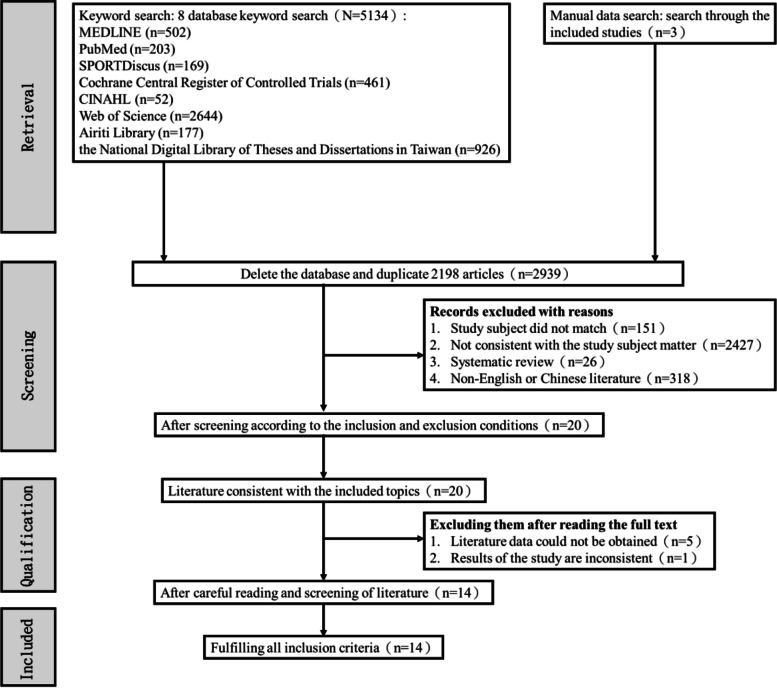
In accordance with the PRISMA guidelines, MEDLINE, PubMed, SPORTDiscus, Cochrane Central Register of Controlled Trials, CINAHL, Web of Science, Airiti Library, and the National Digital Library of Theses and Dissertations in Taiwan were searched from inception to July 2023. Independent reviewers selected randomized clinical trials (RCT) that compared the effects of walking with no intervention or other exercises in individuals with MCI. The primary outcomes were cognitive functions, and the secondary outcome was walking endurance. Three reviewers independently conducted data extraction. The risk of bias was assessed using the Revised Cochrane Risk of Bias assessment tool.
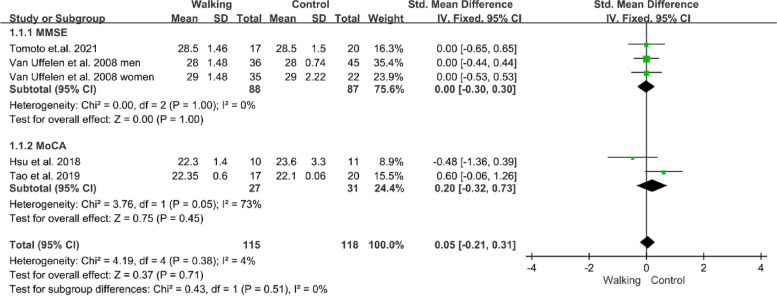
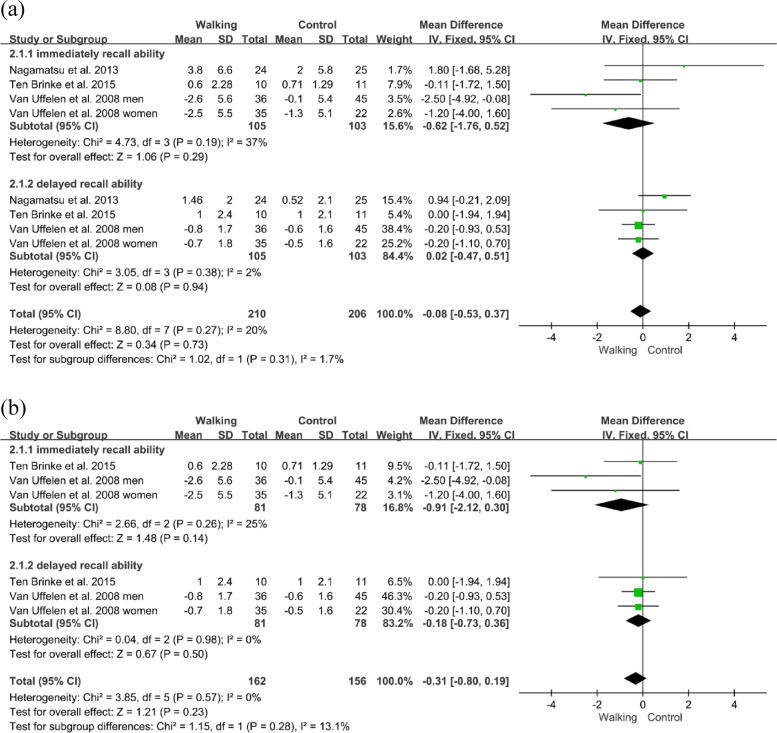
Fourteen RCTs were included in this review. The quality of evidence in these studies was rated as good to excellent. The results of the meta-analysis showed that the individuals with MCI had no significant improvement in cognitive function but had significant improvement in the 6-min walk test (Mean Difference=23.70, p=0.008) after walking interventions compared to no intervention or other exercises.
Walking intervention has no significant improvement on cognitive functions in older adults with MCI. However, walking induces beneficial effects on aerobic capacity.
This systematic review has the registration number CRD42021283753 on PROSPERO.
轻度认知障碍(MCI)是正常衰老预期认知能力下降与更严重痴呆之间的阶段。先前的研究表明,有规律的运动可以改善老年人的认知和身体表现。散步是一种低技术和低成本的运动,已被证明可以改善健康老年人的认知和活动能力。然而,没有系统的综述或荟萃分析探讨过散步是否可以改善 MCI 老年人的认知功能。本研究旨在探讨步行干预对 MCI 个体认知功能的影响。
根据 PRISMA 指南,从建库到 2023 年 7 月,我们在 MEDLINE、PubMed、SPORTDiscus、Cochrane 中央对照试验注册库、CINAHL、Web of Science、Airiti 图书馆和台湾国家学位论文与论文数字图书馆中搜索了对照试验(RCT),比较了 MCI 患者中步行与无干预或其他运动的效果。主要结局是认知功能,次要结局是步行耐力。三名评审员独立进行数据提取。使用修订后的 Cochrane 偏倚风险评估工具评估偏倚风险。
本综述纳入了 14 项 RCT。这些研究的证据质量被评为良好至优秀。荟萃分析的结果表明,与无干预或其他运动相比,MCI 患者的认知功能没有显著改善,但在 6 分钟步行测试中(均差=23.70,p=0.008)有显著改善。
步行干预对 MCI 老年人的认知功能没有显著改善。然而,步行对有氧能力有有益的影响。
本系统评价在 PROSPERO 上的注册号为 CRD42021283753。