School of Psychology, University of Leeds, Leeds, LS2 9JT, UK.
NIHR Greater Manchester Patient Safety Translational Research Centre, Manchester Academic Health Science Centre, The University of Manchester, Manchester, M13 9PL, UK.
BMC Public Health. 2023 Aug 22;23(1):1598. doi: 10.1186/s12889-023-16344-w.
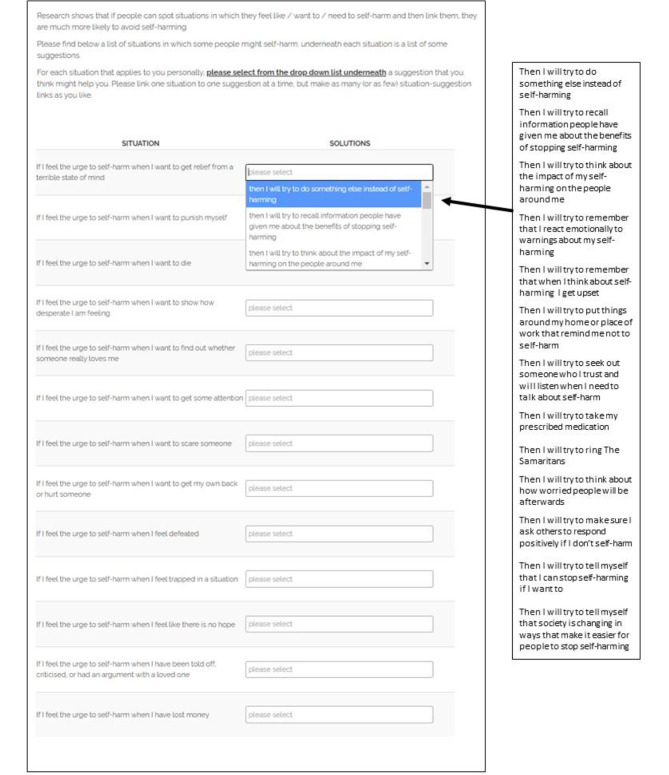
Participant feedback is an important consideration for increasing intervention acceptability, yet whether incorporating such feedback actually improves acceptability is rarely tested.
The present study describes a theory-based approach to assessing whether refining an intervention based on participant feedback increases acceptability.
Three hundred and ninety-three UK adults who had previously self-harmed were exposed to the same intervention at baseline and, six months later, were randomly allocated to receive either: (a) the same version of the intervention (control group), or (b) a version of the intervention that had been refined following participant feedback (experimental group). The main outcome measure was acceptability ratings for each of the seven domains specified in the Theoretical Framework of Acceptability (TFA).
Mixed ANOVAs, with control versus experimental group as the between-participants factor and time (baseline versus follow-up) as the within participants factor showed no significant changes in acceptability.
The null effects reported here imply that participants found both the original and modified versions of the intervention equally acceptable, and that our process of refining an intervention based on participant feedback did not impact on acceptability. Nevertheless, we have operationalised a robust approach for examining whether participant feedback impacts on the acceptability of an intervention. Further research is required to understand better how participant feedback should be incorporated into the development of healthcare interventions.
参与者反馈是提高干预措施可接受性的一个重要考虑因素,但很少有研究测试纳入此类反馈是否确实能提高可接受性。
本研究描述了一种基于理论的方法,用于评估根据参与者反馈来改进干预措施是否能提高可接受性。
393 名曾有过自我伤害行为的英国成年人在基线时接受相同的干预措施,六个月后,他们被随机分配接受以下两种干预措施之一:(a)相同版本的干预措施(对照组),或(b)根据参与者反馈改进后的干预措施版本(实验组)。主要的评估指标是在可接受性理论框架(TFA)中指定的七个领域的可接受性评分。
混合方差分析,以对照组与实验组作为组间因素,以时间(基线与随访)作为组内因素,显示在可接受性方面没有显著变化。
这里报告的零效应意味着参与者发现原始版本和修改版本的干预措施同样可接受,并且我们基于参与者反馈来改进干预措施的过程并没有影响可接受性。然而,我们已经实施了一种强有力的方法来检验参与者反馈是否会影响干预措施的可接受性。需要进一步的研究来更好地理解如何将参与者反馈纳入医疗保健干预措施的开发中。