Li Fengjiao, Wang Chuandong, Xu Jing, Wang Xiaoyu, Cao Meng, Wang Shuhua, Zhang Tingting, Xu Yanyong, Wang Jing, Pan Shaobin, Hu Wei
College of Pharmacy, Shandong University of Traditional Chinese Medicine, Jinan, China.
State Key Laboratory of Microbial Technology, Microbial Technology Institute, Shandong University, Qingdao, China.
Front Microbiol. 2023 Aug 7;14:1219004. doi: 10.3389/fmicb.2023.1219004. eCollection 2023.
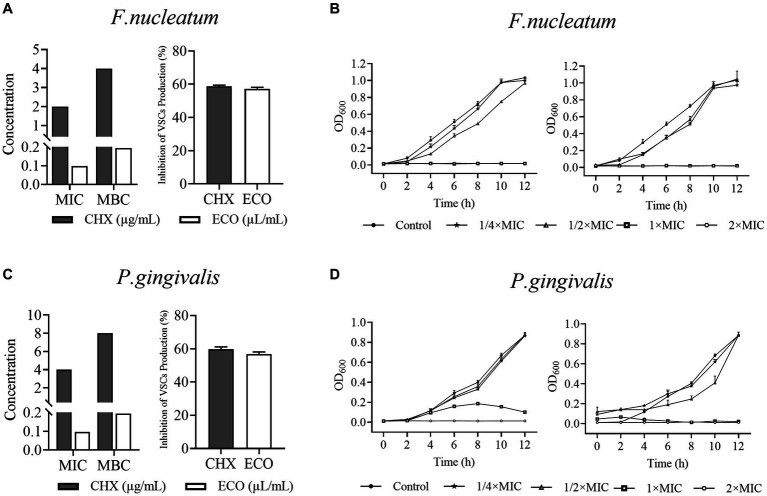
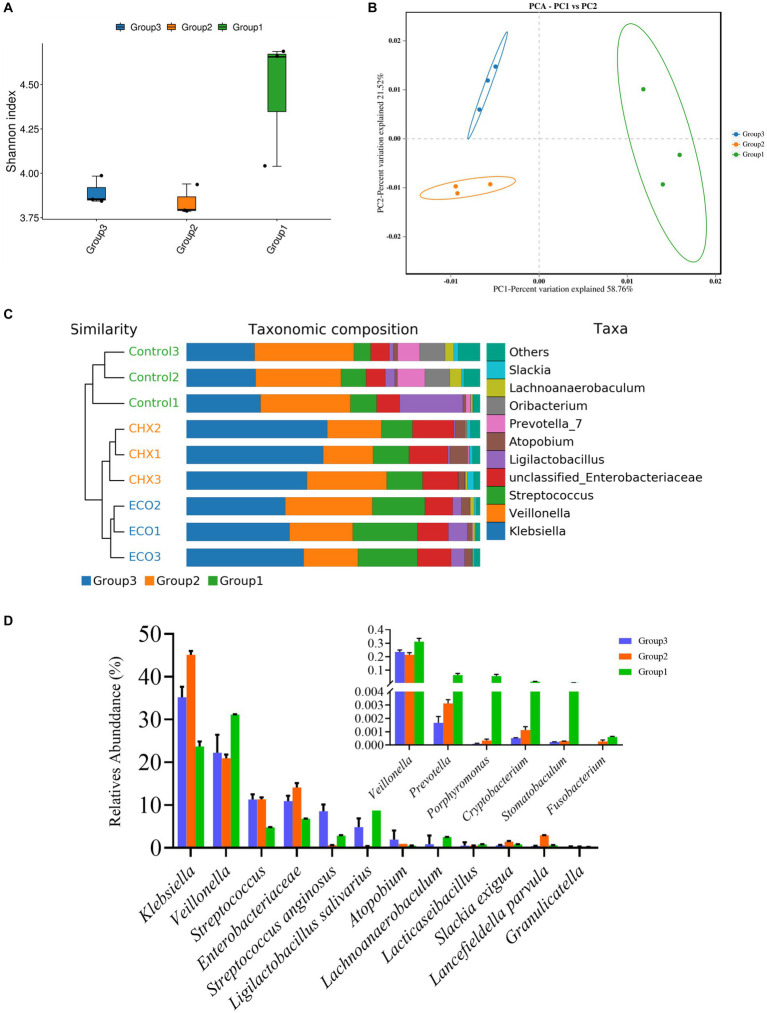
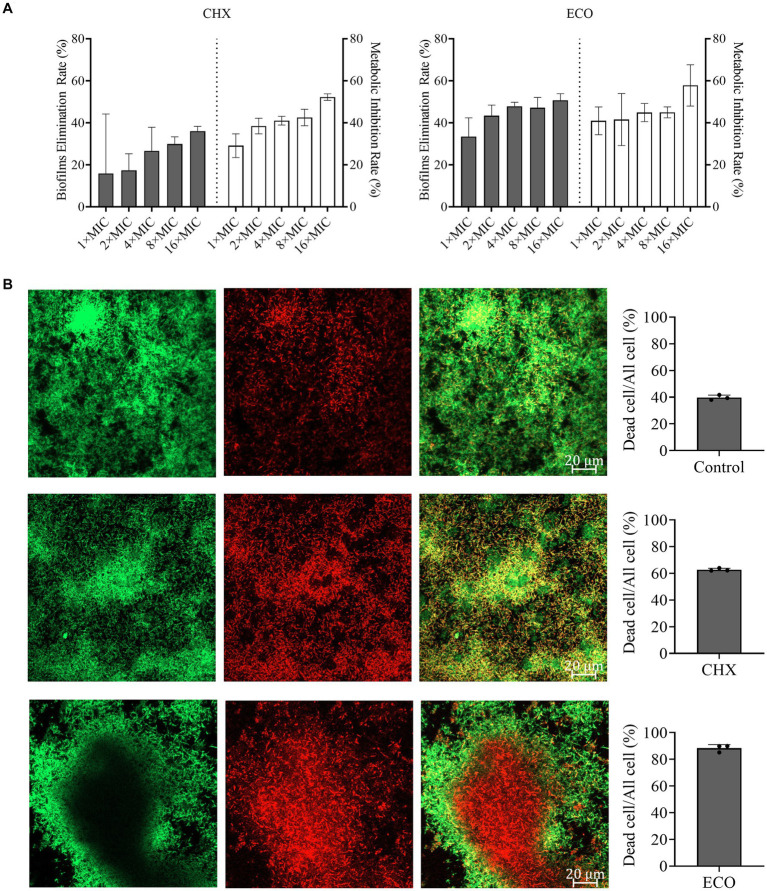
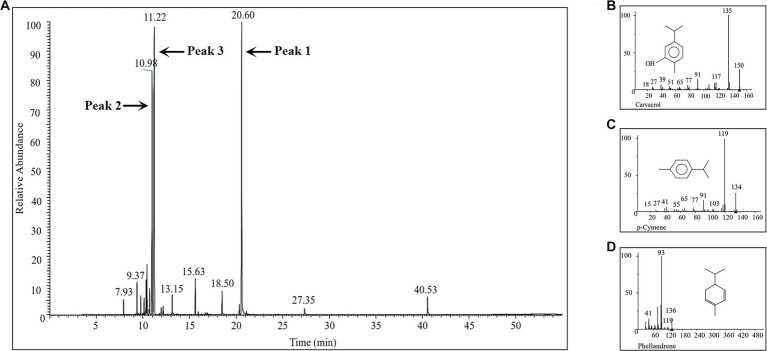
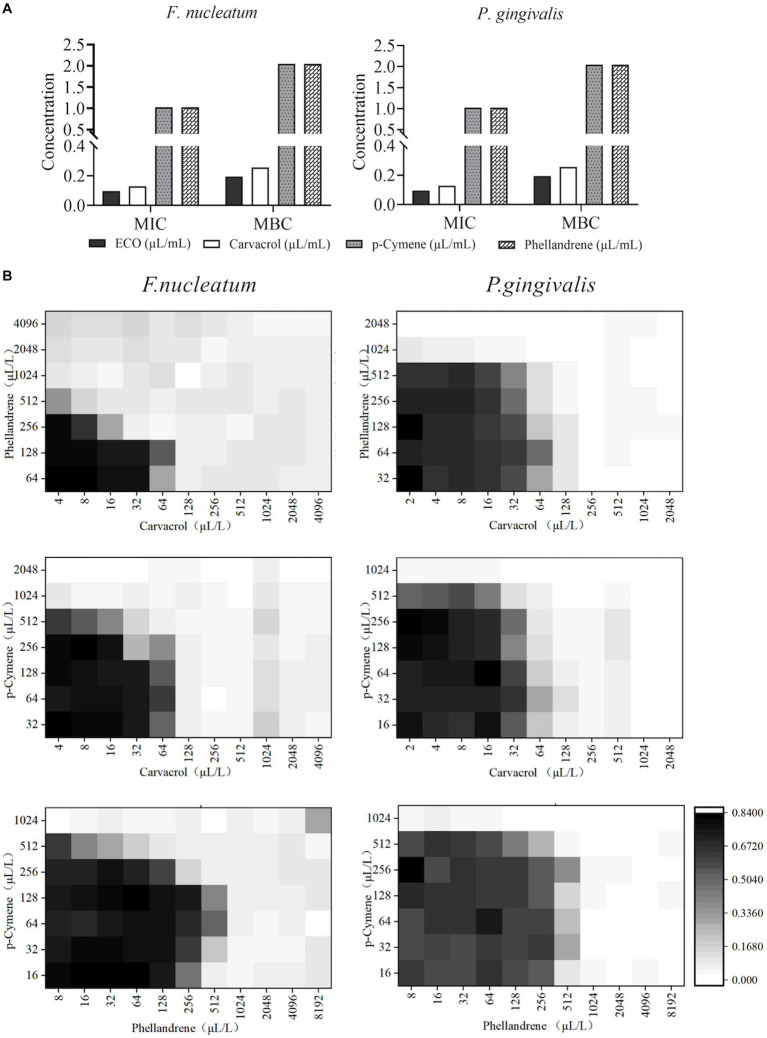
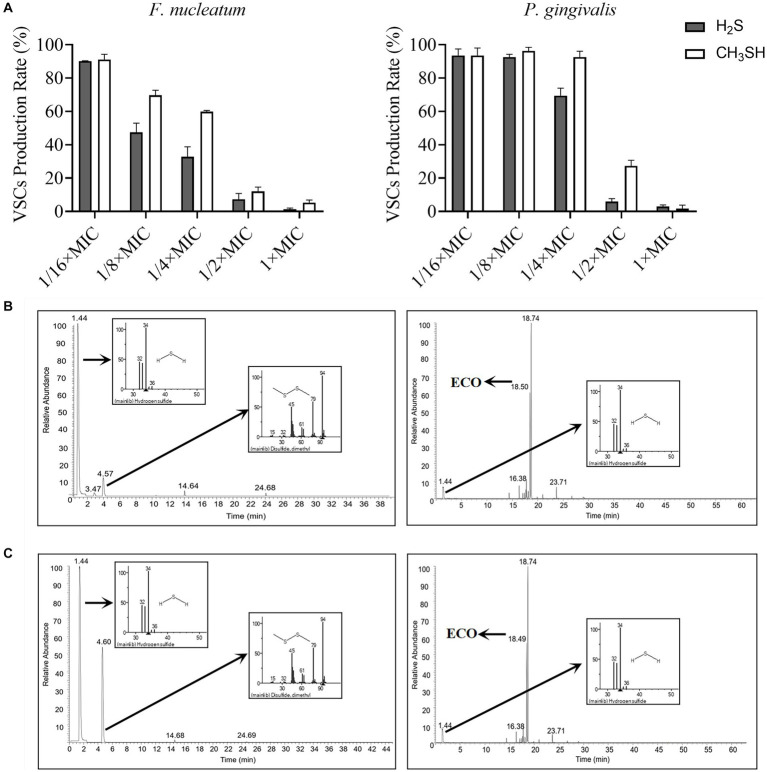
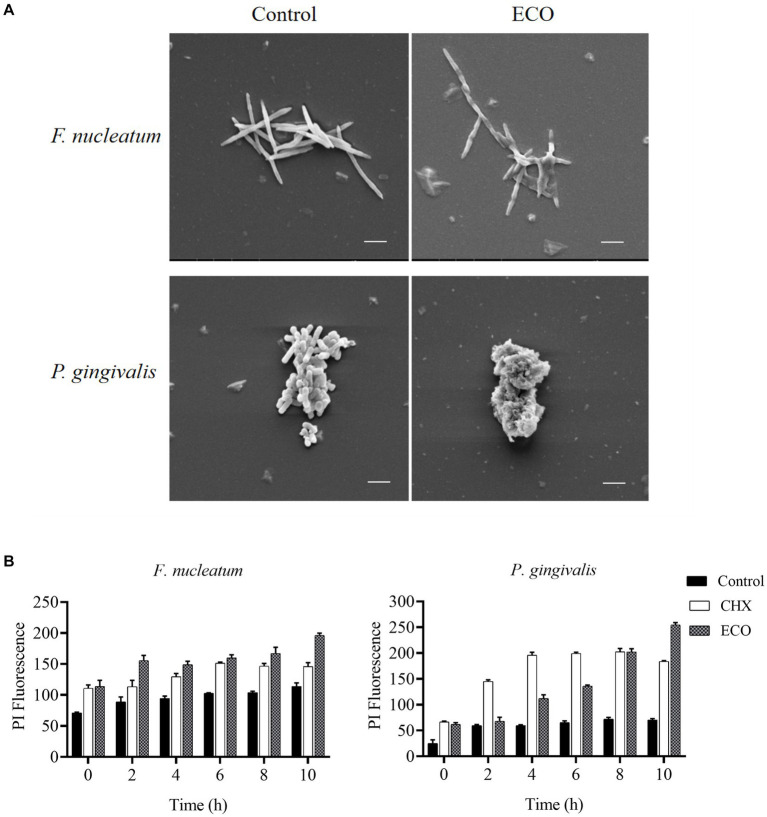
The broad-spectrum antimicrobial activity of essential oil (ECO) has been previously reported, but its effectiveness against halitosis-causing bacteria such as and is not well understood. In this study, we investigated the bacteriostatic activity of ECO against planktonic cells and biofilms of and , as well as its ability to inhibit bacterial metabolism and production of volatile sulfur compounds (VSCs) at sub-lethal concentrations. Our findings revealed that ECO exhibited comparable activities to chlorhexidine against these oral bacteria. Treatment with ECO significantly reduced the production of VSCs, including hydrogen sulfide, dimethyl disulfide, and methanethiol, which are major contributors to bad breath. As the major chemical components of ECO, carvacrol, p-cymene, and phellandrene, were demonstrated inhibitory effects on and , and their combined use showed synergistic and additive effects, suggesting that the overall activity of ECO is derived from the cumulative or synergistic effect of multiple active components. ECO was found to have a destructive effect on the bacterial cell membrane by examining the cell morphology and permeability. Furthermore, the application of ECO induced significant changes in the bacterial composition of saliva-derived biofilm, resulting in the elimination of bacterial species that contribute to halitosis, including , , and . These results provide experimental evidence for the potential clinical applications of ECOs in the prevention and treatment of halitosis.
精油(ECO)的广谱抗菌活性此前已有报道,但其对诸如[具体细菌名称1]和[具体细菌名称2]等导致口臭的细菌的有效性尚不清楚。在本研究中,我们研究了ECO对[具体细菌名称1]和[具体细菌名称2]的浮游细胞和生物膜的抑菌活性,以及其在亚致死浓度下抑制细菌代谢和挥发性硫化合物(VSCs)产生的能力。我们的研究结果表明,ECO对这些口腔细菌表现出与洗必泰相当的活性。用ECO处理可显著降低VSCs的产生,包括硫化氢、二甲基二硫和甲硫醇,这些都是口臭的主要成因。作为ECO的主要化学成分,香芹酚、对伞花烃和水芹烯对[具体细菌名称1]和[具体细菌名称2]具有抑制作用,它们的联合使用显示出协同和相加作用,这表明ECO的整体活性源自多种活性成分的累积或协同作用。通过检查细胞形态和通透性发现,ECO对细菌细胞膜具有破坏作用。此外,ECO的应用导致唾液来源生物膜的细菌组成发生显著变化,从而消除了导致口臭的细菌种类,包括[具体细菌名称1]、[具体细菌名称2]和[具体细菌名称3]。这些结果为ECO在口臭预防和治疗中的潜在临床应用提供了实验证据。