Department of Preventive Dentistry, Graduate School of Dentistry, Osaka Universitygrid.136593.b, Osaka, Japan.
Department of Biotechnology, Graduate School of Engineering, Osaka Universitygrid.136593.b, Osaka, Japan.
mSystems. 2022 Aug 30;7(4):e0017022. doi: 10.1128/msystems.00170-22. Epub 2022 Jul 19.
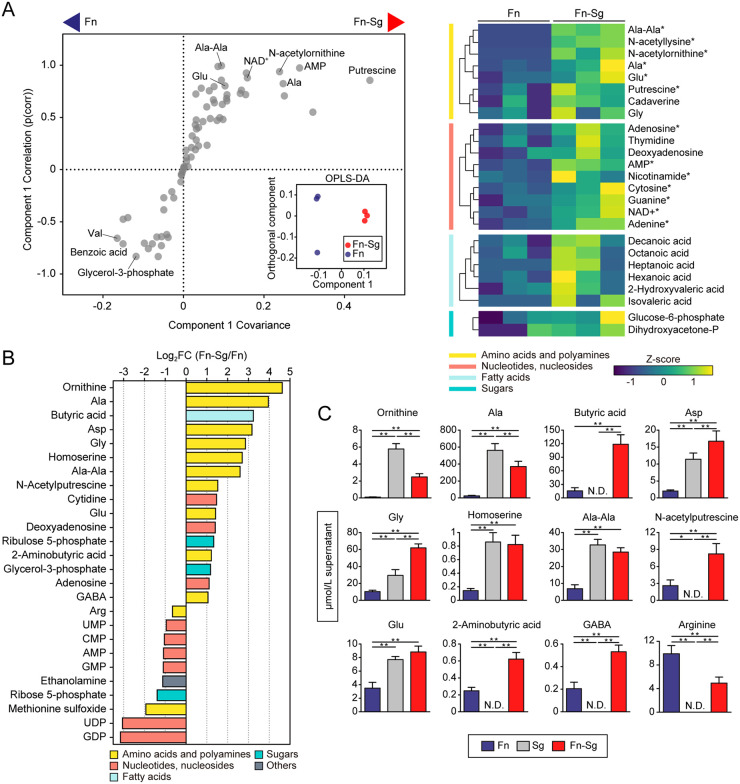
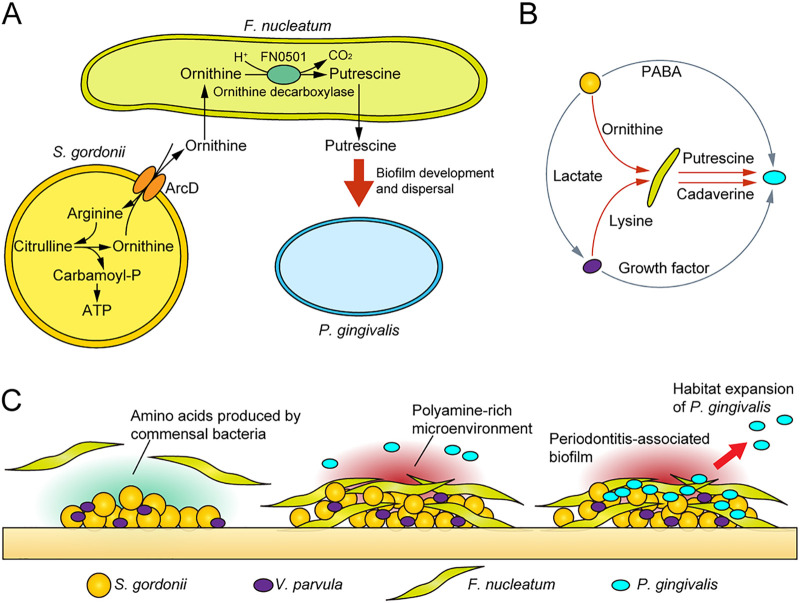
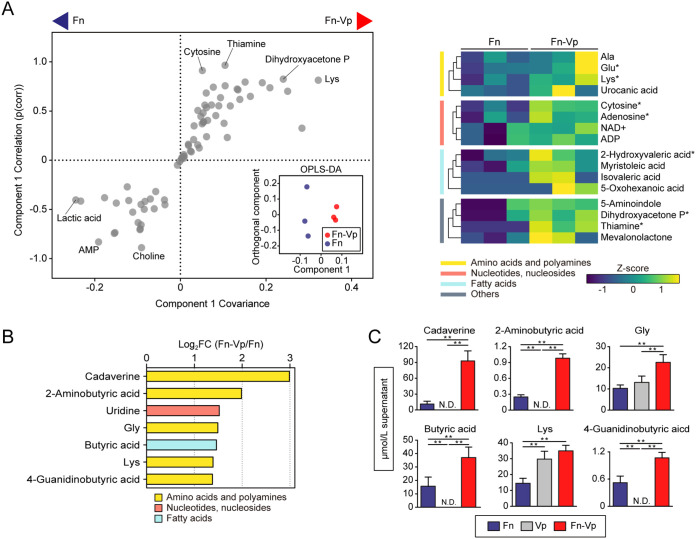
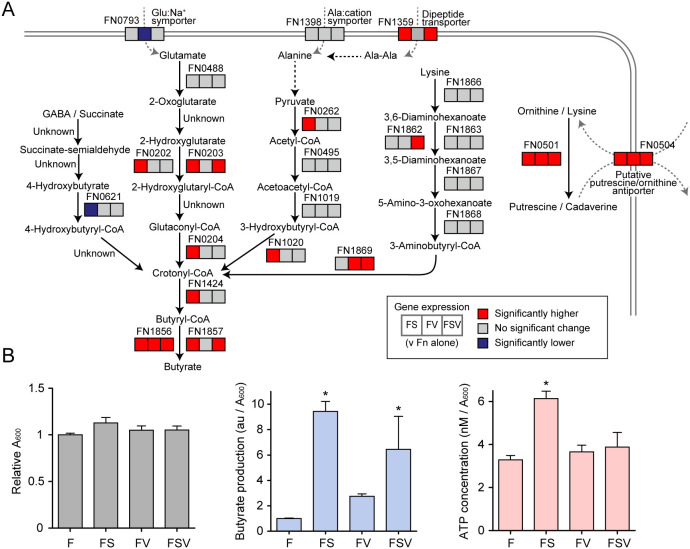
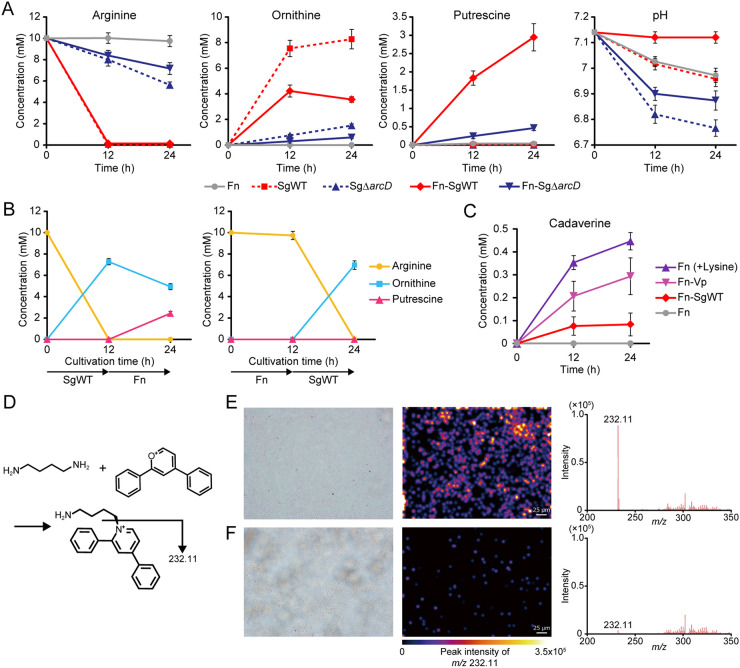
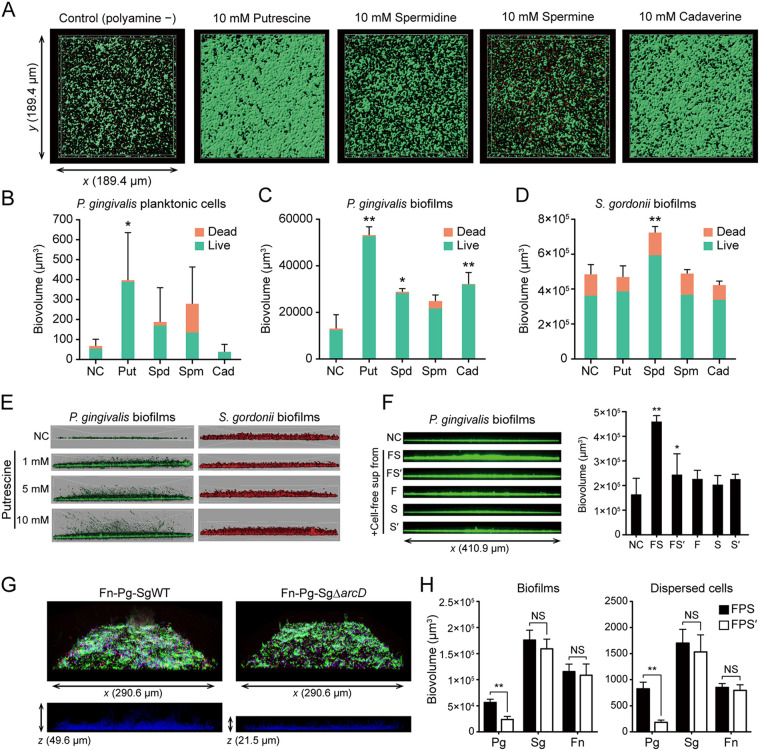
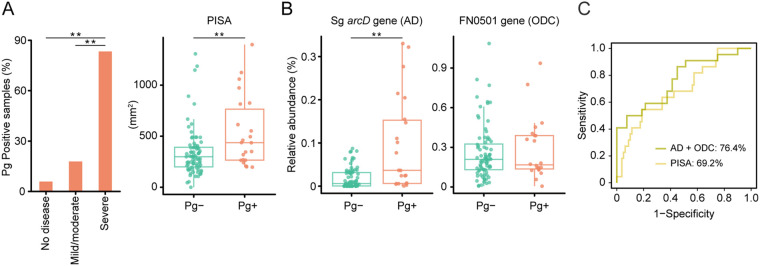
Fusobacterium nucleatum is a common constituent of the oral microbiota in both periodontal health and disease. Previously, we discovered ornithine cross-feeding between F. nucleatum and Streptococcus gordonii, where S. gordonii secretes ornithine via an arginine-ornithine antiporter (ArcD), which in turn supports the growth and biofilm development of F. nucleatum; however, broader metabolic aspects of F. nucleatum within polymicrobial communities and their impact on periodontal pathogenesis have not been addressed. Here, we show that when cocultured with S. gordonii, F. nucleatum increased amino acid availability to enhance the production of butyrate and putrescine, a polyamine produced by ornithine decarboxylation. Coculture with Veillonella parvula, another common inhabitant of the oral microbiota, also increased lysine availability, promoting cadaverine production by F. nucleatum. We confirmed that ArcD-dependent S. gordonii-excreted ornithine induces synergistic putrescine production, and mass spectrometry imaging revealed that this metabolic capability creates a putrescine-rich microenvironment on the surface of F. nucleatum biofilms. We further demonstrated that polyamines caused significant changes in the biofilm phenotype of a periodontal pathogen, Porphyromonas gingivalis, with putrescine accelerating the biofilm life cycle of maturation and dispersal. This phenomenon was also observed with putrescine derived from S. gordonii-F. nucleatum coculture. Lastly, analysis of plaque samples revealed cooccurrence of P. gingivalis with genetic modules for putrescine production by S. gordonii and F. nucleatum. Overall, our results highlight the ability of F. nucleatum to induce synergistic polyamine production within multispecies consortia and provide insight into how the trophic web in oral biofilm ecosystems can eventually shape disease-associated communities. Periodontitis is caused by a pathogenic shift in subgingival biofilm ecosystems, which is accompanied by alterations in microbiome composition and function, including changes in the metabolic activity of the biofilm, which comprises multiple commensals and pathogens. While Fusobacterium nucleatum is a common constituent of the supra- and subgingival biofilms, its metabolic integration within polymicrobial communities and the impact on periodontal pathogenesis are poorly understood. Here, we report that amino acids supplied by other commensal bacteria induce polyamine production by F. nucleatum, creating polyamine-rich microenvironments. Polyamines reportedly have diverse functions in bacterial physiology and possible involvement in periodontal pathogenesis. We show that the F. nucleatum-integrated trophic network yielding putrescine from arginine through ornithine accelerates the biofilm life cycle of Porphyromonas gingivalis, a periodontal pathogen, from the planktonic state through biofilm formation to dispersal. This work provides insight into how cooperative metabolism within oral biofilms can tip the balance toward periodontitis.
具核梭杆菌是牙周健康和疾病中口腔微生物群的常见组成部分。此前,我们发现具核梭杆菌和戈登链球菌之间存在鸟氨酸交叉喂养,其中戈登链球菌通过精氨酸-鸟氨酸逆向转运蛋白(ArcD)分泌鸟氨酸,这反过来又支持了具核梭杆菌的生长和生物膜发育;然而,多微生物群落中具核梭杆菌的更广泛代谢方面及其对牙周发病机制的影响尚未得到解决。在这里,我们表明,当与戈登链球菌共培养时,具核梭杆菌增加了氨基酸的可用性,以增强丁酸盐和腐胺的产生,腐胺是由鸟氨酸脱羧酶产生的多胺。与另一种口腔微生物群的常见居民小韦荣球菌共培养也增加了赖氨酸的可用性,促进了具核梭杆菌的尸胺产生。我们证实,依赖 ArcD 的戈登链球菌分泌的鸟氨酸诱导腐胺产生协同作用,质谱成像显示这种代谢能力在具核梭杆菌生物膜表面创造了一个腐胺丰富的微环境。我们进一步证明,多胺导致牙周病原体牙龈卟啉单胞菌生物膜表型发生显著变化,腐胺加速生物膜成熟和分散的生命周期。这种现象也在戈登链球菌-具核梭杆菌共培养物中产生的腐胺中观察到。最后,对牙菌斑样本的分析表明,牙龈卟啉单胞菌与戈登链球菌和具核梭杆菌产生腐胺的遗传模块同时出现。总的来说,我们的研究结果强调了具核梭杆菌在多物种共生体中诱导协同多胺产生的能力,并深入了解口腔生物膜生态系统中的营养网如何最终塑造与疾病相关的群落。牙周炎是由龈下生物膜生态系统中的致病性转变引起的,伴随着微生物组组成和功能的改变,包括生物膜代谢活性的改变,生物膜由多种共生菌和病原体组成。虽然具核梭杆菌是龈上和龈下生物膜的常见组成部分,但它在多微生物群落中的代谢整合及其对牙周发病机制的影响知之甚少。在这里,我们报告说,其他共生菌提供的氨基酸诱导具核梭杆菌产生多胺,从而在微生物群落中创造富含多胺的微环境。据报道,多胺在细菌生理学中具有多种功能,可能参与牙周发病机制。我们表明,具核梭杆菌整合的营养网络从精氨酸通过鸟氨酸产生腐胺,从而加速牙周病原体牙龈卟啉单胞菌从浮游状态到生物膜形成再到分散的生物膜生命周期。这项工作深入了解了口腔生物膜内的合作代谢如何使牙周炎的平衡向有利于它的方向倾斜。