Department of Prosthodontics, Goldschleger School of Dental Medicine, Sackler Faculty of Medicine, Tel-Aviv University, Tel-Aviv 6997801, Israel.
Molecules. 2024 Jun 23;29(13):2982. doi: 10.3390/molecules29132982.
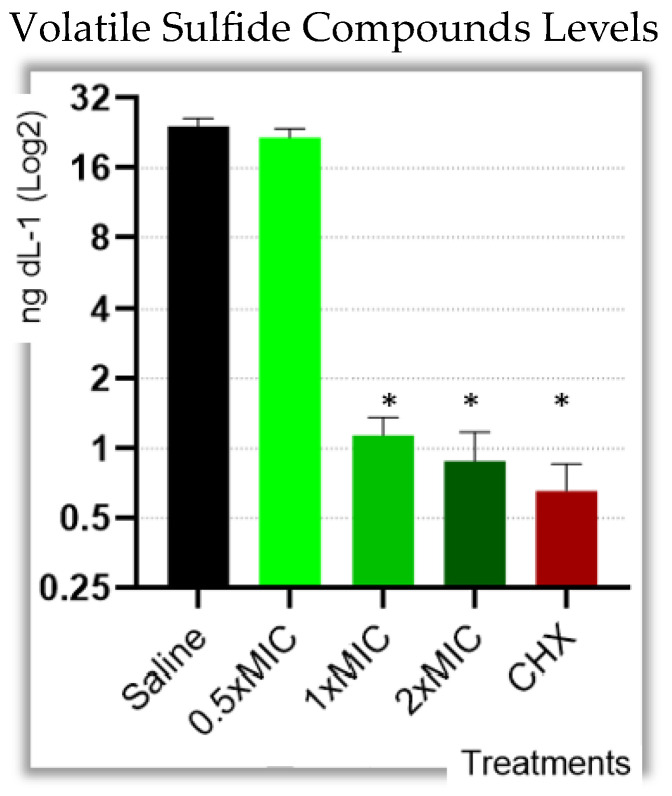
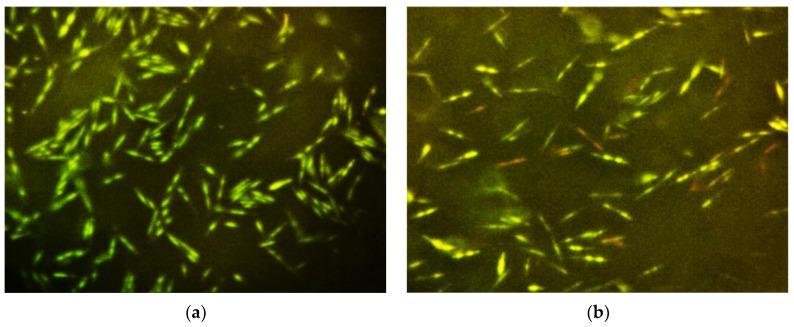
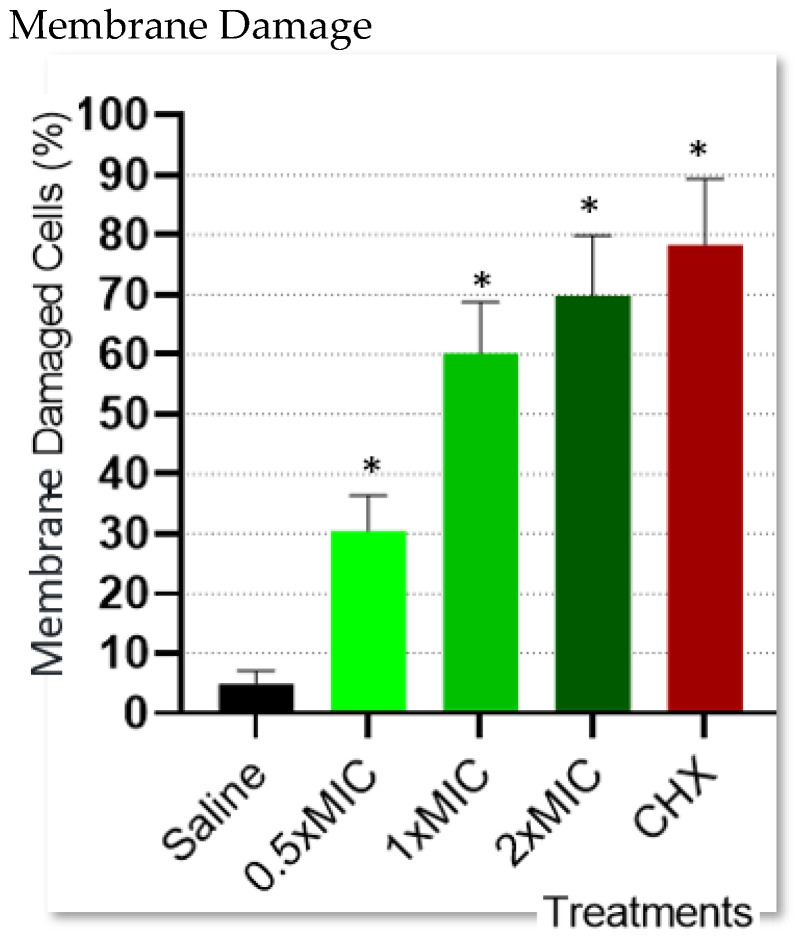
Oral malodor still constitutes a major challenge worldwide. A strong effort is invested in eliminating volatile sulfur compound-producing oral bacteria through organic natural products such as essential oils. is a known volatile sulfur compound-producing bacteria that inspires oral malodor. The aim of the present study was to test the effect of lavender essential oil on the bacterium's ability to produce volatile sulfide compounds, the principal components of oral malodor. Lavender () essential oil was extracted by hydrodistillation and analyzed using GC-MS. The minimal inhibitory concentration (MIC) of lavender essential oil on was determined in a previous trial. was incubated anaerobically in the presence of sub-MIC, MIC, and above MIC concentrations of lavender essential oil, as well as saline and chlorhexidine as negative and positive controls, respectively. Following incubation, volatile sulfur compound levels were measured using GC (Oralchroma), and bacterial cell membrane damage was studied using fluorescence microscopy. Chemical analysis of lavender essential oil yielded five main components, with camphor being the most abundant, accounting for nearly one-third of the total lavender essential oil volume. The MIC (4 µL/mL) of lavender essential oil reduced volatile sulfur compound secretion at a statistically significant level compared to the control (saline). Furthermore, the level of volatile sulfur compound production attributed to 1 MIC of lavender essential oil was in the range of the positive control chlorhexidine with no significant difference. When examining bacterial membrane damage, 2 MIC of lavender essential oil (i.e., 8 µL/mL) demonstrated the same, showing antibacterial membrane damage values comparative to chlorhexidine. Since lavender essential oil was found to be highly effective in hindering volatile sulfur compound production by through the induction of bacterial cell membrane damage, the results suggest that lavender essential oil may be a suitable alternative to conventional chemical-based anti-malodor agents.
口腔异味仍然是全球面临的一个主要挑战。人们投入大量努力通过使用天然有机产物如精油来消除产生挥发性硫化合物的口腔细菌。 是一种已知的产生挥发性硫化合物的细菌,会引起口腔异味。本研究旨在测试薰衣草精油对该细菌产生挥发性硫化物能力的影响,这些化合物是口腔异味的主要成分。通过水蒸馏法提取薰衣草精油,并使用 GC-MS 进行分析。先前的试验确定了薰衣草精油对 的最小抑菌浓度(MIC)。在无氧条件下, 将分别用低于 MIC、MIC 和高于 MIC 的薰衣草精油浓度以及盐水和洗必泰作为阴性和阳性对照进行孵育。孵育后,使用 GC(Oralchroma)测量挥发性硫化合物的水平,并使用荧光显微镜研究细菌细胞膜的损伤。对薰衣草精油的化学分析得到了五个主要成分,其中樟脑的含量最丰富,占薰衣草精油总量的近三分之一。与对照组(盐水)相比,薰衣草精油的 MIC(4 µL/mL)在统计学上显著降低了挥发性硫化合物的分泌。此外,薰衣草精油 1 MIC 产生的挥发性硫化合物的产生水平与阳性对照洗必泰相当,没有显著差异。在检查细菌膜损伤时,2 MIC 的薰衣草精油(即 8 µL/mL)表现出相同的效果,与洗必泰相比,其显示出相当的抗菌膜损伤值。由于发现薰衣草精油通过诱导细菌细胞膜损伤,对 抑制挥发性硫化合物的产生非常有效,因此结果表明,薰衣草精油可能是传统化学性抗异味剂的合适替代品。