Costas Andreea, Florica Camelia, Preda Nicoleta, Besleaga Cristina, Kuncser Andrei, Enculescu Ionut
National Institute of Materials Physics, Nanostructures Laboratory, 405A Atomistilor Street, 077125, Magurele, Ilfov, Romania.
Sci Rep. 2022 Apr 27;12(1):6834. doi: 10.1038/s41598-022-10879-5.
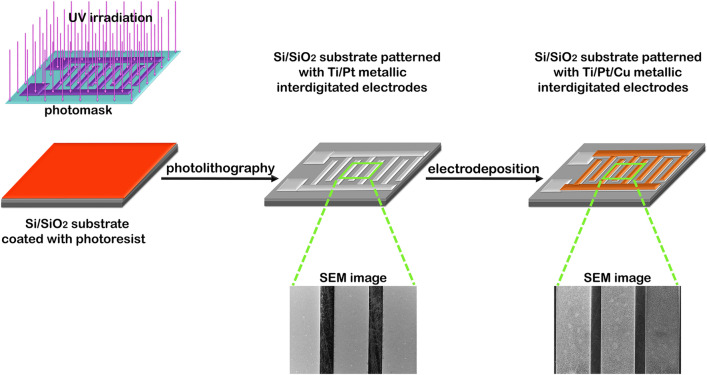
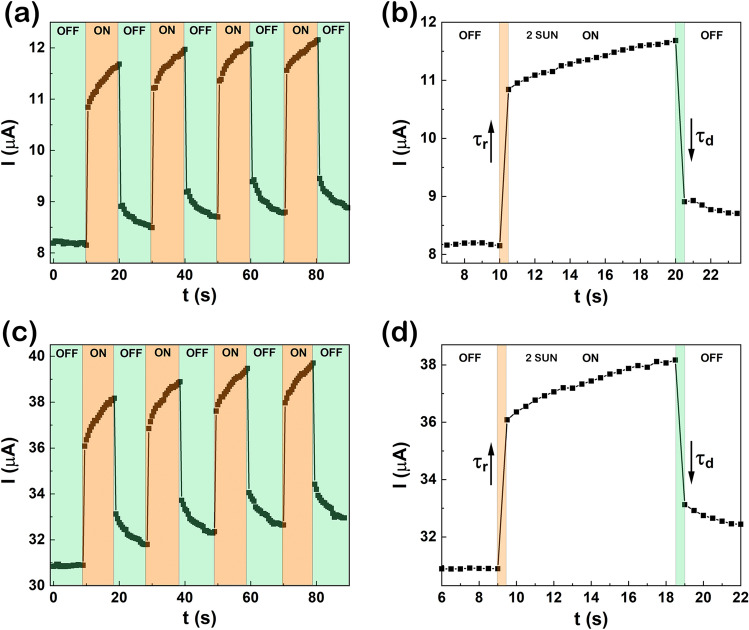
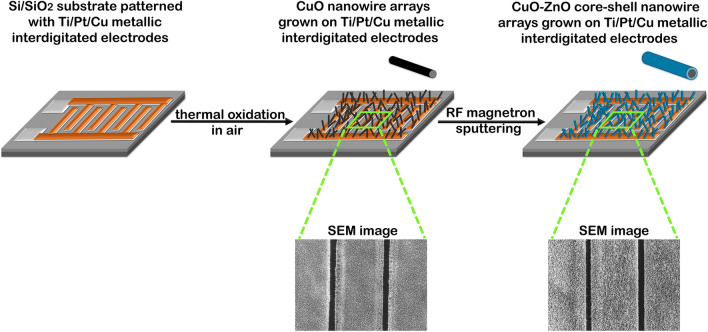
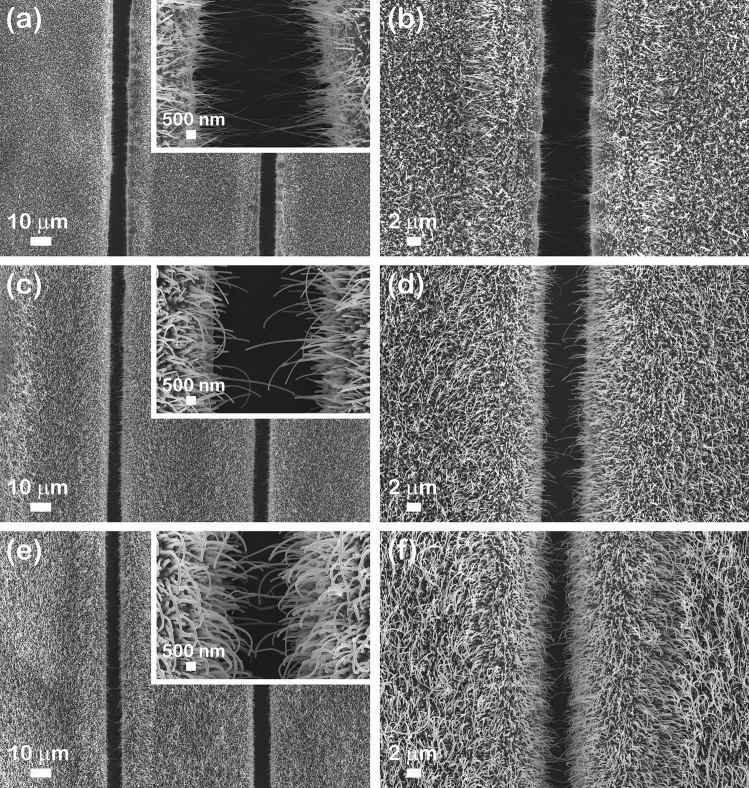
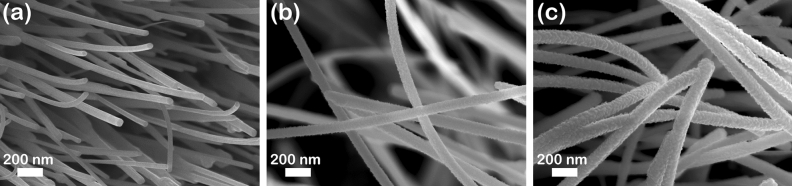
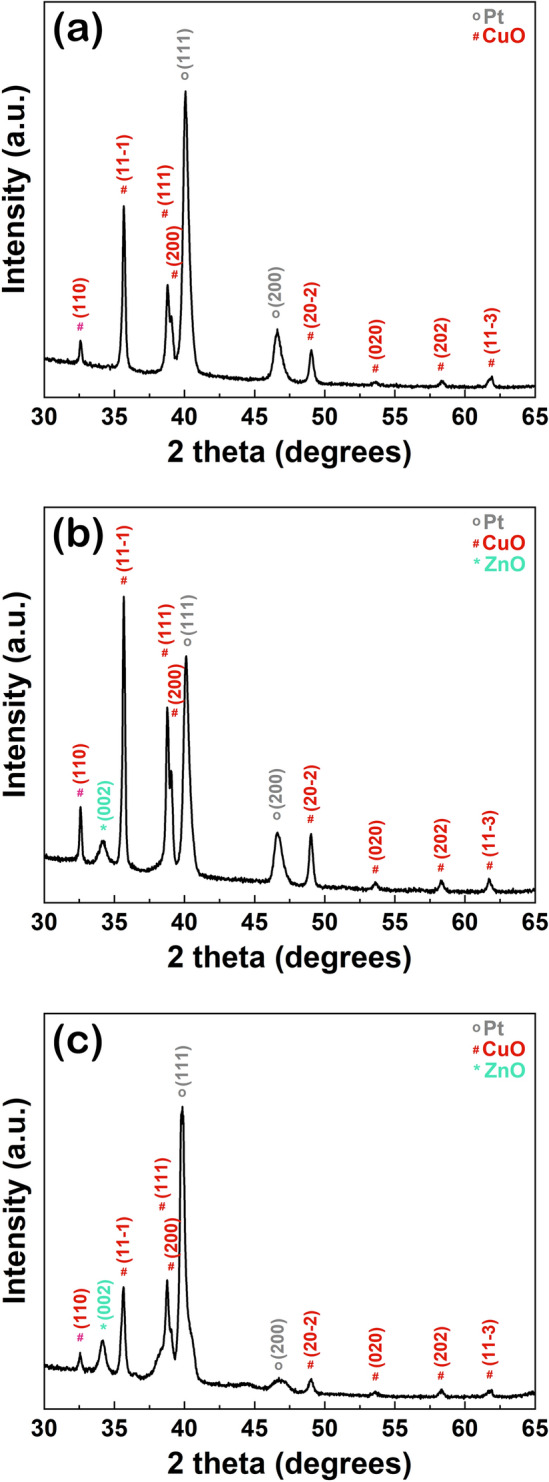
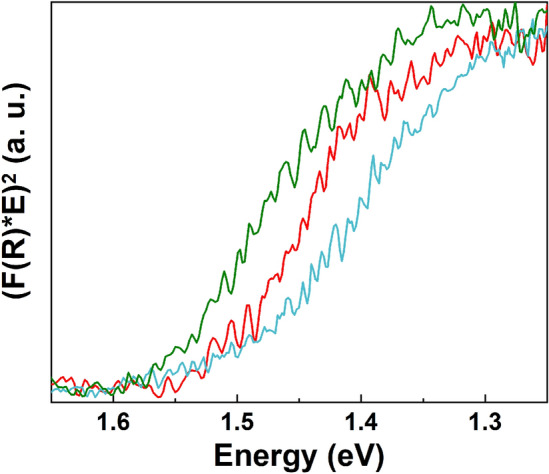
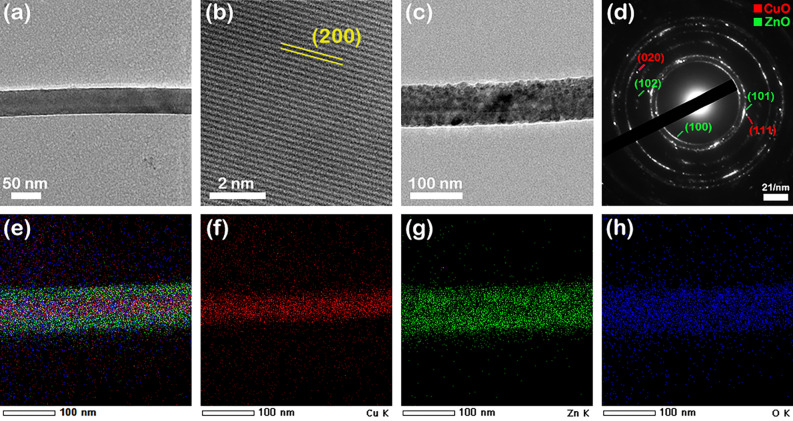
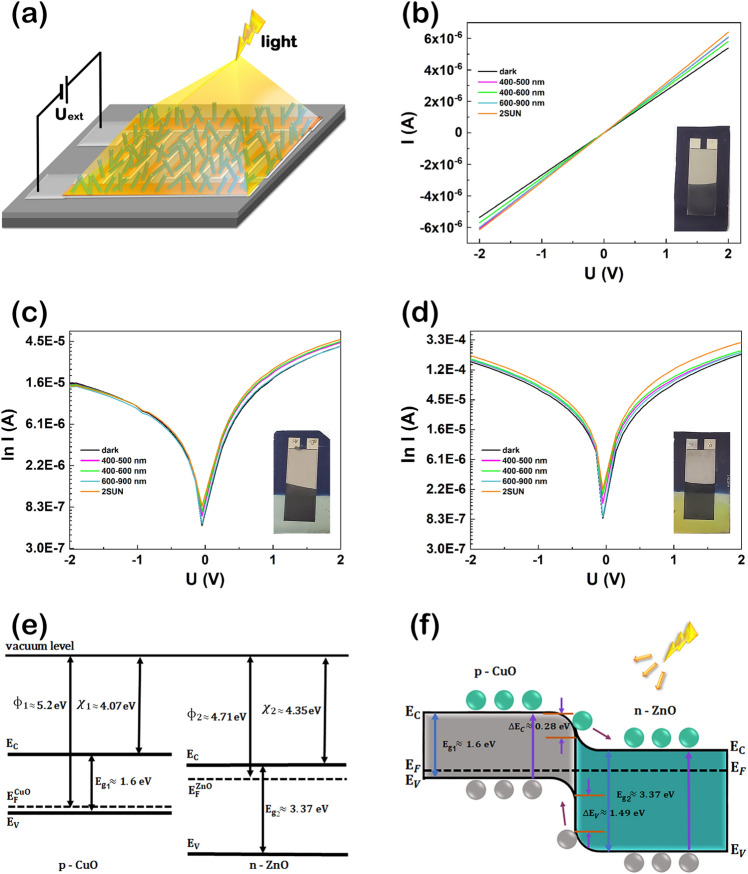
An original photodetector system based on self-connected CuO-ZnO radial core-shell heterojunction nanowire arrays grown on metallic interdigitated electrodes, operating as visible-light photodetector was developed by combining simple preparation approaches. Metallic interdigitated electrodes were fabricated on Si/SiO substrates using a conventional photolithography process. Subsequently, a Cu layer was electrodeposited on top of the metallic interdigitated electrodes. The CuO nanowire arrays (core) were obtained by thermal oxidation in air of the Cu layer. Afterwards, a ZnO thin film (shell) was deposited by RF magnetron sputtering covering the surface of the CuO nanowires. The morphological, structural, compositional, optical, electrical and photoelectrical properties of the CuO nanowire arrays and CuO-ZnO core-shell nanowire arrays grown on metallic interdigitated electrodes were investigated. The performances of the devices were evaluated by assessing the figures of merit of the photodetectors based on self-connected CuO-ZnO core-shell heterojunction nanowire arrays grown on the metallic interdigitated electrodes. The radial p-n heterojunction formed between CuO and ZnO generates a type II band alignment that favors an efficient charge separation of photogenerated electron-hole pairs at the CuO-ZnO interface, suppressing their recombination and consequently enhancing the photoresponse and the photoresponsivity of the photodetectors. The electrical connections in the fabricated photodetector devices are made without any additional complex and time-consuming lithographic step through a self-connecting approach for CuO-ZnO core-shell heterojunction nanowire arrays grown directly onto the Ti/Pt metallic interdigitated electrodes. Therefore, the present study provides an accessible path for employing low dimensional complex structures in functional optoelectronic devices such as photodetectors.
通过结合简单的制备方法,开发了一种基于自连接的CuO-ZnO径向核壳异质结纳米线阵列的原始光电探测器系统,该系统在金属叉指电极上生长,用作可见光光电探测器。使用传统光刻工艺在Si/SiO₂衬底上制作金属叉指电极。随后,在金属叉指电极顶部电沉积一层铜层。通过在空气中对铜层进行热氧化获得CuO纳米线阵列(核)。之后,通过射频磁控溅射沉积一层ZnO薄膜(壳),覆盖CuO纳米线的表面。研究了在金属叉指电极上生长的CuO纳米线阵列和CuO-ZnO核壳纳米线阵列的形态、结构、成分、光学、电学和光电性能。基于在金属叉指电极上生长的自连接CuO-ZnO核壳异质结纳米线阵列的光电探测器,通过评估其品质因数来评价器件性能。CuO和ZnO之间形成的径向p-n异质结产生II型能带排列,有利于光生电子-空穴对在CuO-ZnO界面处有效电荷分离,抑制它们的复合,从而提高光电探测器的光响应和光响应度。对于直接生长在Ti/Pt金属叉指电极上的CuO-ZnO核壳异质结纳米线阵列,通过自连接方法在制造的光电探测器器件中实现电连接,无需任何额外复杂且耗时的光刻步骤。因此,本研究为在诸如光电探测器等功能性光电器件中采用低维复杂结构提供了一条可行途径。