Department of Neurology, Xuanwu Hospital, Capital Medical University, Beijing, China.
Brain Pathol. 2024 Jan;34(1):e13202. doi: 10.1111/bpa.13202. Epub 2023 Aug 24.
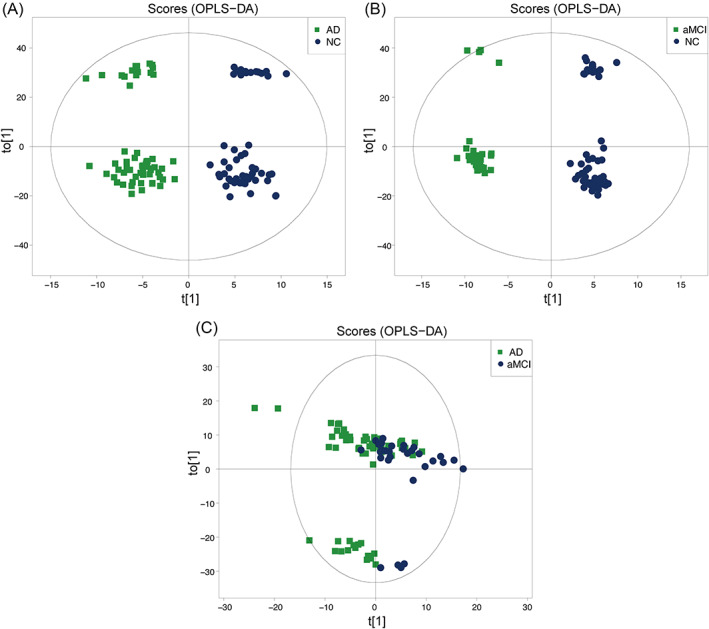
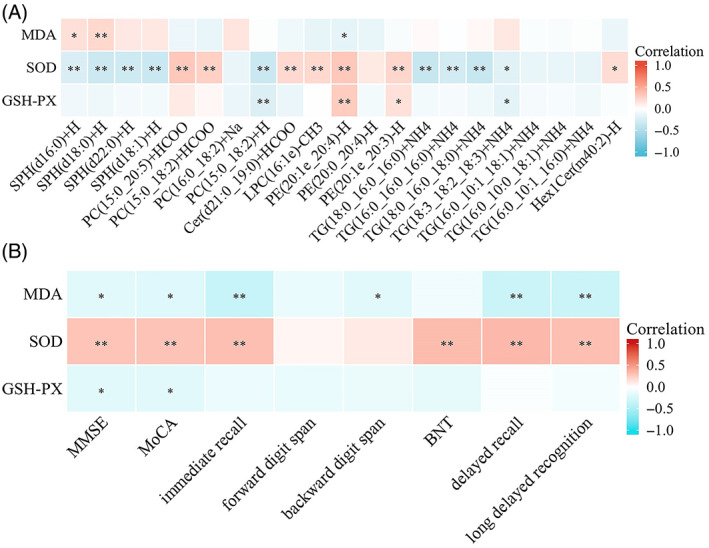
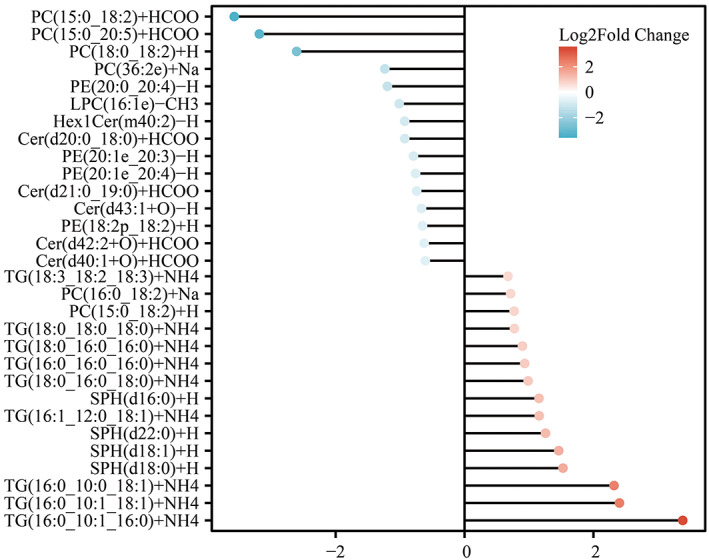
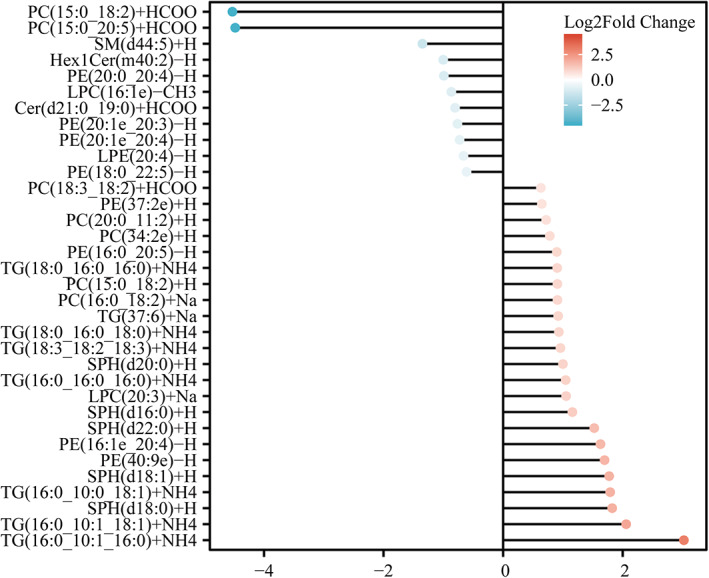
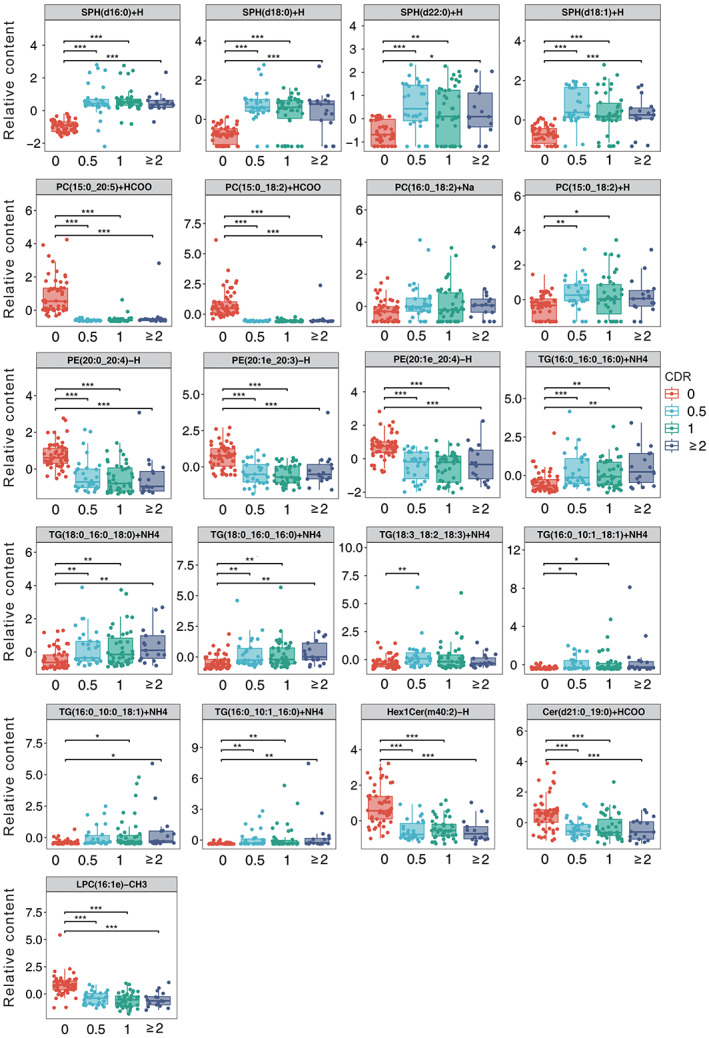
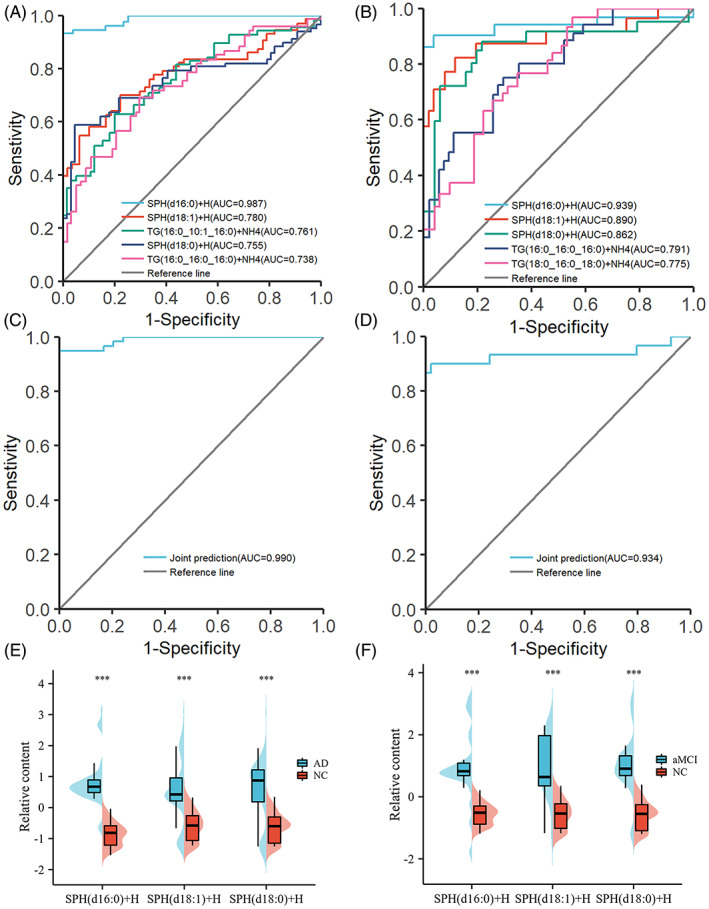
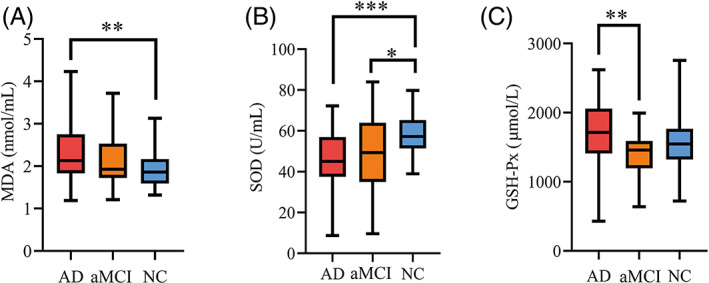
Lipid metabolism and oxidative stress are key mechanisms in Alzheimer's disease (AD). The link between plasma lipid metabolites and oxidative stress in AD patients is poorly understood. This study was to identify markers that distinguish AD and amnestic mild cognitive impairment (aMCI) from NC, and to reveal potential links between lipid metabolites and oxidative stress. We performed non-targeted lipid metabolism analysis of plasma from patients with AD, aMCI, and NC using LC-MS/MS. The plasma malondialdehyde (MDA), glutathione peroxidase (GSH-Px), and superoxide dismutase (SOD) levels were assessed. We found significant differences in lipid metabolism between patients with AD and aMCI compared to those in NC. AD severity is associated with lipid metabolites, especially TG (18:0_16:0_18:0) + NH4, TG (18:0_16:0_16:0) + NH4, LPC(16:1e)-CH3, and PE (20:0_20:4)-H. SPH (d16:0) + H, SPH (d18:1) + H, and SPH (d18:0) + H were high-performance markers to distinguish AD and aMCI from NC. The AUC of three SPHs combined to predict AD was 0.990, with specificity and sensitivity as 0.949 and 1, respectively; the AUC of three SPHs combined to predict aMCI was 0.934, with specificity and sensitivity as 0.900, 0.981, respectively. Plasma MDA concentrations were higher in the AD group than in the NC group (p = 0.003), whereas plasma SOD levels were lower in the AD (p < 0.001) and aMCI (p = 0.045) groups than in NC, and GSH-Px activity were higher in the AD group than in the aMCI group (p = 0.007). In addition, lipid metabolites and oxidative stress are widely associated. In conclusion, this study distinguished serum lipid metabolism in AD, aMCI, and NC subjects, highlighting that the three SPHs can distinguish AD and aMCI from NC. Additionally, AD patients showed elevated oxidative stress, and there are complex interactions between lipid metabolites and oxidative stress.
脂代谢和氧化应激是阿尔茨海默病(AD)的关键机制。AD 患者血浆脂代谢物与氧化应激之间的联系尚不清楚。本研究旨在鉴定能够区分 AD、遗忘型轻度认知障碍(aMCI)和正常对照(NC)的标志物,并揭示脂代谢物与氧化应激之间的潜在联系。我们使用 LC-MS/MS 对 AD、aMCI 和 NC 患者的血浆进行了非靶向脂质代谢分析。评估了血浆丙二醛(MDA)、谷胱甘肽过氧化物酶(GSH-Px)和超氧化物歧化酶(SOD)水平。我们发现 AD 患者与 aMCI 患者的脂代谢与 NC 患者存在显著差异。AD 严重程度与脂代谢物相关,尤其是 TG(18:0_16:0_18:0)+NH4、TG(18:0_16:0_16:0)+NH4、LPC(16:1e)-CH3 和 PE(20:0_20:4)-H。SPH(d16:0)+H、SPH(d18:1)+H 和 SPH(d18:0)+H 是区分 AD 和 aMCI 与 NC 的高效标志物。三种 SPH 联合预测 AD 的 AUC 为 0.990,特异性和敏感性分别为 0.949 和 1;三种 SPH 联合预测 aMCI 的 AUC 为 0.934,特异性和敏感性分别为 0.900 和 0.981。AD 组血浆 MDA 浓度高于 NC 组(p=0.003),而 AD(p<0.001)和 aMCI(p=0.045)组血浆 SOD 水平低于 NC 组,AD 组 GSH-Px 活性高于 aMCI 组(p=0.007)。此外,脂代谢物和氧化应激广泛相关。总之,本研究区分了 AD、aMCI 和 NC 受试者的血清脂代谢,突出了三种 SPH 可以区分 AD 和 aMCI 与 NC。此外,AD 患者表现出氧化应激升高,脂代谢物与氧化应激之间存在复杂的相互作用。