Institute of Nursing and Health, School of Nursing and Health, Henan University, Kaifeng, 475004, Henan, China.
Institute of Business Administration, School of Business, Henan University, Jinming Avenue, Kaifeng, 475004, Henan, China.
BMC Psychol. 2023 Aug 24;11(1):242. doi: 10.1186/s40359-023-01292-2.
BACKGROUND & AIMS: Diabetes may perceive or experience varying degrees of stigma and psychological distress. The association between diabetes-related stigma and psychological distress has been examined in many studies, but no research has used a quantitative synthesis method to investigate the severity of this association and the moderators of the relationship. Thus, we conducted a meta-analysis to quantitatively integrate previous findings to identify the magnitude of the association between stigma and psychological distress among people with diabetes.
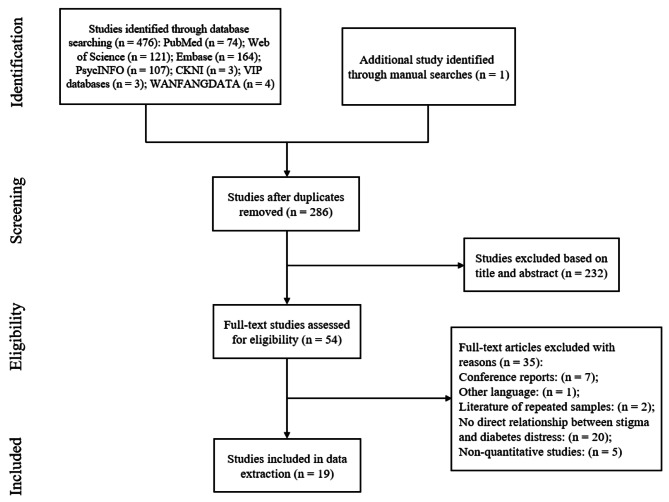
Following the Preferred Reporting Items for Systematic Reviews and Meta-Analyses (PRISMA) 2020 guidelines, we systematically searched four English academic databases (PubMed, Embase, Web of Science, and PsycINFO) and three Chinese databases (China National Knowledge Infrastructure [CNKI], WANFANG Data, China Science and Technology Journal Database [VIP]). The databases were searched from the inception of each database to the end of March 2023. The pooled correlation coefficient of the association between stigma and psychological distress among people with diabetes was calculated by a random effects model using Stata software (version 17.0), and several moderators that impacted this relationship were identified.
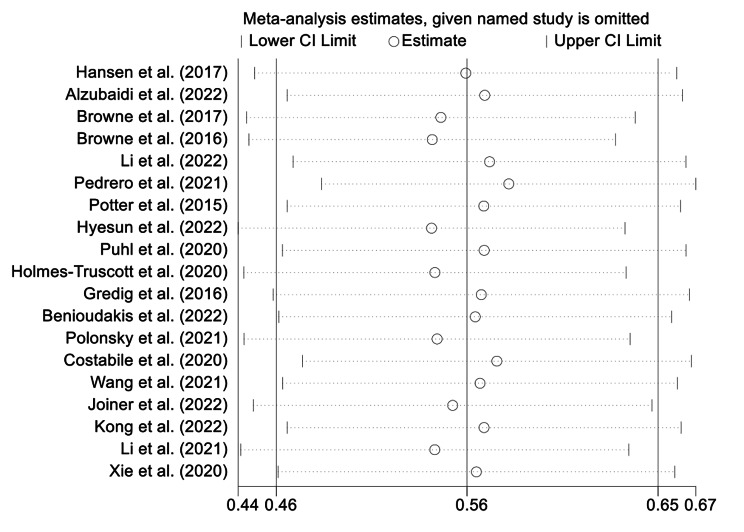
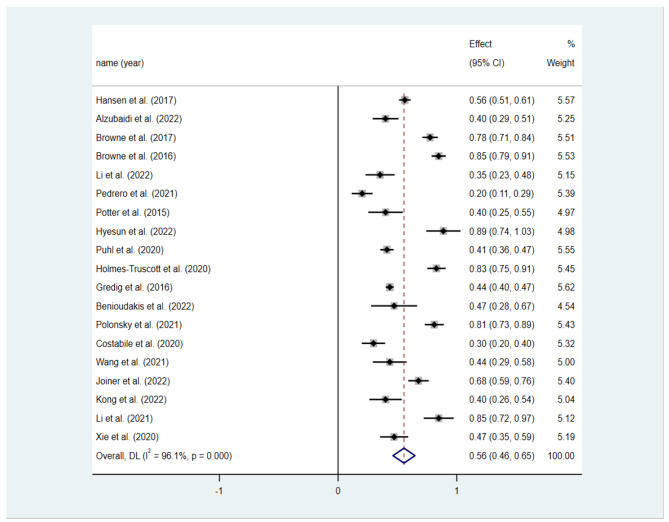
Eligible studies (N = 19) with a total of 12,777 participants were analysed. The pooled correlation was high between diabetes-related stigma and psychological distress (r = 0.50, 95% CI: [0.43-0.57]). Moreover, the association was moderated by the diabetes stigma measurement tools and diabetes distress measurement tools used. However, the relationship was not moderated by type of diabetes, age, gender, geographical location, or type of stigma.
The results of the meta-analysis showed that stigma is strongly related to psychological distress among people with diabetes. Longitudinal or experimental research should be expanded in the future to further identify the causal pathways in the relationship between diabetes stigma and diabetes distress.
糖尿病患者可能会感受到或经历不同程度的污名化和心理困扰。许多研究都考察了糖尿病相关污名与心理困扰之间的关系,但没有研究使用定量综合方法来调查这种关系的严重程度和关系的调节因素。因此,我们进行了一项荟萃分析,以定量整合以前的研究结果,确定糖尿病患者中污名与心理困扰之间的关联程度。
根据系统评价和荟萃分析的首选报告项目(PRISMA)2020 指南,我们系统地检索了四个英文学术数据库(PubMed、Embase、Web of Science 和 PsycINFO)和三个中文数据库(中国国家知识基础设施[CNKI]、万方数据、中国科技期刊数据库[VIP])。从每个数据库的创建到 2023 年 3 月底,对数据库进行了检索。使用 Stata 软件(版本 17.0),通过随机效应模型计算了糖尿病患者中污名与心理困扰之间关联的合并相关系数,并确定了几个影响这种关系的调节因素。
分析了符合条件的研究(N=19),共 12777 名参与者。糖尿病相关污名与心理困扰之间的关联高度相关(r=0.50,95%置信区间:[0.43-0.57])。此外,该关联受到使用的糖尿病污名测量工具和糖尿病困扰测量工具的调节。然而,该关系不受糖尿病类型、年龄、性别、地理位置或污名类型的调节。
荟萃分析的结果表明,污名与糖尿病患者的心理困扰密切相关。未来应扩大纵向或实验研究,以进一步确定糖尿病污名与糖尿病困扰之间关系的因果途径。