Sheta Sheta M, Hamouda Mohamed A, Ali Omnia I, Kandil A T, Sheha Reda R, El-Sheikh Said M
Inorganic Chemistry Department, National Research Centre 33 El-Behouth St., Dokki Giza 12622 Egypt
Chemistry Department, Faculty of Science, Helwan University Ain Helwan Cairo 11795 Egypt
RSC Adv. 2023 Aug 23;13(36):25182-25208. doi: 10.1039/d3ra04177h. eCollection 2023 Aug 21.
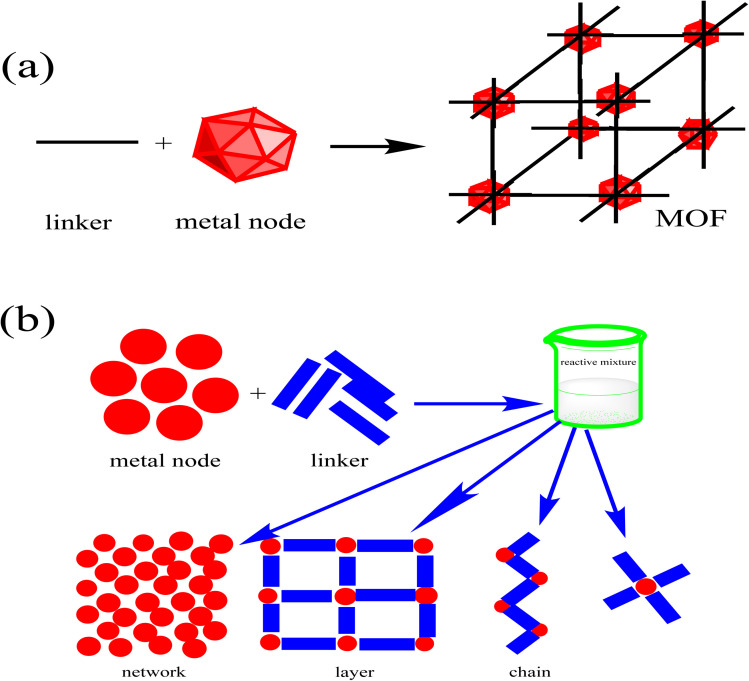
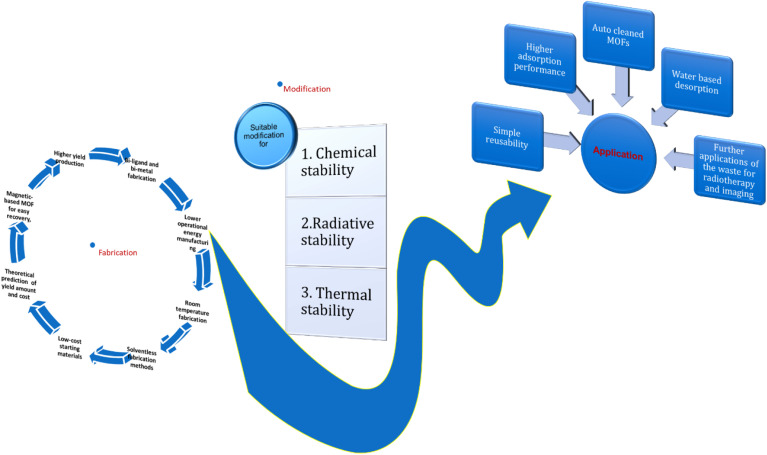
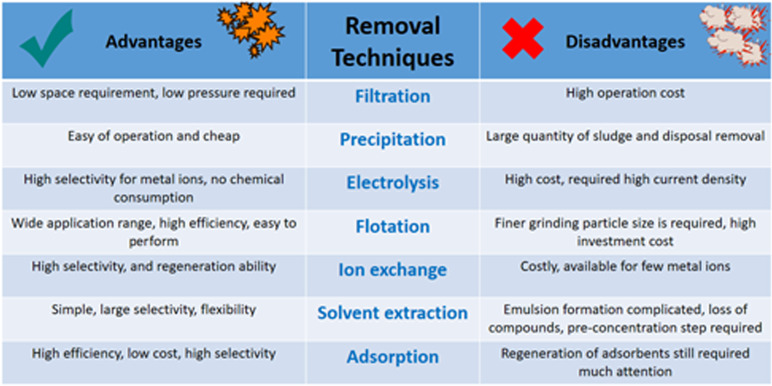
The nuclear industry is rapidly developing and the effective management of nuclear waste and monitoring the nuclear fuel cycle are crucial. The presence of various radionuclides such as uranium (U), europium (Eu), technetium (Tc), iodine (I), thorium (Th), cesium (Cs), and strontium (Sr) in the environment is a major concern, and the development of materials with high adsorption capacity and selectivity is essential for their effective removal. Metal-organic frameworks (MOFs) have recently emerged as promising materials for removing radioactive elements from water resources due to their unique properties such as tunable pore size, high surface area, and chemical structure. This review provides an extensive analysis of the potential of MOFs as adsorbents for purifying various radionuclides rather than using different techniques such as precipitation, filtration, ion exchange, electrolysis, solvent extraction, and flotation. This review discusses various MOF fabrication methods, focusing on minimizing environmental impacts when using organic solvents and solvent-free methods, and covers the mechanism of MOF adsorption towards radionuclides, including macroscopic and microscopic views. It also examines the effectiveness of MOFs in removing radionuclides from wastewater, their behavior on exposure to high radiation, and their renewability and reusability. We conclude by emphasizing the need for further research to optimize the performance of MOFs and expand their use in real-world applications. Overall, this review provides valuable insights into the potential of MOFs as efficient and durable materials for removing radioactive elements from water resources, addressing a critical issue in the nuclear industry.
核工业正在迅速发展,对核废料进行有效管理以及监测核燃料循环至关重要。环境中存在各种放射性核素,如铀(U)、铕(Eu)、锝(Tc)、碘(I)、钍(Th)、铯(Cs)和锶(Sr),这是一个主要问题,开发具有高吸附容量和选择性的材料对于有效去除这些放射性核素至关重要。金属有机框架(MOF)由于其独特的性质,如可调孔径、高比表面积和化学结构,最近已成为从水资源中去除放射性元素的有前途的材料。本综述对MOF作为吸附剂净化各种放射性核素的潜力进行了广泛分析,而不是使用沉淀、过滤、离子交换、电解、溶剂萃取和浮选等不同技术。本综述讨论了各种MOF制备方法,重点是在使用有机溶剂和无溶剂方法时尽量减少对环境的影响,并涵盖了MOF对放射性核素的吸附机制,包括宏观和微观观点。它还研究了MOF从废水中去除放射性核素的有效性、它们在高辐射下的行为以及它们的可再生性和可重复使用性。我们强调需要进一步研究以优化MOF的性能并扩大其在实际应用中的使用,以此作为结论。总体而言,本综述为MOF作为从水资源中去除放射性元素的高效耐用材料的潜力提供了有价值的见解,解决了核工业中的一个关键问题。