Faculty of Medical Engineering, University Politehnica of Bucharest, Gh Polizu 1-7, 011061 Bucharest, Romania.
Advanced Polymer Materials Group, University Politehnica of Bucharest, Gh Polizu 1-7, 011061 Bucharest, Romania.
Biosensors (Basel). 2023 Aug 8;13(8):797. doi: 10.3390/bios13080797.
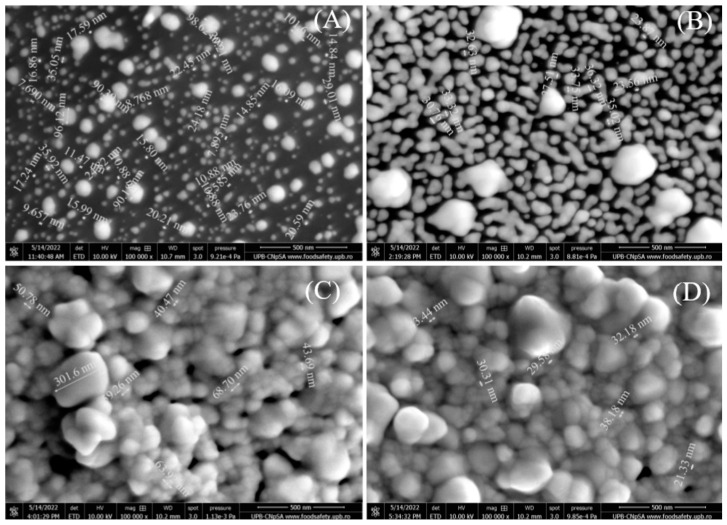
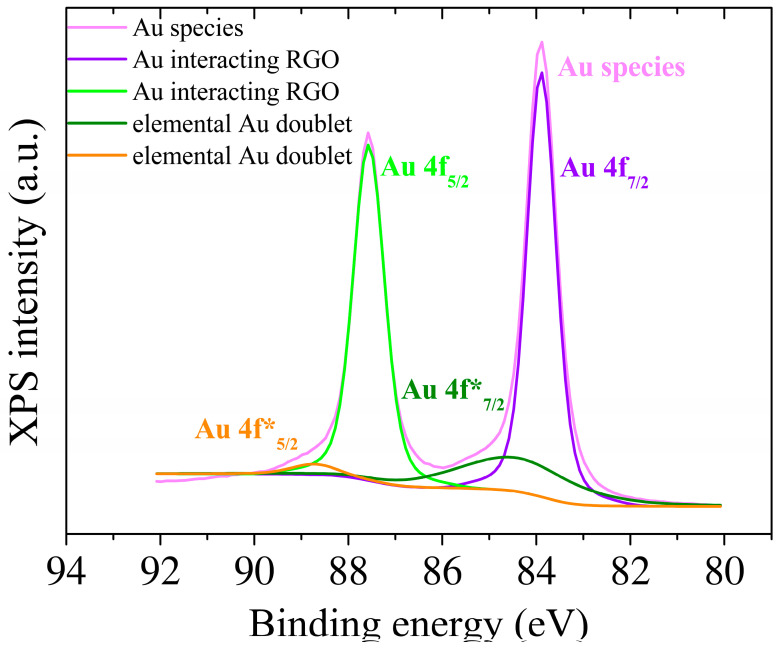
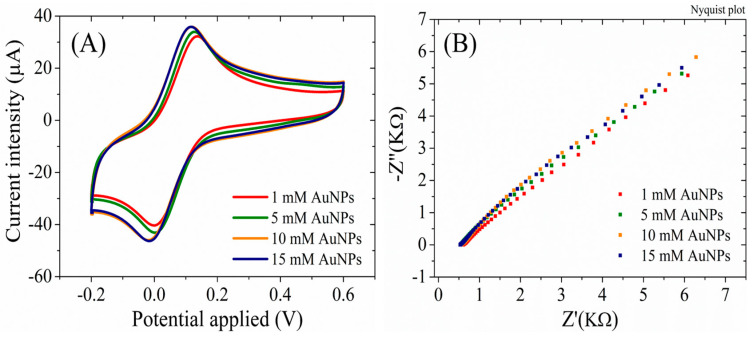
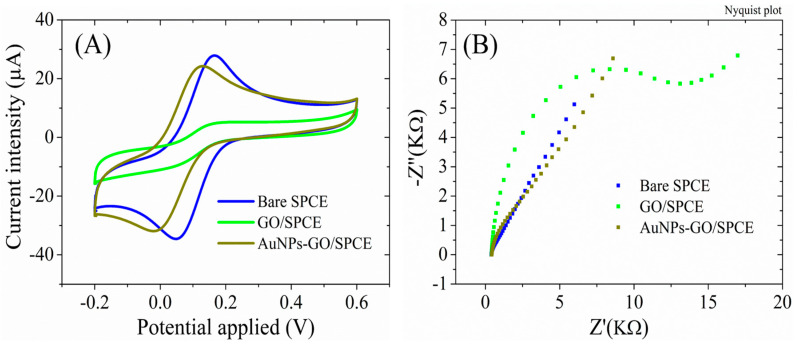
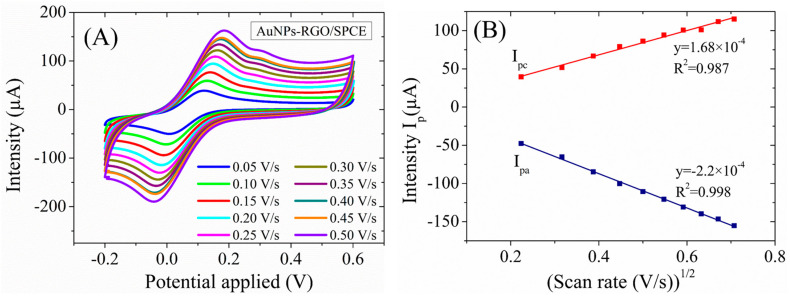
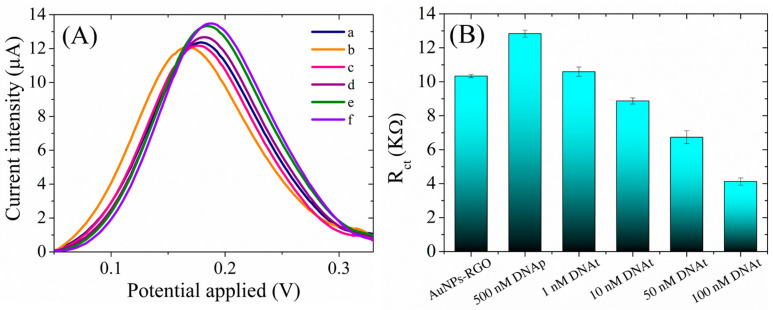
Currently available DNA detection techniques frequently require compromises between simplicity, speed, accuracy, and cost. Here, we propose a simple, label-free, and cost-effective DNA detection platform developed at screen-printed carbon electrodes (SPCEs) modified with reduced graphene oxide (RGO) and gold nanoparticles (AuNPs). The preparation of the detection platform involved a two-step electrochemical procedure based on GO reduction onto SPCEs followed by the electrochemical reduction of HAuCl to facilitate the post-grafting reaction with AuNPs. The final sensor was fabricated by the simple physical adsorption of a single-stranded DNA (ssDNA) probe onto a AuNPs-RGO/SPCE electrode. Each preparation step was confirmed by morphological and structural characterization using scanning electron microscopy (SEM) and X-ray photoelectron spectroscopy, respectively. Furthermore, the electrochemical properties of the modified electrodes have been investigated by cyclic voltammetry (CV) and electrochemical impedance spectroscopy (EIS). The results demonstrated that the introduction of AuNPs onto RGO/SPCEs led to an enhancement in surface conductivity, a characteristic that favored an increased sensitivity in detection. The detection process relied on the change in the electrochemical signal induced by the binding of target DNA to the bioreceptor and was particularly monitored by the change in the charge transfer resistance of a [Fe(CN)] redox couple added in the test solution.
目前可用的 DNA 检测技术通常需要在简单性、速度、准确性和成本之间进行权衡。在这里,我们提出了一种简单、无标记且具有成本效益的 DNA 检测平台,该平台是在经过还原氧化石墨烯 (RGO) 和金纳米粒子 (AuNPs) 修饰的丝网印刷碳电极 (SPCE) 上开发的。检测平台的制备涉及两步电化学过程,基于 GO 在 SPCE 上的还原,然后电化学还原 HAuCl,以促进与 AuNPs 的接枝后反应。最终传感器通过单链 DNA (ssDNA) 探针简单地物理吸附到 AuNPs-RGO/SPCE 电极上制备而成。每个制备步骤均通过扫描电子显微镜 (SEM) 和 X 射线光电子能谱分别进行形态和结构表征进行了确认。此外,还通过循环伏安法 (CV) 和电化学阻抗谱 (EIS) 研究了修饰电极的电化学性质。结果表明,AuNPs 引入 RGO/SPCE 会增加表面电导率,这一特性有利于提高检测的灵敏度。检测过程依赖于目标 DNA 与生物受体结合引起的电化学信号变化,并通过检测溶液中添加的 [Fe(CN)] 氧化还原对的电荷转移电阻的变化来特别监测。