Nouhou Moussa Abdoul Wahab, Sawadogo Boukary, Konate Yacouba, Sidibe Sayon Dit Sadio, Heran Marc
Laboratoire Eaux Hydro-Systèmes et Agriculture (LEHSA), Institut International d'Ingénierie de l'Eau et de l'Environnement (2iE), Rue de la Science, Ouagadougou 01 BP 594, Burkina Faso.
Laboratoire Energies Renouvelables et Efficacité Energétique (LaBEREE), Institut International d'Ingénierie de l'Eau et de l'Environnement (2iE), Rue de la Science, Ouagadougou 01 BP 594, Burkina Faso.
Membranes (Basel). 2023 Jul 31;13(8):709. doi: 10.3390/membranes13080709.
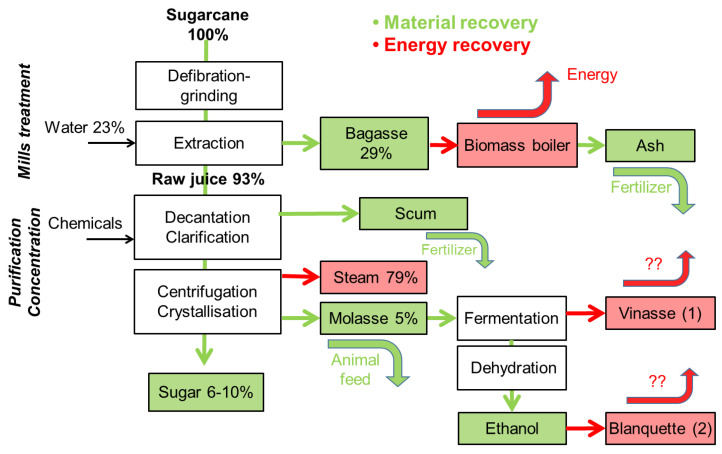
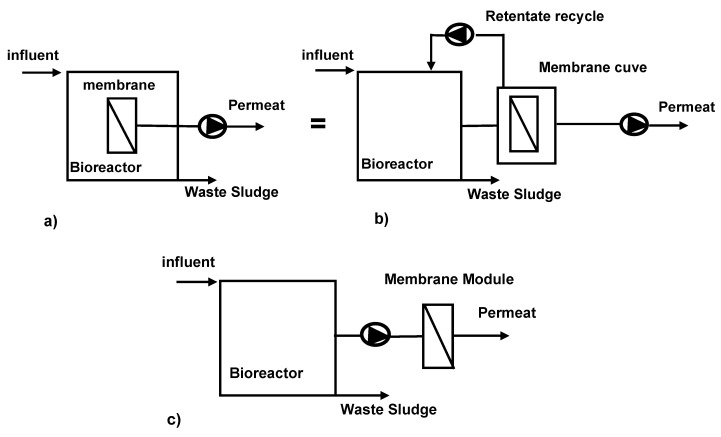
The worldwide pressure on water resources is aggravated by rapid industrialization, with the food industry, particularly sugar factories, being the foremost contributor. Sugarcane, a primary source of sugar production, requires vast amounts of water, over half of which is discharged as wastewater, often mixed with several byproducts. The discharge of untreated wastewater can have detrimental effects on the environment, making the treatment and reuse of effluents crucial. However, conventional treatment systems may not be adequate for sugarcane industry effluent treatment due to the high organic load and variable chemical and mineral pollution. It is essential to explore pollution-remediating technologies that can achieve a nexus (water, energy, and food) approach and contribute to sustainable development. Based on the extensive literature, membrane technologies such as the membrane bioreactor have shown promising results in treating sugarcane industry wastewater, producing treated water of higher quality, and the possibility of biogas recovery. The byproducts generated from this treatment can also be recovered and used in agriculture for food security. To date, membrane technologies have demonstrated successful results in treating industrial wastewater. This critical review aims to evaluate the performance of traditional and conventional processes in order to propose sustainable perspectives. It also serves to emphasize the need for further research on operating conditions related to membrane bioreactors for valuing sugarcane effluent, to establish it as a sustainable treatment system.
快速工业化加剧了全球水资源压力,食品工业,尤其是制糖厂,是主要贡献者。甘蔗作为糖生产的主要来源,需要大量的水,其中一半以上作为废水排放,且常与多种副产品混合。未经处理的废水排放会对环境产生有害影响,因此废水的处理和再利用至关重要。然而,由于有机负荷高以及化学和矿物污染的变化,传统处理系统可能不足以处理甘蔗工业废水。探索能够实现水、能源和食物三者关联方法并有助于可持续发展的污染修复技术至关重要。基于大量文献,膜生物反应器等膜技术在处理甘蔗工业废水方面已显示出有前景的结果,能产生更高质量的处理水,并有可能回收沼气。这种处理产生的副产品也可回收并用于农业以保障粮食安全。迄今为止,膜技术在处理工业废水方面已取得成功成果。这篇批判性综述旨在评估传统工艺的性能,以提出可持续的观点。它还强调了有必要进一步研究与膜生物反应器处理甘蔗废水相关的运行条件,使其成为可持续处理系统。