Department of Radiology, IRCCS Sacro Cuore Hospital, Via Don A. Sempreboni 10, 37042 Negrar, Verona, Italy.
Department of Diagnostic and Interventional Radiology, Division of Experimental Imaging, University Hospital Frankfurt, 60596 Frankfurt am Main, Germany.
Tomography. 2023 Aug 8;9(4):1471-1484. doi: 10.3390/tomography9040117.
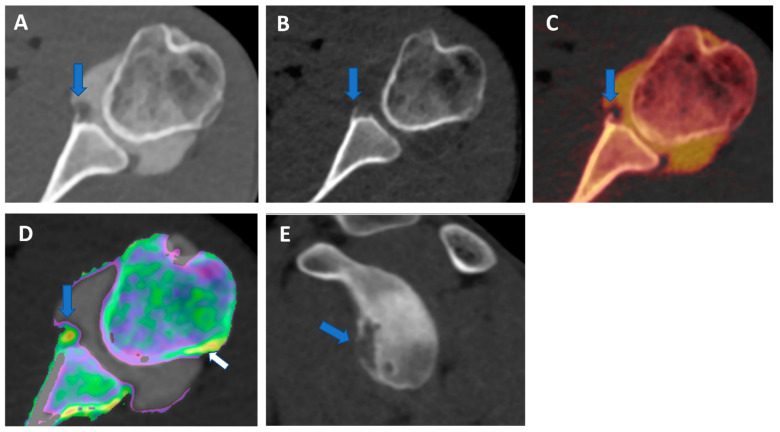
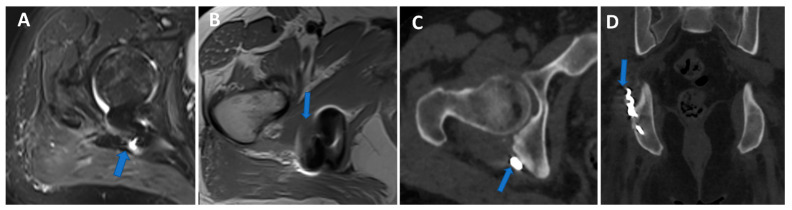
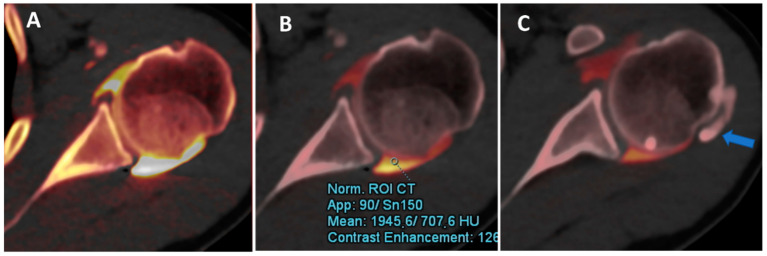
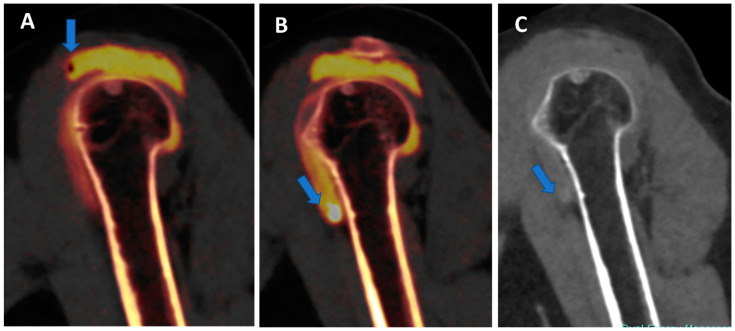
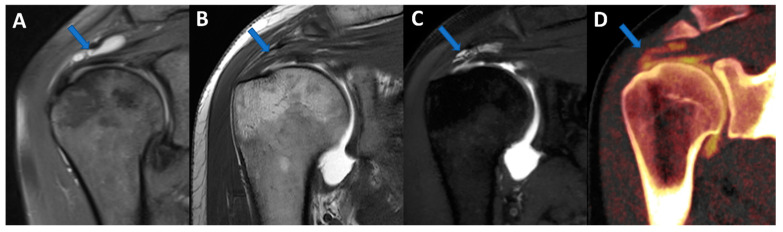
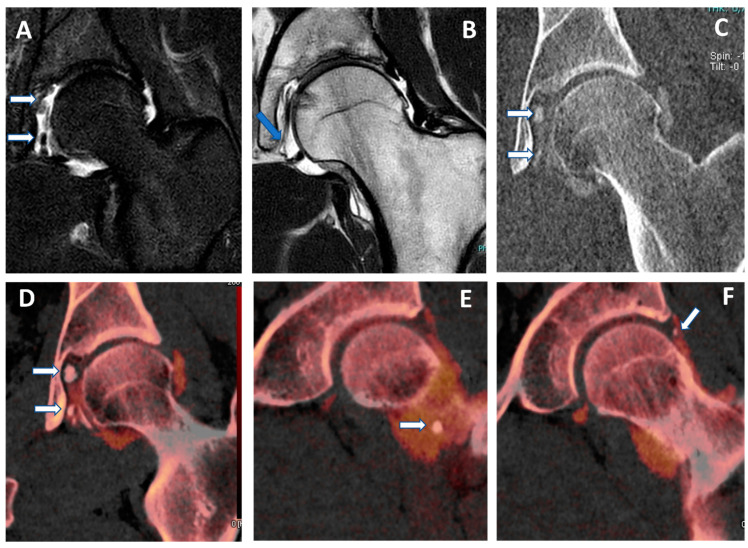
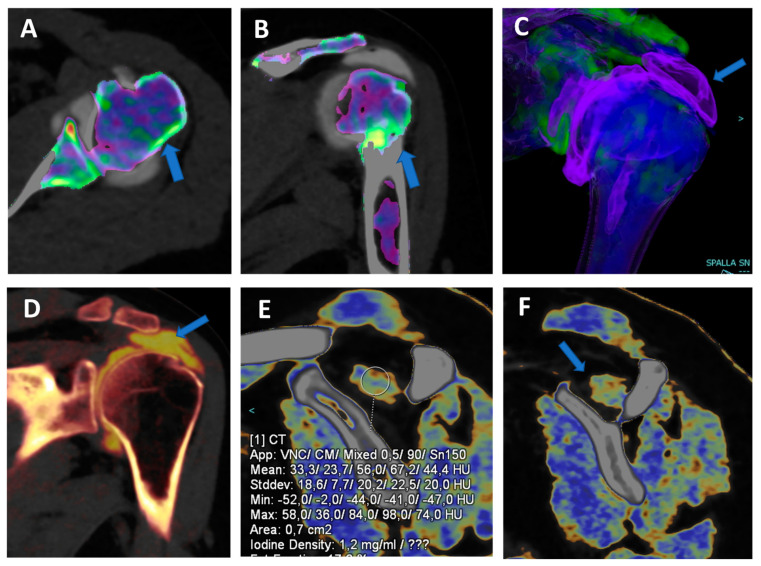
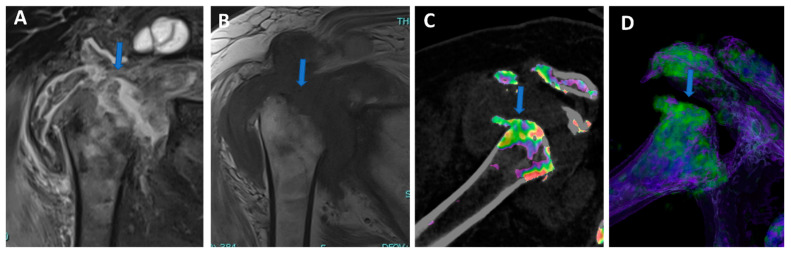
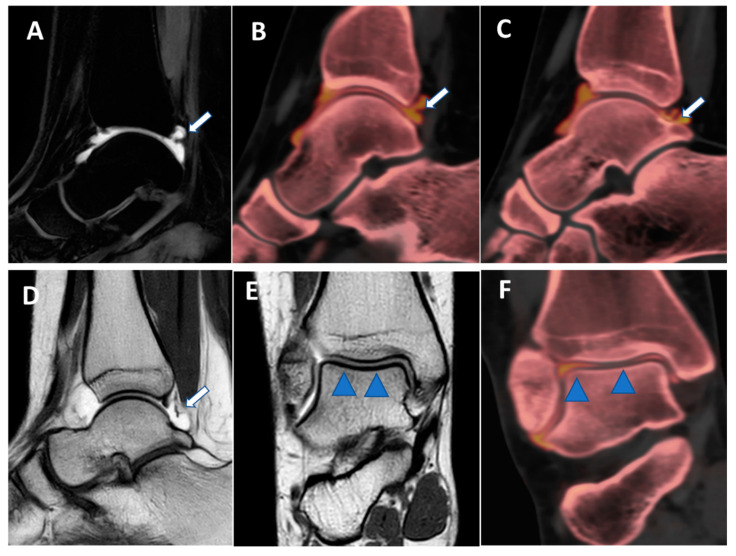
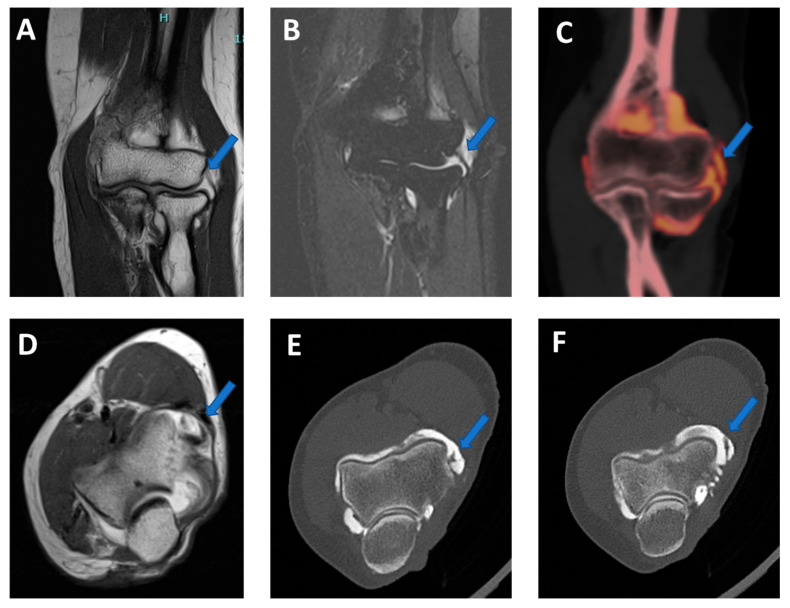
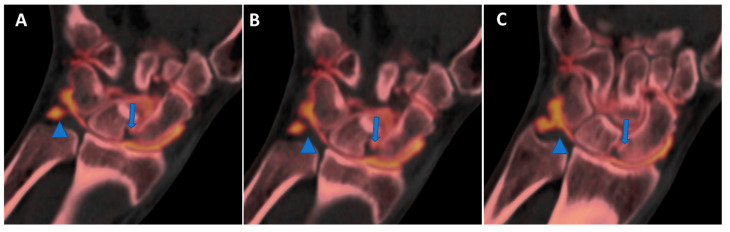
This paper provides a comprehensive overview of the potential applications of dual-energy CT (DECT) in improving image quality and the diagnostic capabilities of CT arthrography (CTA) in clinical practice. The paper covers the use of virtual non-contrast (VNC) images, in which the injected contrast medium is subtracted from the articular cavity in order to better analyze 2D and 3D images of the bone. Moreover, virtual monoenergetic imaging (VMI) applications and their potential use for the reduction of metal artifacts and improving image contrast are reviewed. The role of virtual non-calcium (VNCa) in detecting bone marrow edema surrounding the imaged joint will be discussed. Furthermore, the role of iodine maps in enhancing the contrast between soft tissues, optimizing the visualization of contrast material, and distinguishing contrast material from calcifications is described. Finally, a case series including different joints is provided to underline the additional advantages of high-spatial-resolution dual-energy CT reconstructed images.
本文全面介绍了能谱 CT(DECT)在提高 CT 关节造影(CTA)图像质量和诊断能力方面的潜在应用。文中涵盖了虚拟非对比(VNC)图像的应用,该技术可从关节腔中减去注入的对比剂,从而更好地分析二维和三维的骨图像。此外,还回顾了虚拟单能量成像(VMI)的应用,及其在减少金属伪影和提高图像对比度方面的潜在作用。本文还将探讨虚拟非钙质(VNCa)在检测成像关节周围骨髓水肿方面的作用。此外,碘图在增强软组织对比度、优化对比剂可视化以及区分对比剂与钙化方面的作用也有描述。最后,提供了一系列不同关节的病例,以突出高空间分辨率能谱 CT 重建图像的附加优势。