Peng Yulan, Pu Xuemei, Yu Qi, Zhou Hailing, Huang Tianfang, Xu Bo, Gao Xinfen
Chengdu Institute of Biology, Chinese Academy of Sciences, Chengdu 610041, China.
Plants (Basel). 2023 Aug 9;12(16):2909. doi: 10.3390/plants12162909.
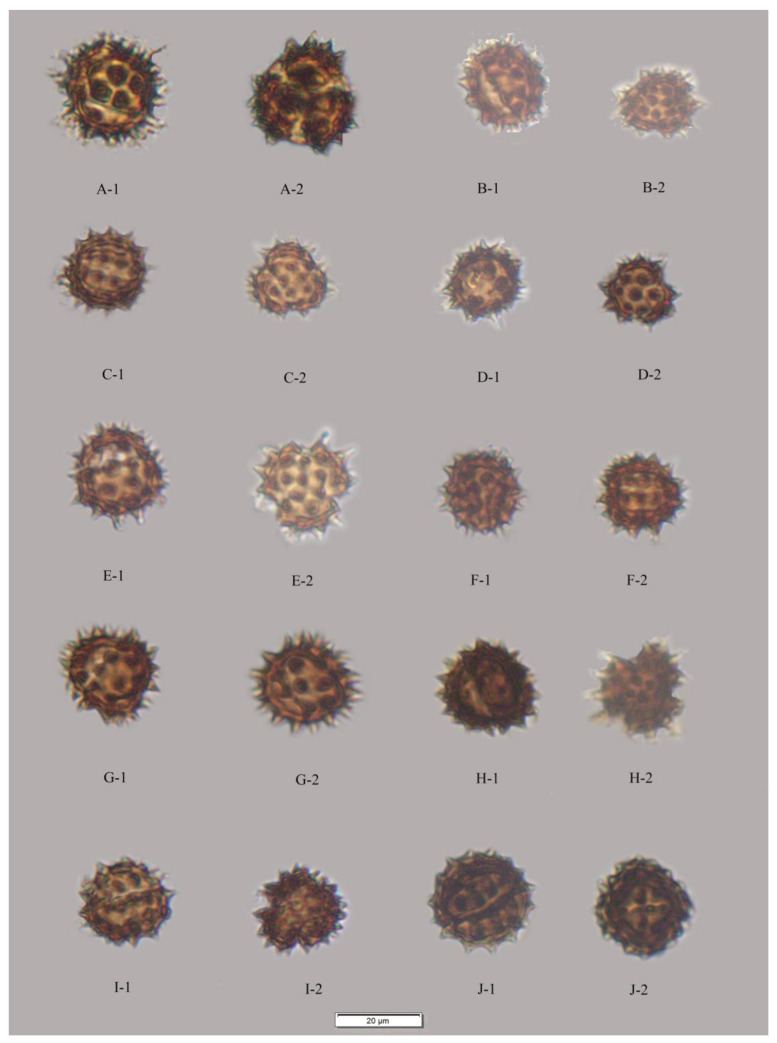
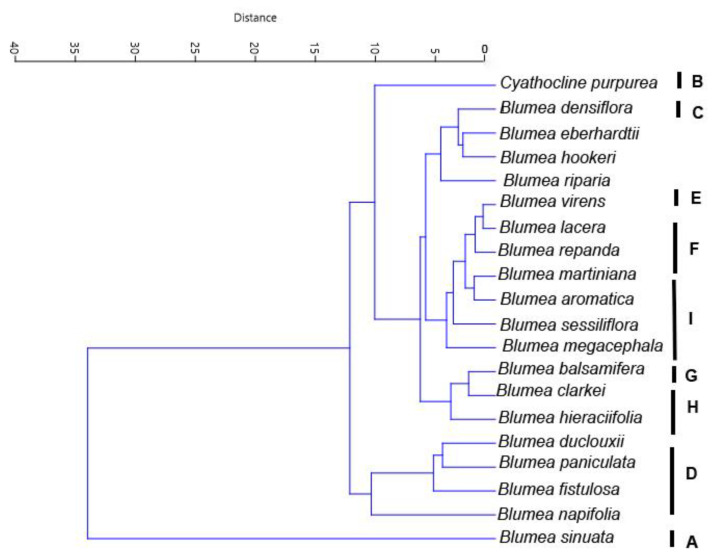
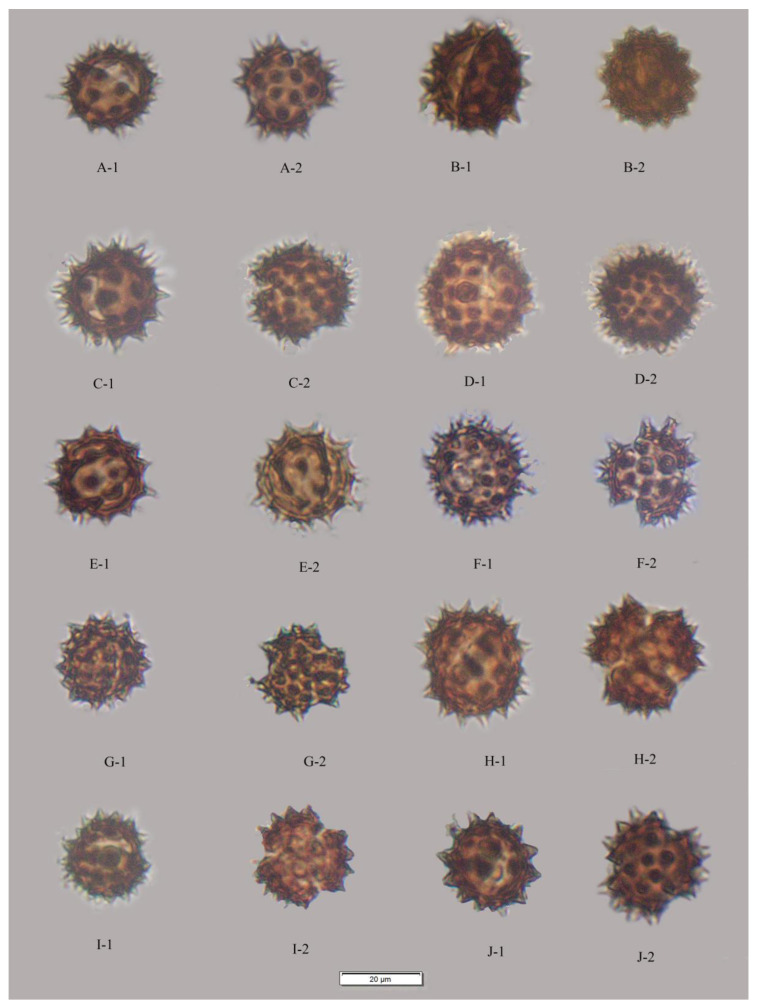
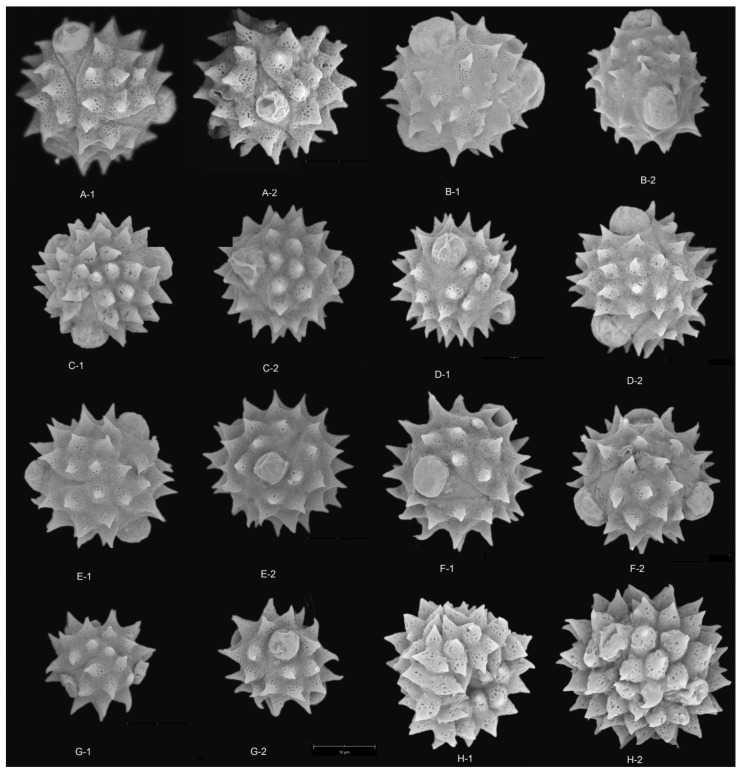
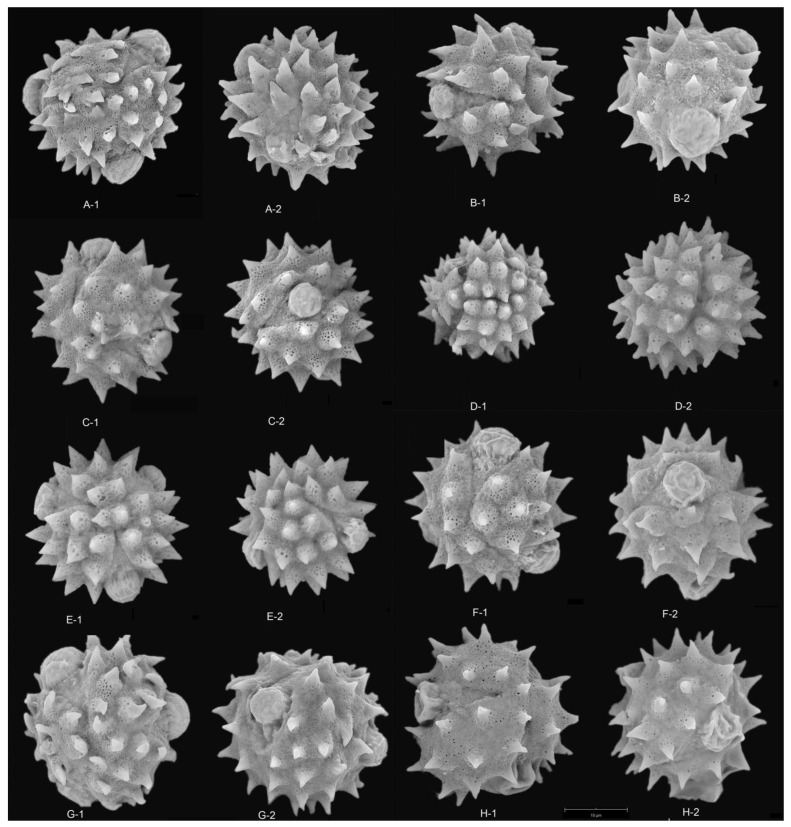
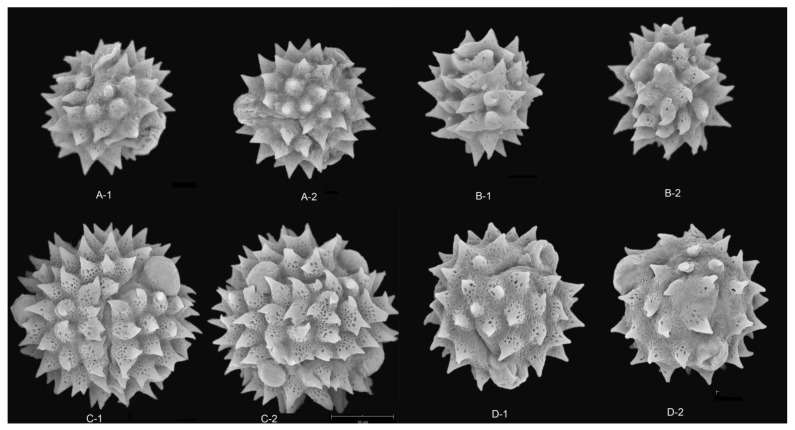
The pollen morphology of 20 species from and Cass. was investigated using a light microscope (LM) and scanning electron microscopy (SEM) to explore their taxonomic significance. This study showed that pollen grains of these species were usually tricolporate, rarely tetracolporate (). Nine pollen types were distinguishable through the exine sculpture characters and the number of apertures. It was easily distinguished from species of s. str. by its much smaller size (15.04 μm × 15.07 μm) and sparse and longer spines (24 spines, spine length 4.23 μm) with acute apex, which suggest that might not belong to the genus s. str. The palynological characteristics indicated that Section and Section of were not monophyletic groups. The pollen morphology differentiation of clade is consistent with the interspecific relationship revealed by the molecular phylogenetic tree. However, the pollen morphology of the clade is inconsistent with the interspecific relationship based on molecular phylogenetic analysis. This palynology research can only partly support the previously published molecular phylogeny of s. str.
利用光学显微镜(LM)和扫描电子显微镜(SEM)对来自[属名1]和[属名2](Cass.)的20个物种的花粉形态进行了研究,以探讨其分类学意义。本研究表明,这些物种的花粉粒通常为三孔沟型,很少为四孔沟型([具体情况])。通过外壁纹饰特征和萌发孔数量可区分出九种花粉类型。它很容易通过其小得多的尺寸(15.04μm×15.07μm)以及稀疏且较长的刺(24根刺,刺长4.23μm)且顶端尖锐与[属名]狭义组的物种区分开来,这表明[物种名]可能不属于[属名]狭义组。孢粉学特征表明,[属名]的[组名1]和[组名2]不是单系类群。[属名]分支的花粉形态分化与分子系统发育树揭示的种间关系一致。然而,[属名]分支的花粉形态与基于分子系统发育分析的种间关系不一致。这项孢粉学研究只能部分支持先前发表过的[属名]狭义组的分子系统发育。