Cherait Asma, Banks William A, Vaudry David
Univ Rouen Normandie, Inserm U1245, Medical Faculty, Normandie Univ, F-76000 Rouen, France.
Department of Second Cycle, Higher School of Agronomy Mostaganem, Mostaganem 27000, Algeria.
Pharmaceutics. 2023 Jul 28;15(8):2032. doi: 10.3390/pharmaceutics15082032.
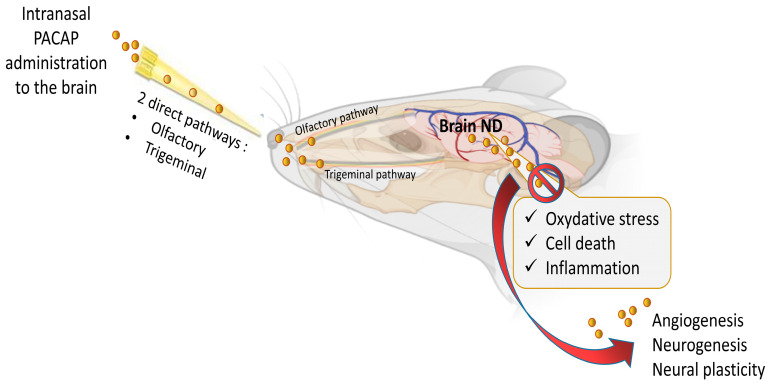
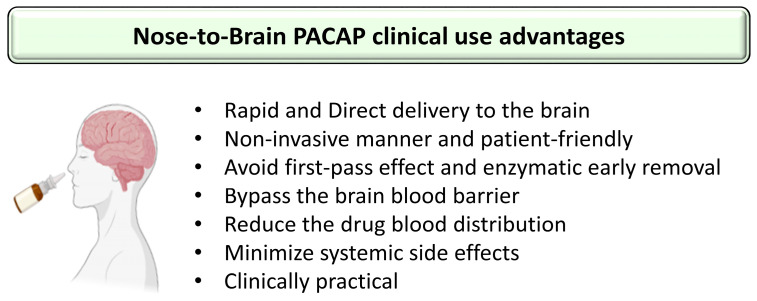
Research on the neuroprotective effect of pituitary adenylate cyclase-activating polypeptide (PACAP) and its use as a therapeutic agent has grown over the past 30 years. Both in vitro and in vivo experiments have shown that PACAP exerts a strong neuroprotective effect in many central and peripheral neuronal diseases. Various delivery routes have been employed from intravenous (IV) injections to intracerebroventricular (ICV) administration, leading either to systemic or topical delivery of the peptide. Over the last decade, a growing interest in the use of intranasal (IN) administration of PACAP and other therapeutic agents has emerged as an alternative delivery route to target the brain. The aim of this review is to summarize the findings on the neuroprotective effect of PACAP and to discuss how the IN administration of PACAP could contribute to target the effects of this pleiotropic peptide.
在过去30年里,关于垂体腺苷酸环化酶激活多肽(PACAP)的神经保护作用及其作为治疗剂的应用研究不断增加。体外和体内实验均表明,PACAP在许多中枢和外周神经元疾病中发挥着强大的神经保护作用。从静脉注射到脑室内给药,已采用了各种给药途径,从而实现该肽的全身或局部递送。在过去十年中,越来越多的人对通过鼻腔内(IN)给药PACAP和其他治疗剂作为靶向大脑的替代给药途径产生了兴趣。这篇综述的目的是总结关于PACAP神经保护作用的研究结果,并讨论鼻腔内给药PACAP如何有助于实现这种多效性肽的作用靶点。