The Pulmonary Center, Boston University School of Medicine (BUSM), East Concord Street R304, Boston, MA, 02118, USA.
Faculté de Pharmacie, Université D'Auvergne, Clermont Ferrand, France.
BMC Cancer. 2019 Feb 11;19(1):136. doi: 10.1186/s12885-019-5337-6.
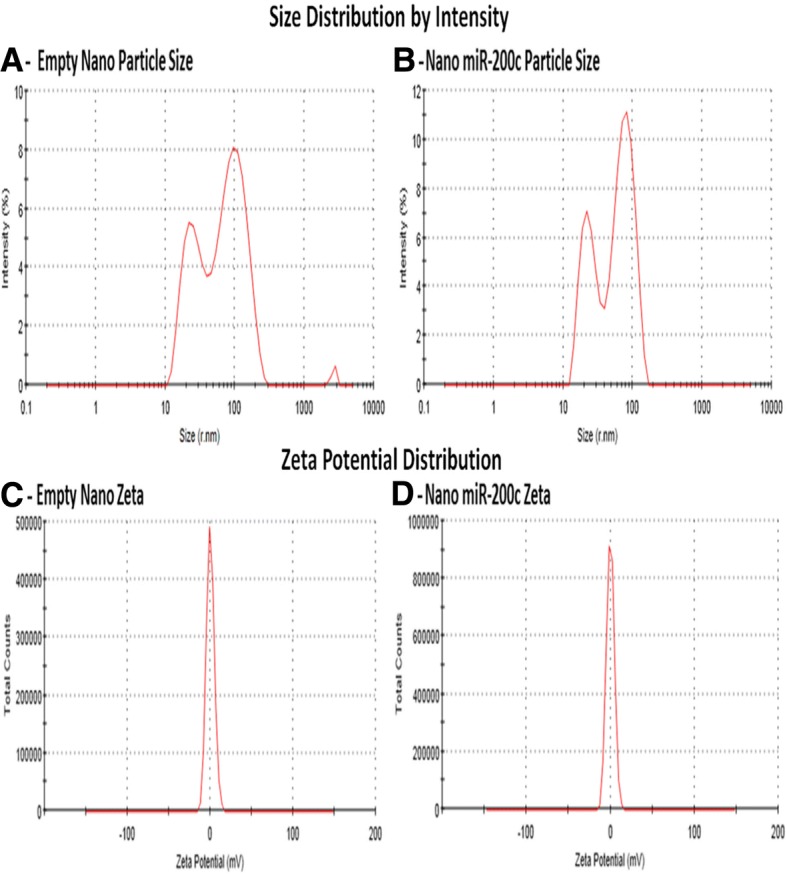
MicroRNAs are noncoding RNA molecules of ~ 22 nucleotides with diagnostic and therapeutic action [Curr Drug Targets, 2015. 16(12): p. 1381-403], affecting the expression of mRNAs involved in invasion, migration, and development [Oncotarget, 2015. 6(9): p. 6472-98, Cancer Manag Res, 2014. 6: p. 205-16]. miR-200c is part of the miR-200c/141 cluster on chromosome 12p13. Its mechanism of action when encapsulated is critical in lung cancer when patients express changes in miRNAs. miR-200c be a potential biomarkers for various lung diseases. As a potential therapy, miR-200c can impacts lives as target lung cancer is a leading cause of death with about 234,000 cases annually, high heterogeneity, complex screening, and a 5-year survival rate of 16% [CA Cancer J Clin, 2016.66(1): p. 7-30]. Encapsulated miR-200c efficiently enhances bioavailability, pharmacokinetics of therapeutics and targeting to cells, improves efficacy and provides potential cure.
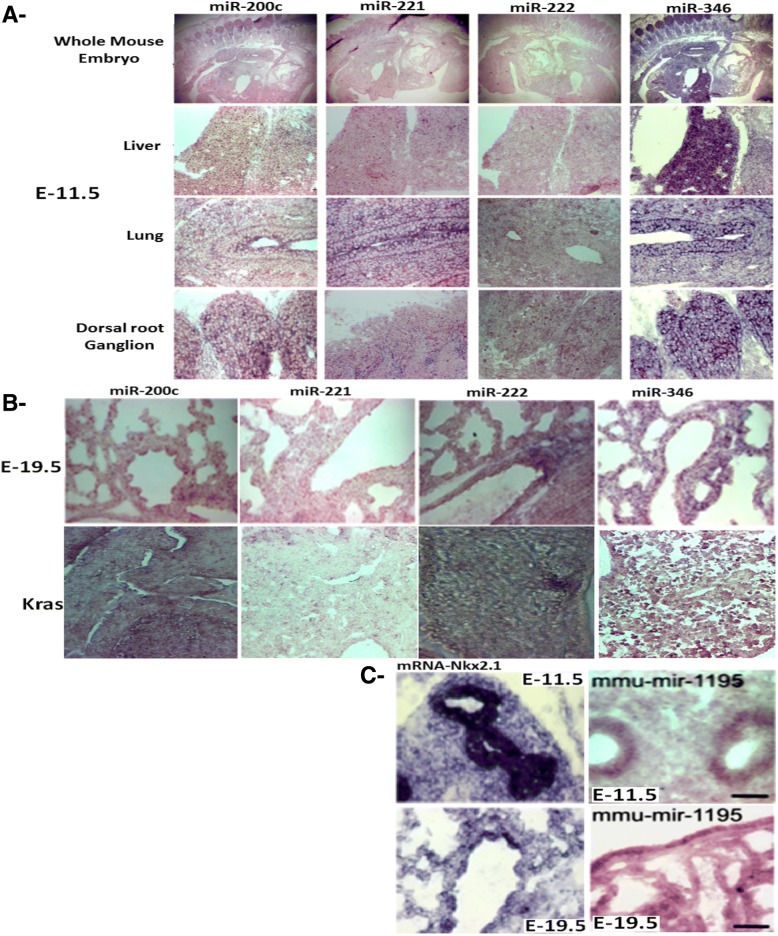
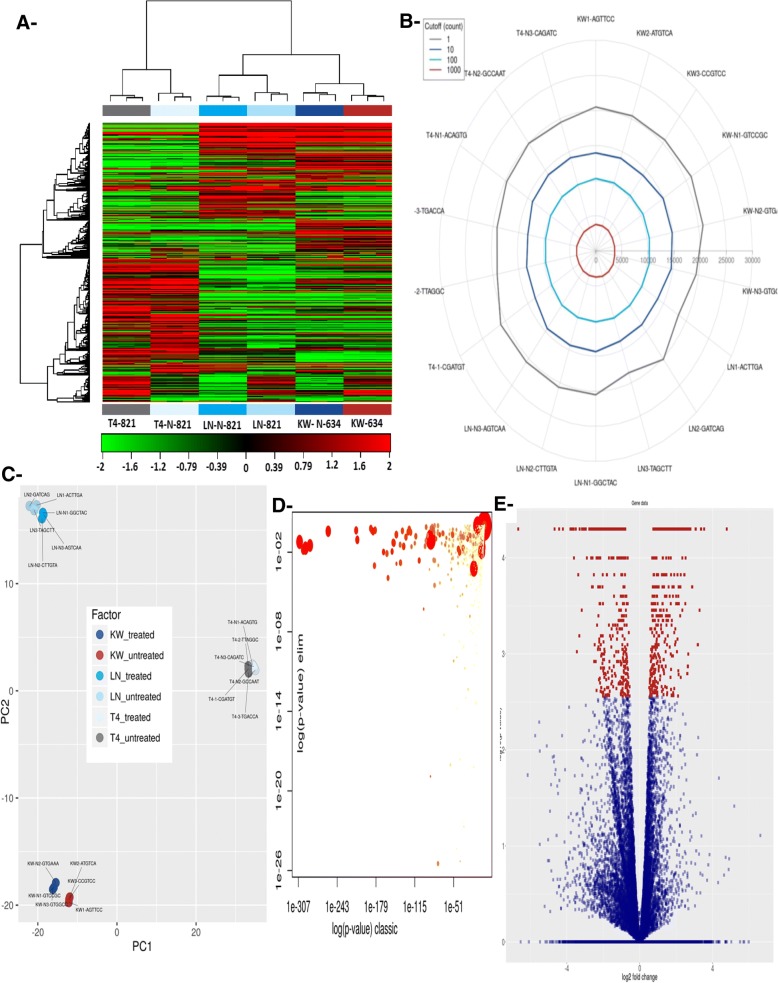
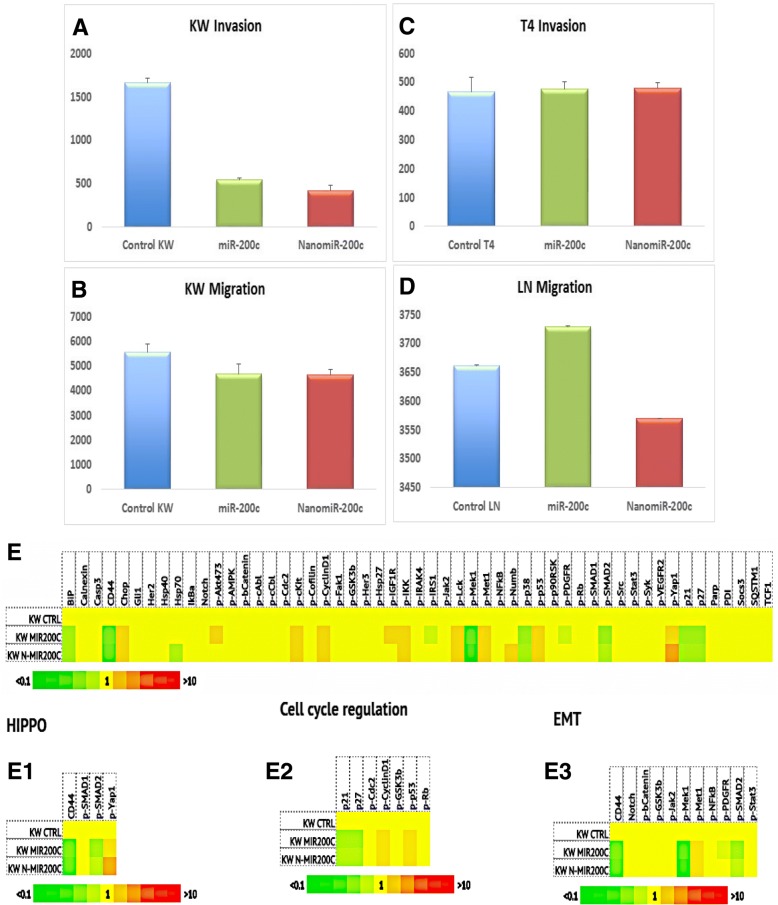
The functions of miR-200c were determined in non-metastatic KW-634 and metastatic 821-T4 and 821-LN mouse lung cancer cell lines after various Nano vehicle treatments. Viability and cytotoxicity were determined by cell cycle and quantitative real-time PCR analyses were used to quantify levels of miR-200c and its target genes. In situ hybridization was used to visualize patterns of expression of miR-200c and others in the lung and many organs. Next-generation sequencing accession number GSE125000, invasion and migration assays using transwell chambers, and ActivSignal were used to elucidate the activation and inhibition profiles and perform direct expression measurements and modification of cellular components.
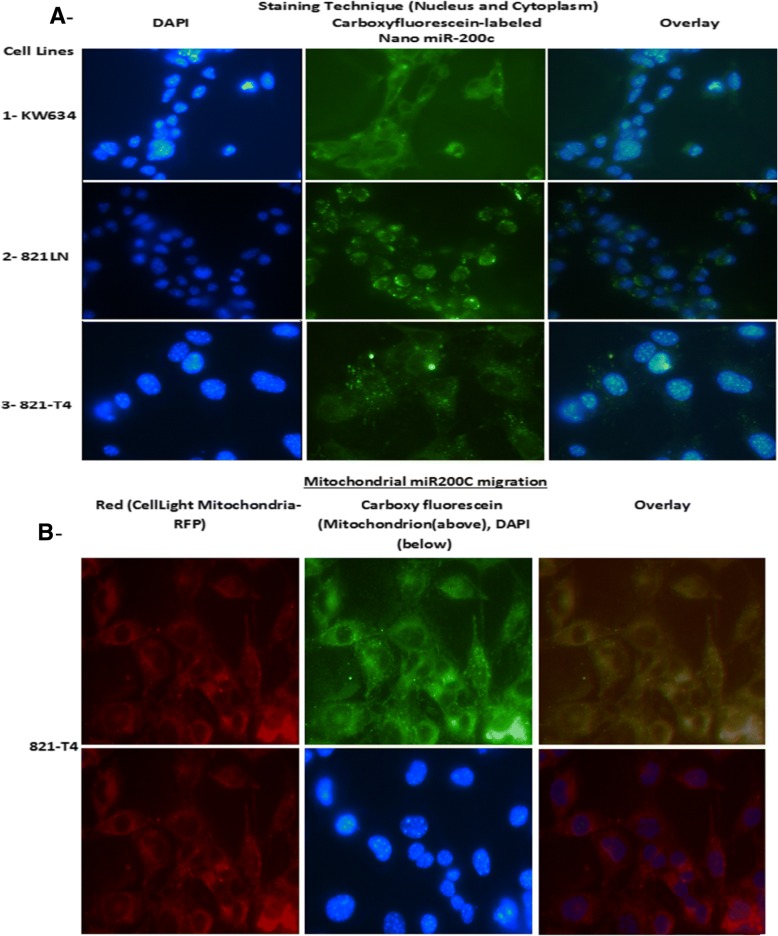
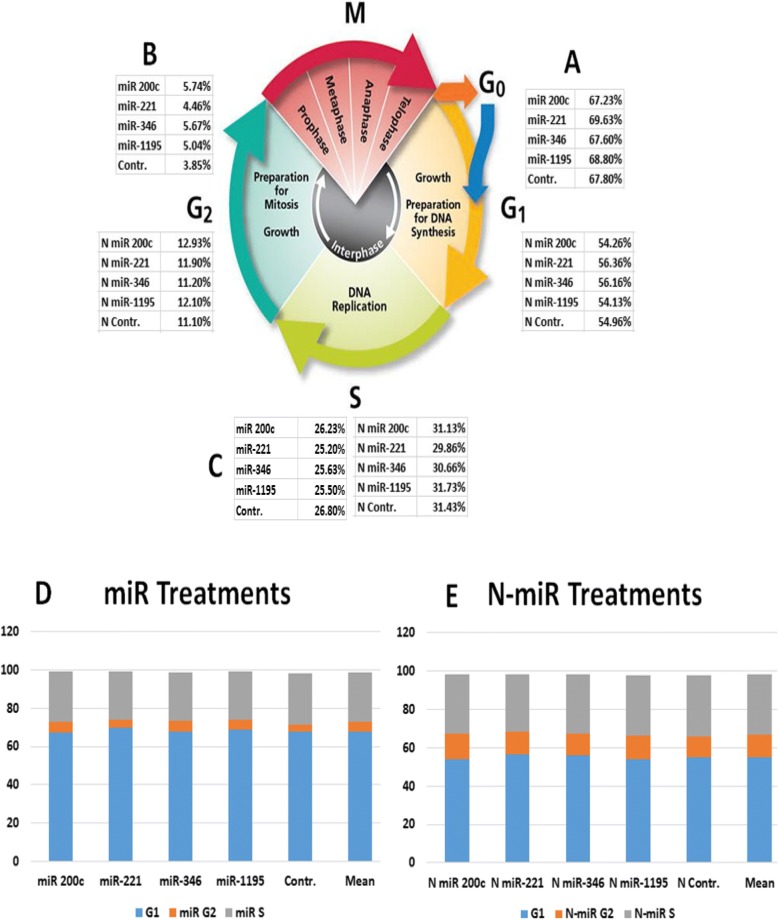
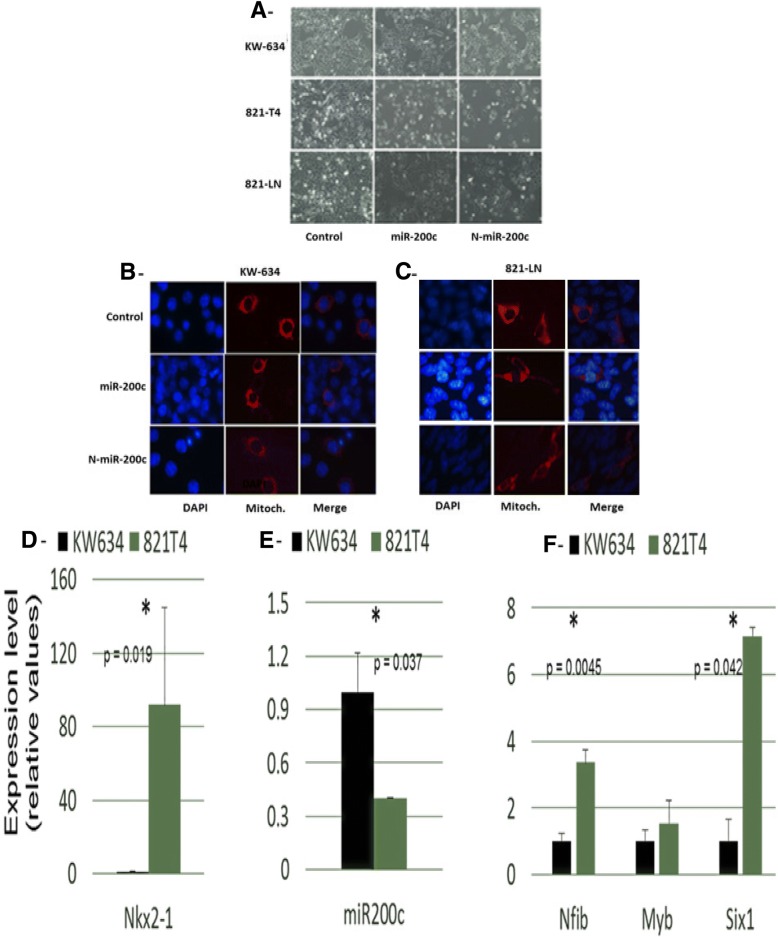
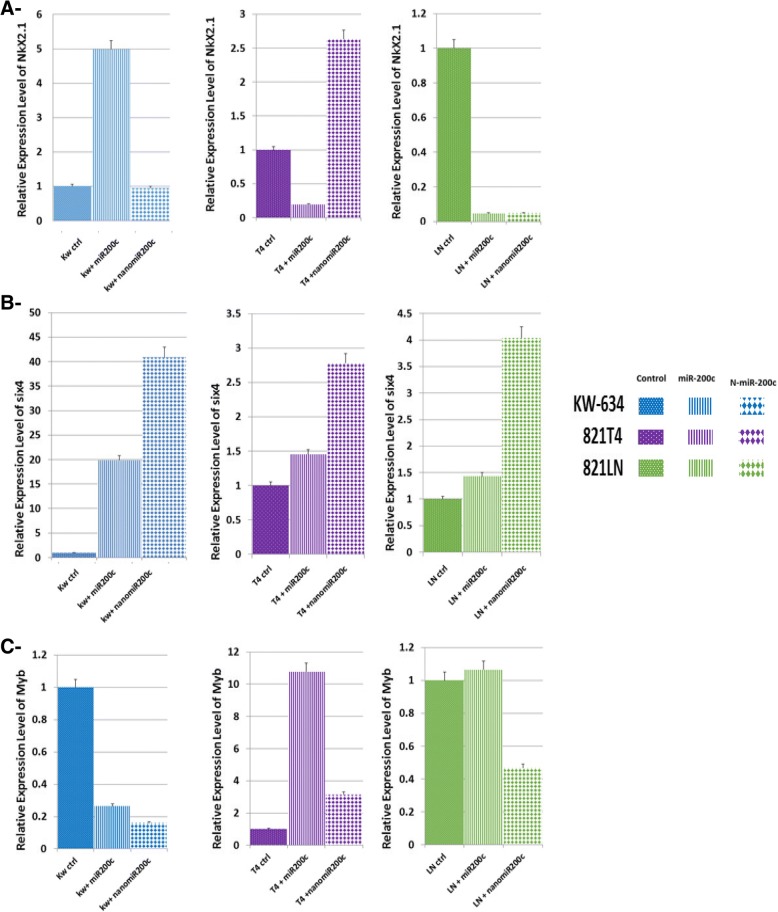
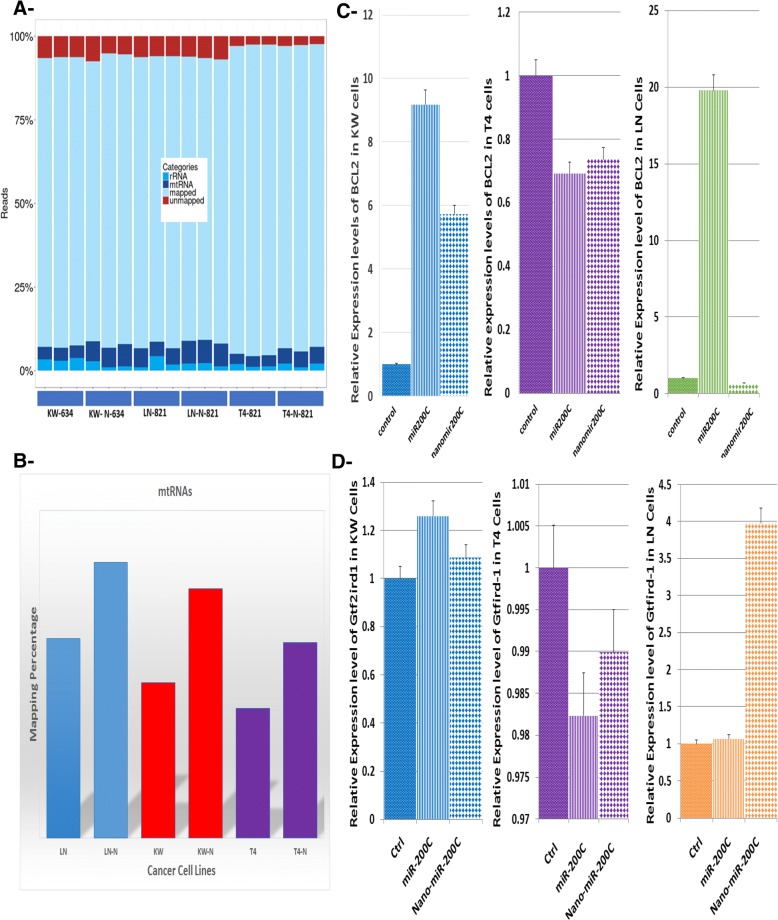
Due to their effectiveness as intracellular vesicles transporting miR-200c into, out, and between parts of the cells, miR-200c is encapsulated with cholesterol, an integral part of the biological membranes with very important physical properties of the vehicle. Nano miR-200c showed efficient cellular uptake in KW-634, 821-T4, and 821-LN cells with important changes in gene expression and new isoforms. In KW-634, when treated with encapsulated miR-200c and compare to the non-encapsulated control; miR-29b increased by 5261-fold, and in 821-T4/LN, miR-1247 increased by 150-fold. Conversely, miR-1247 and miR-675 decreased by 348 and 1029.5-fold, respectively. miR-189 decreased by 34-fold in treated 821-T4 cells. A reduction of growth was observed only after 48 h of treatment with Nano miR-200c. Moreover, labeling the vehicle with carboxy-fluorescein showed that the encapsulated particles enter the nucleus and mitochondria. Encapsulated miR-200c by entering the cells, the nucleus and mitochondria, trigger changes in cell cycle phases with 4 up to 12 fold percentage in G2 and S phase respectively compare to miR-200c. Endogenous expression of Nkx2.1, miR-200c, and their targets Myb, Nfib, Six4 and Six1 showed an inverse correlation, as observed in development.
Little is known about miR-200c involvement in regulatory processes. Nano miR-200c affects invasion and migration mechanisms. The expression of encapsulated miR-200c contributes to the inhibition/activation of Kras, EMT, Hippo, regulatory pathways and blockers of metastasis. Delivery of miR-200c increases the expression of miR-29b, an EMY regulator, and miR-1247, an inhibitor of cancer genes, both tumor suppressors involved in lung metastasis. Encapsulated miR-200c act on different proteins that regulates cell cycle pathways. These findings represent a part of a regulatory network providing new insights towards improvement of therapy.
microRNAs 是一种约 22 个核苷酸的非编码 RNA 分子,具有诊断和治疗作用 [Curr Drug Targets, 2015. 16(12): p. 1381-403],影响涉及侵袭、迁移和发育的 mRNAs 的表达 [Oncotarget, 2015. 6(9): p. 6472-98, Cancer Manag Res, 2014. 6: p. 205-16]。miR-200c 是位于染色体 12p13 的 miR-200c/141 簇的一部分。当被包裹时,其作用机制在表达 miRNA 变化的肺癌患者中至关重要。miR-200c 可以作为各种肺部疾病的潜在生物标志物。作为一种潜在的治疗方法,miR-200c 可以影响生命,因为目标肺癌是导致死亡的主要原因,每年约有 234000 例,高度异质性,复杂的筛查和 5 年生存率为 16% [CA Cancer J Clin, 2016.66(1): p. 7-30]。包裹的 miR-200c 可有效提高生物利用度、治疗药物的药代动力学和靶向细胞的能力,提高疗效,并提供潜在的治愈方法。
在非转移性 KW-634 和转移性 821-T4 和 821-LN 小鼠肺癌细胞系中,用各种纳米载体处理后,确定 miR-200c 的功能。通过细胞周期测定细胞活力和细胞毒性,并用定量实时 PCR 分析定量 miR-200c 及其靶基因的水平。原位杂交用于可视化 miR-200c 及其它在肺和许多器官中的表达模式。下一代测序注册号 GSE125000、使用 Transwell 室的侵袭和迁移测定以及 ActivSignal 用于阐明激活和抑制谱,并进行直接表达测量和细胞成分的修饰。
由于它们作为将 miR-200c 运入、运出和在细胞内部分之间的细胞内囊泡的有效性,miR-200c 与胆固醇一起被包裹,胆固醇是生物膜的重要组成部分,具有非常重要的物理性质。纳米 miR-200c 在 KW-634、821-T4 和 821-LN 细胞中具有有效的细胞摄取能力,并且基因表达和新的同工型发生重要变化。在 KW-634 中,用包裹的 miR-200c 处理并与非包裹的对照相比;miR-29b 增加了 5261 倍,在 821-T4/LN 中,miR-1247 增加了 150 倍。相反,miR-1247 和 miR-675 分别减少了 348 和 1029.5 倍。miR-189 在处理的 821-T4 细胞中减少了 34 倍。仅在用纳米 miR-200c 处理 48 小时后才观察到生长减少。此外,用羧基荧光素标记载体表明,包裹的颗粒进入细胞核和线粒体。包裹的 miR-200c 通过进入细胞、细胞核和线粒体,触发细胞周期各阶段的变化,与 miR-200c 相比,G2 和 S 期的百分比分别增加了 4 到 12 倍。内源性表达的 Nkx2.1、miR-200c 及其靶基因 Myb、Nfib、Six4 和 Six1 表现出相反的相关性,如在发育过程中观察到的那样。
关于 miR-200c 在调控过程中的参与,人们知之甚少。纳米 miR-200c 影响侵袭和迁移机制。包裹的 miR-200c 的表达有助于抑制/激活 Kras、EMT、Hippo、调节途径和转移抑制剂。miR-200c 的递呈增加了 EMY 调节剂 miR-29b 和癌症基因抑制剂 miR-1247 的表达,两者都是涉及肺转移的肿瘤抑制因子。包裹的 miR-200c 作用于不同的蛋白质,调节细胞周期途径。这些发现代表了一个调控网络的一部分,为改善治疗提供了新的见解。