College of Animal Science and Technology, Northwest A&F University, Yangling, 712100, Shanxi, China.
Cell Death Dis. 2023 Aug 26;14(8):566. doi: 10.1038/s41419-023-06091-6.
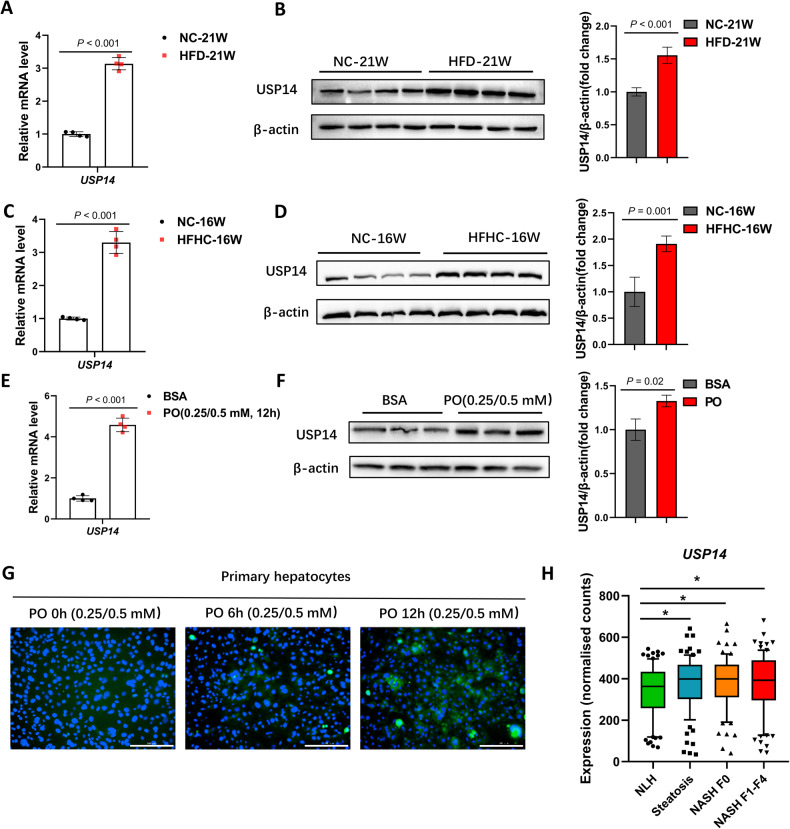
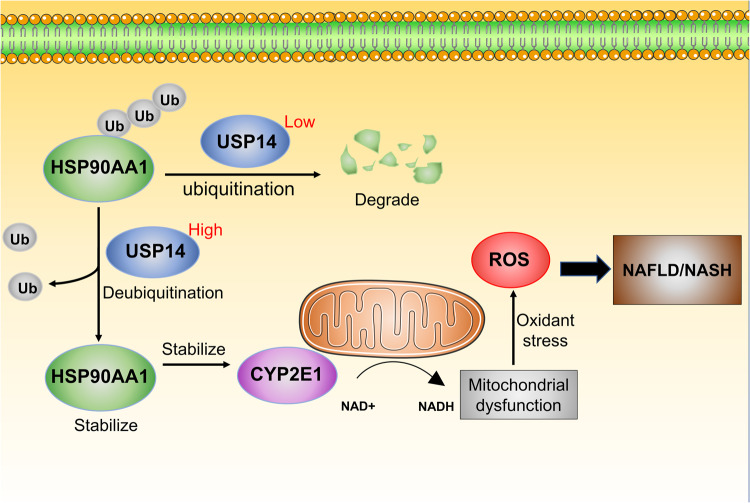
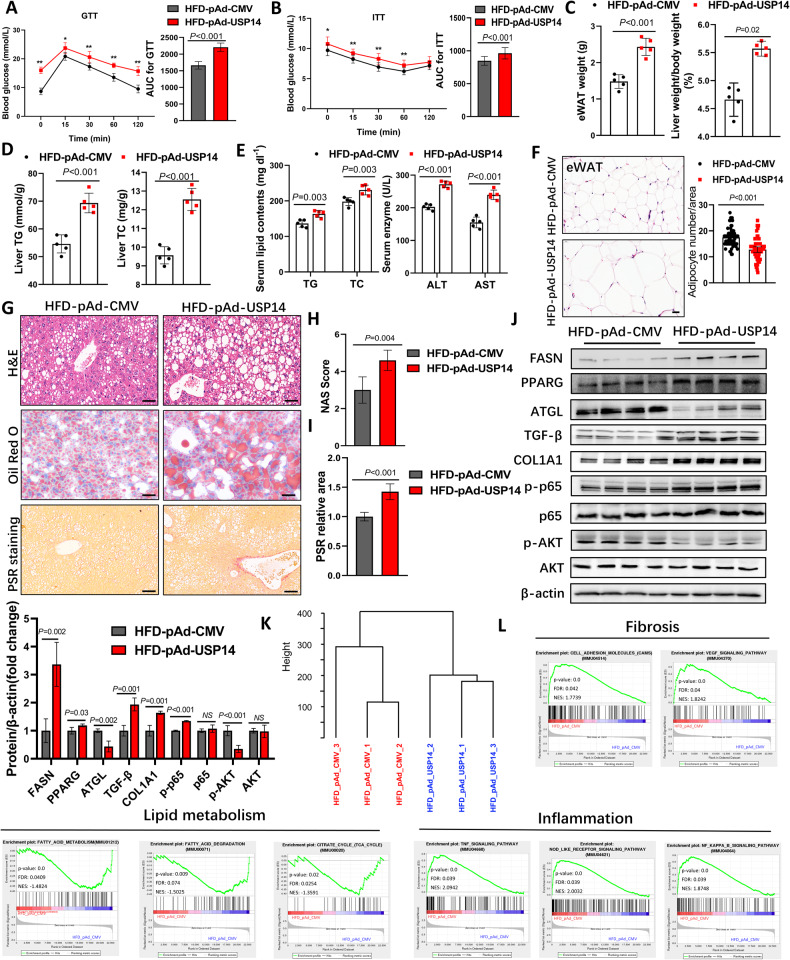
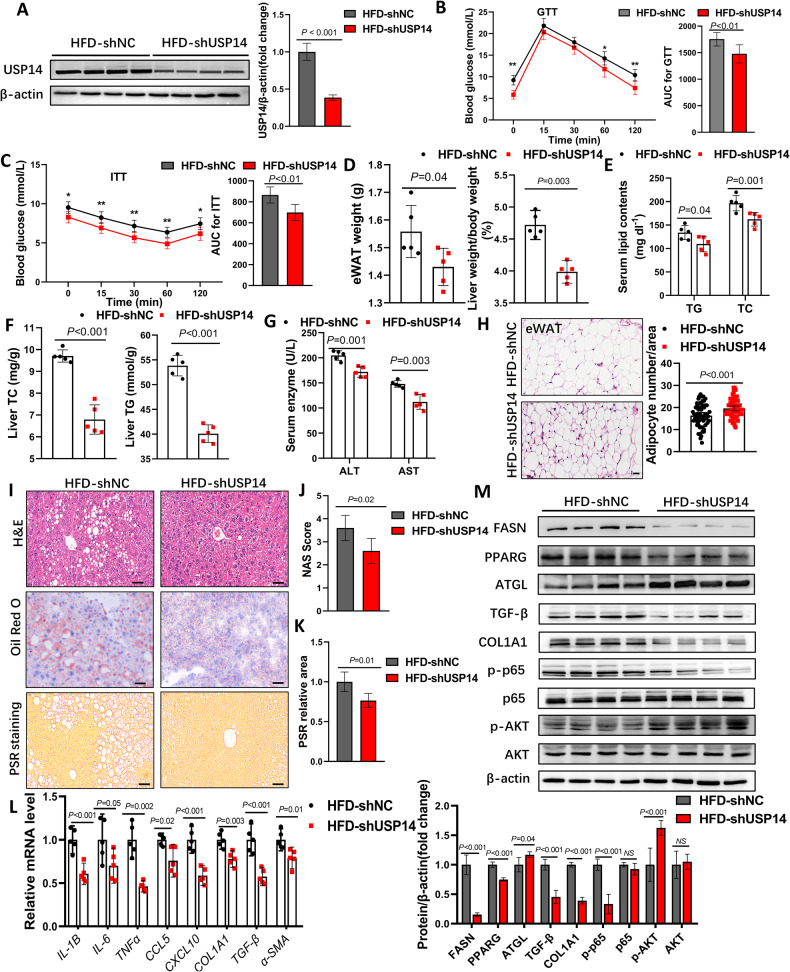
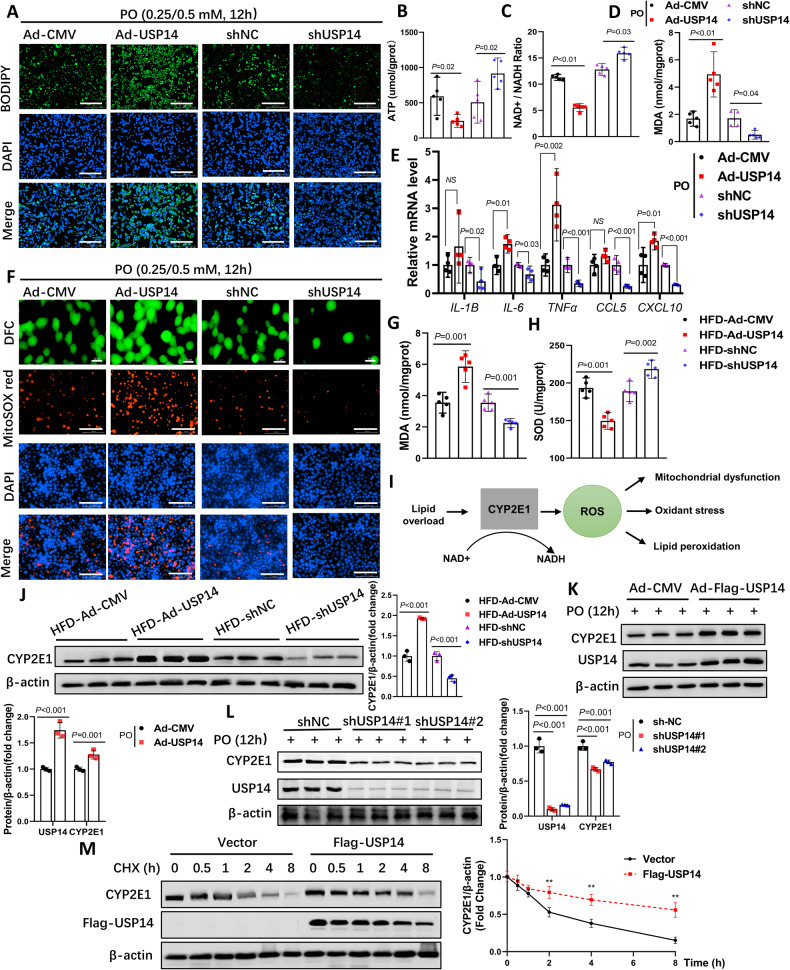
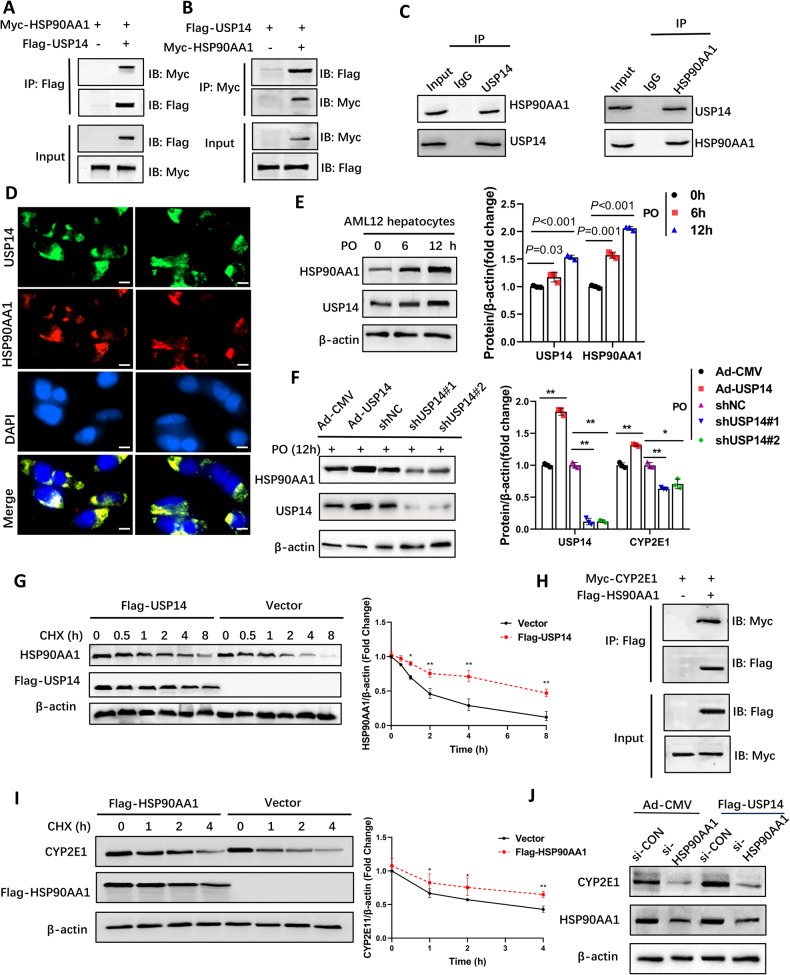
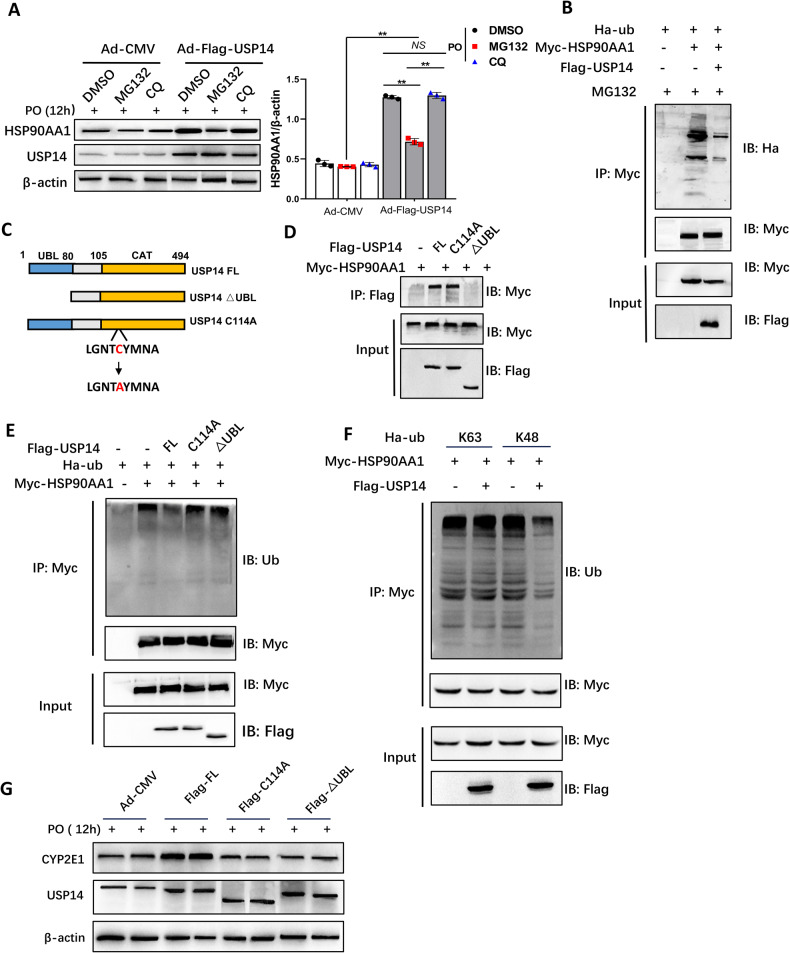
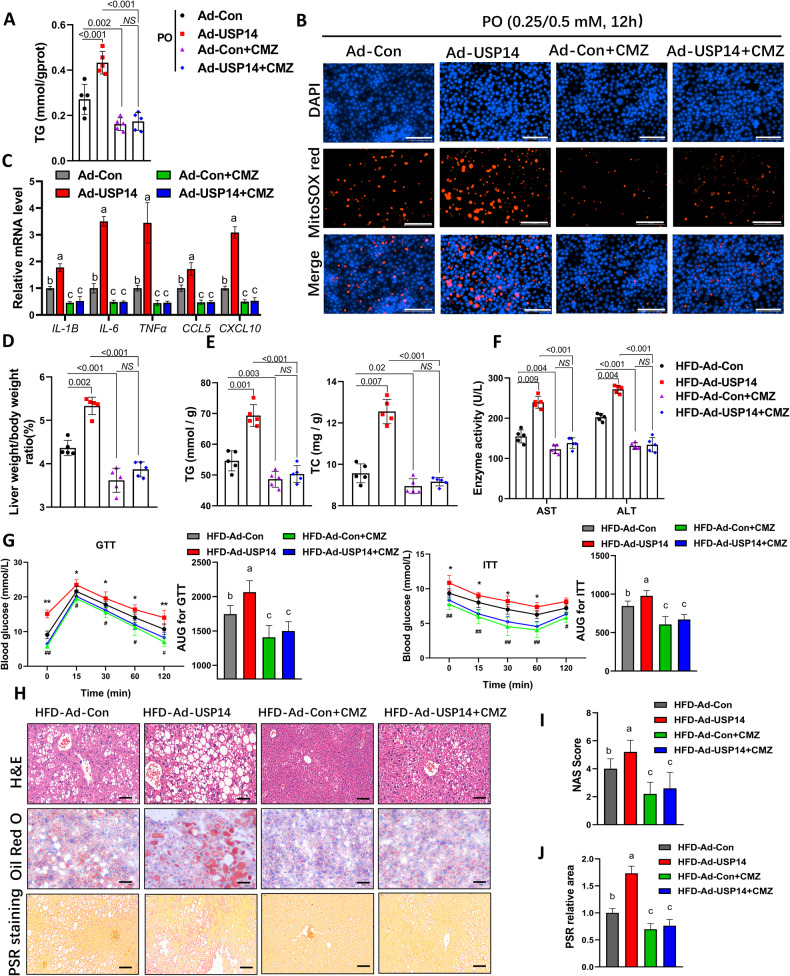
Nonalcoholic fatty liver disease (NAFLD) begins with excessive triglyceride accumulation in the liver, and overly severe hepatic steatosis progresses to nonalcoholic steatohepatitis (NASH), which is characterized by lipid peroxidation, inflammation, and fibrosis. Ubiquitin-specific proteinase 14 (USP14) regulates inflammation, hepatocellular carcinoma and viral infection, but the effect of USP14 on NAFLD is unknown. The aim of this study was to reveal the role of USP14 in the progression of NAFLD and its underlying mechanism. We demonstrated that hepatic USP14 expression was significantly increased in NAFLD in both humans and mice. Hepatic USP14 overexpression exacerbated diet-induced hepatic steatosis, inflammation and fibrosis in mice, in contrast to the results of hepatic USP14 knockdown. Furthermore, palmitic/oleic acid-induced lipid peroxidation and inflammation in hepatocytes were markedly increased by USP14 overexpression but decreased by USP14 knockdown. Notably, in vivo or in vitro data show that USP14 promotes NAFLD progression in a cytochrome p4502E1 (CYP2E1)-dependent manner, which exacerbates hepatocyte oxidative stress, impairs the mitochondrial respiratory chain and inflammation by promoting CYP2E1 protein levels. Mechanistically, we demonstrated by immunoprecipitation and ubiquitination analysis that USP14 inhibits the degradation of heat shock protein 90 alpha family class A member 1 (HSP90AA1) by decreasing its lysine 48-linkage ubiquitination. Meanwhile, upregulation of HAP90AA1 protein promotes CYP2E1 protein accumulation. Collectively, our data indicate that an unknown USP14-HSP90AA1-CYP2E1 axis contributes to NAFLD progression, and we propose that inhibition of USP14 may be an effective strategy for NASH treatment.
非酒精性脂肪性肝病 (NAFLD) 始于肝脏内甘油三酯的过度积累,而过度严重的肝脂肪变性则进展为非酒精性脂肪性肝炎 (NASH),其特征为脂质过氧化、炎症和纤维化。泛素特异性蛋白酶 14 (USP14) 调节炎症、肝细胞癌和病毒感染,但 USP14 对 NAFLD 的影响尚不清楚。本研究旨在揭示 USP14 在 NAFLD 进展中的作用及其潜在机制。我们表明,USP14 在人类和小鼠的 NAFLD 中均显著增加。与肝 USP14 敲低相反,肝 USP14 过表达加剧了饮食诱导的小鼠肝脂肪变性、炎症和纤维化。此外,USP14 过表达显著增加了棕榈酸/油酸诱导的肝细胞脂质过氧化和炎症,而 USP14 敲低则降低了这种作用。值得注意的是,体内或体外数据表明,USP14 以细胞色素 p4502E1 (CYP2E1) 依赖性方式促进 NAFLD 进展,通过促进 CYP2E1 蛋白水平加剧肝细胞氧化应激、损害线粒体呼吸链和炎症。在机制上,我们通过免疫沉淀和泛素化分析表明,USP14 通过减少 HSP90AA1 的赖氨酸 48 位连接泛素化来抑制 HSP90AA1 的降解。同时,HAP90AA1 蛋白的上调促进 CYP2E1 蛋白的积累。综上所述,我们的数据表明,一个未知的 USP14-HSP90AA1-CYP2E1 轴有助于 NAFLD 的进展,我们提出抑制 USP14 可能是 NASH 治疗的有效策略。