Department of Otorhinolaryngology Head and Neck Surgery, The Second Affiliated Hospital of Xi'an Jiaotong University, No.157, Xiwu Road, Xi'an, Shaanxi, 710004, China.
School of Mathematics and Statistics, Xi'an Jiaotong University, No.28, Xianningxi Road, Xi'an, Shaanxi, 710049, China.
BMC Surg. 2023 Aug 27;23(1):254. doi: 10.1186/s12893-023-02144-x.
To investigate the relationship between tongue fat content and severity of obstructive sleep apnea (OSA) and its effects on the efficacy of uvulopalatopharyngoplasty (UPPP) in the Chinese group.
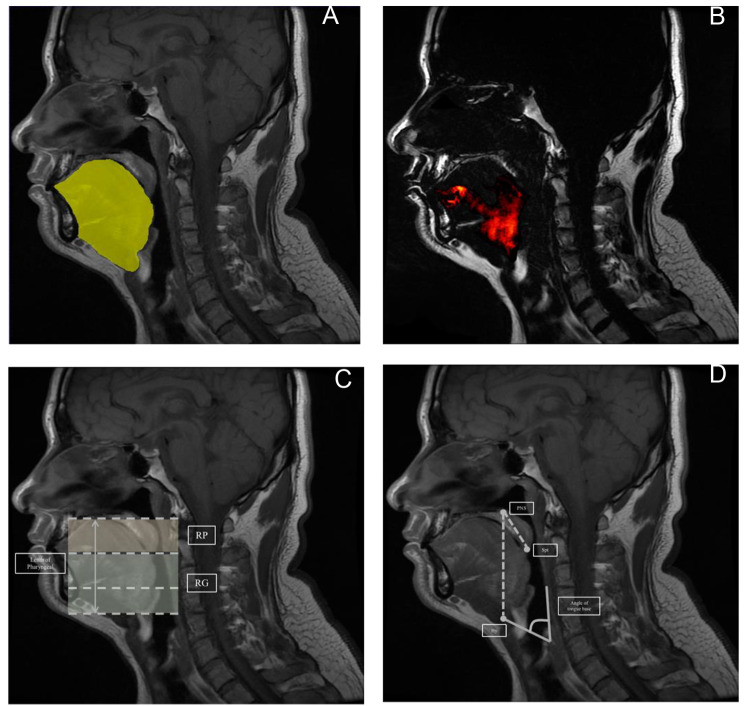
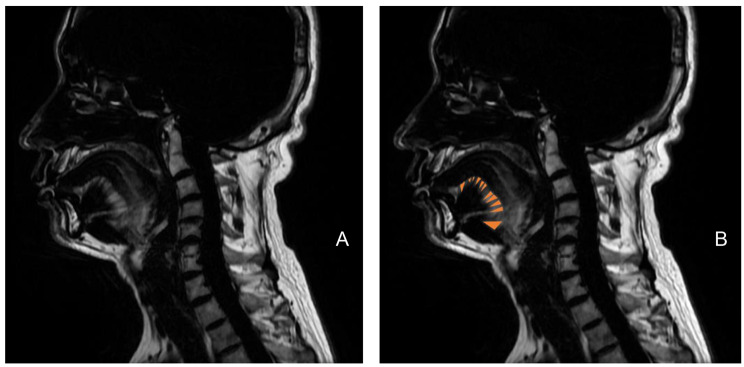
Fifty-two participants concluded to this study were diagnosed as OSA by performing polysomnography (PSG) then they were divided into moderate group and severe group according to apnea hypopnea index (AHI). All of them were also collected a series of data including age, BMI, height, weight, neck circumference, abdominal circumference, magnetic resonance imaging (MRI) of upper airway and the score of Epworth Sleepiness Scale (ESS) on the morning after they completed PSG. The relationship between tongue fat content and severity of OSA as well as the association between tongue fat content in pre-operation and surgical efficacy were analyzed.Participants underwent UPPP and followed up at 3 month after surgery, and they were divided into two groups according to the surgical efficacy.
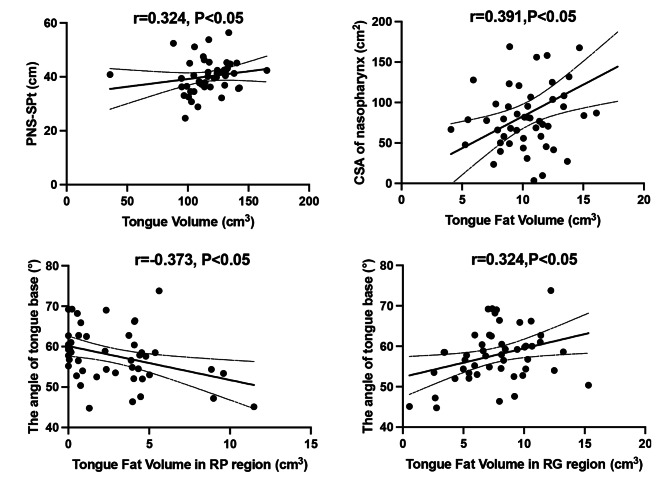
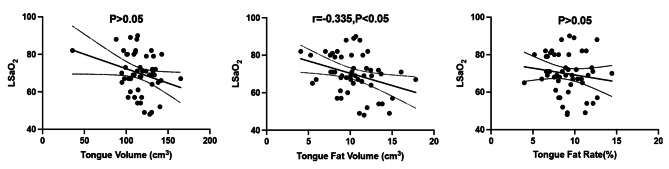
There were 7 patients in the moderate OSA group and 45 patients in the severe OSA group. The tongue volume was significantly larger in the severe OSA group than that in the moderate OSA group. There was no difference in tongue fat volume and tongue fat rate between the two groups. There was no association among tongue fat content, AHI, obstructive apnea hypopnea index, obstructive apnea index and Epworth sleepiness scale (all P > 0.05), but tongue fat content was related to the lowest oxygen saturation (r=-0.335, P < 0.05). There was no significantly difference in pre-operative tongue fat content in two different surgical efficacy groups.
This study didn't show an association between tongue fat content and the severity of OSA in the Chinese group, but it suggested a negative correlation between tongue fat content and the lowest oxygen saturation (LSaO). Tongue fat content didn't influence surgical efficacy of UPPP in Chinese OSA patients.
This study didn't report on a clinical trial, it was retrospectively registered.
探讨国人舌体脂肪含量与阻塞性睡眠呼吸暂停(OSA)严重程度的关系及其对悬雍垂腭咽成形术(UPPP)疗效的影响。
52 例经多导睡眠监测(PSG)诊断为 OSA 的患者,根据呼吸暂停低通气指数(AHI)分为中重度 OSA 组和重度 OSA 组。两组患者均于 PSG 检查次日清晨采集年龄、体质量指数(BMI)、身高、体重、颈围、腹围、上气道磁共振成像(MRI)及 Epworth 嗜睡量表(ESS)评分等资料。分析舌体脂肪含量与 OSA 严重程度的关系,术前舌体脂肪含量与手术疗效的关系。所有患者均接受 UPPP 手术治疗,术后 3 个月根据疗效分为两组。
中重度 OSA 组 7 例,重度 OSA 组 45 例。重度 OSA 组患者的舌体体积明显大于中重度 OSA 组。两组患者的舌体脂肪体积、舌体脂肪率比较,差异均无统计学意义(均 P>0.05)。舌体脂肪含量与 AHI、阻塞性呼吸暂停低通气指数、阻塞性呼吸暂停指数、ESS 评分均无相关性(均 P>0.05),但与最低血氧饱和度(LSaO₂)呈负相关(r=-0.335,P<0.05)。两组不同手术疗效患者的术前舌体脂肪含量比较,差异无统计学意义。
本研究结果显示,国人舌体脂肪含量与 OSA 严重程度无明显相关性,但与 LSaO₂呈负相关。舌体脂肪含量对国人 OSA 患者 UPPP 手术疗效无影响。
本研究未进行临床试验注册,属于回顾性研究。