Yang Linlin, Li Zhefeng, Binzel Daniel W, Guo Peixuan, Williams Terence M
Department of Radiation Oncology, Beckman Research Institute, City of Hope National Medical Center, Duarte, CA 91010, USA.
Center for RNA Nanobiotechnology and Nanomedicine, College of Pharmacy, James Comprehensive Cancer Center, Dorothy M. Davis Heart and Lung Research Institute, The Ohio State University, Columbus, OH 43210, USA.
Mol Ther Nucleic Acids. 2023 Jul 28;33:559-571. doi: 10.1016/j.omtn.2023.07.027. eCollection 2023 Sep 12.
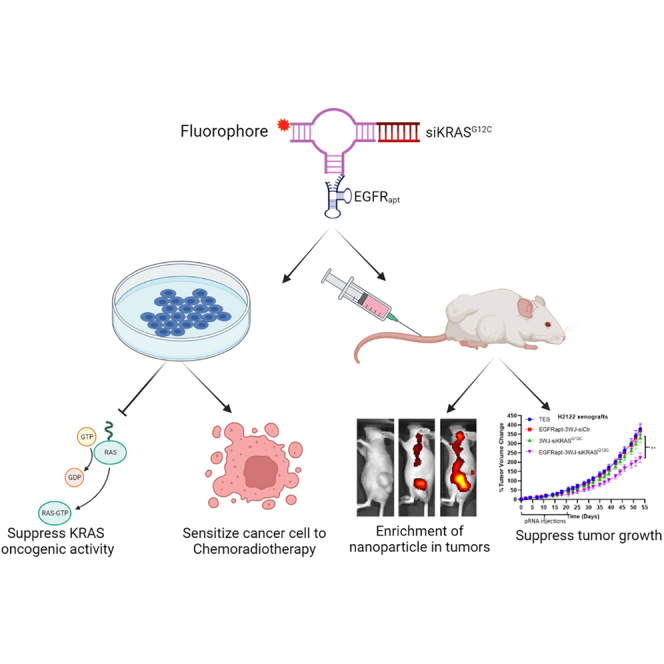
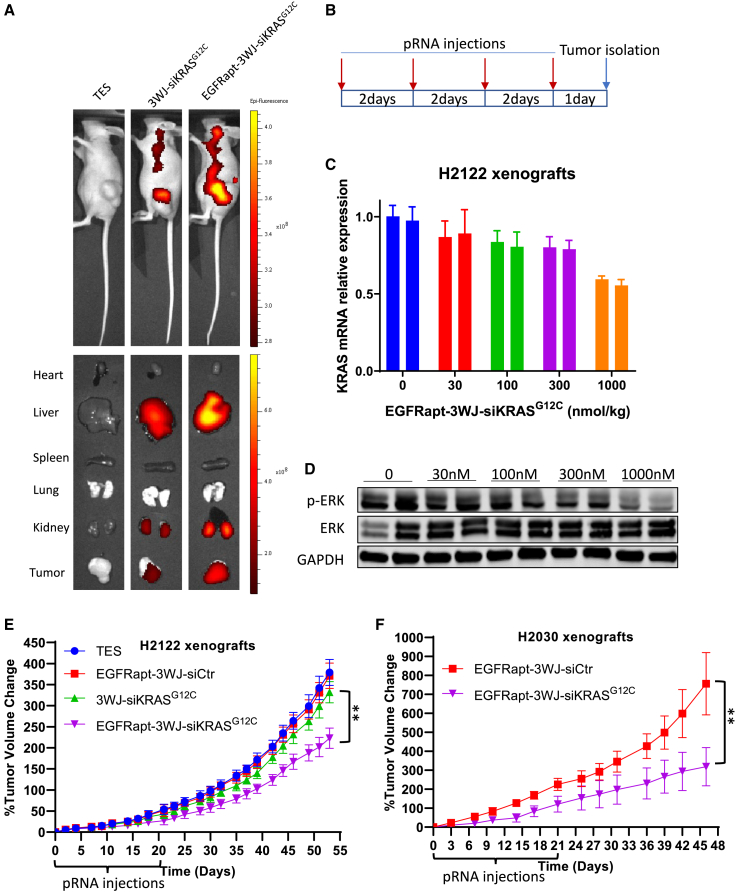
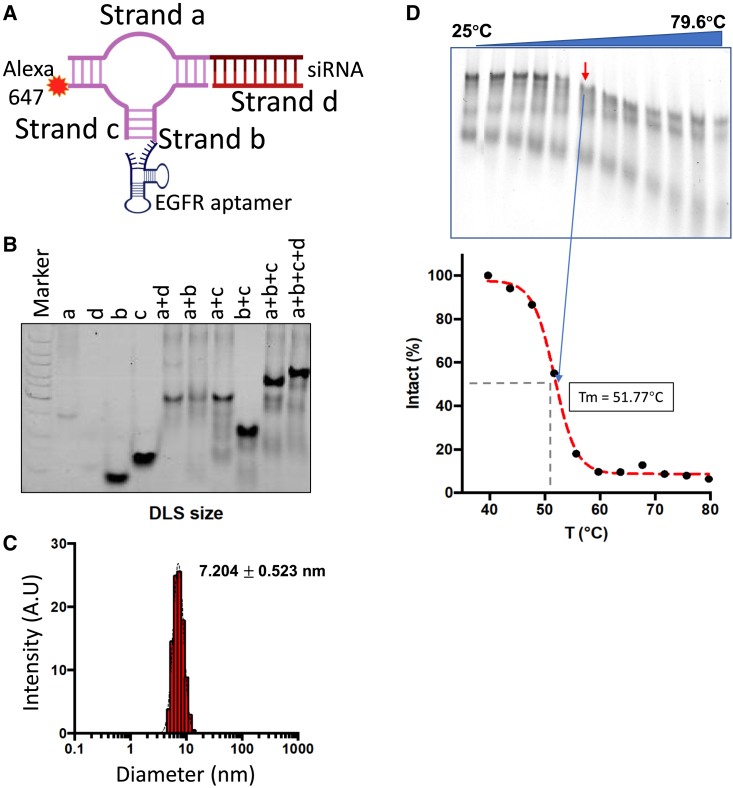
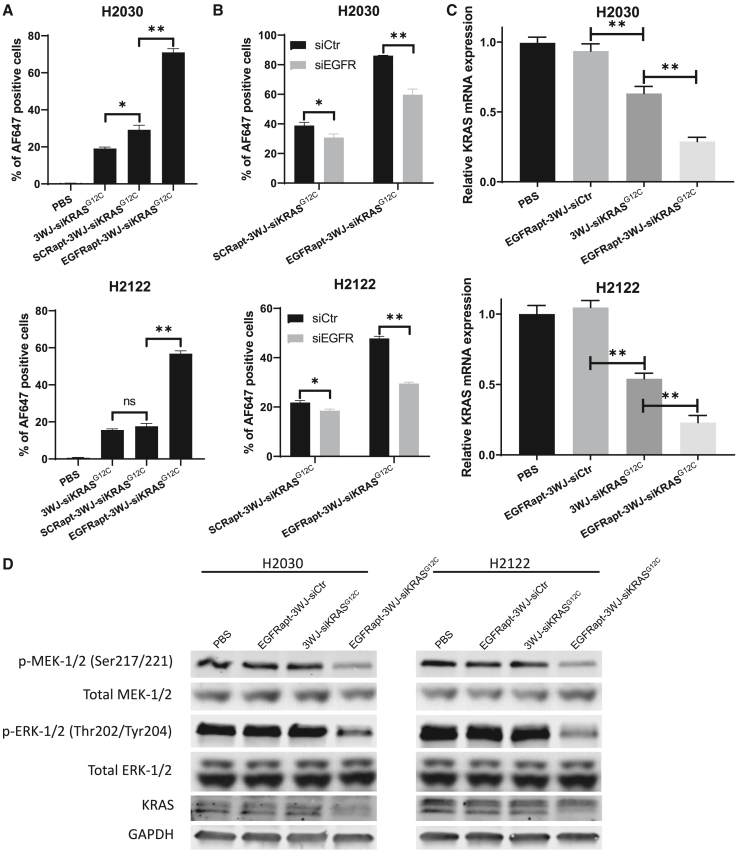
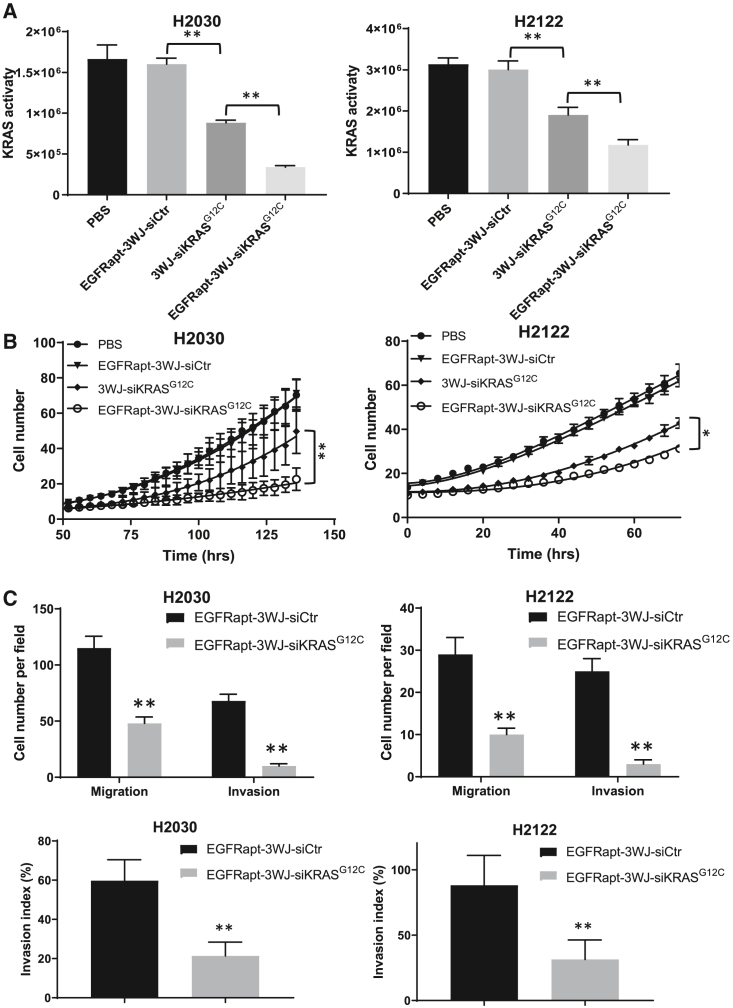
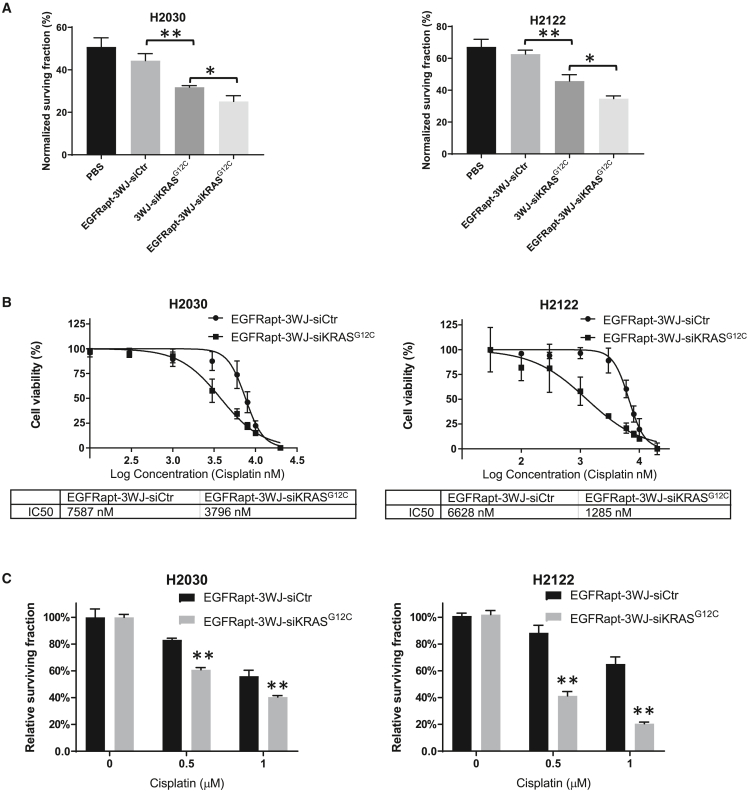
mutations are one of the most common oncogenic driver mutations in human cancers, including non-small cell lung cancer (NSCLC), and have established roles in cancer pathogenesis and therapeutic resistance. The development of effective inhibitors of mutant represents a significant challenge. Three-way junction (3WJ)-based multi-functional RNA nanoparticles have the potential to serve as an effective siRNA delivery platform with the ability to enhance tumor targeting specificity and visualize biodistribution through an imaging moiety. Herein, we assembled novel EGFR-3WJ-si mutation targeted nanoparticles to target EGFR-expressing human NSCLC harboring a mutation to silence expression in a tumor cell-specific fashion. We found that EGFR-3WJ-si nanoparticles potently depleted cellular expression, resulting in attenuation of downstream MAPK pathway signaling, cell proliferation, migration/invasion ability, and sensitized NSCLC cells to chemoradiotherapy. , these nanoparticles induced tumor growth inhibition in NSCLC tumor xenografts. Together, this study suggests that the 3WJ pRNA-based platform has the potential to suppress mutant KRAS activity for the treatment of KRAS-driven human cancers, and warrants further development for clinical translation.
KRAS突变是人类癌症(包括非小细胞肺癌(NSCLC))中最常见的致癌驱动突变之一,在癌症发病机制和治疗耐药性中发挥着既定作用。开发有效的KRAS突变体抑制剂是一项重大挑战。基于三向连接(3WJ)的多功能RNA纳米颗粒有潜力作为一种有效的KRAS siRNA递送平台,能够通过成像部分增强肿瘤靶向特异性并可视化生物分布。在此,我们组装了新型的靶向EGFR-3WJ-KRAS突变的纳米颗粒,以靶向携带KRAS突变的EGFR表达的人NSCLC,以肿瘤细胞特异性方式沉默KRAS表达。我们发现EGFR-3WJ-KRAS si纳米颗粒有效地耗尽了细胞内KRAS表达,导致下游MAPK途径信号传导、细胞增殖、迁移/侵袭能力减弱,并使NSCLC细胞对放化疗敏感。此外,这些纳米颗粒在KRAS NSCLC肿瘤异种移植物中诱导了肿瘤生长抑制。总之,这项研究表明基于3WJ pRNA的平台有潜力抑制突变型KRAS活性以治疗KRAS驱动的人类癌症,值得进一步开发用于临床转化。