Department of Molecular Neurobiology, Groningen Institute for Evolutionary Life Sciences (GELIFES), University of Groningen, Groningen, The Netherlands.
Department of Neurology, The Second Affiliated Hospital of Hainan Medical University, Haikou, Hainan, China.
J Alzheimers Dis. 2023;95(3):785-803. doi: 10.3233/JAD-230199.
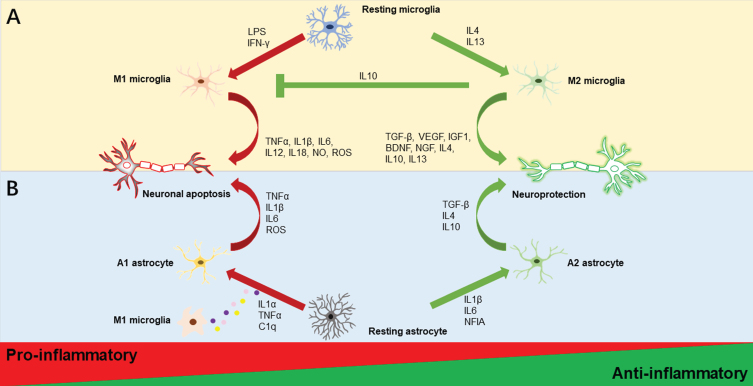
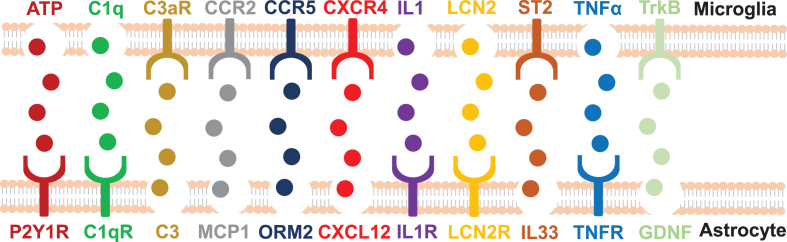
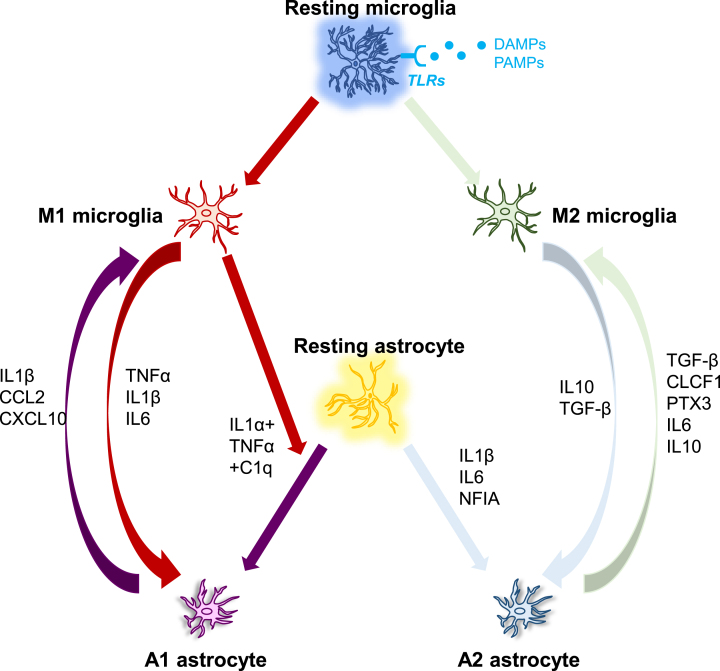
Microglia and astrocytes are regarded as active participants in the central nervous system under various neuropathological conditions, including Alzheimer's disease (AD). Both microglia and astrocyte activation have been reported to occur with a spatially and temporarily distinct pattern. Acting as a double-edged sword, glia-mediated neuroinflammation may be both detrimental and beneficial to the brain. In a variety of neuropathologies, microglia are activated before astrocytes, which facilitates astrocyte activation. Yet reactive astrocytes can also prevent the activation of adjacent microglia in addition to helping them become activated. Studies describe changes in the genetic profile as well as cellular and molecular responses of these two types of glial cells that contribute to dysfunctional immune crosstalk in AD. In this paper, we construct current knowledge of microglia-astrocyte communication, highlighting the multifaceted functions of microglia and astrocytes and their role in AD. A thorough comprehension of microglia-astrocyte communication could hasten the creation of novel AD treatment approaches.
小胶质细胞和星形胶质细胞被认为是在各种神经病理学条件下,包括阿尔茨海默病(AD),中枢神经系统的活跃参与者。已有报道称,小胶质细胞和星形胶质细胞的激活具有空间和时间上的不同模式。作为一把双刃剑,神经胶质介导的神经炎症可能对大脑既有损害又有益处。在多种神经病理学中,小胶质细胞先于星形胶质细胞被激活,这促进了星形胶质细胞的激活。然而,反应性星形胶质细胞除了帮助它们被激活之外,还可以防止相邻小胶质细胞的激活。研究描述了这两种神经胶质细胞的遗传特征以及细胞和分子反应的变化,这些变化导致 AD 中功能失调的免疫串扰。在本文中,我们构建了小胶质细胞-星形胶质细胞通讯的现有知识,强调了小胶质细胞和星形胶质细胞的多方面功能及其在 AD 中的作用。对小胶质细胞-星形胶质细胞通讯的深入理解可以加速 AD 治疗方法的创新。